
洪 民憙 (Hong Minhee) :nonbinary:'s avatar

洪 民憙 (Hong Minhee) :nonbinary:

@hongminhee@hollo.social

1,109 following1,901 followers

An intersectionalist, feminist, and socialist living in Seoul (UTC+09:00). @tokolovesme's spouse. Who's behind @fedify, @hollo, and @botkit. Write some free software in , , , & . They/them.

서울에 사는 交叉女性主義者이자 社會主義者. 金剛兔(@tokolovesme)의 配偶者. @fedify, @hollo, @botkit 메인테이너. , , , 等으로 自由 소프트웨어 만듦.

()

Pinned

@hongminhee@hollo.social

Hello! I'm Hong Minhee (洪 民憙), an open source software engineer in my late 30s, living in Seoul, Korea. I'm bisexual and non-binary (they/them), and an enthusiastic advocate of free/open source software and the fediverse.

I work full-time on @fedify, an ActivityPub server framework in TypeScript, funded by @sovtechfund. I'm also the creator of @hollo, a single-user ActivityPub microblog; @botkit, an ActivityPub bot framework; Hackers' Pub, a fediverse platform for software developers; and LogTape, a logging library for JavaScript and TypeScript.

I have a long interest in East Asian languages (CJK) and Unicode. I post mostly in English here, though occasionally in Japanese or in mixed-script Korean (國漢文混用體), a traditional writing style that interleaves Chinese characters with the native Korean alphabet. Wanting to write in that style was actually one of the reasons I joined the fediverse. Feel free to talk to me in English, Korean, Japanese, or even Literary Chinese!

en.wikipedia.org

Korean mixed script - Wikipedia

Pinned

はじめまして!ソウル在住の30代後半のオープンソースソフトウェアエンジニア、洪 民憙ホン・ミンヒと申します。バイセクシュアル(bisexual)・ノンバイナリー(non-binary)で、自由・オープンソースソフトウェア(F/OSS)とフェディバース(fediverse)の熱烈な支持者です。

STF(@sovtechfund)の支援を受け、TypeScript用ActivityPubサーバーフレームワーク「@fedify」の開発に専念しています。他にも、おひとり様向けのActivityPubマイクロブログ「@hollo」、ActivityPubボットフレームワーク「@botkit」、ソフトウェア開発者向けフェディバースプラットフォームHackers' Pub、JavaScript・TypeScript用ロギングライブラリLogTapeなどの制作者でもあります。

東アジア言語(いわゆるCJK)とUnicodeにも興味があります。このアカウントでは主に英語で投稿していますが、時々日本語や国漢文混用体(漢字ハングル混じり文)の韓国語でも書いています。実はこの文体で書きたくてフェディバースを始めた、という経緯もあります。日本語、英語、韓国語、漢文でも気軽に話しかけてください!

speakerdeck.com

国漢文混用体からHolloまで

本発表では、韓国語の「国漢文混用体」(漢字ハングル混じり文)を自分のフェディバース投稿に実装したいという小さな目標から始まった旅路を共有します。 この目標を達成するために、ActivityPubのJSON-LDの複雑さやHTTP Signatures、WebFingerなどの仕様を理解する必要性に…

Pinned

安寧(안녕)하세요! 저는 서울에 살고 있는 30() 後半(후반)의 오픈 소스 소프트웨어 엔지니어 洪民憙(홍민희)입니다. 兩性愛者(양성애자)(bisexual)이자 논바이너리(non-binary)이며, 自由(자유)·오픈 소스 소프트웨어(F/OSS)와 聯合宇宙(연합우주)(fediverse)의 熱烈(열렬)支持者(지지자)이기도 합니다.

STF(@sovtechfund)의 支援(지원)을 받아 TypeScript() ActivityPub 서버 프레임워크 @fedify 開發(개발)專業(전업)으로 ()하고 있습니다. 그 ()에도 싱글 유저() ActivityPub 마이크로블로그 @hollo, ActivityPub 봇 프레임워크 @botkit, 소프트웨어 開發者(개발자)를 위한 聯合宇宙(연합우주) 플랫폼 Hackers' Pub, JavaScript·TypeScript() 로깅 라이브러리 LogTape ()製作者(제작자)이기도 합니다.

()아시아 言語(언어)(이른바 CJK)와 Unicode에도 關心(관심)이 많습니다. 이 計定(계정)에서는 ()英語(영어)로 포스팅하지만, 때때로 日本語(일본어)國漢文混用體(국한문 혼용체) 韓國語(한국어)로도 씁니다. 聯合宇宙(연합우주)에 오게 된 動機(동기) () 하나가 바로 國漢文混用體(국한문 혼용체)로 글을 쓰고 싶었기 때문이기도 하고요. 韓國語(한국어), 英語(영어), 日本語(일본어), 아니면 漢文(한문)으로도 말을 걸어주세요!

logtape.org

LogTape

Unobtrusive logging library with zero dependencies—library-first design for Deno, Node.js, Bun, browsers, and edge functions

@botkit@hollo.social

Coming soon in 0.2.0: Native post support!

We're excited to share a preview of the upcoming quoting features in BotKit 0.2.0. This update will make it easier for your bots to engage with quoted content across the fediverse.

The quoting feature set includes:

Here's a quick example of how you can use the quote detection:

bot.onQuote = async (session, quote) => {
  // The quote parameter is a Message object representing the post that quoted your bot
  await quote.reply(text`Thanks for quoting my post, ${quote.actor}!`);
  
  // You can access the original quoted message
  const originalPost = quote.quoteTarget;
  console.log(`Original message: ${originalPost?.text}`);
};

And creating quote posts is just as simple:

// Quote in a new post
await session.publish(
  text`I'm quoting this interesting message!`,
  { quoteTarget: someMessage }
);

// Or quote in a reply
await message.reply(
  text`Interesting point! I'm quoting another relevant post here.`,
  { quoteTarget: anotherMessage }
);

Remember that quoting behavior may vary across different implementations—some platforms like Misskey display quotes prominently, while others like Mastodon might implement them differently.

Want to try these features right now? You can install the development version from JSR:

deno add jsr:@fedify/botkit@0.2.0-dev.90+d6ab4bdc

We're looking forward to seeing how you use these quoting capabilities in your bots!

jsr.io

@fedify/botkit - JSR

@fedify/botkit on JSR: A framework for creating ActivityPub bots

@botkit@hollo.social · Reply to BotKit by Fedify :botkit:

Continuing our emoji reaction feature announcement, we're also introducing two new event handlers—Bot.onReact and Bot.onUnreact—that let your bot respond when users react to posts:

// When someone adds an emoji reaction to a post
bot.onReact = async (session, reaction) => {
  // Only respond when the reaction is to your bot's post
  if (reaction.message.actor.id?.href === session.actorId.href) {
    console.log(`${reaction.actor.preferredUsername} reacted with ${reaction.emoji}`);
    
    // You can respond differently based on the emoji
    if (reaction.emoji === "❤️") {
      await session.publish(
        text`Thanks for the love, ${reaction.actor}!`,
        { visibility: "direct" }
      );
    }
  }
};
// When someone removes their emoji reaction
bot.onUnreact = async (session, reaction) => {
  if (reaction.message.actor.id?.href === session.actorId.href) {
    console.log(`${reaction.actor.preferredUsername} removed their ${reaction.emoji} reaction`);
    
    // Optional: respond to reaction removal
    await session.publish(
      text`I noticed you removed your ${reaction.emoji} reaction, ${reaction.actor}.`,
      { visibility: "direct" }
    );
  }
};

These event handlers open up interesting interaction possibilities—your bot can now track popular reactions, respond to specific emoji feedback, or create interactive experiences based on reactions.

Want to try these features now? You can install the development version from JSR today:

deno add jsr:@fedify/botkit@0.2.0-dev.86+cdbb52a2

The full documentation for these features will be available when BotKit 0.2.0 is officially released!

jsr.io

@fedify/botkit - JSR

@fedify/botkit on JSR: A framework for creating ActivityPub bots

@botkit@hollo.social

We're excited to introduce emoji reactions in the upcoming 0.2.0 release!

With the new Message.react() method, your bot can now react to messages using standard Unicode :

await message.react(emoji`👍`);

support is also included, allowing your bot to react with server-specific emojis:

const emojis = bot.addCustomEmojis({
  // Use a remote image URL:
  yesBlob: {
    url: "https://cdn3.emoji.gg/emojis/68238-yesblob.png",
    mediaType: "image/png",
  },
  // Use a local image file:
  noBlob: {
    file: `${import.meta.dirname}/emojis/no_blob.png`,
    mediaType: "image/webp",
  },
});

await message.react(emojis.yesBlob);

Reactions can be removed using the AuthorizedReaction.unreact() method:

const reaction = await message.react(emoji`❤️`);
await reaction.unreact();

Want to try these features now? You can install the development version from JSR today:

deno add jsr:@fedify/botkit@0.2.0-dev.84+c997c6a6

We're looking forward to seeing how your bots express themselves with this new feature!

jsr.io

@fedify/botkit - JSR

@fedify/botkit on JSR: A framework for creating ActivityPub bots

Another annoying thing about the current custom emoji spec in the fediverse: the type is just called Emoji instead of CustomEmoji. Such a small detail, but it creates unnecessary ambiguity between Unicode emojis and custom ones. I ran into this while implementing BotKit and had type name collisions with Emoji—had to use awkward namespacing to work around it. These little inconsistencies make implementation more tedious than it needs to be.

@botkit@hollo.social

We're excited to announce that 0.2.0 will introduce custom emoji support! This feature allows your bots to express themselves with more personality and engagement.

What's included:

  • Add custom emojis to your bot with Bot.addCustomEmojis()
  • Use emoji in messages with the customEmoji() function
  • Support for both local image files and remote URLs as emoji sources
  • Full integration with BotKit's text formatting system

Simple example:

// Define custom emojis
const emojis = bot.addCustomEmojis({
  botkit: { file: "./botkit.png", type: "image/png" },
  fedify: { url: "https://fedify.dev/logo.png", type: "image/png" }
});

// Use in messages
await session.publish(
  text`Hello world! ${customEmoji(emojis.botkit)}`
);

Want to try it early? You can install the development version from JSR today:

deno add jsr:@fedify/botkit@0.2.0-dev.82+8a0438e6

jsr.io

@fedify/botkit - JSR

@fedify/botkit on JSR: A framework for creating ActivityPub bots

In case you weren't aware, has both and communities where you can get help, discuss features, or just chat about and federated social networks.

Feel free to join either community based on your preference. Both channels have active discussions about Fedify and federation topics.

discord.com

Join the Fedify/Hollo Discord Server!

Check out the Fedify/Hollo community on Discord - hang out with 87 other members and enjoy free voice and text chat.

@hongminhee@hollo.social · Reply to Emelia 👸🏻

@thisismissem You're right, I don't believe there's a specific FEP for custom emojis yet. If one were to be created, accessibility through proper alt text would definitely need to be a core requirement. The current state where emoji codes like :blob_wave: become the alt text creates significant barriers for screen reader users—especially for non-English speakers, who face an additional language barrier when trying to understand these codes. A proper standard should address how to provide meaningful descriptions that actually convey what the emoji represents in multiple languages.

@hongminhee@hollo.social · Reply to wakest ⁂

@liaizon I appreciate the enthusiasm, but I personally don't have much motivation to standardize custom emoji. While I understand many people enjoy this feature, I'm not particularly fond of custom emoji functionality in general. My limited interest in the feature itself, combined with the significant accessibility issues it creates, makes it difficult for me to get excited about investing time in standardization efforts. Though I respect that others might feel differently!

@hongminhee@hollo.social

As someone who has developed several software implementations (Fedify, Hollo, BotKit, and Hackers' Pub), I believe one of the most frustrating features to implement in the is .

The challenges are numerous:

First, there's no standardization. ActivityPub specifications don't define how custom emoji should work, leading to inconsistent implementations across different servers like Mastodon and Misskey.

Rendering is particularly problematic. Emojis must display properly across different contexts (in text, as reactions, in emoji pickers) while maintaining quality at various sizes. Animated emojis add another layer of complexity.

Perhaps most concerning is the poor . Most implementations simply use the emoji code (like :party_blob:) as the alt text, which provides no meaningful information to screen reader users (in particular, non-English speakers) about what the emoji actually depicts or means.

What really dampens my motivation to implement this feature is knowing I'm investing significant effort into something that ultimately creates accessibility barriers. It's disheartening to work hard on a feature that excludes part of the community.

hackers.pub

Hackers' Pub

Hackers' Pub is a place for software engineers to share their knowledge and experience with each other. It's also an ActivityPub-enabled social network, so you can follow your favorite hackers in the fediverse and get their latest posts in your feed.

@sarah11918@mastodon.social

@ayo @hongminhee It can be so helpful during design! Some people do it first-first. At Astro with our RFC process, minimal "docs" are updated as the feature is developed.

For Astro's new experimental Fonts API, we held not only an open API bash, but an API *docs* bash! After 2 hours looking at the draft docs ("Oh, it works like this? Oh, you expect people to do this? Oh, this is what it takes to explain how to use it?")... some design changes were implemented for sure, and everyone wins!

@hongminhee@hackers.pub

For my library and CLI projects, I've been writing documentation before writing any code. It helps me imagine the final interface early on, which usually leads to better design. Sure, sometimes I miss implementation details and have to revise later, but hey—it's just docs. Docs are easy to change.

This tiny habit has surprisingly big payoffs. When I focus on how things will be used rather than how they'll be built, I end up with interfaces that actually make sense.

Anyone else do this? Curious about your experience with documentation-first approaches.

hollo.social

First, I'm adding custom emoji…

First, I'm adding custom emoji support to #BotKit…

First, I'm adding custom emoji support to

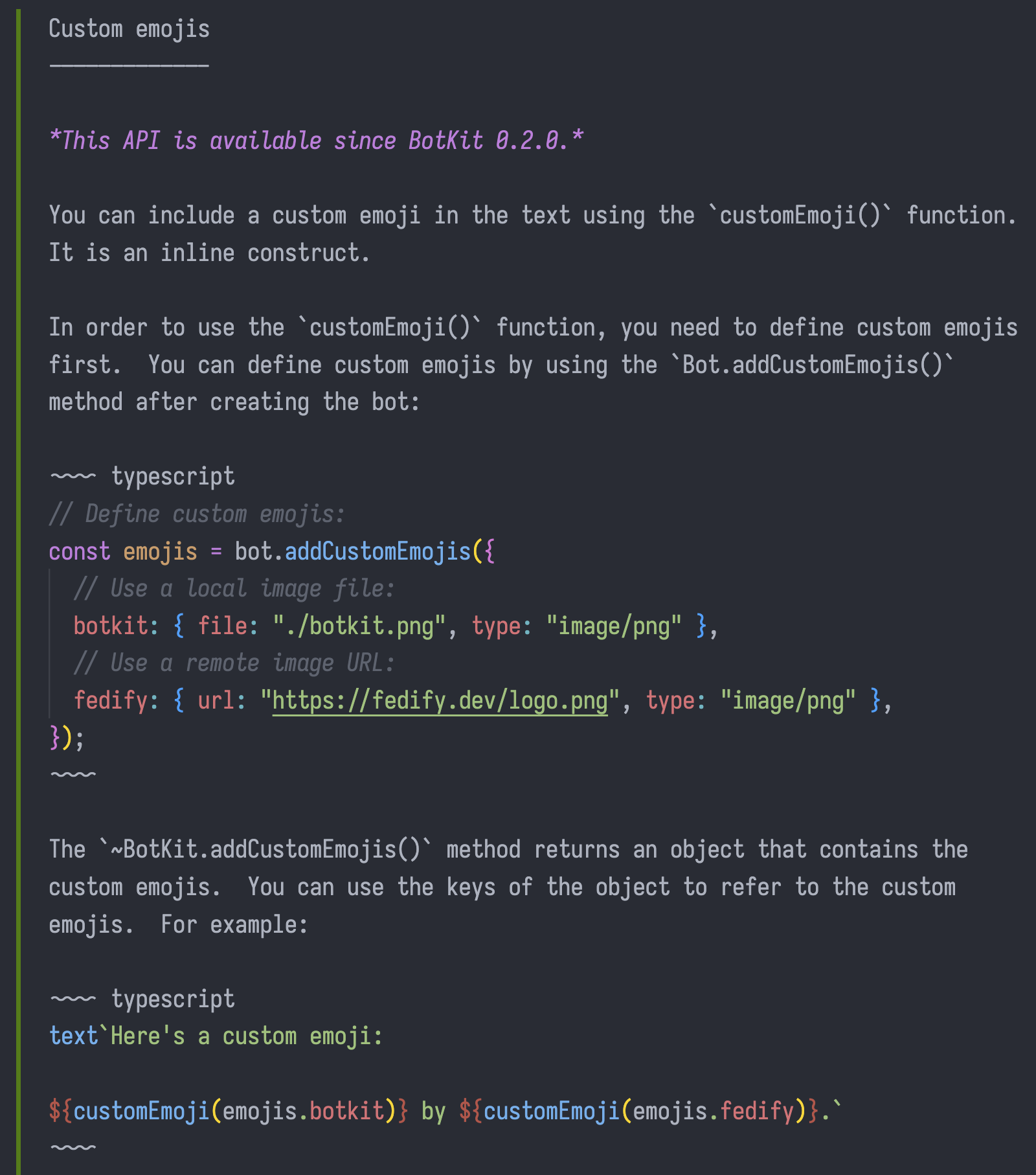
Custom emojis
-------------

*This API is available since BotKit 0.2.0.*

You can include a custom emoji in the text using the `customEmoji()` function.
It is an inline construct.

In order to use the `customEmoji()` function, you need to define custom emojis first.  You can define custom emojis by using the `Bot.addCustomEmojis()` method after creating the bot:

~~~~ typescript
// Define custom emojis:
const emojis = bot.addCustomEmojis({
  // Use a local image file:
  botkit: { file: "./botkit.png", type: "image/png" },
  // Use a remote image URL:
  fedify: { url: "https://fedify.dev/logo.png", type: "image/png" },
});
~~~~

The `~BotKit.addCustomEmojis()` method returns an object that contains the custom emojis.  You can use the keys of the object to refer to the custom emojis.  For example:

~~~~ typescript
text`Here's a custom emoji:

${customEmoji(emojis.botkit)} by ${customEmoji(emojis.fedify)}.`
~~~~
ALT text

Custom emojis ------------- *This API is available since BotKit 0.2.0.* You can include a custom emoji in the text using the `customEmoji()` function. It is an inline construct. In order to use the `customEmoji()` function, you need to define custom emojis first. You can define custom emojis by using the `Bot.addCustomEmojis()` method after creating the bot: ~~~~ typescript // Define custom emojis: const emojis = bot.addCustomEmojis({ // Use a local image file: botkit: { file: "./botkit.png", type: "image/png" }, // Use a remote image URL: fedify: { url: "https://fedify.dev/logo.png", type: "image/png" }, }); ~~~~ The `~BotKit.addCustomEmojis()` method returns an object that contains the custom emojis. You can use the keys of the object to refer to the custom emojis. For example: ~~~~ typescript text`Here's a custom emoji: ${customEmoji(emojis.botkit)} by ${customEmoji(emojis.fedify)}.` ~~~~

First, I'm adding custom emoji support to

Custom emojis
-------------

*This API is available since BotKit 0.2.0.*

You can include a custom emoji in the text using the `customEmoji()` function.
It is an inline construct.

In order to use the `customEmoji()` function, you need to define custom emojis first.  You can define custom emojis by using the `Bot.addCustomEmojis()` method after creating the bot:

~~~~ typescript
// Define custom emojis:
const emojis = bot.addCustomEmojis({
  // Use a local image file:
  botkit: { file: "./botkit.png", type: "image/png" },
  // Use a remote image URL:
  fedify: { url: "https://fedify.dev/logo.png", type: "image/png" },
});
~~~~

The `~BotKit.addCustomEmojis()` method returns an object that contains the custom emojis.  You can use the keys of the object to refer to the custom emojis.  For example:

~~~~ typescript
text`Here's a custom emoji:

${customEmoji(emojis.botkit)} by ${customEmoji(emojis.fedify)}.`
~~~~
ALT text

Custom emojis ------------- *This API is available since BotKit 0.2.0.* You can include a custom emoji in the text using the `customEmoji()` function. It is an inline construct. In order to use the `customEmoji()` function, you need to define custom emojis first. You can define custom emojis by using the `Bot.addCustomEmojis()` method after creating the bot: ~~~~ typescript // Define custom emojis: const emojis = bot.addCustomEmojis({ // Use a local image file: botkit: { file: "./botkit.png", type: "image/png" }, // Use a remote image URL: fedify: { url: "https://fedify.dev/logo.png", type: "image/png" }, }); ~~~~ The `~BotKit.addCustomEmojis()` method returns an object that contains the custom emojis. You can use the keys of the object to refer to the custom emojis. For example: ~~~~ typescript text`Here's a custom emoji: ${customEmoji(emojis.botkit)} by ${customEmoji(emojis.fedify)}.` ~~~~

@kiwiyou@twt.rs

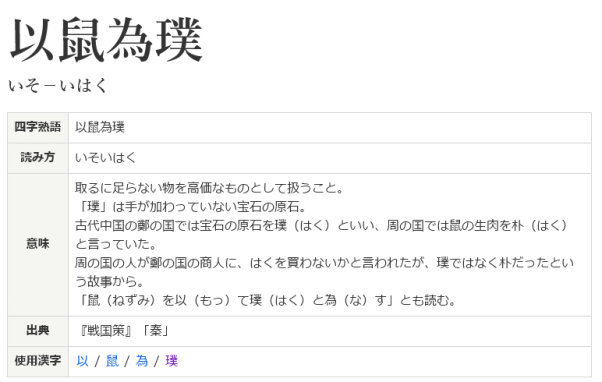
以鼠為璞(いそいはく)
鄭の人が「璞」という玉を買おうとしたら、周の人が「璞」というネズミ肉を渡したという故事から。

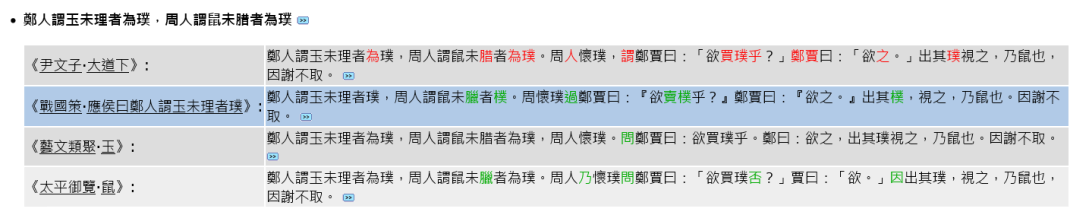
辞典オンでは周の方を「朴」と記すが、原文は「樸」なんじゃ?
https://ctext.org/zhan-guo-ce/ying-hou-yue-zheng-ren-wei/zh

他の本の同じ話では全て「璞」。
https://ctext.org/text.pl?node=49650&if=gb&show=parallel

이서위박(以鼠爲璞)
정(鄭) 사람이 璞이라는 옥을 사려 했더니 주(周) 사람이 璞이라는 쥐고기를 내줬다는 고사.

https://yoji.jitenon.jp/yojim/6332 에서는 璞이 아닌 朴을 줬다 하며 출전은 《전국책》인데 원문에서는 樸. https://ctext.org/zhan-guo-ce/ying-hou-yue-zheng-ren-wei/zh

다른 책 같은 내용에서는 璞.
https://ctext.org/text.pl?node=49650&if=gb&show=parallel