
José A. Alonso
@Jose_A_Alonso@mathstodon.xyz
A simple switch makes code differentiable. ~ Dan Piponi (sigfpe). https://blog.sigfpe.com/2026/04/a-simple-switch-makes-code.html #Haskell #FunctionalProgramming
@Jose_A_Alonso@mathstodon.xyz
A simple switch makes code differentiable. ~ Dan Piponi (sigfpe). https://blog.sigfpe.com/2026/04/a-simple-switch-makes-code.html #Haskell #FunctionalProgramming

@haskell@fosstodon.org
Any appetite in the crowd for "A CTO's Guide to Adopting #Haskell"? If so, there would be things like:
* Observability
* Domain Design
* Just Enough Haskell To Be Dangerous™
* Library recommendations for your HTTP/gRPC/DB needs
* SBOM
What else would you like to see?
@haskell@fosstodon.org
Anyone knows a good Machine Yearning library in #Haskell?

@lobsters@mastodon.social
What is a property? https://lobste.rs/s/ogz2ro #haskell #plt
https://alperenkeles.com/posts/what-is-a-property/
@lobsters@mastodon.social
What is a property? https://lobste.rs/s/ogz2ro #haskell #plt
https://alperenkeles.com/posts/what-is-a-property/
@lobsters@mastodon.social
What is a property? https://lobste.rs/s/ogz2ro #haskell #plt
https://alperenkeles.com/posts/what-is-a-property/

@meejah@mastodon.social · Reply to David Reed's post
@aoristdual yeah .. on the flip side, the documentation is really good in general and the compiler gives very good hints and error messages (in general).
I don't think I would have succeeded at any #Rust (or #Haskell) learning without IDE support -- these languages are what made me make LSP work correctly, finally :)
@Jose_A_Alonso@mathstodon.xyz
Type-level programming is still programming. ~ Michael Chavinda. https://mchav.github.io/type-level-programming-is-still-programming/ #Haskell #FunctionalProgramming
@Jose_A_Alonso@mathstodon.xyz
Howl (Haskell Open Wolfram Language interpreter); an implementation of a microscopic subset of the Wolfram Language (which powers Mathematica), in Haskell. ~ David Simmons-Duffin. https://github.com/davidsd/howl #Haskell #FunctionalProgramming

@abnv@fantastic.earth
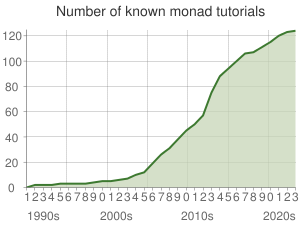
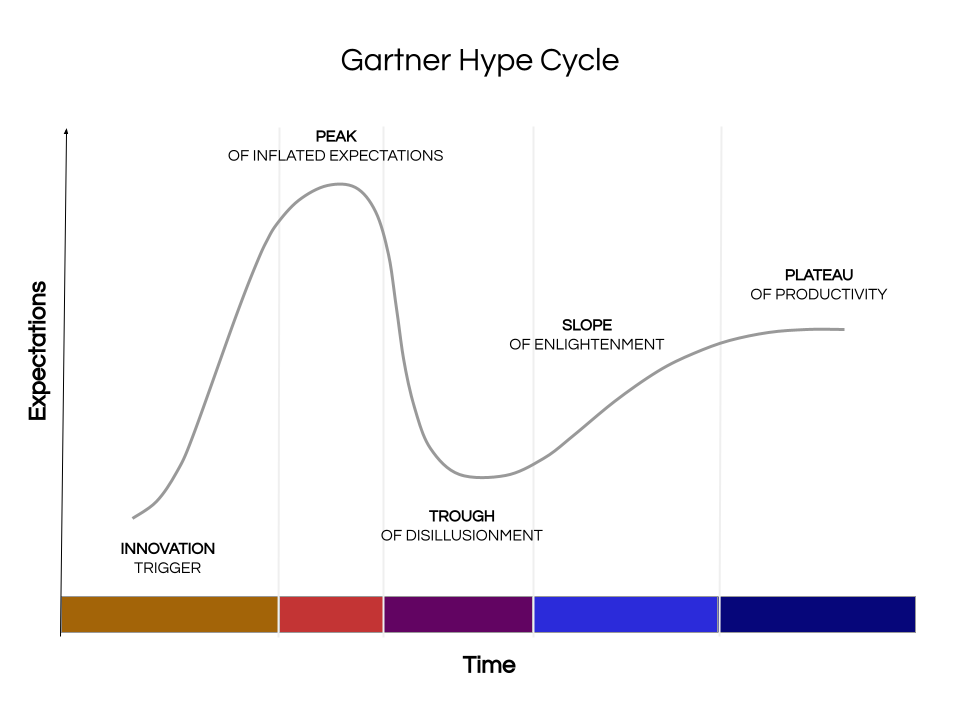
Comparing the chart of #Monad tutorials by year[1] with the Gartner hype cycle graph, it seems like we are almost at the Peak of Inflated Expectations phase now.
[1]: From the list of Monad tutorials (https://wiki.haskell.org/Monad_tutorials_timeline).
In my lifetime, I hope to see the Slope of Enlightenment phase when people stop asking what a Monad is, and the further Plateau of Productivity phase when everyone knows what it is.
@abnv@fantastic.earth · Reply to Abhinav 🌏's post
I finished Make A #Lisp in C++20 in about 2600 lines of code. I learned a lot about modern #CPP and managed to write the whole #interpreter without writing a single C-style macro or pointer arithmetic or type casting.
Compared to my usual choice #Haskell, C++ is way more verbose. I feel I can write the same interpreter in (idiomatic) Haskell in less than 800 LOCs. But it’ll probably be much slower.
Some time later in the year, I want to attempt writing a compiler for MAL in Haskell via QBE.
@abnv@fantastic.earth
I wrote the third part of my #blog post series: “Implementing Co, a Small Language With Coroutines #3: Adding #Coroutines”. https://abhinavsarkar.net/posts/implementing-co-3/
Reply to this toot to post comments on the article.
#programming #programminglanguages #plt #compilers #haskell #concurrency

@michabbb@vivaldi.net · Reply to michabbb's post
🚀 Performance on a completely different level:
Written in #Haskell with the Warp HTTP server. JSON gets serialized directly in SQL. Connection pooling via Hasql. Subsecond response times at 2000 req/sec — even on free tier hosting.
🔐 Security is built in, not bolted on:
Auth runs via JWT. Authorization is controlled directly in the database through roles. One single declarative source of truth for security. The server assumes the identity of the authenticated user.

@jaror@social.edu.nl
Might #GHC 9.14 be the first release that does not break anything (except for bounds bumps)? If you find anything, report it here:
https://discourse.haskell.org/t/was-any-breakage-caused-by-9-14/13902?u=jaror
@jaror@social.edu.nl
Might #GHC 9.14 be the first release that does not break anything (except for bounds bumps)? If you find anything, report it here:
https://discourse.haskell.org/t/was-any-breakage-caused-by-9-14/13902?u=jaror
@abnv@fantastic.earth
I wrote the fifth part of my #blog series “Implementing Co, a small programming language with #coroutines”. This time, we add support for sleep in #Co for time-based executions. https://abhinavsarkar.net/posts/implementing-co-5/
#Programming #PLT #ProgrammingLanguages #Compilers #Haskell #concurrency

@DiazCarrete@hachyderm.io
Rethinking Typed Template Haskell https://gitlab.haskell.org/ghc/ghc/-/wikis/Rethinking-TTH https://discourse.haskell.org/t/ghc-community-update-march-2026/13870
@haskell@fosstodon.org
GHC community update March 2026
by @mangoiv
https://discourse.haskell.org/t/ghc-community-update-march-2026/13870

@cfp@social.callingallpapers.com
24 hours until the CfP for "Lambda World" closes: https://confeti.app/events/lambda-world-2026

@sushee@ohai.social
some wise words about operations and reliability in this #haskell https://blog.haskell.org/a-couple-million-lines-of-haskell/ article which basically isn't even really about haskell
(it's really good you know the stuff we liked before and then bookmarked it even)

@hackuador@functional.cafe
@hackuador@functional.cafe
@sushee@ohai.social
some wise words about operations and reliability in this #haskell https://blog.haskell.org/a-couple-million-lines-of-haskell/ article which basically isn't even really about haskell
(it's really good you know the stuff we liked before and then bookmarked it even)
@cfp@social.callingallpapers.com
24 hours until the CfP for "Lambda World" closes: https://confeti.app/events/lambda-world-2026
@haskell@fosstodon.org
The editors of the #Haskell Blog are happy to announce a new series of articles called "Haskellers from the trenches", where we invite experienced engineers to talk about their subjects of expertise, best practices, and production tales.
Our first guest is @iankduncan.com with "A Couple Million Lines of Haskell: Production Engineering at Mercury"
@haskell@fosstodon.org
GHC Proposal 744 "Branch weight support" by @iankduncan.com is looking for feedback! Manually annotating the likelyhood of a branch helps the compiler with code layout and optimisations.
@abnv@fantastic.earth
I'm writing a series of blog posts, in which I write a #bytecode #compiler and a #virtualMachine for arithmetic in #Haskell. We explore the following topics in the series:
- Parsing arithmetic expressions to ASTs.
- Compiling ASTs to bytecode.
- Interpreting ASTs.
- Efficiently executing bytecode in a VM.
- Disassembling bytecode and decompiling opcodes for debugging and testing.
- Unit testing and property-based testing for our compiler and VM.
- Benchmarking our code to see how the different passes perform.
- All the while keeping an eye on performance.
The second post of the series that focuses on writing the #compiler is now out: https://abhinavsarkar.net/posts/arithmetic-bytecode-vm-compiler
@abnv@fantastic.earth
I wrote a note about implementing A* #algorithm in #Haskell https://notes.abhinavsarkar.net/2022/astar
#programming

@DiazCarrete@hachyderm.io
"Compiler and runtime support for continuation marks" (PLDI 2020) https://dl.acm.org/doi/10.1145/3385412.3385981
"Continuation marks enable dynamic binding and context inspection in a language with proper handling of tail calls and first-class, multi-prompt, delimited continuations."
GHC proposal: "scoped thread-locals" https://github.com/ghc-proposals/ghc-proposals/pull/751
"efficient storage and lookup for immutable context
attached to the current Haskell thread, which is inherited by child threads."
@hackuador@functional.cafe
Added a new recipe to my #Hakyll grimoire: https://frasertweedale.github.io/blog-fp/posts/2026-03-28-hakyll-pages-from-haskell-source.html #Haskell
@hackuador@functional.cafe
Added a new recipe to my #Hakyll grimoire: https://frasertweedale.github.io/blog-fp/posts/2026-03-28-hakyll-pages-from-haskell-source.html #Haskell
@haskell@fosstodon.org
The Glorious Glasgow #Haskell Compiler version 9.12.4 is now available! This 4th patch release fixes critical codegen regression, crashes and brings improved backtrace supports.
See the release notes https://downloads.haskell.org/~ghc/9.12.4/docs/users_guide/9.12.4-notes.html
@hackuador@functional.cafe
RE: https://functional.cafe/@hackuador/116282882755691464
Two more sleeps until the first #BFPG Hack Day of 2026! See yas there, curious minds!
#FP #Haskell #OCaml #Idris #Gleam #Lean #Scala #Erlang #Elixir #FSharp #Clojure #Lisp #Agda #Rocq #Rust #Scheme #Racket
@hackuador@functional.cafe
Functional programmers and #FP curious people in Brisbane: don't miss #BFPG Hack Day this Saturday 28 March at UQ: https://luma.com/uu28az9h

@shanecelis@mastodon.gamedev.place

@Jose_A_Alonso@mathstodon.xyz
@shanecelis@mastodon.gamedev.place
@shanecelis@mastodon.gamedev.place
@abnv@fantastic.earth
I wrote the fourth part of my #blog series “Implementing Co, a small programming language with #coroutines”. And this time, we add support for channels in #Co for inter-coroutine communication. https://abhinavsarkar.net/posts/implementing-co-4/
#Programming #PLT #ProgrammingLanguages #Compilers #Haskell #concurrency
@shanecelis@mastodon.gamedev.place
@shanecelis@mastodon.gamedev.place
@Jose_A_Alonso@mathstodon.xyz
Liberator: A drag-and-drop visual programming environment for Haskell. ~ Miles Berry. https://github.com/milesberry/liberator #Haskell #FunctionalProgramming

@robinp@mastodon.social
Guys, I realized I was doing #Haskell development stone-age style.
You _need_ to try this, these new tools are absolute game-changers, unlocking 2x to 10x productivity.
I know this is not a popular opinion, but look, we need to keep pace with the changes of times. It might feel hard at first, or at least feel alien, but, we need to part from our old, sluggish, slow ways.
So, enable the DuplicateRecordFields and OverloadedRecordDot extensions, now!
@jaror@social.edu.nl
Packages like `text` reach into the unstable bowels of #GHC to avoid allocating intermediate structures when reading IO.
But it is possible to do fusible lazy IO:
```
produce :: IO [Char]
produce = IO $ \s0 ->
(# s0 , build $ \c n ->
let go s = case runIO getChar s of
(# s' , x #) -> c x (go s')
in go s0
#)
```
Perhaps GHC could expose something like that and the text package could use it.
@jaror@social.edu.nl
Packages like `text` reach into the unstable bowels of #GHC to avoid allocating intermediate structures when reading IO.
But it is possible to do fusible lazy IO:
```
produce :: IO [Char]
produce = IO $ \s0 ->
(# s0 , build $ \c n ->
let go s = case runIO getChar s of
(# s' , x #) -> c x (go s')
in go s0
#)
```
Perhaps GHC could expose something like that and the text package could use it.

@poseidon@ecoevo.social
New qjanno release v1.0.1.0! Please see the changelog here: https://github.com/poseidon-framework/qjanno/releases/tag/v1.0.1.0 #aDNA #OpenData #Haskell
@poseidon@ecoevo.social
New qjanno release v1.0.1.0! Please see the changelog here: https://github.com/poseidon-framework/qjanno/releases/tag/v1.0.1.0 #aDNA #OpenData #Haskell
@haskell@fosstodon.org
A blog post by Brandon "jberryman" Simmons “Linking Smaller Haskell Binaries” (2023) https://brandon.si/code/linking-smaller-haskell-binaries/
@haskell@fosstodon.org
Today is a great day for some major news!
DataFrame v1.0.0.0 has been officially released! Step up your exploratory data analysis in #Haskell with Typed data frames, direct connection to HuggingFace data sets, and Python integration through Apache Arrow.
@abnv@fantastic.earth
@abnv@fantastic.earth

@6d03@mathstodon.xyz
Wot?
```
• Couldn't match expected type ‘bytestring-0.11.5.3:Data.ByteString.Internal.Type.ByteString’
with actual type ‘bytestring-0.11.5.3:Data.ByteString.Lazy.Internal.ByteString’
```
@abnv@fantastic.earth
@abnv@fantastic.earth
Wrote some #CSS in #Haskell as an #EDSL using the Clay library. Gotta say, writing type-safe CSS is a really nice experience. #programming
```haskell
pageStyle = do
body ? do
header ? do
textAlign center
main_ ** article ? do
small ? do
fontSize $ em 0.5
marginLeft $ em 0.3
".meta" ? do
display flex
justifyContent spaceBetween
ul # ".tags" ? do
paddingLeft $ em 0
li ? do
display inlineBlock
backgroundColor $ rgb 230 230 250
color $ rgb 34 34 34
margin (em 0.2) (em 0.1) (em 0.2) (em 0.1)
padding (em 0.1) (em 0.5) (em 0.1) (em 0.5)
whiteSpace nowrap
fontSizeCustom smaller
query CM.screen [CM.prefersColorScheme CM.dark] $ do
backgroundColor $ rgb 72 57 165
color $ rgb 217 216 220
footer ? do
textAlign center
fontSizeCustom smaller
borderTop 1 dashed black
```
@abnv@fantastic.earth
I ported @mattmight’s #CPS conversion code (https://matt.might.net/articles/cps-conversion/) to #Haskell and after some fighting with the type system, it worked! To make the #interpreters work with the Cont monad, I had to remove recursive lets and hence, functions being able to call themselves recursively, but the rest works fine.
The attached images show the conversion of the Fibonacci function into the CPS version.
![Fibonacci function in Lisp:
(let
([fib
(λ (n)
(let
([fib'
(λ (n f)
(if (= n 0)
0
(if (= n 1)
1
(+ (f (- n 1) f) (f (- n 2) f)))))])
(fib' n fib')))])
(fib 10))](https://fantastic.earth/system/media_attachments/files/110/501/915/416/243/442/original/cfe38bc6dbea34c8.png)
![CPS version of Fibonacci function in Lisp:
(let
([fib
(λ (n k0)
(let
([fib'
(λ (n f k1)
((λ (k2)
((λ (v3)
(if v3
(k2 0)
((λ (k4)
((λ (v5)
(if v5
(k4 1)
((λ (v9)
(f v9 f
(λ (v6)
((λ (v8)
(f v8 f
(λ (v7)
(k4 (+ v6 v7)))))
(- n 2)))))
(- n 1))))
(= n 1)))
k2)))
(= n 0)))
k1))])
(fib' n fib' k0)))])
(fib 10 return))](https://fantastic.earth/system/media_attachments/files/110/501/915/556/844/583/original/adad442b1733a421.png)
@hackuador@functional.cafe
@abnv@fantastic.earth
In an alternative timeline where #FunctionalProgramming is the norm instead of Object-oriented programming, and #Haskell is the most popular #ProgrammingLanguage instead of #Java, there is a list of tutorials trying to explain what Objects are to programmers in terms of FP concepts, the most popular of which is, “Objects are Comonads”.
However, we don't live in that timeline, so we'll have to be content with the inverse article, “Comonads are Objects” https://www.haskellforall.com/2013/02/you-could-have-invented-comonads.html .
@abnv@fantastic.earth
I'm starting a series of blog posts, in which I write a #bytecode #compiler and a #virtualMachine for arithmetic in #Haskell. We explore the following topics in the series:
- Parsing arithmetic expressions to ASTs.
- Compiling ASTs to bytecode.
- Interpreting ASTs.
- Efficiently executing bytecode in a VM.
- Disassembling bytecode and decompiling opcodes for debugging and testing.
- Unit testing and property-based testing for our compiler and VM.
- Benchmarking our code to see how the different passes perform.
- All the while keeping an eye on performance.
The first post of the series that focuses on writing the #parser is now out: https://abhinavsarkar.net/posts/arithmetic-bytecode-vm-parser/
@abnv@fantastic.earth
I've created a PR in #Nixkell, a simple #Nix #Haskell setup framework, to add support for easy building of statically-linked executables (https://github.com/pwm/nixkell/pull/50). I'd appreciate it if any Nixkell users gives it a try for their projects. I've been using this code for a couple of my projects, and it works fine for me, but I'd like to have more working examples.
@abnv@fantastic.earth
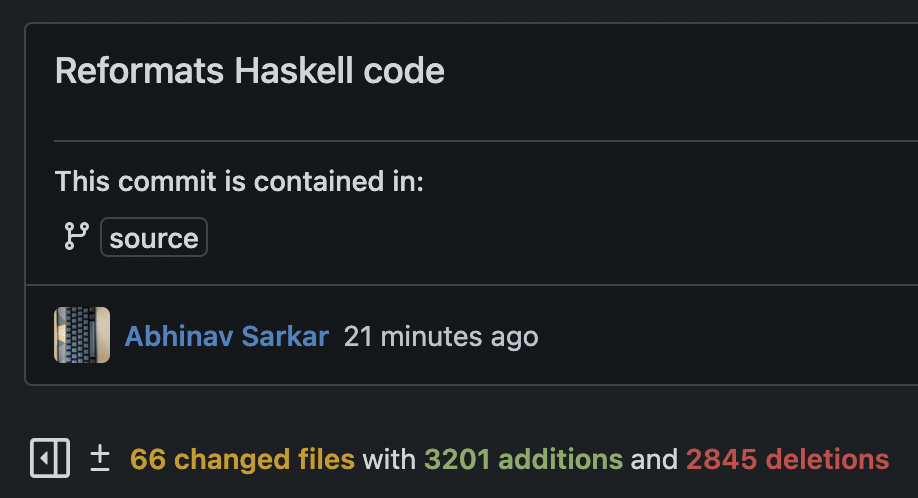
After seven years of meticulously formatting and aligning all the source code of my #Haskell static site generator by hand, I finally moved to an auto-formatter today (Ormolu).

@artem@functional.cafe
#haskell ghcid supports cabal scripts now (3 years after I filed the feature request! :-)) 🎉
@artem@functional.cafe
#haskell ghcid supports cabal scripts now (3 years after I filed the feature request! :-)) 🎉
@abnv@fantastic.earth · Reply to Abhinav 🌏's post
And of course, no disk defragmentation solution is complete without a proper visualization. #Haskell #adventofcode #programming #visualization

@haskell@fosstodon.org
 GHC 9.12.4-rc1 is available for testing! Please try it out on your projects and give feedback! It is available today on the GHCup pre-release channel. See the installation instructions: https://discourse.haskell.org/t/ghc-9-12-4-rc1-is-now-available/13786
@abnv@fantastic.earth
Every year I try to solve some problems from the #AdventOfCode competition in a not straightforward way. This year I solved the day 19 problem “Aplenty” by compiling the problem input to an executable file.
A new #blog post: https://abhinavsarkar.net/posts/compiling-aoc23-aplenty/
@robinp@mastodon.social
Guys, I realized I was doing #Haskell development stone-age style.
You _need_ to try this, these new tools are absolute game-changers, unlocking 2x to 10x productivity.
I know this is not a popular opinion, but look, we need to keep pace with the changes of times. It might feel hard at first, or at least feel alien, but, we need to part from our old, sluggish, slow ways.
So, enable the DuplicateRecordFields and OverloadedRecordDot extensions, now!
@abnv@fantastic.earth
@robinp@mastodon.social
Guys, I realized I was doing #Haskell development stone-age style.
You _need_ to try this, these new tools are absolute game-changers, unlocking 2x to 10x productivity.
I know this is not a popular opinion, but look, we need to keep pace with the changes of times. It might feel hard at first, or at least feel alien, but, we need to part from our old, sluggish, slow ways.
So, enable the DuplicateRecordFields and OverloadedRecordDot extensions, now!
@abnv@fantastic.earth
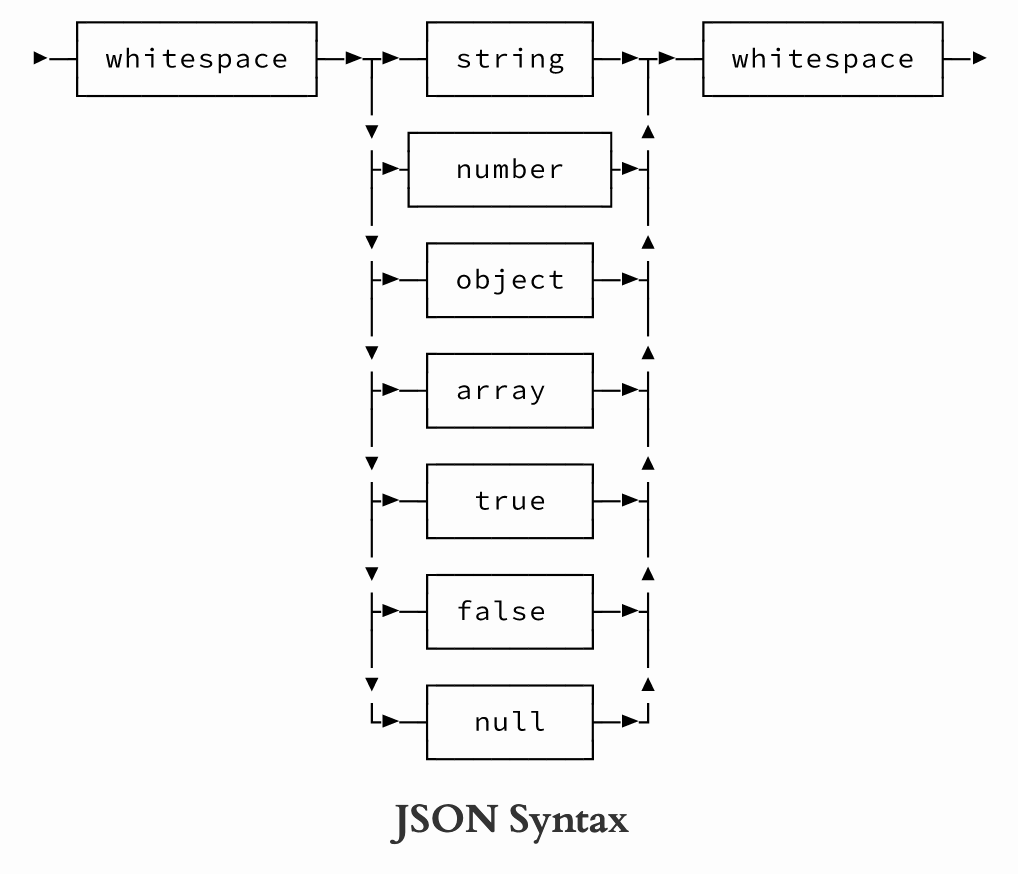
JSON is probably the most used standard file format for storing and transmitting data on the Internet in recent times. It has a simple syntax with only four scalar data types and two composite data types. So, writing a parser for #JSON is a great exercise for learning the basics of parsing.
That's exactly what I did: I wrote a JSON #parser from scratch in #Haskell. Read my #blog post to learn about basics of parsing, nuances of the JSON syntax, and parser combinators and property-based #testing in Haskell: https://abhinavsarkar.net/posts/json-parsing-from-scratch-in-haskell/
@Jose_A_Alonso@mathstodon.xyz
@Jose_A_Alonso@mathstodon.xyz
The floor is magma. ~ Alexandre Esteves. https://github.com/alexfmpe/semantic-satiation/blob/main/posts/003-the-floor-is-magma.md #Haskell #FunctionalProgramming
@abnv@fantastic.earth
Writing an #interpreter for #Brainfuck is almost a rite of passage for any programming language implementer, and it’s my turn now. In this post, I write not one but four Brainfuck #interpreters in #Haskell: https://abhinavsarkar.net/posts/brainfuck-interpreter/
Please boost for reach. If you have any questions or comments, please reply to this post.
@Jose_A_Alonso@mathstodon.xyz
Category theory for programming. ~ Benedikt Ahrens, Kobe Wullaert. https://arxiv.org/abs/2209.01259v1 #CategoryTheory #Haskell #LeanProver #FunctionalProgramming
@abnv@fantastic.earth
Do you want to learn how to create beautiful and useful #REPL for your #ProgrammingLanguages written in #Haskell? I wrote a Haskeline tutorial just for you: https://abhinavsarkar.net/posts/repling-with-haskeline/
#blog #programming
@abnv@fantastic.earth
Type-level literals + GADTs = Type-safe AST representation for #nanopass #compilers in #Haskell? 🤔
@abnv@fantastic.earth
After a gap of 1.5 years since the last part, I have finally finished writing the third part of my post series on implementing Co. Planning to publish it this weekend. #haskell #programminglanguages #blog

@ramin_hal9001@fe.disroot.org · Reply to Hippo 🍉's post
@badrihippo modern frameworks like React, Vue, and Van.js are all very similar, but I have not seen a consistent name for this family of frameworks. I have heard it called “The Elm Architecture,” because they are loosely based on how the Elm programming language originally did GUI programming in the browser. I have also heard it called the Model-View-Update paradigm. But most people just call it “React-like” or “Reactive Programming” because they are all similar to the very popular “React.js” framework.
Note that this should not be confused with Functional Reactive Programming (FRP), although the two are not completely different. As I understand it, React-like GUIs and FRP can both be implemented on top of a more powerful and more general computation model called “propagators” (here is the PDF of the original Propagators paper).
@dthompson wrote a really good blog post about FRP, propagators, and React-like frameworks.
I hope that helps, but I am not as well-versed in the theory of this stuff as I should be.
Oh, and I should say, before React-like took over the world wide web, GUI programming was mostly intertwined with Object Oriented Programming and design, so a good place to start might be to read up on Smalltalk OOP and GUI design.
#tech #software #GUI #ReactiveProgramming #FRP #Scheme #Haskell #SchemeLang #Propagators #ElmArchitecture #ReactJS #Smalltalk #OOP #ObjectOriented

@agentultra@types.pl
New blog post on adding Lua scripting support to Haskell applications: https://agentultra.com/blog/scripting-haskell-applications-with-lua/
@Jose_A_Alonso@mathstodon.xyz
Readings shared March 04, 2026. https://jaalonso.github.io/vestigium/posts/2026/03/05-readings_shared_02-04-26 #AI #AI4Math #CoqProver #FunctionalProgramming #Haskell #ITP #LeanProver #Math #RocqProver
@agentultra@types.pl
New blog post on adding Lua scripting support to Haskell applications: https://agentultra.com/blog/scripting-haskell-applications-with-lua/
@Jose_A_Alonso@mathstodon.xyz
Monuses and heaps. ~ Donnacha Oisín Kidney. https://doisinkidney.com/posts/2026-03-03-monus-heaps.html #Haskell #FunctionalProgramming
@haskell@fosstodon.org
Layoutz! Zero-dep Elm-style TUI’s for #Haskell - now w/ terminal plots & more
@abnv@fantastic.earth
I wrote a new note: "Reading Time Estimates for #Pandoc Based Blog Generators" https://notes.abhinavsarkar.net/2025/pandoc-reading-time

@kosmikus@functional.cafe
Please consider applying for the #Haskell Foundation Board of Directors: https://discourse.haskell.org/t/call-for-applications-to-the-haskell-foundation-board-of-directors/13694
Deadline is one week from now.
@haskell@fosstodon.org
Notorious mad lad
@iankduncan.com has opened a GHC Proposal to add hints to guide branch prediction! https://github.com/ghc-proposals/ghc-proposals/pull/744
This may be key to better register allocation and code layout.

@rudi@chaos.social · Reply to pandoc's post
@haskell@fosstodon.org
It's there folks! The results of the State of #Haskell 2025 survey have been published
https://discourse.haskell.org/t/state-of-haskell-2025-results/13755

@m4lvin@goto.fiets.pizza
I always enjoy giving this lecture 😃 #haskell

@abnv@fantastic.earth
Over the weekend, I spent a couple of hours #reading through Patrick Thomson's series of blog posts on Recursion Schemes with #Haskell https://blog.sumtypeofway.com/posts/recursion-schemes-part-6.html, and it has been most helpful in understanding the topic. I have tried reading the docs of the eponymous package before, to no avail. That's why I love reading (and writing) #programming tutorials.
I downloaded the posts and converted them to an e-book for offline reading. It was over a hundred pages but it was so engrossing, I couldn't put it down! There are not many blog posts that I could say the same about. Definitely a recommended read if you are interested in #RecursionSchemes and #FunctionalProgramming.
@abnv@fantastic.earth
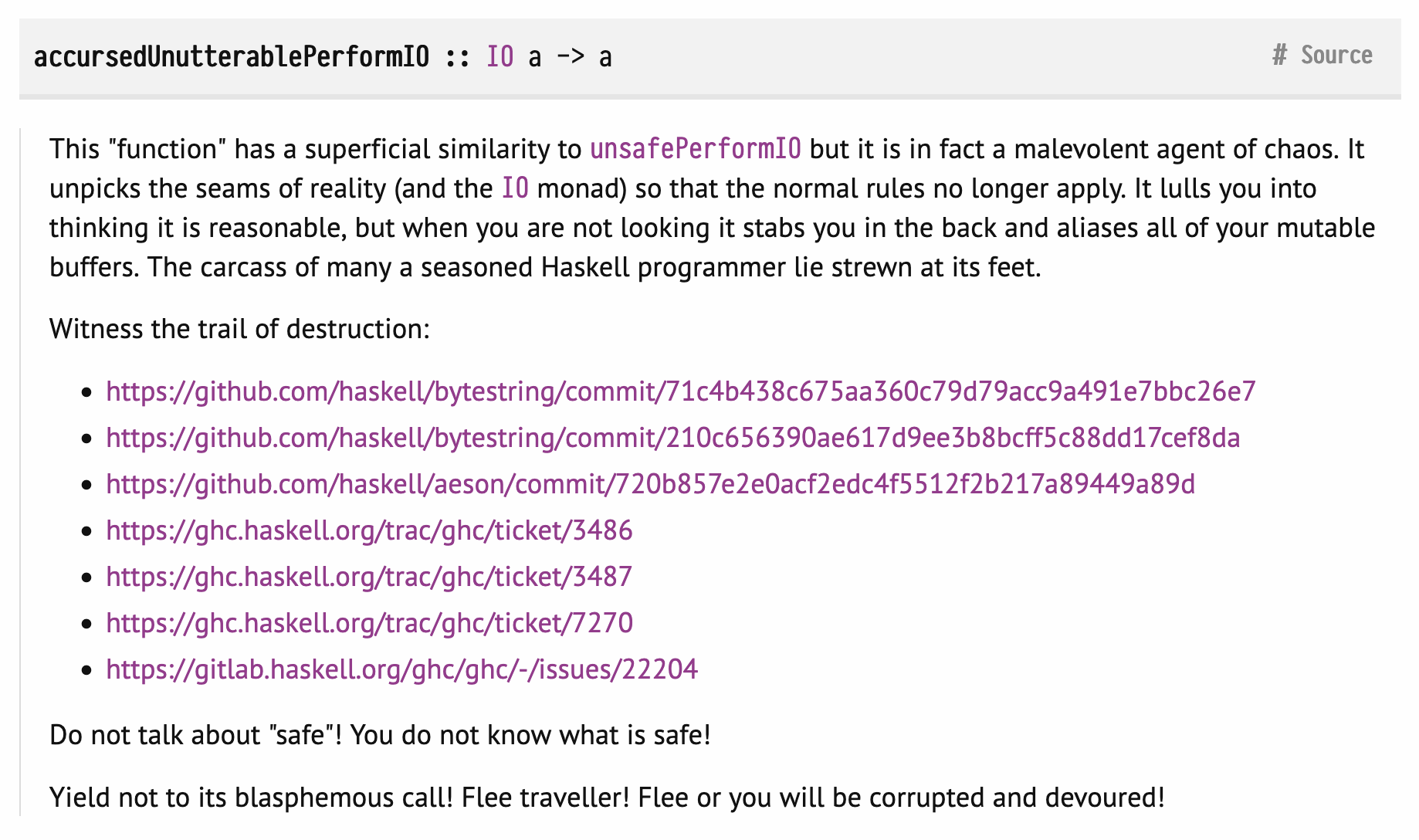
It is a good day to unleash the agent of chaos. #Haskell #programming
@abnv@fantastic.earth
| Option | Voters |
|---|---|
| Parsec | 2 (25%) |
| ReadP | 0 (0%) |
| Attoparsec | 1 (13%) |
| Megaparsec | 4 (50%) |
| Alex + Happy | 0 (0%) |
| Flatparse | 1 (13%) |
| Earley | 0 (0%) |
| Parsley | 0 (0%) |
| Streamly | 0 (0%) |
| Polyparse | 0 (0%) |
@haskell@fosstodon.org
Brillo 2.0 - Production ready 2D graphics
https://discourse.haskell.org/t/brillo-2-0-production-ready-2d-graphics/13747

@pandoc@fosstodon.org
Pandoc is written in #Haskell (https://haskell.org), an advanced, purely functional programming language. It was chosen for its great parser support, which was ahead of its time when pandoc was born in 2006. The language is also uniquely suited for a long-lived project, as the strong typing helps tremendously to keep things maintainable.
#pandoc
@pandoc@fosstodon.org
Pandoc is written in #Haskell (https://haskell.org), an advanced, purely functional programming language. It was chosen for its great parser support, which was ahead of its time when pandoc was born in 2006. The language is also uniquely suited for a long-lived project, as the strong typing helps tremendously to keep things maintainable.
#pandoc
@Jose_A_Alonso@mathstodon.xyz
Readings shared February 24, 2026. https://jaalonso.github.io/vestigium/posts/2026/02/25-readings_shared_02-24-26 #AI4Math #ATP #Agda #CoqProver #FunctionalProgramming #Haskell #ITP #IsabelleHOL #LLMs #LeanProver #Math #Reasoning #Vampire
@abnv@fantastic.earth
Check out my series of #blog posts about writing a fast #Sudoku solver in #Haskell, starting with this post: https://abhinavsarkar.net/posts/fast-sudoku-solver-in-haskell-1/
Comments, boosts and likes appreciated.

@Jose_A_Alonso@mathstodon.xyz
Haskell meets Evariste. ~ Paulo R. Pereira, Jose N. Oliveira. https://arxiv.org/abs/2602.16809v1 #Haskell #FunctionalProgramming
@haskell@fosstodon.org
Exported for tests only: Precise control over API visibility with custom warnings
@haskell@fosstodon.org
New #Haskell Debugger Release: v0.12
https://discourse.haskell.org/t/new-haskell-debugger-release-v0-12/13732
@haskell@fosstodon.org
Sabela - A reactive Notebook for #Haskell by the #DataHaskell project
Announcement: https://discourse.haskell.org/t/ann-sabela-a-reactive-notebook-for-haskell/13728
Github Repository: https://github.com/DataHaskell/sabela
@haskell@fosstodon.org
Iced-hs, a #Haskell wrapper for the #Rust GUI library iced-rs, has been updated to iced 0.14.
Read more details at https://discourse.haskell.org/t/updated-iced-hs-to-iced-0-14/13715
@DiazCarrete@hachyderm.io
"the N+1 problem creeps back in through the cracks of composition"
https://www.iankduncan.com/engineering/2026-02-20-haskell-postgresql-without-suffering
@haskell@fosstodon.org
[ANN] kdl-hs 1.0.0 released with v2 support
kdl-hs is a parser for the #KDL configuration language, now compliant with the v2 standard.
https://discourse.haskell.org/t/ann-kdl-hs-1-0-0-released-with-v2-support/13712
@DiazCarrete@hachyderm.io
"the N+1 problem creeps back in through the cracks of composition"
https://www.iankduncan.com/engineering/2026-02-20-haskell-postgresql-without-suffering
@DiazCarrete@hachyderm.io
"If any CPS remains at runtime, the overheads are eye-watering"
https://www.reddit.com/r/haskell/comments/1raoz6m/comment/o6ml33l/
@abnv@fantastic.earth
I've written a series of blog posts, in which I write a #bytecode #compiler and a #virtualMachine for arithmetic in #Haskell. We explore the following topics in the series:
- Parsing arithmetic expressions to ASTs.
- Compiling ASTs to bytecode.
- Interpreting ASTs.
- Efficiently executing bytecode in a VM.
- Disassembling bytecode and decompiling opcodes for debugging and testing.
- Unit testing and property-based testing for our compiler and VM.
- Benchmarking our code to see how the different passes perform.
- All the while keeping an eye on performance.
The third and final post of the series that focuses on writing the virtual machine is now out: https://abhinavsarkar.net/posts/arithmetic-bytecode-vm/

@the@ultracrepidarian.mysteriar.ch
Why has no one written a Fediverse server in Haskell?
I would love to be wrong about this, obviously, but I've looked, and I can't find anything that speaks ActivityPub in Haskell.
Is Haskell just a bad language to use for something like this, and if so then why, or what's the reason if not that?
@lobsters@mastodon.social
Linking Smaller Haskell Binaries via @hongminhee https://lobste.rs/s/xeerdn #haskell
https://brandon.si/code/linking-smaller-haskell-binaries/
@Jose_A_Alonso@mathstodon.xyz
@Jose_A_Alonso@mathstodon.xyz
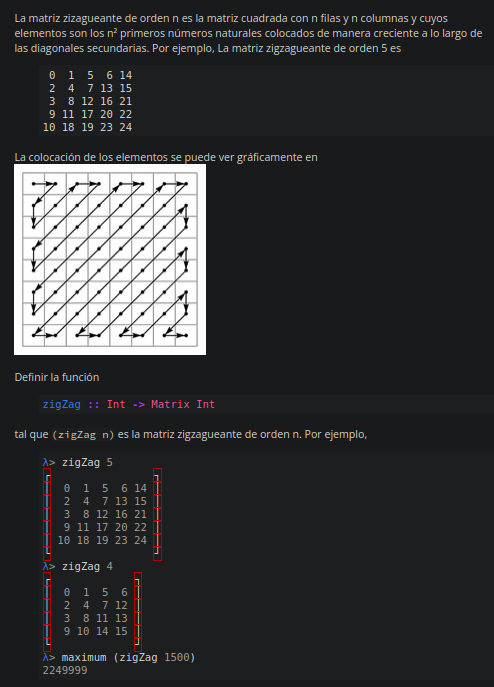
#Exercitium: Matriz zigzagueante. http://jaalonso.github.io/exercitium/posts/2015/02/24-matriz_zigzagueante/ #Haskell #FunctionalProgramming #Math
@Jose_A_Alonso@mathstodon.xyz
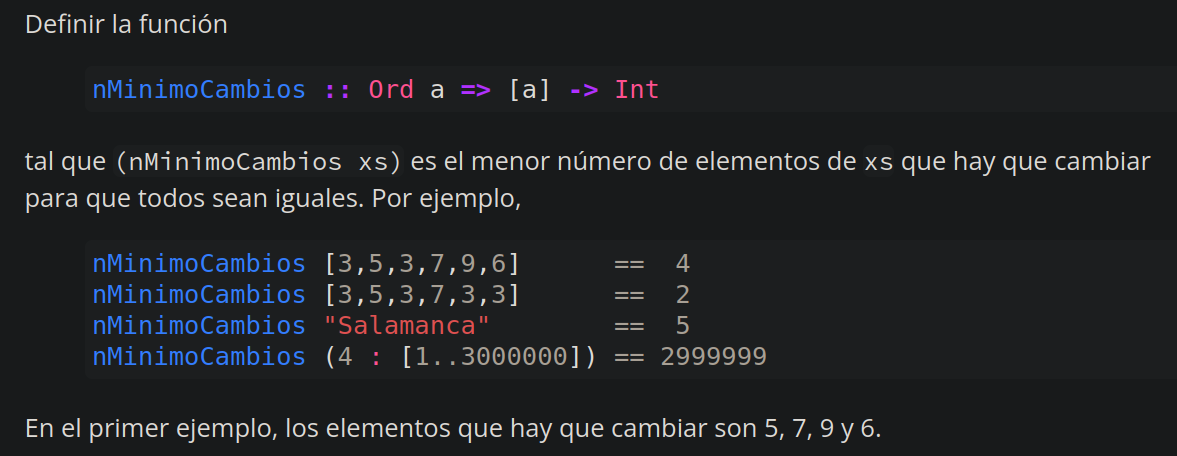
#Exercitium: Mínimo número de cambios para igualar una lista. https://jaalonso.github.io/exercitium/posts/2015/02/23-minimo_numero_de_cambios_para_igualar_una_lista/ #Haskell #FunctionalProgramming
@abnv@fantastic.earth
So, you've heard of the new hotness that is #Nix, for creating reproducible and isolated development environments, and want to use it for your new #Haskell project? But you are unclear about how to get started? Then this is the guide you are looking for: https://abhinavsarkar.net/posts/nix-for-haskell/


@patrick@hatoya.cafe
One Open-source Project Daily
A terminal interface for Tetris
https://github.com/samtay/tetris
#1ospd #opensource #brick #game #haskell #terminalgame #tetris #tui #vty
@patrick@hatoya.cafe
One Open-source Project Daily
A terminal interface for Tetris
https://github.com/samtay/tetris
#1ospd #opensource #brick #game #haskell #terminalgame #tetris #tui #vty
@abnv@fantastic.earth
#Haskell's documentation generation tool Haddock failed me so I wrote some regexes. Published new note: “Generating Standalone Haddock Docs for a Multi-package Haskell Project” https://notes.abhinavsarkar.net/2023/standalone-haddock
@Jose_A_Alonso@mathstodon.xyz
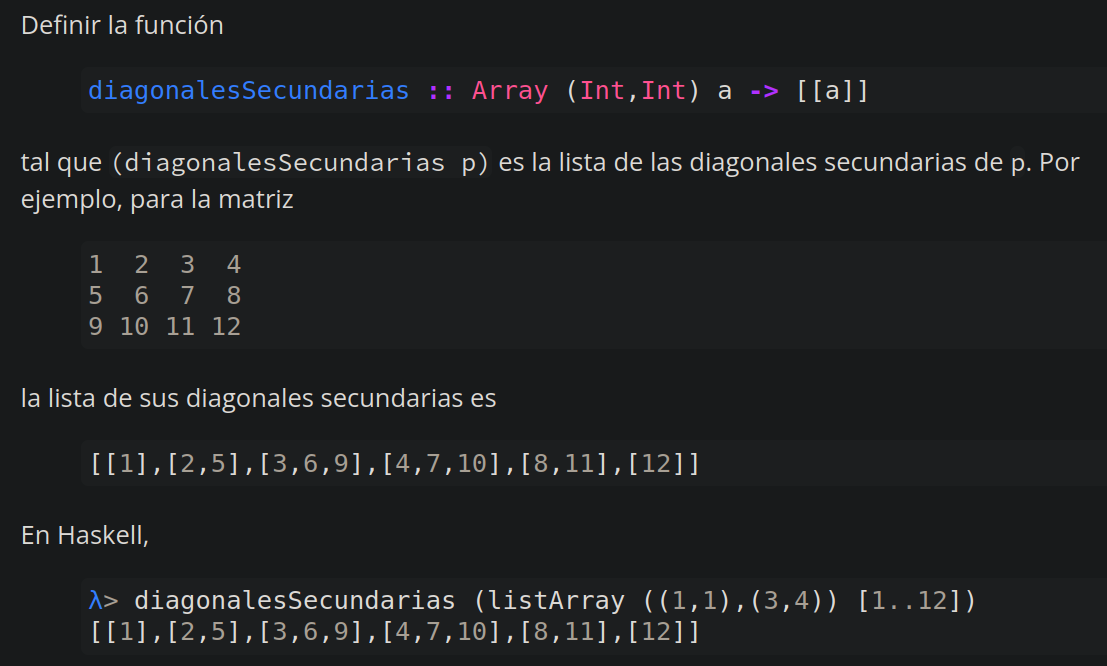
#Exercitium: Diagonales secundarias de una matriz. https://jaalonso.github.io/exercitium/posts/2015/02/20-diagonales_secundarias/ #Haskell #FunctionalProgramming #Math

@jnkrtech@treehouse.systems
I have an algebraic data type for an AST, which takes a type parameter for the type of expression that the AST holds. I’m writing a function which walks the AST, transforming certain nodes, but always keeping the types of the nodes the same. For example, I can provide this function a function for transforming identifiers (like for renaming them), but the transformer has to return another identifier. The outer structure of the AST stays the same. This is important because I only want to specify transformation functions for the “interesting” cases, and allow the majority of cases to use a default transformer which does nothing more than traverse down the node’s children.
What would you name such a thing? I wouldn’t call it “map” because it doesn’t change the type parameter. It’s not “fold” because it doesn’t have the ability to vary the return type at all. It might be a special case of some other morphism, which would be helpful, but I’m not seeing it.
@Jose_A_Alonso@mathstodon.xyz
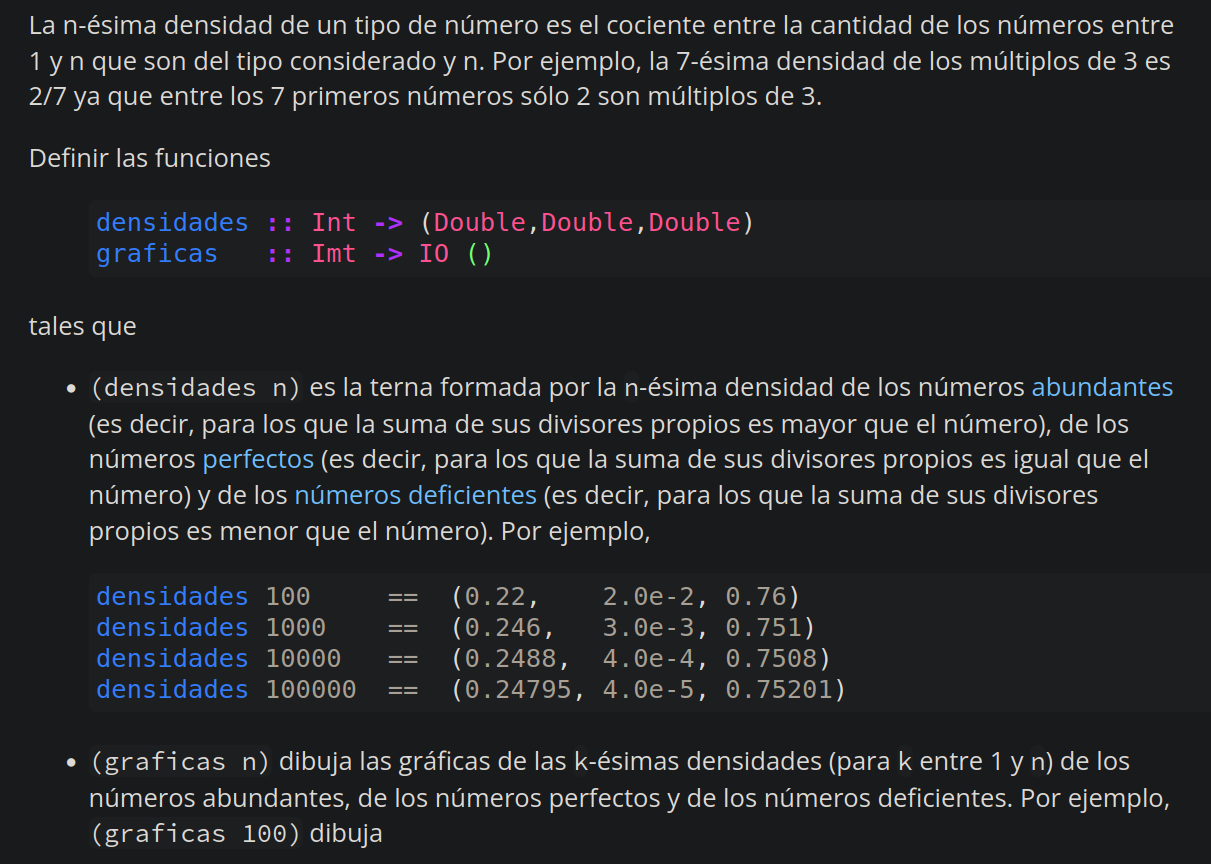
#Exercitium: Densidades de números abundantes, perfectos y deficientes. https://jaalonso.github.io/exercitium/posts/2015/02/19-densidad_de_numeros_abundantes/ #Haskell #FunctionalProgramming #Math
@Jose_A_Alonso@mathstodon.xyz
Readings shared February 14, 2026. https://jaalonso.github.io/vestigium/posts/2026/02/15-readings_shared_02-14-26 #AI4Math #Agda #Clojure #CoqProver #FunctionalProgramming #Haskell #ITP #LeanProver #Lisp #Logic #Math #Minlog #Prolog #RustLang
@Jose_A_Alonso@mathstodon.xyz
LISP, Prolog and evolution. ~ Sami Badawi. https://blog.samibadawi.com/2013/05/lisp-prolog-and-evolution.html #FunctionalProgramming #Lisp #Prolog #Haskell #Clojure
@Jose_A_Alonso@mathstodon.xyz
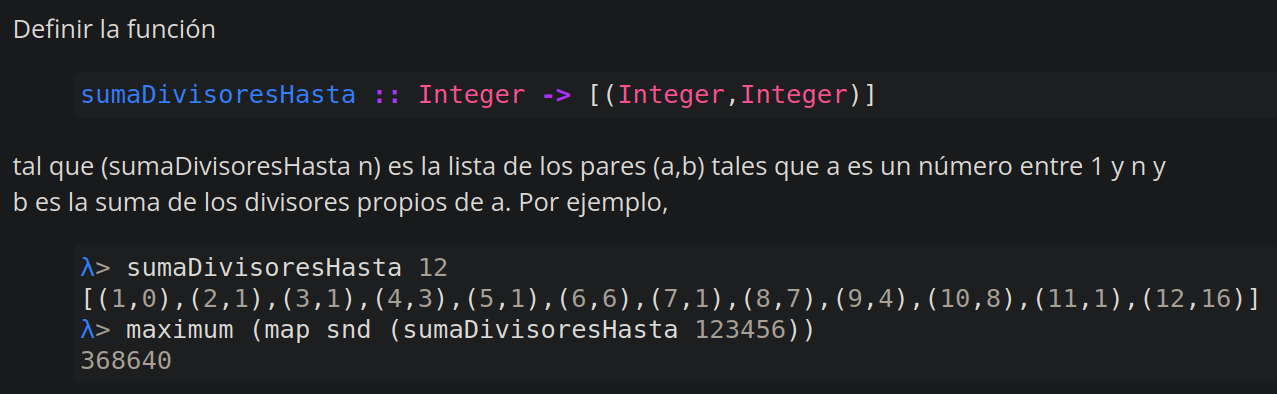
#Exercitium: Sumas de divisores propios. https://jaalonso.github.io/exercitium/posts/2015/02/18-sumas_de_divisores_propios/ #Haskell #FunctionalProgramming #Math
@Jose_A_Alonso@mathstodon.xyz
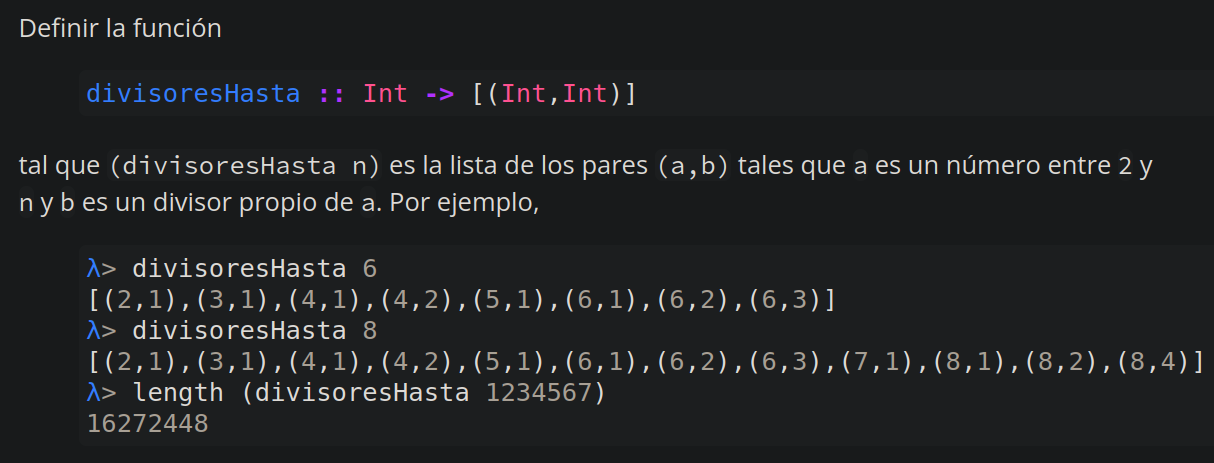
#Exercitium: Parejas de números y divisores. https://jaalonso.github.io/exercitium/posts/2015/02/17-parejas_de_numeros_y_divisores/ #Haskell #FunctionalProgramming #Math
@haskell@fosstodon.org
#AmeriHac 2026 retrospective by @jmct
https://discourse.haskell.org/t/amerihac-2026-retrospective/13682
@Jose_A_Alonso@mathstodon.xyz
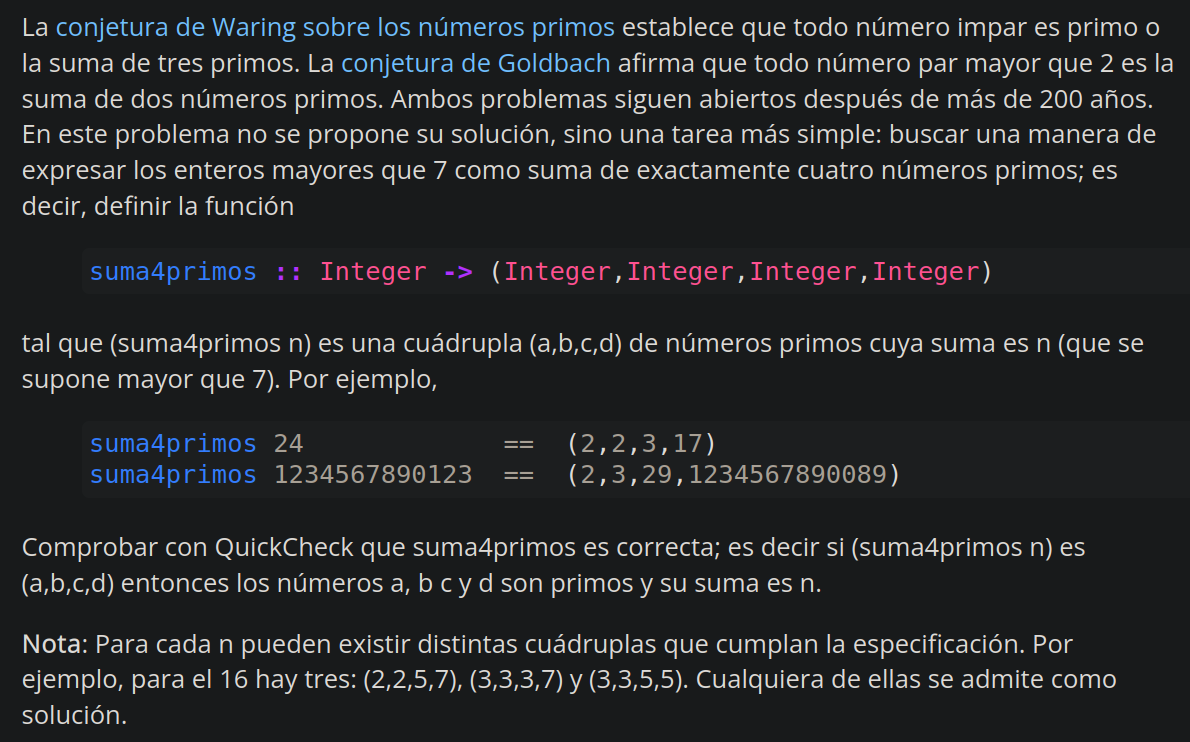
#Exercitium: Sumas de 4 primos. https://jaalonso.github.io/exercitium/posts/2015/02/16-sumas_de_4_primos/ #Haskell #FunctionalProgramming #Math
@Jose_A_Alonso@mathstodon.xyz
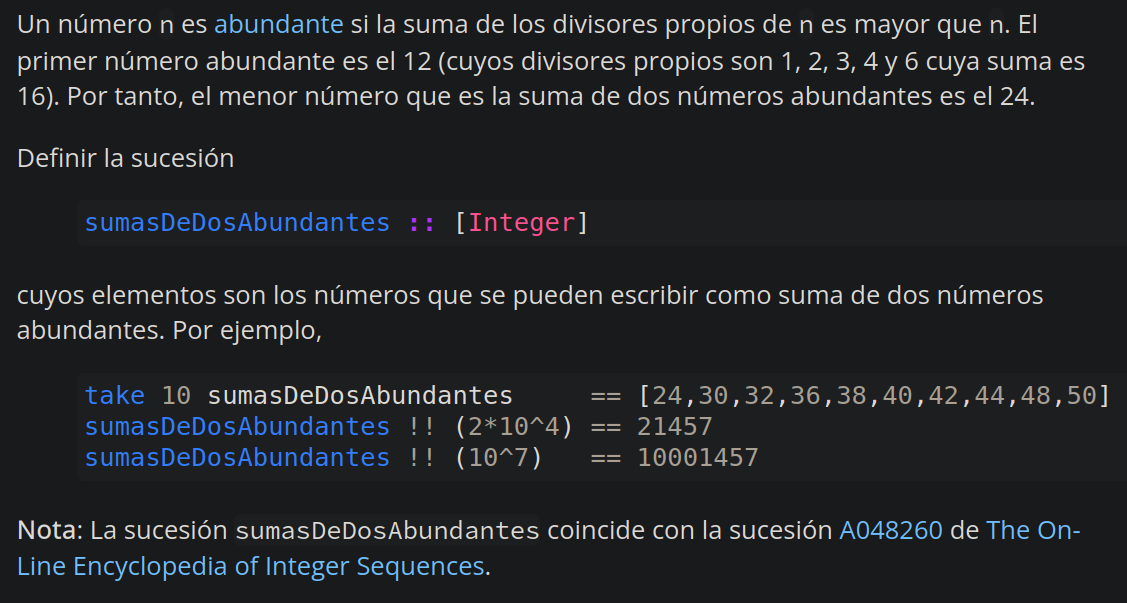
#Exercitium: Sucesión de sumas de dos números abundantes. https://jaalonso.github.io/exercitium/posts/2015/02/13-sumas_de_dos_abundantes/ #Haskell #FunctionalProgramming #Math
@haskell@fosstodon.org
“Well-Typed are delighted to announce a release preview of hs-bindgen, a tool for automatic Haskell binding generation from C header files”
Go try it out and give feedback!
@haskell@fosstodon.org
“Well-Typed are delighted to announce a release preview of hs-bindgen, a tool for automatic Haskell binding generation from C header files”
Go try it out and give feedback!

@hecate@merveilles.town
@haskell@fosstodon.org
“Well-Typed are delighted to announce a release preview of hs-bindgen, a tool for automatic Haskell binding generation from C header files”
Go try it out and give feedback!
@hecate@merveilles.town
@hackuador@functional.cafe · Reply to Fraser Tweedale's post
@hackuador@functional.cafe
@abnv@fantastic.earth
In my quest of solving #AdventOfCode problems in interesting ways, this time I solved the 2020 problem "Seating System" with comonads and stencils in #Haskell. Read my latest #blog post about it: https://abhinavsarkar.net/posts/solving-aoc20-seating-system/
@haskell@fosstodon.org

@zurihac@fosstodon.org
ZuriHac 2026 - Registrations are open!
ZuriHac is the biggest Haskell community event in the world: a completely free, three-day grassroots coding festival co-organized by the Zürich Friends of Haskell and the OST Eastern Switzerland University of Applied Science. It is not your standard conference with papers and presentations, but features fantastic keynotes, hands-on tracks, hacking on many of your favourite projects, and of course lots of socializing!
Register now: https://zureg.zfoh.ch/register
@Jose_A_Alonso@mathstodon.xyz
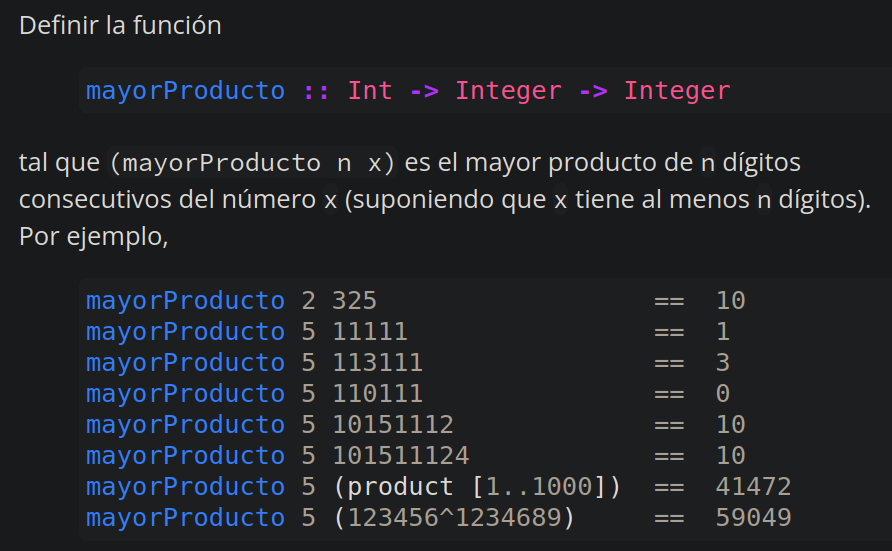
#Exercitium: Mayor producto de n dígitos consecutivos de un número. https://jaalonso.github.io/exercitium/posts/2015/02/12-mayor_producto_de_n_digitos_consecutivos_de_un_numero/ #Haskell #FunctionalProgramming #Math
@abnv@fantastic.earth
The tiny but complete #JSON #parser that I wrote in #Haskell years ago is now featured in the 200-and-change collection of programs by @dubroy: https://pdubroy.github.io/200andchange
@DiazCarrete@hachyderm.io
a lot of "it was traverse" (not complaining) but not enough "it was unfold"
@Jose_A_Alonso@mathstodon.xyz
Hello, Haskell: Getting started in 2026. ~ Lukasz Tymoszczuk. https://lukastymo.com/posts/025-hello-haskell-a-hands-on-lab-for-2026/ #Haskell #FunctionalProgramming
@Jose_A_Alonso@mathstodon.xyz
"Five-Point Haskell": Total depravity (and defensive typing). ~ Justin Le. https://blog.jle.im/entry/five-point-haskell-part-1-total-depravity.html #Haskell #FunctionalProgramming
@Jose_A_Alonso@mathstodon.xyz
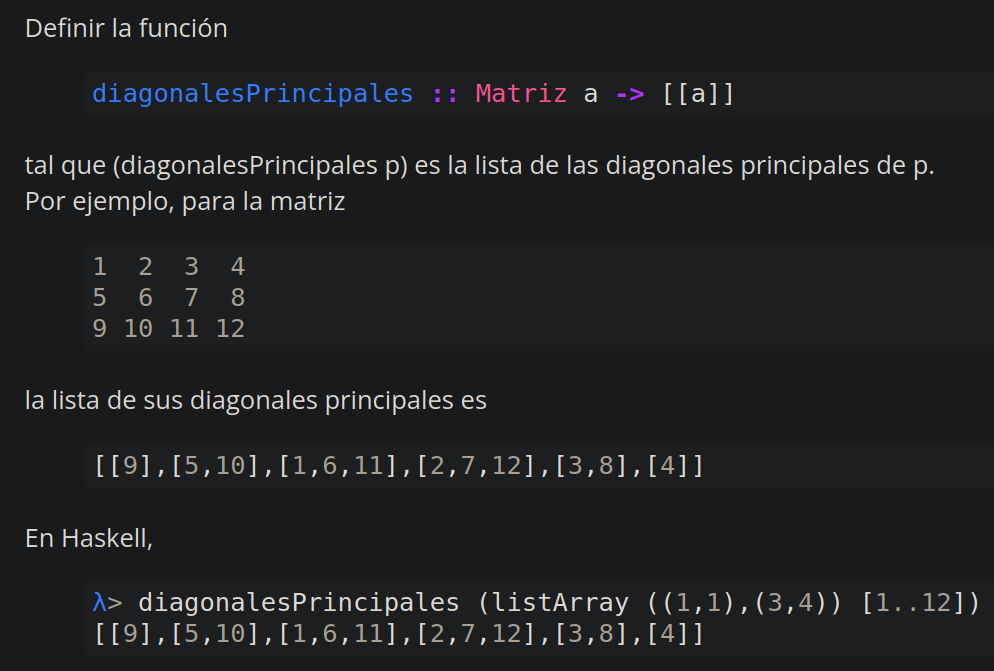
#Exercitium: Diagonales principales de una matriz. https://jaalonso.github.io/exercitium/posts/2015/02/11-diagonales_principales/ #Haskell #FunctionalProgramming #Math
@Jose_A_Alonso@mathstodon.xyz
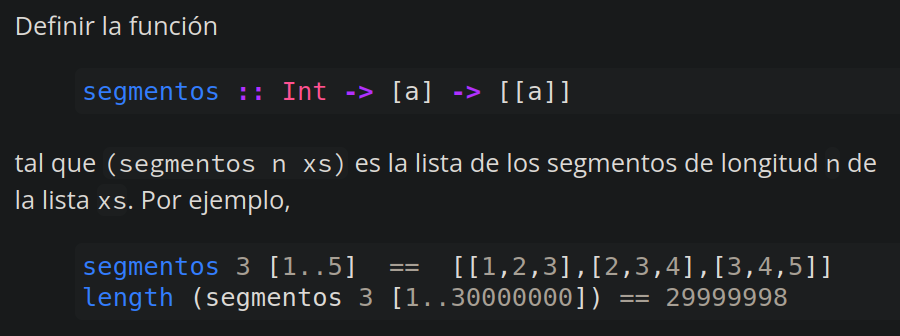
#Exercitium: Segmentos de longitud dada. https://jaalonso.github.io/exercitium/posts/2015/02/10-segmentos_de_longitud_dada/ #Haskell #FunctionalProgramming
@Jose_A_Alonso@mathstodon.xyz
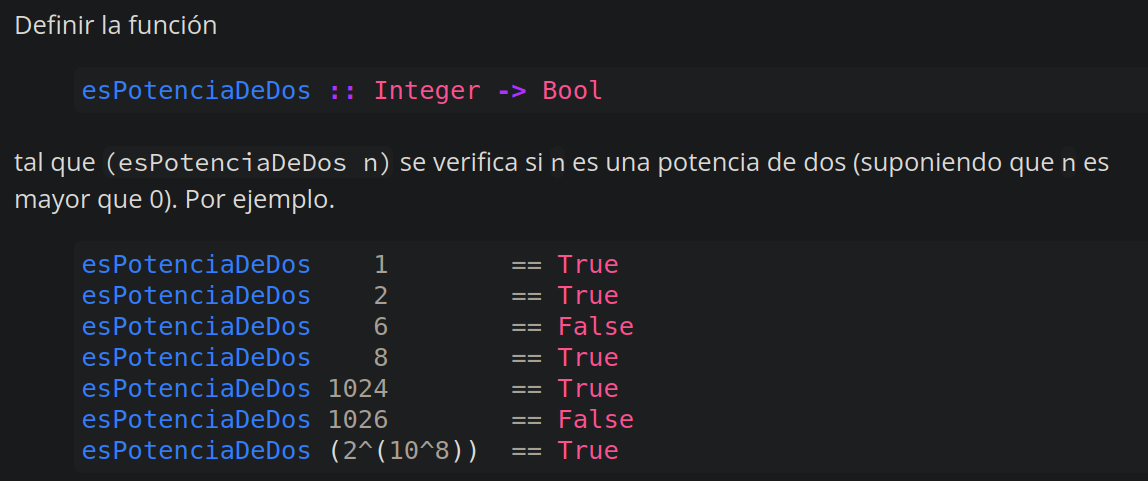
#Exercitium: Reconocimiento de potencias de 2. https://jaalonso.github.io/exercitium/posts/2015/02/09-reconocimiento_de_grandes_potencias_de_2/ #Haskell #FunctionalProgramming #Math
@Jose_A_Alonso@mathstodon.xyz
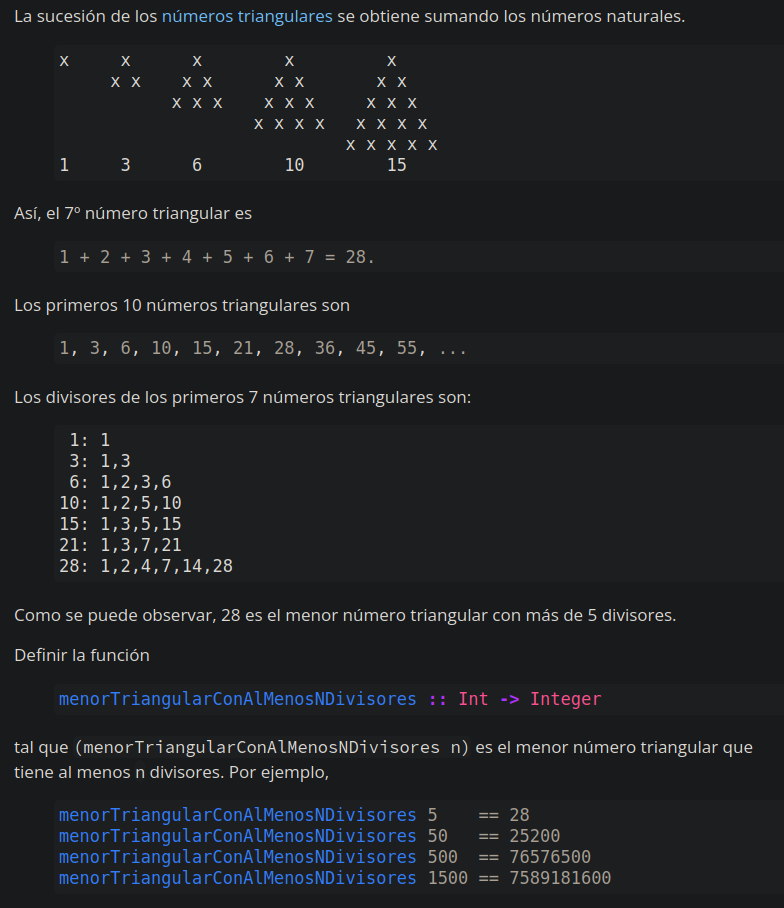
#Exercitium: Menor número triangular con más de n divisores. https://jaalonso.github.io/exercitium/posts/2015/02/06-menor_numero_triangular_con_mas_de_n_divisores/ #Haskell #FunctionalProgramming #Math
@Jose_A_Alonso@mathstodon.xyz
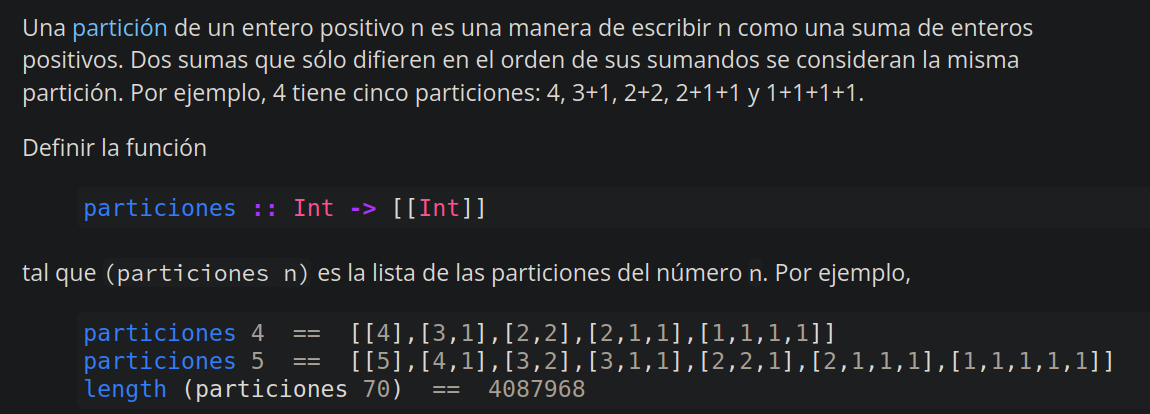
#Exercitium: Particiones de enteros positivos. https://jaalonso.github.io/exercitium/posts/2015/02/05-particiones_de_enteros_positivos/ #Haskell #FunctionalProgramming #Math
@haskell@fosstodon.org

@dinofp@fosstodon.org
Looking for work as a software developer. Lots of #Haskell experience, including in industry. #Linux #OpenSource
https://codeberg.org/dinofp https://github.com/dino-
cv: http://www.ui3.info/d/cv-DinoMorelli.pdf
@Jose_A_Alonso@mathstodon.xyz
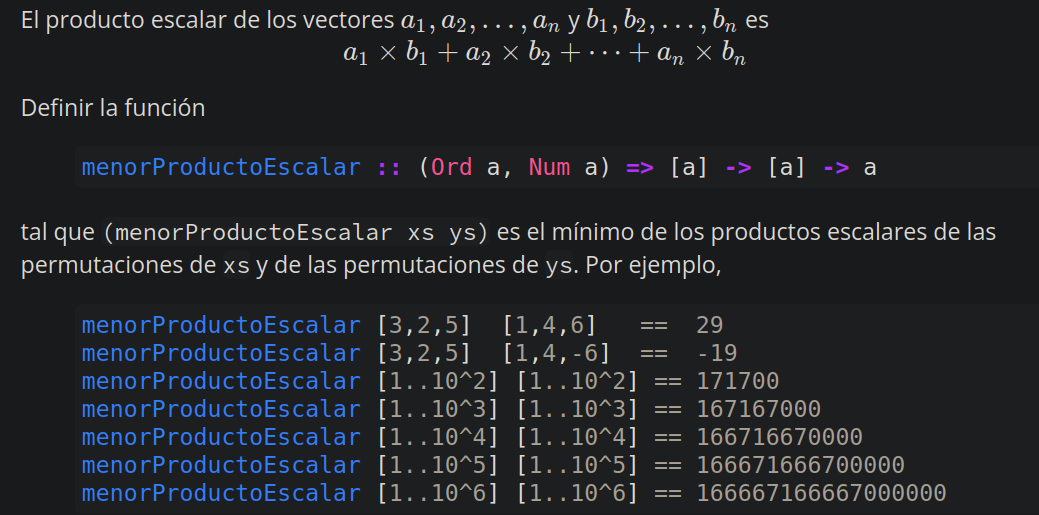
#Exercitium: Mínimo producto escalar. https://jaalonso.github.io/exercitium/posts/2015/02/04-minimo_producto_escalar/ #Haskell #FunctionalProgramming #Math
@6d03@mathstodon.xyz
An new proposal for passing implicit parameters to #Haskell functions: https://github.com/ghc-proposals/ghc-proposals/pull/741
Done the right way; as opposed to the existing ImplicitParams extension, which is practically useless.
@6d03@mathstodon.xyz
An new proposal for passing implicit parameters to #Haskell functions: https://github.com/ghc-proposals/ghc-proposals/pull/741
Done the right way; as opposed to the existing ImplicitParams extension, which is practically useless.
@haskell@fosstodon.org
"Haskell Language Server 2.13.0.0 release" on the #Haskell blog!
@Jose_A_Alonso@mathstodon.xyz
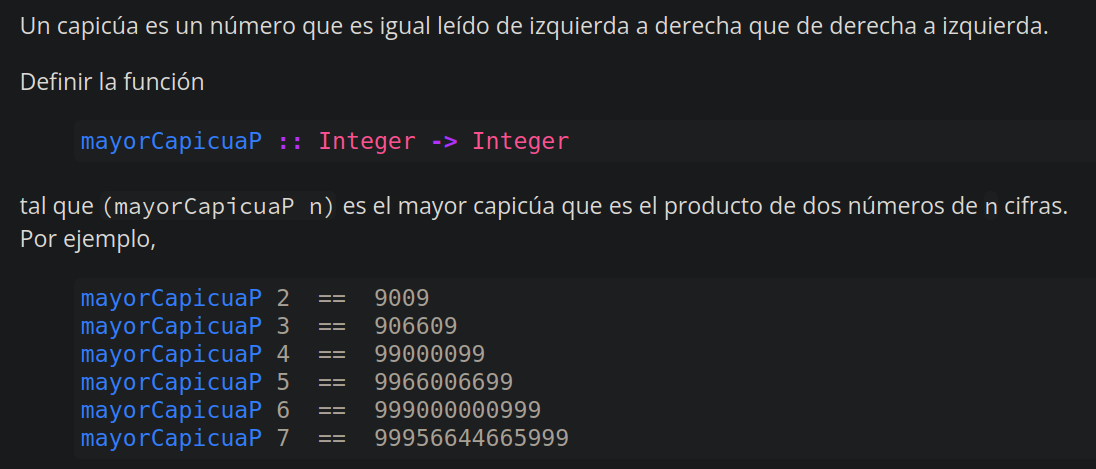
#Exercitium: Mayor capicúa producto de dos números de n cifras. https://jaalonso.github.io/exercitium/posts/2015/02/03-mayor_capicua_producto_de_dos_numeros_de_n_cifras/ #Haskell #FunctionalProgramming #Math
@Jose_A_Alonso@mathstodon.xyz
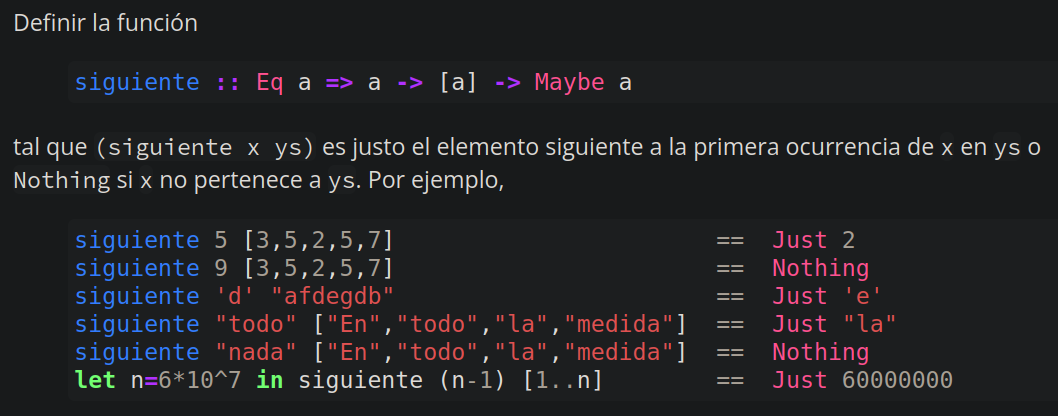
#Exercitium: Siguiente elemento en una lista. https://jaalonso.github.io/exercitium/posts/2015/02/02-siguiente_elemento_en_una_lista/ #Haskell #FunctionalProgramming
@kosmikus@functional.cafe
Join us tonight, 2026-01-21 at 1930 UTC, for the first new #Haskell #Unfolder episode of 2026, on static pointers.
https://www.youtube.com/watch?v=Mc3liw0EoIY&list=PLD8gywOEY4HaG5VSrKVnHxCptlJv2GAn7&index=53
@haskell@fosstodon.org
Case Study: Automating Type Safety for Mission-Critical Industrial Systems, by Stack Builders
@Jose_A_Alonso@mathstodon.xyz
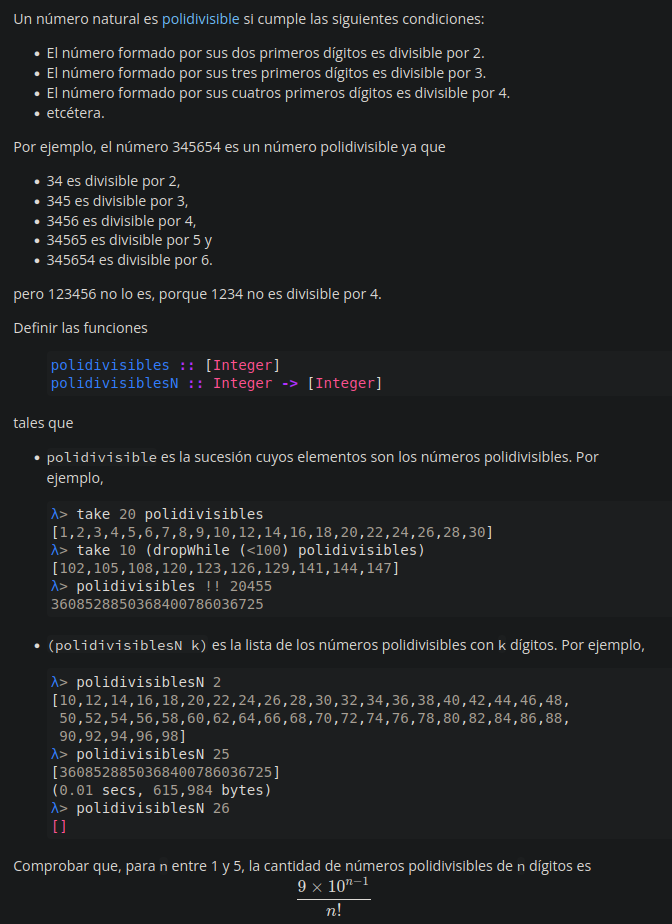
#Exercitium: Números polidivisibles. https://jaalonso.github.io/exercitium/posts/2015/01/30-numeros_polidivisibles/ #Haskell #FunctionalProgramming #Math
@Jose_A_Alonso@mathstodon.xyz
@Jose_A_Alonso@mathstodon.xyz
Some Haskell idioms we like. ~ Jack Kelly. https://exploring-better-ways.bellroy.com/some-haskell-idioms-we-like.html #Haskell #FunctionalProgramming
@Jose_A_Alonso@mathstodon.xyz
Logic programming with extensible types. ~ Ivan Perez, Angel Herranz. https://arxiv.org/abs/2601.03836v1 #Haskell #FunctionalProgramming #Prolog #LogicProgramming
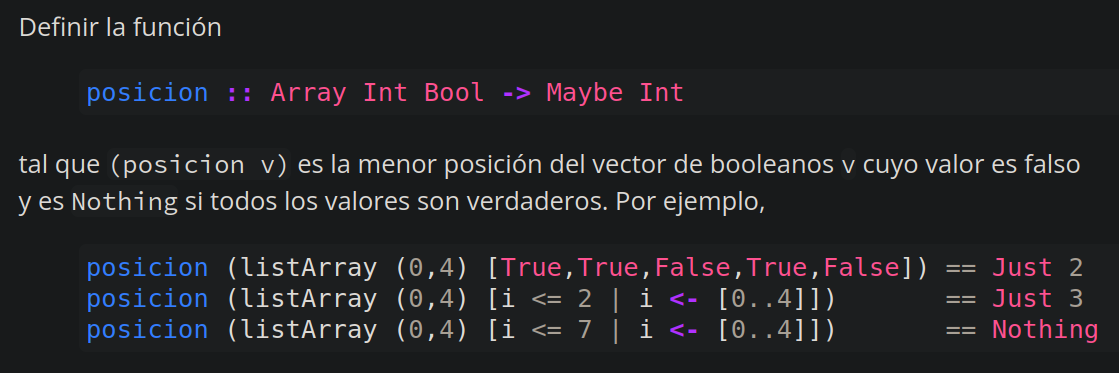
@Jose_A_Alonso@mathstodon.xyz
#Exercitium: Posición del primer falso en un vector. https://jaalonso.github.io/exercitium/posts/2015/01/29-posicion_del_primer_falso_en_un_vector/ #Haskell #FunctionalProgramming

@johl@mastodon.xyz
This is so niche and yet so relevant to my interests: "Kip is an experimental programming language that combines Turkish grammar rules with a type system. Case endings, vowel harmony, and other Turkish morphological features are an integral part of Kip's type-checking process."
@johl@mastodon.xyz
This is so niche and yet so relevant to my interests: "Kip is an experimental programming language that combines Turkish grammar rules with a type system. Case endings, vowel harmony, and other Turkish morphological features are an integral part of Kip's type-checking process."
@haskell@fosstodon.org
Aztecs v0.15: A functional, archetypal ECS for #Haskell game engines
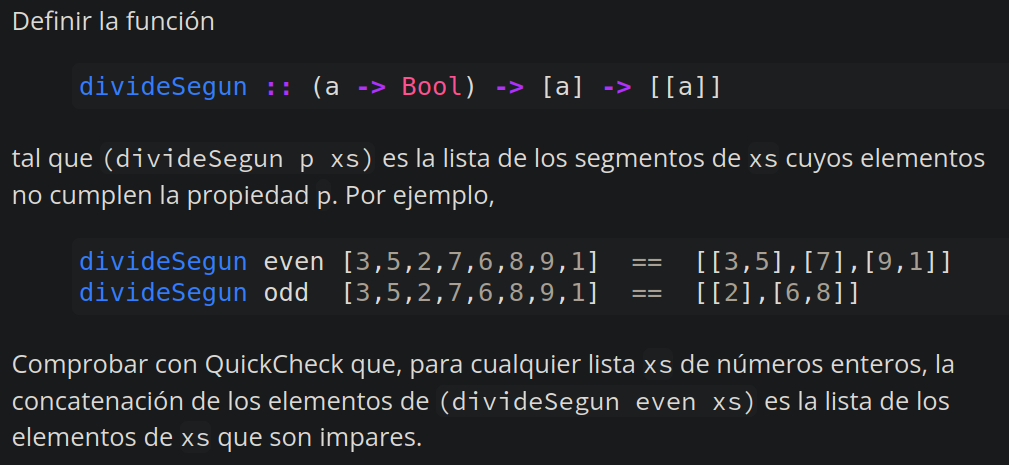
@Jose_A_Alonso@mathstodon.xyz
#Exercitium: División según una propiedad. https://jaalonso.github.io/exercitium/posts/2015/01/28-division_segun_una_propiedad/ #Haskell #FunctionalProgramming
@abnv@fantastic.earth
I wrote the fifth part of my #blog series “Implementing Co, a small programming language with #coroutines”. This time, we add support for sleep in #Co for time-based executions. https://abhinavsarkar.net/posts/implementing-co-5/
#Programming #PLT #ProgrammingLanguages #Compilers #Haskell #concurrency
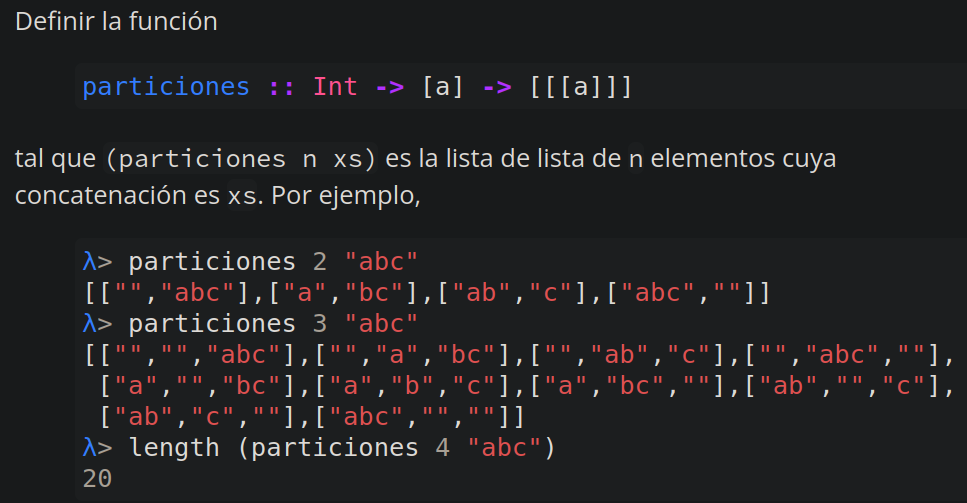
@Jose_A_Alonso@mathstodon.xyz
#Exercitium: Particiones en listas de segmentos. https://jaalonso.github.io/exercitium/posts/2015/01/27-particiones_en_listas_de_segmentos/ #Haskell #FunctionalProgramming
@haskell@fosstodon.org
Hyperbole 0.6, the #Haskell web framework for interactive applications with minimal JS, has been released! See it in action on https://hyperbole.live
Announcement: https://discourse.haskell.org/t/ann-hyperbole-0-6-viewstate-server-push-concurrency-controls-fancy-docs/13543
@Jose_A_Alonso@mathstodon.xyz
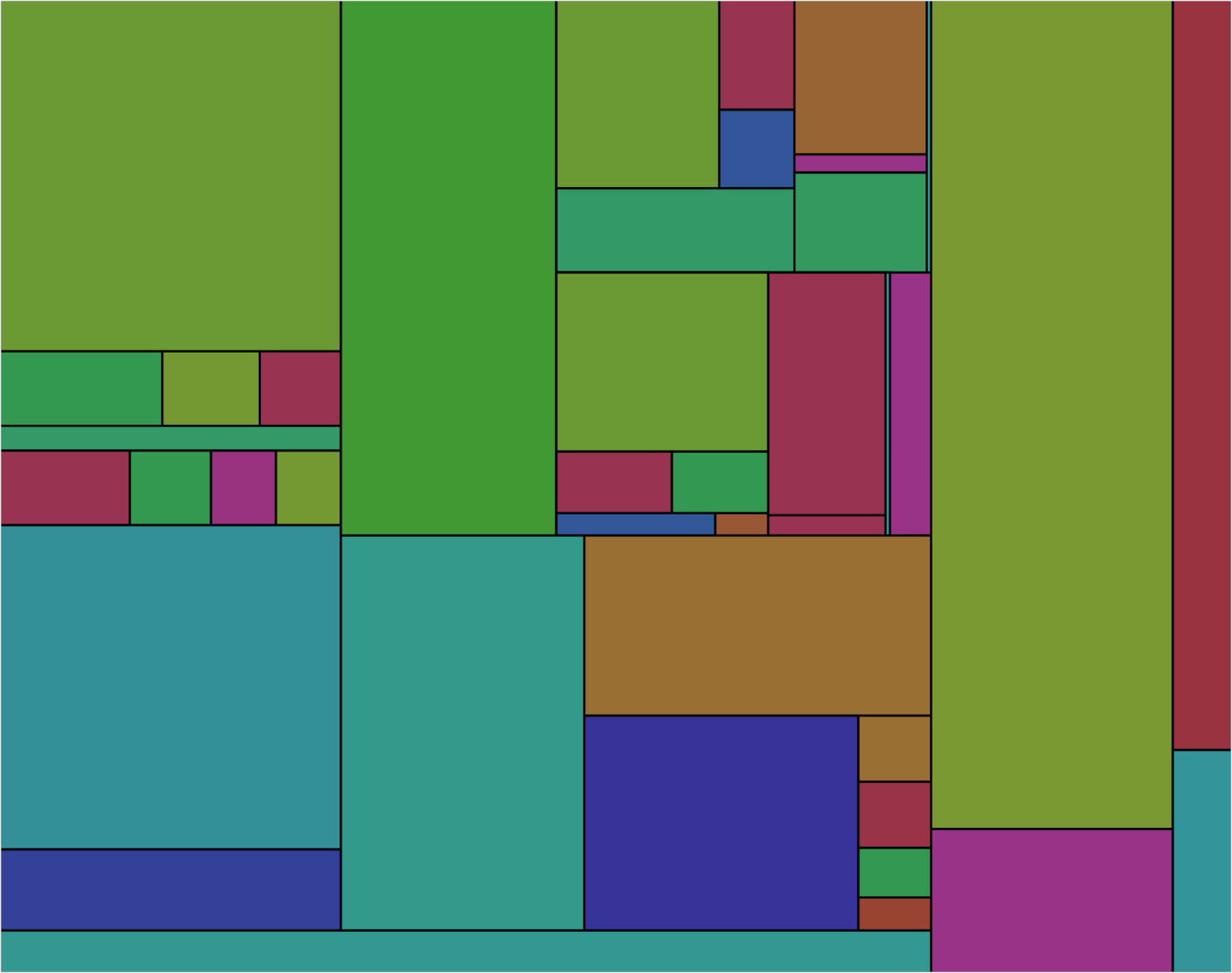
@abnv@fantastic.earth
Trying to debug a memory leak in #haskell be like:
@Jose_A_Alonso@mathstodon.xyz
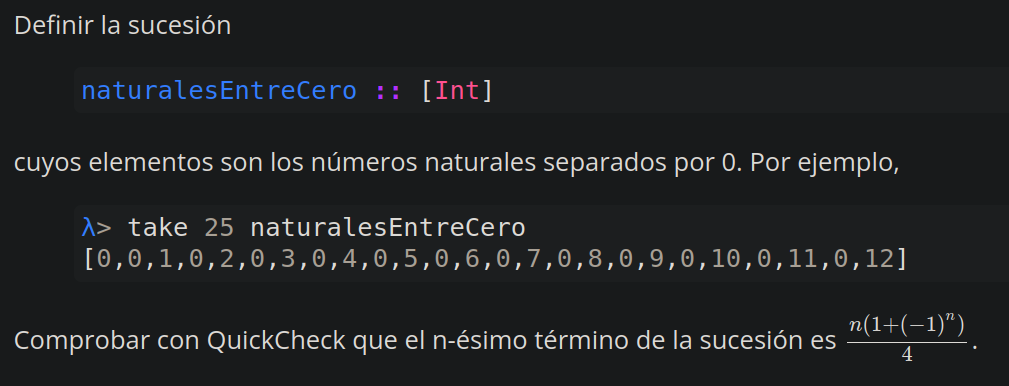
#Exercitium: Números naturales separados por ceros. https://jaalonso.github.io/exercitium/posts/2015/01/26-numeros_naturales_separados_por_ceros/ #Haskell #FunctionalProgramming #Math
@haskell@fosstodon.org
State of DataHaskell Q1 2026
https://www.datahaskell.org/blog/2026/01/12/state-of-datahaskell-q1-2026.html
@haskell@fosstodon.org
State of DataHaskell Q1 2026
https://www.datahaskell.org/blog/2026/01/12/state-of-datahaskell-q1-2026.html
@haskell@fosstodon.org
The #Haskell ecosystem survey closes in two days! Make your voice heard so that we know where to invest our resources: https://www.surveymonkey.com/r/6M3Z6NV
@Jose_A_Alonso@mathstodon.xyz
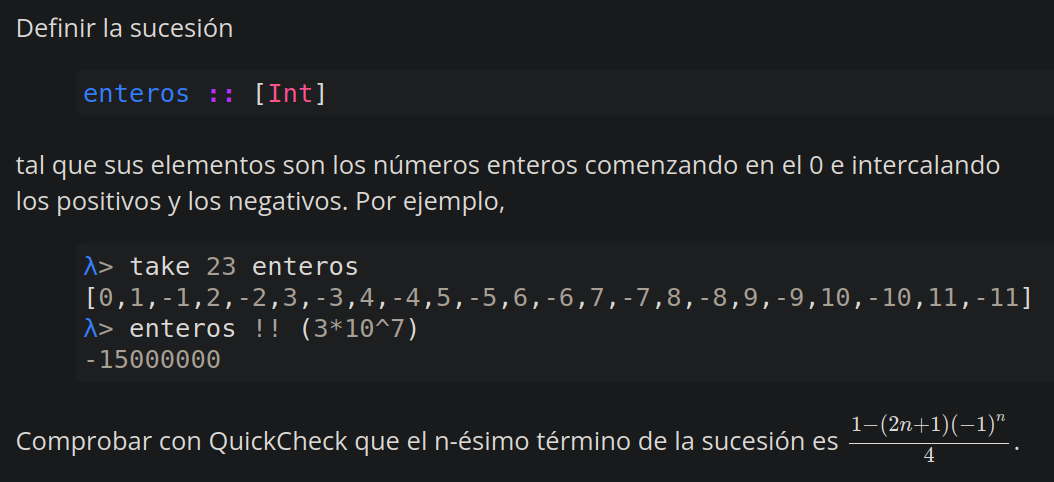
#Exercitium: Enumeración de los números enteros. https://jaalonso.github.io/exercitium/posts/2015/01/23-enumeracion_de_los_enteros/ #Haskell #FunctionalProgramming #Math
@Jose_A_Alonso@mathstodon.xyz
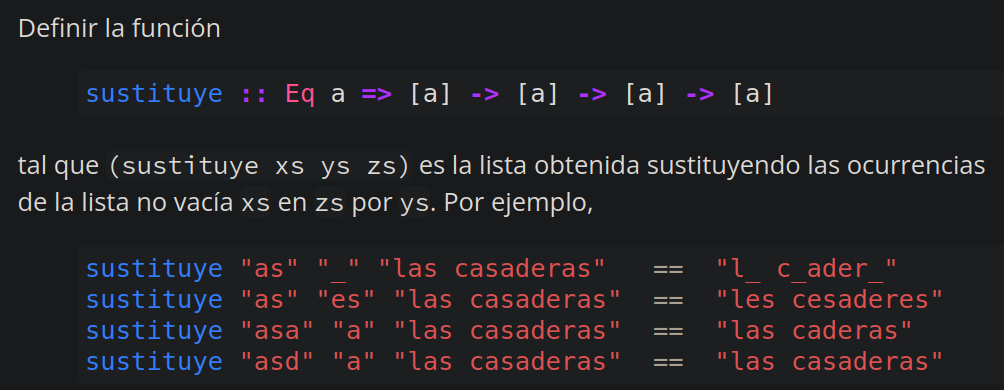
#Exercitium: Sustitución de listas. https://jaalonso.github.io/exercitium/posts/2015/01/22-sustitucion_de_listas/ #Haskell #FunctionalProgramming
@Jose_A_Alonso@mathstodon.xyz
#Exercitium: Triparticiones de una lista. https://jaalonso.github.io/exercitium/posts/2015/01/21-triparticiones_de_una_lista/ #Haskell #ProgramaciónFuncional
@haskell@fosstodon.org
"DataFrame January 2026 Updates"
https://discourse.haskell.org/t/dataframe-january-2026-updates/13512
@DiazCarrete@hachyderm.io
-fno-show-error-context
"Controls whether GHC displays information about the context in which an error occurred"
https://downloads.haskell.org/ghc/latest/docs/users_guide/using.html#ghc-flag-fshow-error-context
@Jose_A_Alonso@mathstodon.xyz
#Exercitium: Listas con suma dada. https://jaalonso.github.io/exercitium/posts/2015/01/20-listas_con_suma_dada/ #Haskell #ProgramaciónFuncional #Matemáticas
@haskell@fosstodon.org
@haskell@fosstodon.org
"The Hazy Haskell Compiler" on Discourse
https://discourse.haskell.org/t/the-hazy-haskell-compiler/13497

@madmansnest@mastodon.world
Recommendation request.
Any interesting #Haskell programming channels in 2025?
@Jose_A_Alonso@mathstodon.xyz
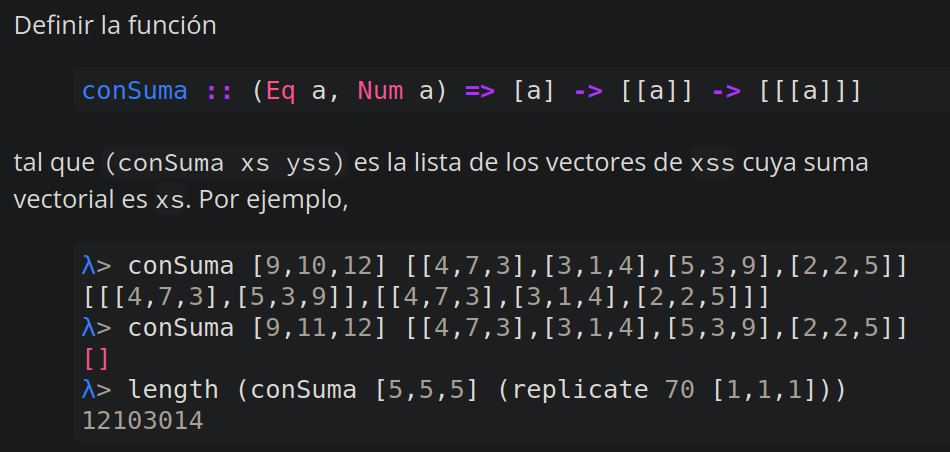
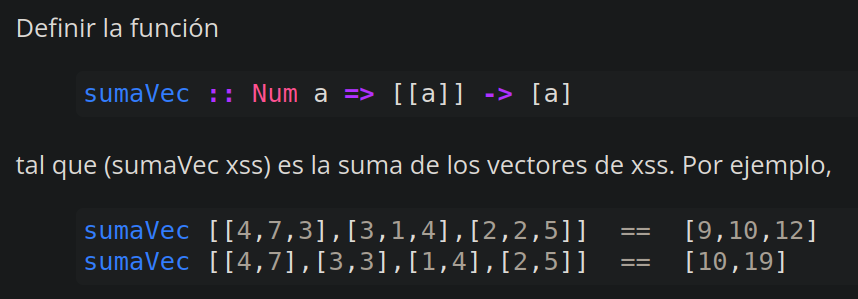
#Exercitium: Suma de una lista de vectores. https://jaalonso.github.io/exercitium/posts/2015/01/19-suma_de_un_lista_de_vectores/ #Haskell #ProgramaciónFuncional #Matemáticas
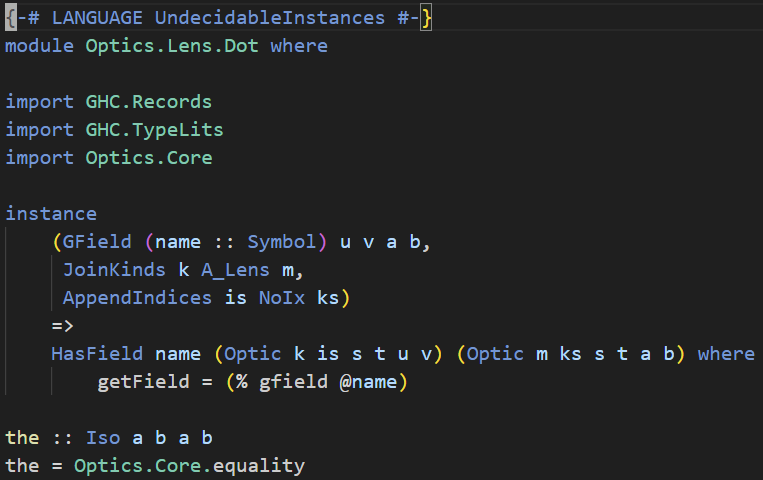
@DiazCarrete@hachyderm.io
Got so furious while trying to get this HasField instance to compile that I bashed my face against the keyboard, inserting letters like k s t u v m a b wholly at random. Lo and behold, now it typechecks:
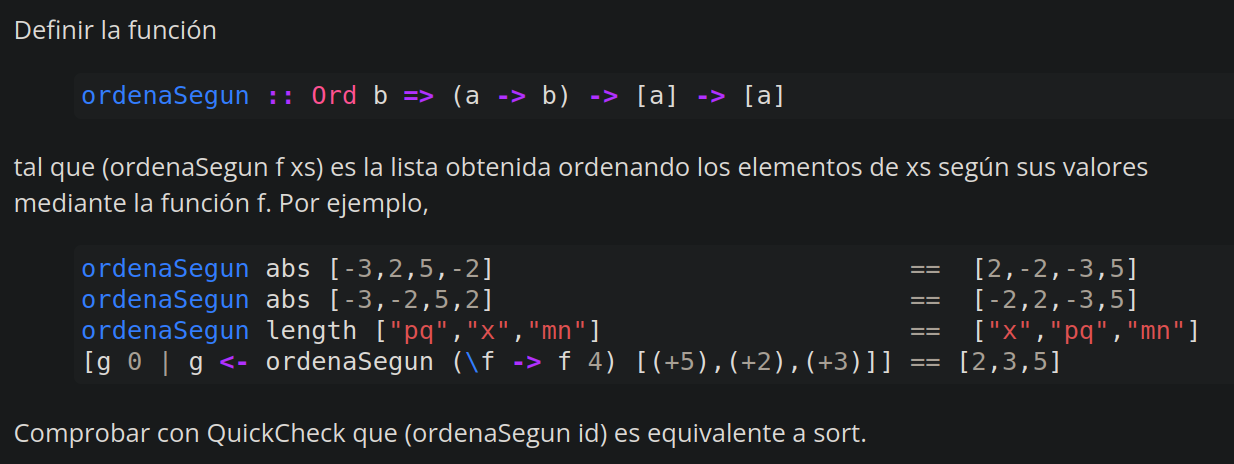
@Jose_A_Alonso@mathstodon.xyz
#Exercitium: Ordenación según una función. https://jaalonso.github.io/exercitium/posts/2015/01/16-ordenacion_segun/ #Haskell #ProgramaciónFuncional #Matemáticas
@abnv@fantastic.earth
@haskell@fosstodon.org
New article on the #Haskell Blog: "A Comment-Preserving Cabal Parser" by Léana Jiang

@AmenZwa@mathstodon.xyz
"Write Yourself a Scheme in 48 Hours: An Introduction to Haskell through Example", Tang (2007)
https://upload.wikimedia.org/wikipedia/commons/a/aa/Write_Yourself_a_Scheme_in_48_Hours.pdf
I'm well and truly miffed—until this moment, I'd never come across this little jewel of a free ebook.🤦♂️
This book teaches practical #Haskell #programming (like monadic parsing) through an implementation of a large subset of R5RS #Scheme interpreter, all in just 138 pp. An experienced FP #programmer, even one who is unfamiliar with Haskell and Scheme (although I’ve not met such a person), can plough through this text, in one sitting.
It's brilliant!
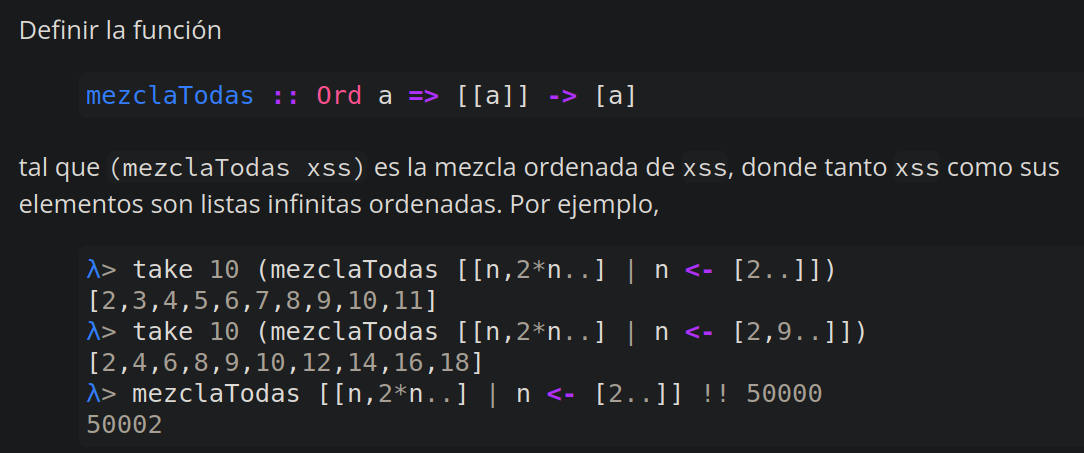
@Jose_A_Alonso@mathstodon.xyz
#Exercitium: Mezcla de infinitas listas infinitas. https://jaalonso.github.io/exercitium/posts/2015/01/15-mezcla_de_infinitas_listas_infinitas/ #Haskell #ProgramaciónFuncional #Matemáticas
@haskell@fosstodon.org
Communication from the #Haskell Cryptography Group: "A vulnerability in #libsodium 's validation of ed25519 elliptic curve points: You are likely not affected"
https://haskell-cryptography.org/blog/libsodium-vulnerability-ed25519-valid-points/
@Jose_A_Alonso@mathstodon.xyz
#Exercitium: Conjuntos de puntos enteros en regiones rectangulares. https://jaalonso.github.io/exercitium/posts/2015/01/14-conjuntos_de_puntos_enteros_en_regiones_rectangulares/ #Haskell #ProgramaciónFuncional #Matemáticas
@abnv@fantastic.earth
Ever since I figured out how to build static executables for #Haskell code, I've being deploying all my Haskell projects as static binaries. I can't believe how much disk space it saves in some cases. The SSG that builds my website used to take more than 5GB; now it takes about 80MB!

@AmenZwa@mathstodon.xyz
"Write Yourself a Scheme in 48 Hours: An Introduction to Haskell through Example", Tang (2007)
https://upload.wikimedia.org/wikipedia/commons/a/aa/Write_Yourself_a_Scheme_in_48_Hours.pdf
I'm well and truly miffed—until this moment, I'd never come across this little jewel of a free ebook.🤦♂️
This book teaches practical #Haskell #programming (like monadic parsing) through an implementation of a large subset of R5RS #Scheme interpreter, all in just 138 pp. An experienced FP #programmer, even one who is unfamiliar with Haskell and Scheme (although I’ve not met such a person), can plough through this text, in one sitting.
It's brilliant!
@haskell@fosstodon.org
The best #Haskell pretty-printing library `prettyprinter` is looking for maintainers to help out! https://github.com/quchen/prettyprinter/issues/272
@Jose_A_Alonso@mathstodon.xyz
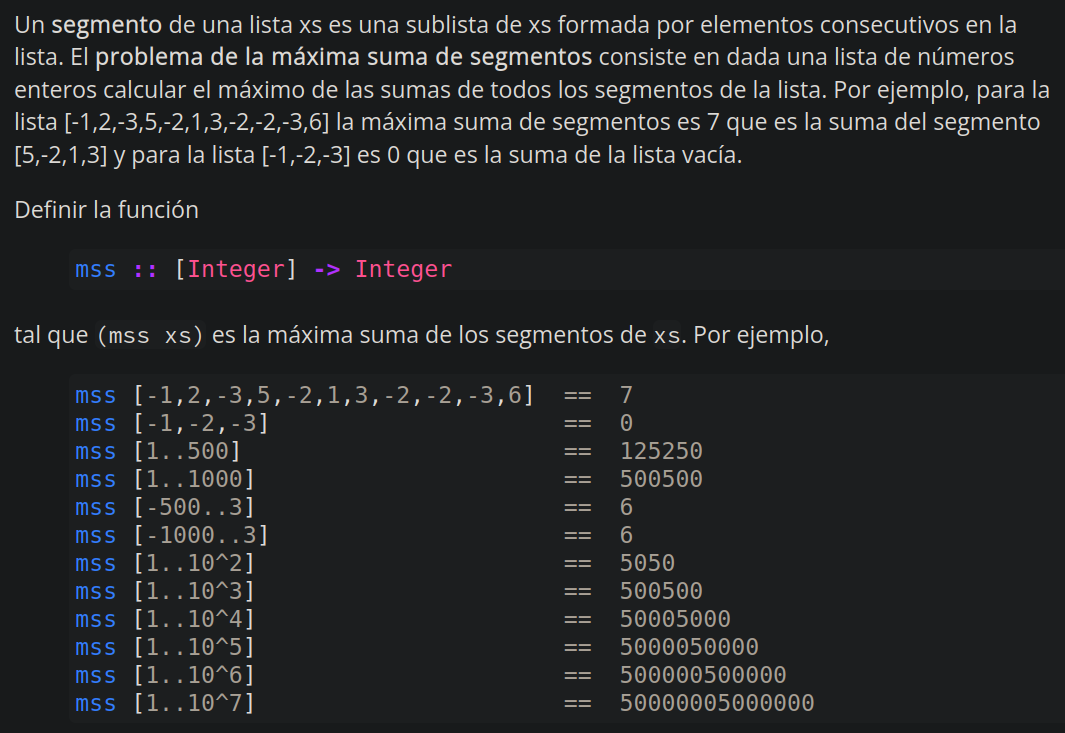
#Exercitium: Máxima suma de los segmentos. https://jaalonso.github.io/exercitium/posts/2015/01/13-maxima_suma_de_segmentos/ #Haskell #ProgramaciónFuncional #Matemáticas
@Jose_A_Alonso@mathstodon.xyz
Readings shared December 29, 2025. https://jaalonso.github.io/vestigium/posts/2025/12/30-readings_shared_12-29-25 #AI #Agda #CoqProver #FunctionalProgramming #Haskell #ITP #IsabelleHOL #LeanProver #Logic #Math #OCaml #Rocq #SMT
@Jose_A_Alonso@mathstodon.xyz
Advent of Code 2025: Haskell solution reflections for all 12 days. ~ Justin Le. https://blog.jle.im/entry/advent-of-code-2025.html #Haskell #FunctionalProgramming
@Jose_A_Alonso@mathstodon.xyz
Carnap: a free and open software framework written in Haskell for teaching and studying formal logic. https://carnap.io/ #Haskell #FunctionalProgramming #Logic
@Jose_A_Alonso@mathstodon.xyz
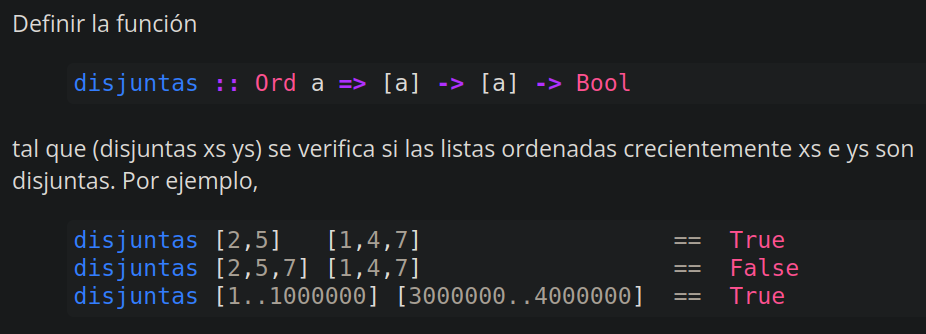
#Exercitium: Listas disjuntas. https://jaalonso.github.io/exercitium/posts/2015/01/12-listas_disjuntas/ #Haskell #ProgramaciónFuncional #Matemáticas
@abnv@fantastic.earth
I wrote a #blog post about implementing a small #interpreted #programming language with #coroutines: https://abhinavsarkar.net/posts/implementing-co-1/
#ProgrammingLanguages #plt #haskell
@Jose_A_Alonso@mathstodon.xyz
#Exercitium: Triángulos de Herón. https://jaalonso.github.io/exercitium/posts/2015/01/09-triangulos_de_heron/ #Haskell #ProgramaciónFuncional #Matemáticas


@kaleissin@wandering.shop
Running a #haskell program (or trying to) is very late 90's nostalgic, very
configure && make && make install
.. then wait for 16 hours and realize it failed after 14 of them. The error messages was easier to understand in the 90's though, and autoconf fixed a lot of shite.
@lobsters@mastodon.social
Writing an NES emulator in Haskell via @abnv https://lobste.rs/s/jkomyi #haskell #retrocomputing
https://arthi-chaud.github.io/posts/funes/
@lobsters@mastodon.social
Writing an NES emulator in Haskell via @abnv https://lobste.rs/s/jkomyi #haskell #retrocomputing
https://arthi-chaud.github.io/posts/funes/
@Jose_A_Alonso@mathstodon.xyz
Readings shared December 24, 2025. https://jaalonso.github.io/vestigium/posts/2025/12/25-readings_shared_12-24-25 #AI #FunctionalProgramming #Haskell #ITP #LLMs #LeanProver #Math
@Jose_A_Alonso@mathstodon.xyz
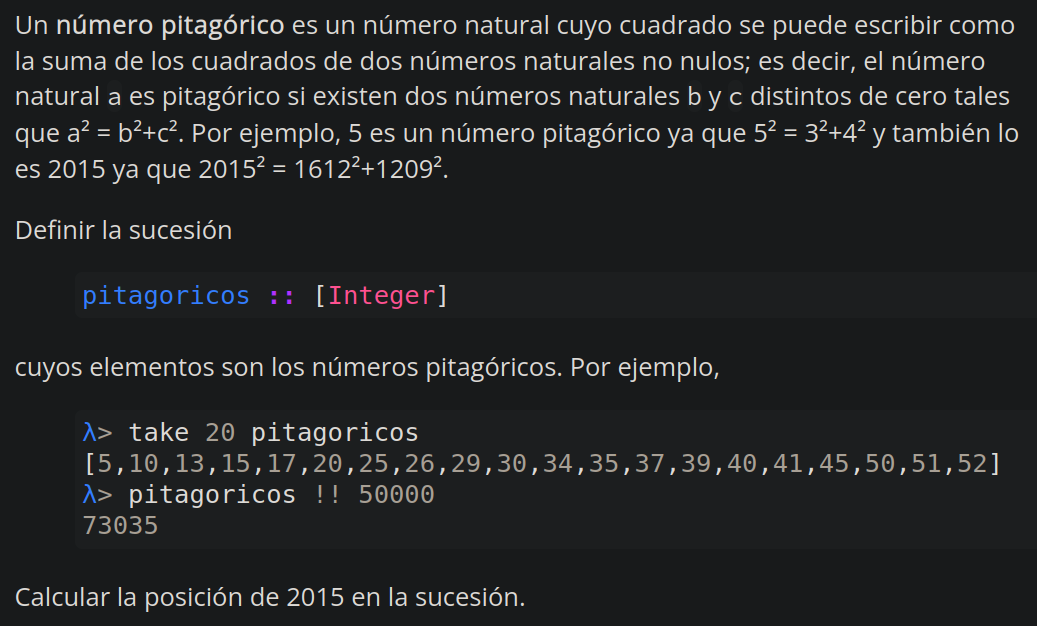
#Exercitium: 2015 y los números pitagóricos. https://jaalonso.github.io/exercitium/posts/2015/01/08-2015_y_los_numeros_pitagoricos/ #Haskell #ProgramaciónFuncional #Matemáticas
@Jose_A_Alonso@mathstodon.xyz
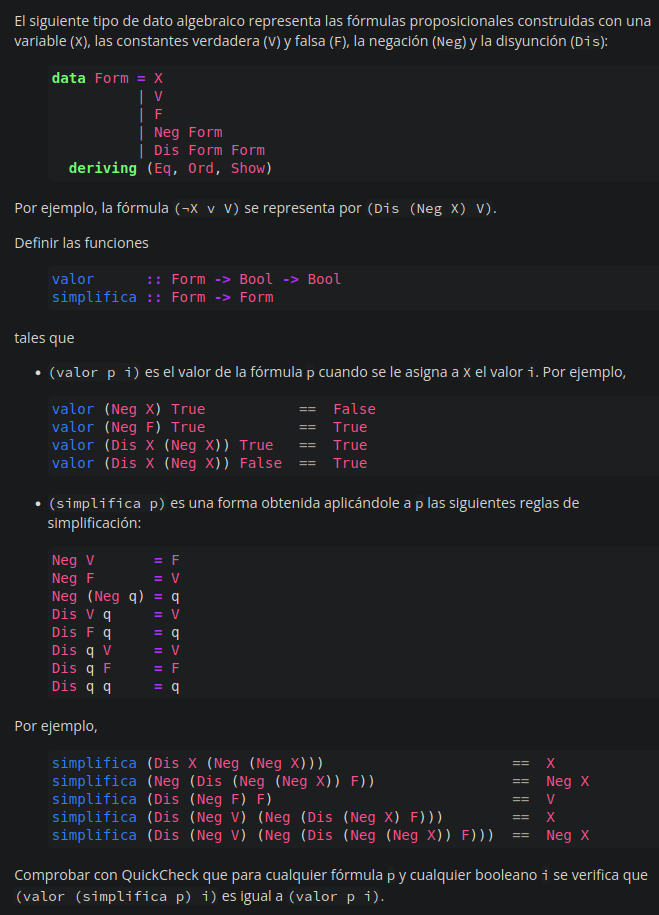
#Exercitium: Simplificación de expresiones proposicionales. https://jaalonso.github.io/exercitium/posts/2015/01/02-simplificacion_de_expresiones_proposicionales/ #Haskell #ProgramaciónFuncional #Matemáticas
@Jose_A_Alonso@mathstodon.xyz
#Exercitium: 2015 y los números con factorización capicúa. https://jaalonso.github.io/exercitium/posts/2015/01/01-2015_y_los_numeros_con_factorizacion_capicua/ #Haskell #ProgramaciónFuncional #Matemáticas
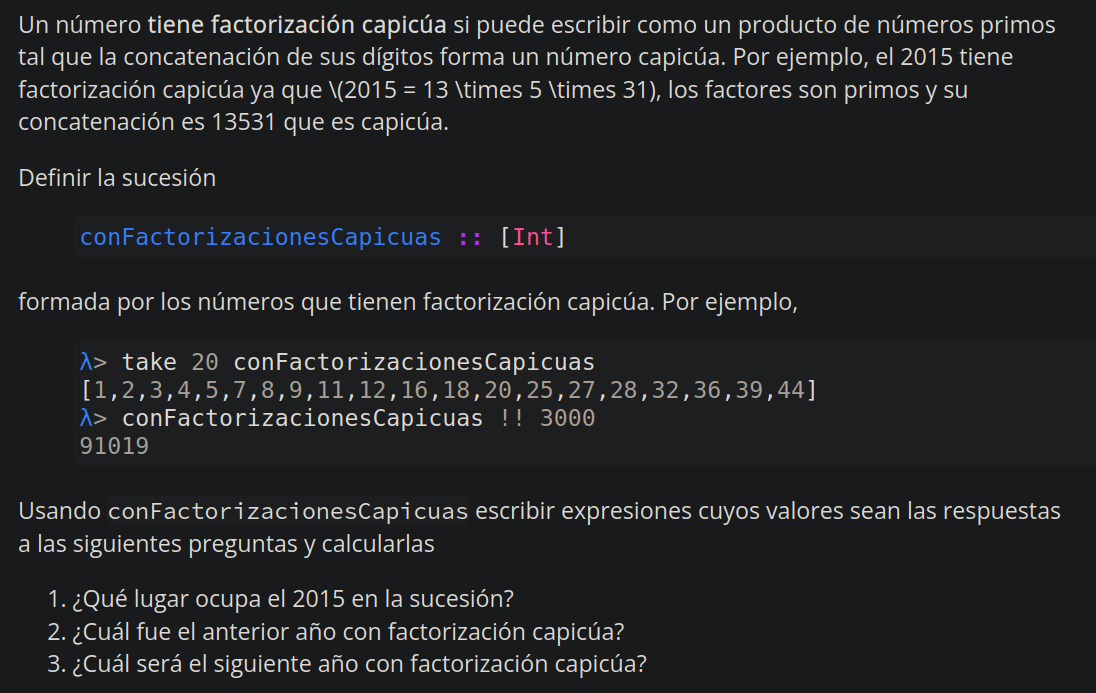
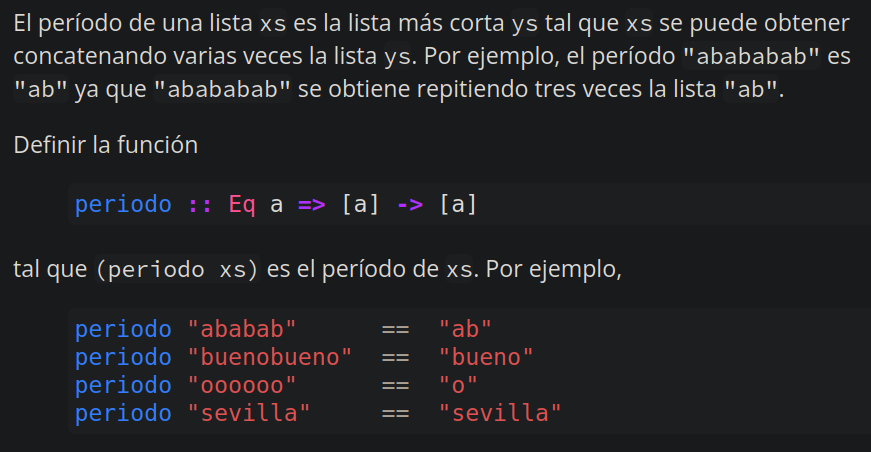
@Jose_A_Alonso@mathstodon.xyz
#Exercitium: Período de una lista. https://jaalonso.github.io/exercitium/posts/2014/12/31-periodo_de_una_lista/ #Haskell #ProgramaciónFuncional
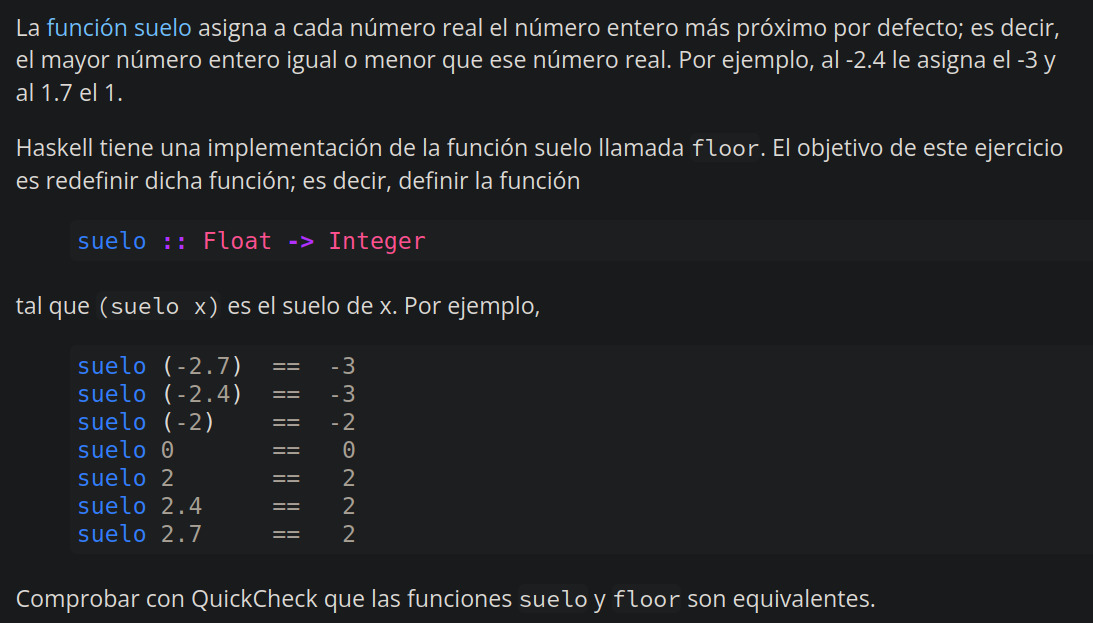
@Jose_A_Alonso@mathstodon.xyz
#Exercitium: La función suelo. https://jaalonso.github.io/exercitium/posts/2014/12/30-la_funcion_suelo/ #Haskell #ProgramaciónFuncional #Matemáticas
@haskell@fosstodon.org
"Haskell ecosystem activities report: September–November 2025" by Well-Typed
https://www.well-typed.com/blog/2025/12/haskell-ecosystem-report-september-november-2025/
@haskell@fosstodon.org
@haskell@fosstodon.org
"The Subtle Footgun of TVar (Map _ _)" by Matt Parsons
https://www.parsonsmatt.org/2025/12/17/the_subtle_footgun_of_tvar_(map____).html
@haskell@fosstodon.org
"A different way to do concurrency — #Haskell 's STM monad" by Elisabeth Stenholm
@Jose_A_Alonso@mathstodon.xyz
#Exercitium: Enumeración de los pares de números naturales. https://jaalonso.github.io/exercitium/posts/2014/12/29-enumeracion_de_pares_de_naturales/ #Haskell #ProgramaciónFuncional #Matemáticas
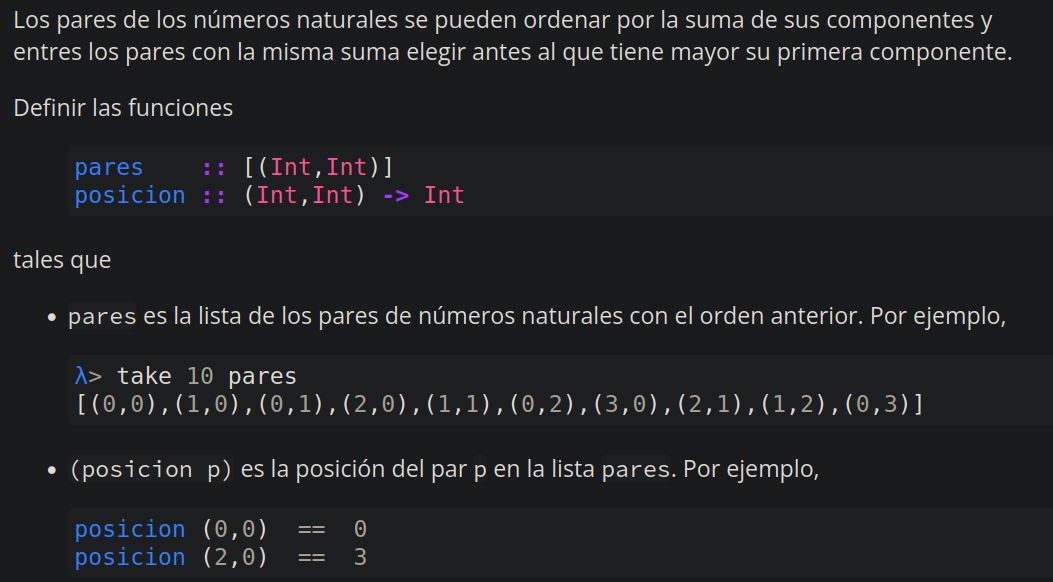
@Jose_A_Alonso@mathstodon.xyz
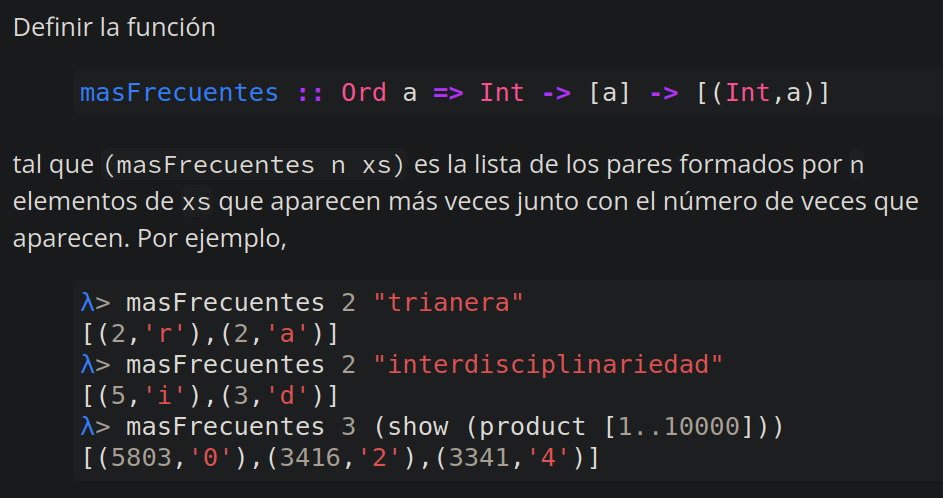
#Exercitium: Elementos más frecuentes. https://jaalonso.github.io/exercitium/posts/2014/12/26-elementos_mas_frecuentes/ #Haskell #ProgramaciónFuncional #Matemáticas
@lobsters@mastodon.social
Liskell - Haskell Semantics with Lisp Syntax https://lobste.rs/s/dhvobg #pdf #api #haskell #lisp
http://clemens.endorphin.org/ILC07-Liskell-draft.pdf
@Jose_A_Alonso@mathstodon.xyz
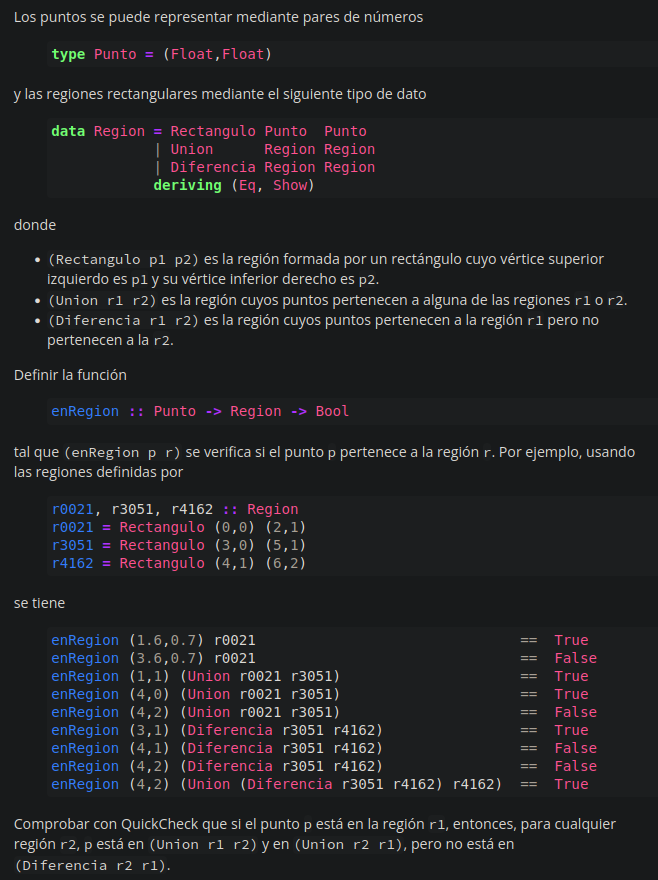
#Exercitium: Puntos en regiones rectangulares. https://jaalonso.github.io/exercitium/posts/2014/12/24-puntos_en_regiones_rectangulares/ #Haskell #ProgramaciónFuncional #Matemáticas
@Jose_A_Alonso@mathstodon.xyz
Readings shared December 14, 2025. https://jaalonso.github.io/vestigium/posts/2025/12/15-readings_shared_12-14-25 #AI #FunctionalProgramming #Haskell #ITP #LeanProver #Math #Rocq
@Jose_A_Alonso@mathstodon.xyz
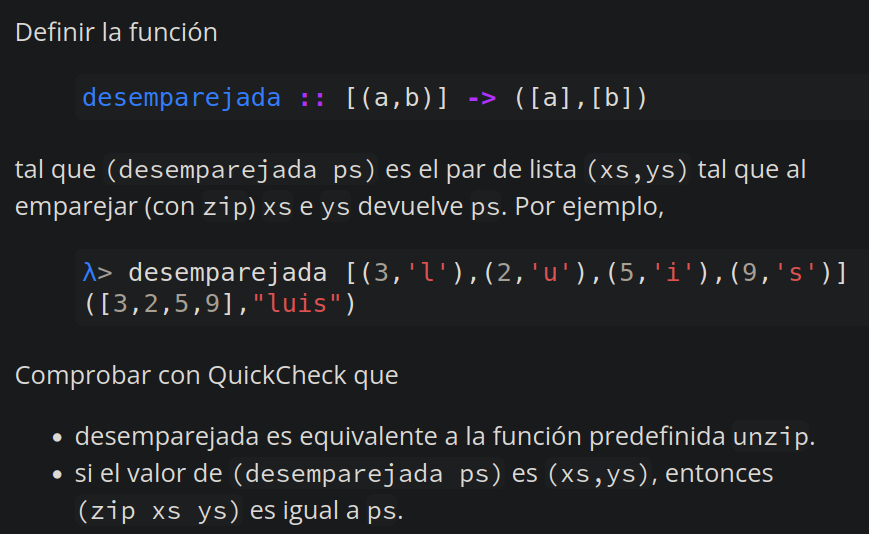
#Exercitium: Desemparejamiento de listas. https://jaalonso.github.io/exercitium/posts/2014/12/23-desemparejamiento-de-listas/ #Haskell #ProgramaciónFuncional
@Jose_A_Alonso@mathstodon.xyz
The Haskell Unfolder Episode 52: Bidirectional parsing and printing (of JSON). ~ Edsko de Vries, Andres Löh. https://www.youtube.com/live/z9V59Y0VDcg #Haskell #FunctionalProgramming
@haskell@fosstodon.org
🎉 Release 1.0.0 of ClickHaskell, the #Haskell implementation of ClickHouse DBMS Native protocol, has been published! See https://github.com/KovalevDima/ClickHaskell/releases/tag/v1.0.0 and https://clickhaskell.dev/
@haskell@fosstodon.org
"Easy Type-Level Flags In #Haskell" by Grégoire Locqueville

@glocq@mathstodon.xyz
I wrote a new #haskell blog post! This one is about a neat trick I found to conditionally exclude some branches from your data types at compile-time, in a totally standard and portable way (no compiler extensions, no Template Haskell, nothing fishy :) )
@Jose_A_Alonso@mathstodon.xyz
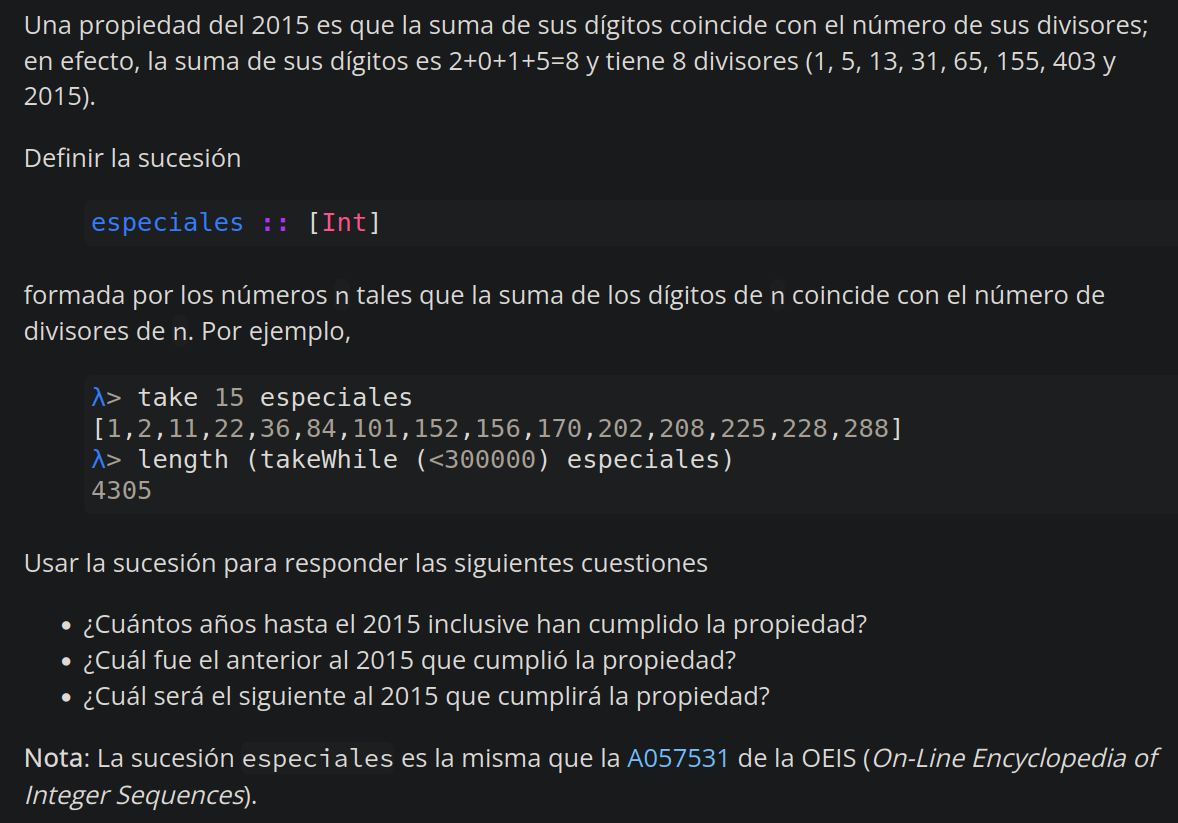
#Exercitium: 2015 y los números tales que la suma de sus dígitos es igual al número de sus divisores. https://jaalonso.github.io/exercitium/posts/2014/12/22-2015_y_los_numeros_cuya_suma_de_digitos_es_su_numero_de_divisores/ #Haskell #ProgramaciónFuncional #Matemáticas
@Jose_A_Alonso@mathstodon.xyz
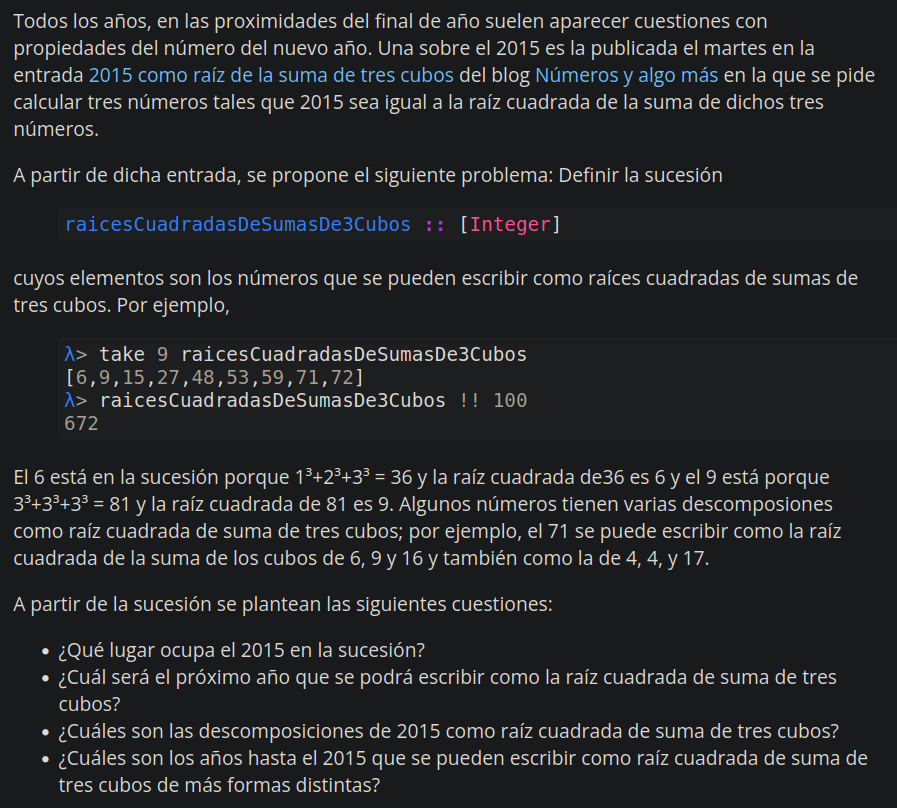
#Exercitium: 2015 como raíz cuadrada de la suma de tres cubos. https://jaalonso.github.io/exercitium/posts/2014/12/19-2015-como-raiz-cuadrada-de-la-suma-de-tres-cubos/ #Haskell #ProgramaciónFuncional #Matemáticas
@abnv@fantastic.earth
I solved #AdventOfCode day 7 in #Haskell with #parsers, #zippers and #interpreters, and wrote a note about it: https://notes.abhinavsarkar.net/2022/aoc-7
@Jose_A_Alonso@mathstodon.xyz
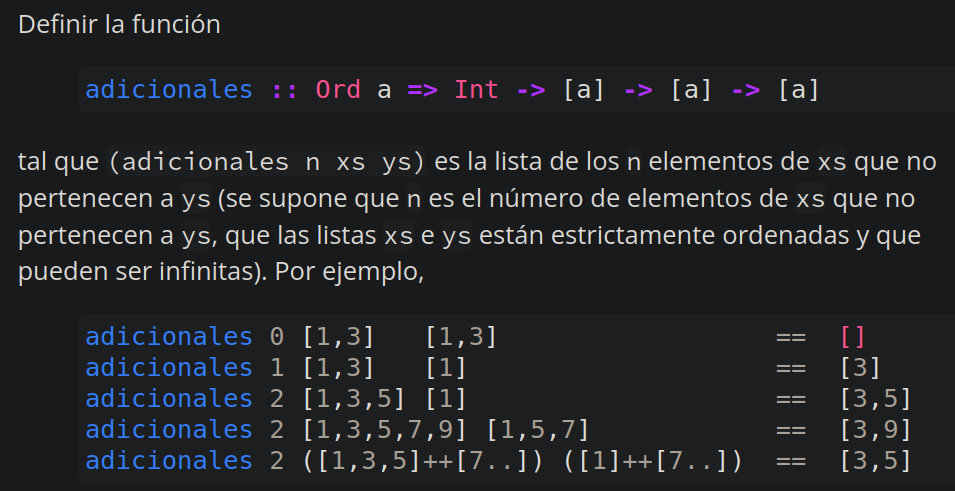
#Exercitium: Elementos adicionales. https://jaalonso.github.io/exercitium/posts/2014/12/17-elementos_adicionales/ #Haskell #ProgramaciónFuncional

@haskell_foundation@mastodon.social
The State of #Haskell 2025 survey is out! Please take ~10 minutes to fill this out and share it with friends/colleagues/coworkers, whether or not they are users of Haskell.
@Jose_A_Alonso@mathstodon.xyz
Readings shared December 10, 2025. https://jaalonso.github.io/vestigium/posts/2025/12/11-readings_shared_12-10-25 #FunctionalProgramming #Haskell #ITP #IsabelleHOL #LeanProver #Math
@haskell@fosstodon.org
The State of #Haskell 2025 survey is out! Please take ~10 minutes to fill this out and share it with friends/colleagues/coworkers, whether or not they are users of Haskell.
@haskell@fosstodon.org
Koreaboo #Haskell programmers should not forget to add GOCHUJANGLOG.md in the extra-doc-files section of their .cabal file.
https://cabal.readthedocs.io/en/stable/cabal-package-description-file.html#pkg-field-extra-doc-files
@haskell@fosstodon.org
The State of #Haskell 2025 survey is out! Please take ~10 minutes to fill this out and share it with friends/colleagues/coworkers, whether or not they are users of Haskell.
@haskell@fosstodon.org
The State of #Haskell 2025 survey is out! Please take ~10 minutes to fill this out and share it with friends/colleagues/coworkers, whether or not they are users of Haskell.
@6d03@mathstodon.xyz
I have a working prototype of an #ASN1 to #Haskell compiler. It can't do a lot yet; but it does translate enum types.
(Built on top of a lot of great existing work.)
```
ghci> Prelude.putStr =<< Prelude.readFile "./asn1-modules/bar.asn1"
BarFramework { 1 }
DEFINITIONS ::=
BEGIN
Bar ::= ENUMERATED {red, blue, yellow}
END -- BarFramework
ghci> _ = () ; $(spliceFromModuleOrDie "./asn1-modules/bar.asn1")
ghci> :i Bar
type Bar :: *
data Bar = Red | Blue | Yellow
-- Defined at <interactive>:137:11
ghci>
```
@haskell@fosstodon.org
The State of #Haskell 2025 survey is out! Please take ~10 minutes to fill this out and share it with friends/colleagues/coworkers, whether or not they are users of Haskell.
@Jose_A_Alonso@mathstodon.xyz
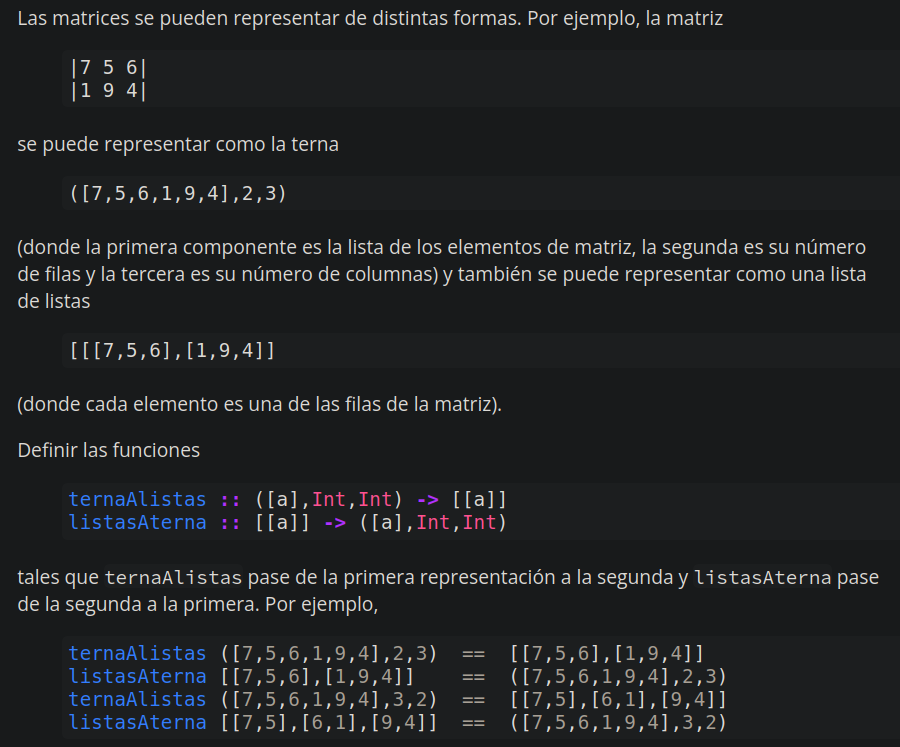
#Exercitium: Representaciones de matrices. https://jaalonso.github.io/exercitium/posts/2014/12/16-representaciones_de_matrices/ #Haskell #ProgramaciónFuncional #Matemáticas
@kosmikus@functional.cafe
Join us for a new episode of the #Haskell #Unfolder, today, 2025-12-10 at 1930 UTC. This time we're discussing bidirectional parsing and printing, using as an example the autodocodec package.
https://www.youtube.com/watch?v=z9V59Y0VDcg&list=PLD8gywOEY4HaG5VSrKVnHxCptlJv2GAn7&index=52
@Jose_A_Alonso@mathstodon.xyz
Readings shared December 9, 2025. https://jaalonso.github.io/vestigium/posts/2025/12/10-readings_shared_12-09-25 #AI #FunctionalProgramming #HOL4 #HOL-Light #Haskell #ITP #IsabelleHOL #LeanProver #Math
@Jose_A_Alonso@mathstodon.xyz
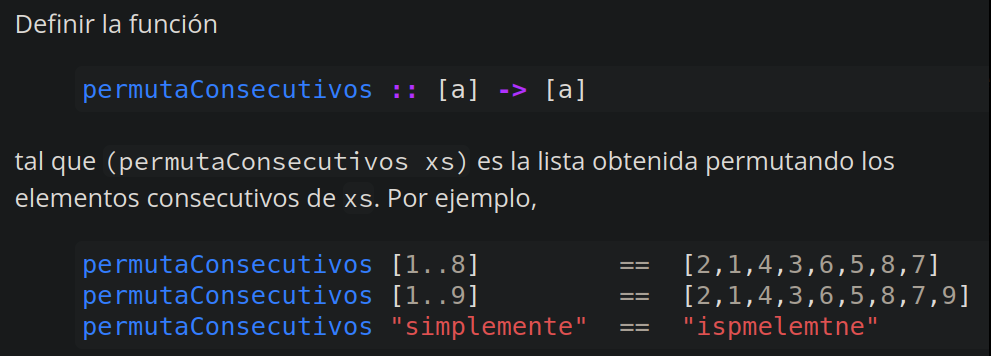
#Exercitium: Permutación de elementos consecutivos. https://jaalonso.github.io/exercitium/posts/2014/12/15-permutacion_de_consecutivos/ #Haskell #ProgramaciónFuncional
@Jose_A_Alonso@mathstodon.xyz
Readings shared December 8, 2025. https://jaalonso.github.io/vestigium/posts/2025/12/09-readings_shared_12-08-25 #FunctionalProgramming #Haskell #ITP #LeanProver #Math
@Jose_A_Alonso@mathstodon.xyz
#Exercitium: Juego de bloques con letras. https://jaalonso.github.io/exercitium/posts/2014/12/12-juego_de_bloques_con_letras/ #Haskell #ProgramaciónFuncional
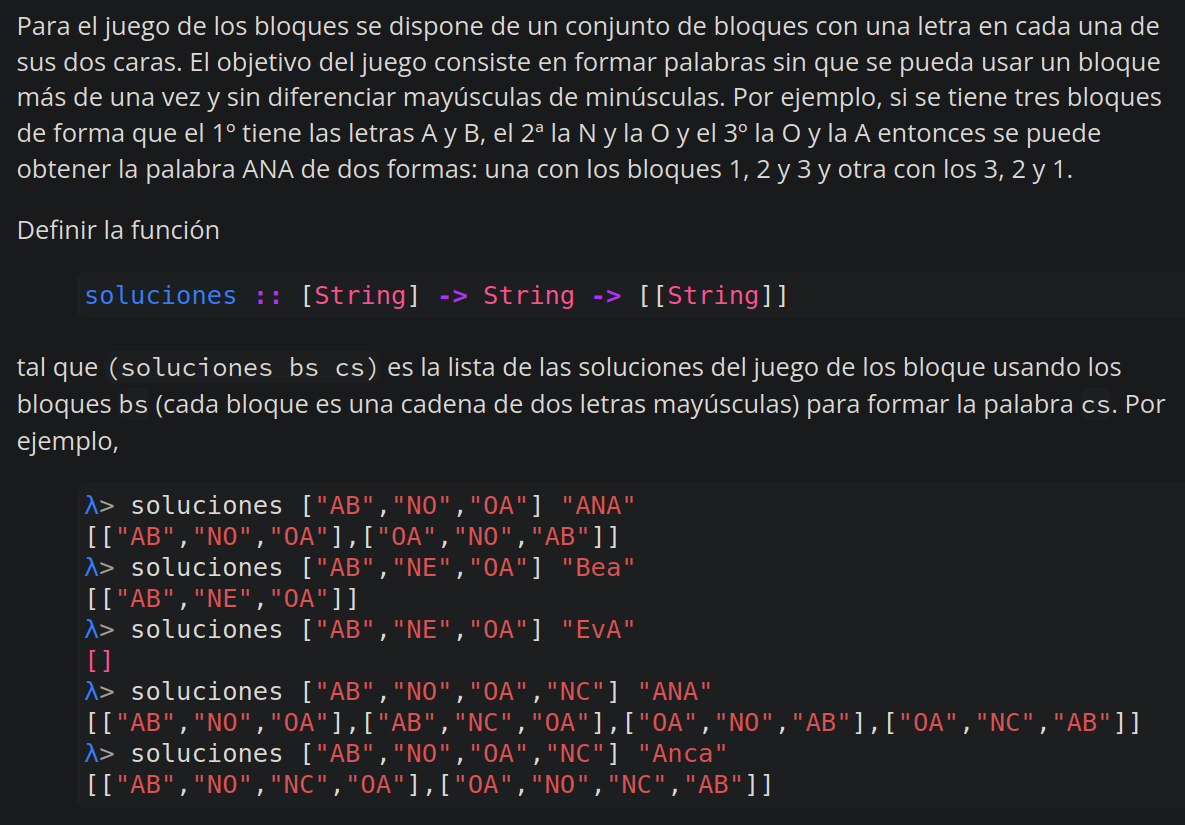
@Jose_A_Alonso@mathstodon.xyz
@Jose_A_Alonso@mathstodon.xyz
#Exercitium: Números que sumados a su siguiente primo dan primos. https://jaalonso.github.io/exercitium/posts/2014/12/11-numeros_que_sumados_a_su_siguiente_primo_dan_primos/ #Haskell #ProgramaciónFuncional #Matemáticas
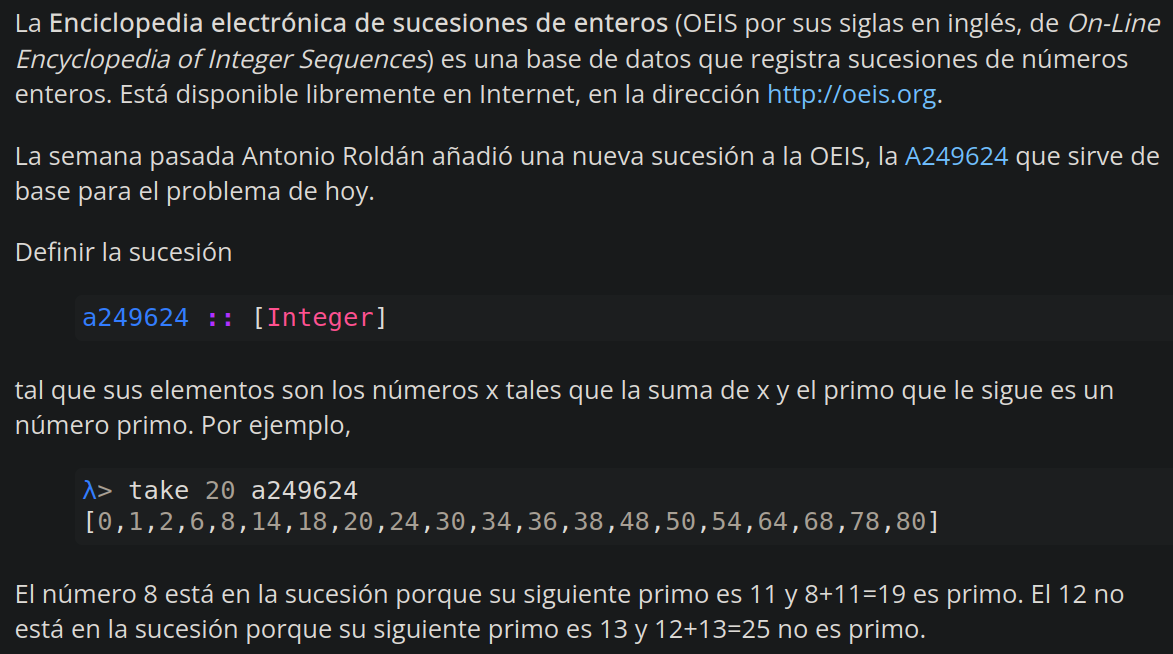
@haskell@fosstodon.org
Saint-Exupéry wrote “Perfection is achieved, not when there is nothing more to add, but when there is nothing left to take away.”
What would you like to see removed from #Haskell to help it achieve perfection?
@haskell@fosstodon.org
Saint-Exupéry wrote “Perfection is achieved, not when there is nothing more to add, but when there is nothing left to take away.”
What would you like to see removed from #Haskell to help it achieve perfection?
@Jose_A_Alonso@mathstodon.xyz
Readings shared December 5, 2025. https://jaalonso.github.io/vestigium/posts/2025/12/06-readings_shared_12-05-25 #ATP #Autoformalization #DataScience #FunctionalProgramming #Haskell #ITP #LeanProver #Math #Rocq #Rstats #SMT #Z3
@hackuador@functional.cafe · Reply to Fraser Tweedale's post
@haskell@fosstodon.org
Layoutz – A tiny zero-dep lib for beautiful #Elm-style TUI's in #Haskell 🪶
https://flora.pm/packages/@hackage/layoutz
https://www.reddit.com/r/haskell/comments/1pe3qju/layoutz_020_a_tiny_zerodep_lib_for_beautiful/
@Jose_A_Alonso@mathstodon.xyz
#Exercitium: Normalización de expresiones aritméticas. https://jaalonso.github.io/exercitium/posts/2014/12/10-normalizacion_de_expresiones_aritmetica/ #Haskell #ProgramaciónFuncional #Matemáticas
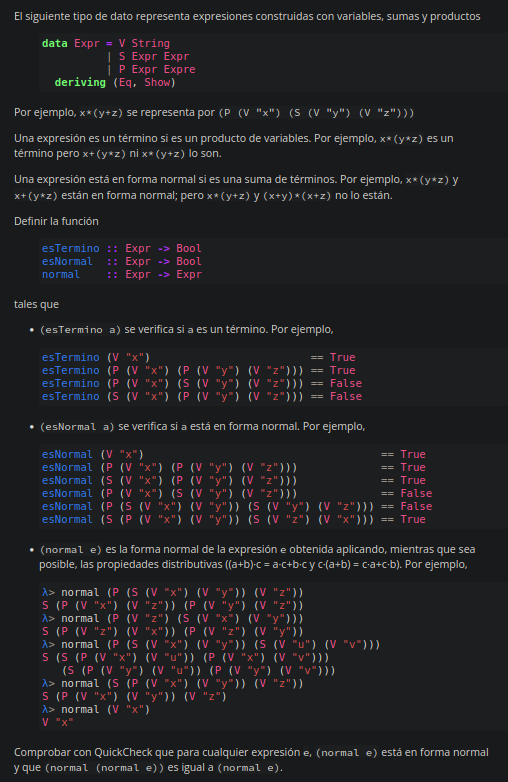
@Jose_A_Alonso@mathstodon.xyz
Haskell is a great language for data science. ~ Jonathan Carroll. https://jcarroll.com.au/2025/12/05/haskell-is-a-great-language-for-data-science/ #Haskell #FunctionalProgramming #DataScience #Rstats
@Jose_A_Alonso@mathstodon.xyz
Readings shared December 4, 2025. https://jaalonso.github.io/vestigium/posts/2025/12/05-readings_shared_12-04-25 #FunctionalProgramming #Haskell #ITP #IsabelleHOL #LeanProver

@jonocarroll@fosstodon.org
Perhaps you saw the post series "Python is not a great language for data science"... well, here's
Haskell IS a Great Language for Data Science
https://jcarroll.com.au/2025/12/05/haskell-is-a-great-language-for-data-science/
@Jose_A_Alonso@mathstodon.xyz
#Exercitium: Sin consecutivos repetidos. https://jaalonso.github.io/exercitium/posts/2014/12/09-sin_consecutivos_repetidos/ #Haskell #ProgramaciónFuncional
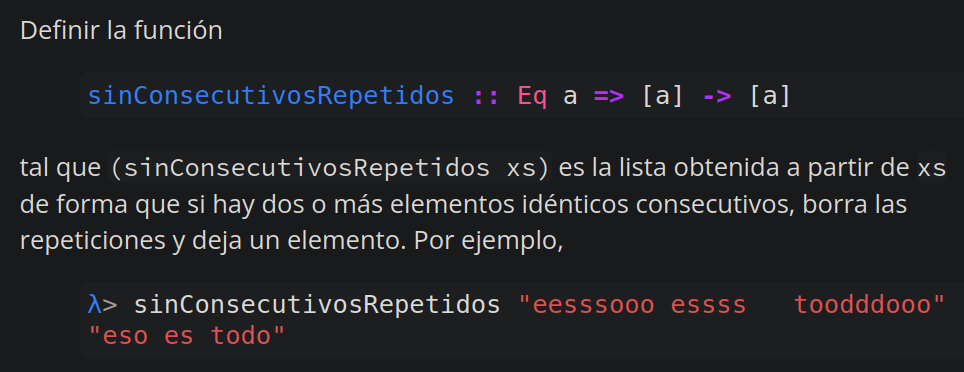
@Jose_A_Alonso@mathstodon.xyz
Readings shared December 3, 2025. https://jaalonso.github.io/vestigium/posts/2025/12/04-readings_shared_12-03-25 #CompSci #FunctionalProgramming #Haskell #ITP #LeanProver #Math
@Jose_A_Alonso@mathstodon.xyz
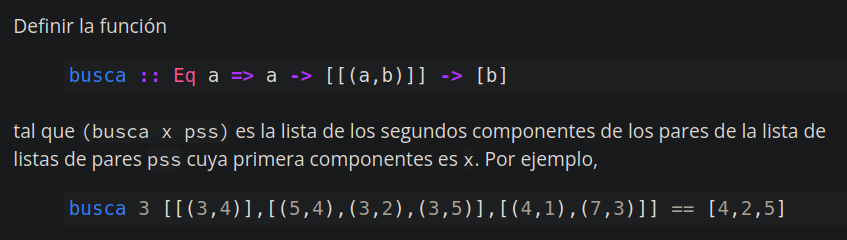
#Exercitium: Búsqueda en lista de listas de pares. https://jaalonso.github.io/exercitium/posts/2014/12/08-busqueda_en_lista_de_listas_de_pares/ #Haskell #ProgramaciónFuncional

@sp1ff@indieweb.social
#haskell #recursion A few notes on the Haskell fix function (https://www.unwoundstack.com/blog/haskell-fixpoint-combinator.html)
@sp1ff@indieweb.social
#haskell #recursion A few notes on the Haskell fix function (https://www.unwoundstack.com/blog/haskell-fixpoint-combinator.html)
@haskell@fosstodon.org
This year, why not do the #AdventOfCode in #Haskell with your polycule?
@haskell@fosstodon.org
New post on the #Haskell blog: "Analyzing language extension semantics" from the Stability Working Group.
https://blog.haskell.org/investigating-language-extension-semantics/
@Jose_A_Alonso@mathstodon.xyz
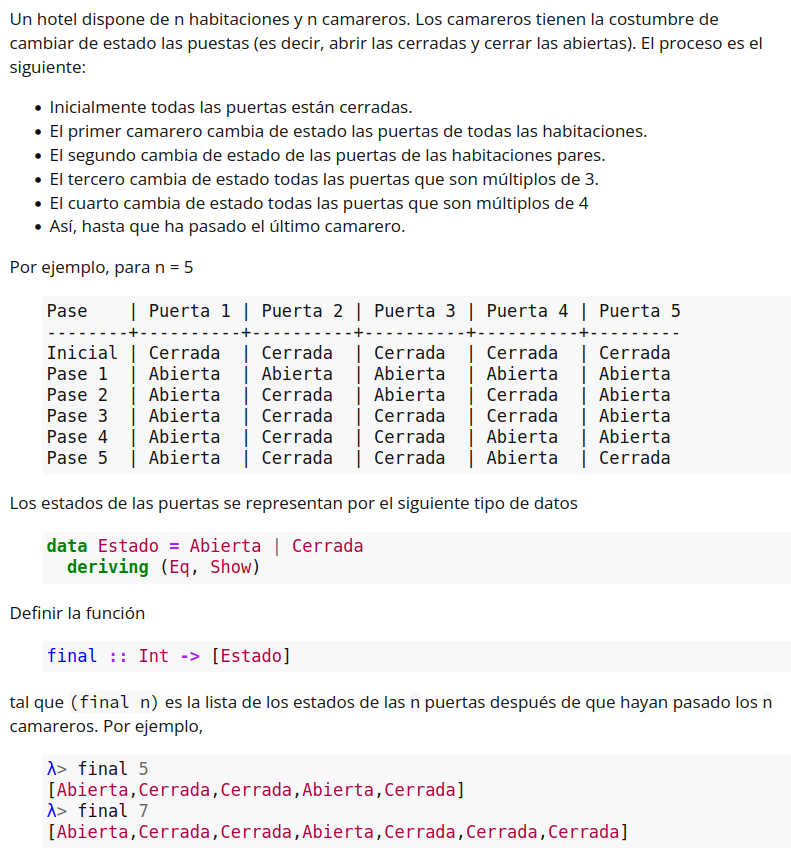
#Exercitium: Problema de las puertas. https://jaalonso.github.io/exercitium/posts/2014/12/05-problema_de_las_puertas/ #Haskell #ProgramaciónFuncional #Matemáticas
@Jose_A_Alonso@mathstodon.xyz
Readings shared November 27, 2025. https://jaalonso.github.io/vestigium/posts/2025/11/28-readings_shared_11-27-25 #AI #FunctionalProgramming #Haskell #ITP #LeanProver #Math
@Jose_A_Alonso@mathstodon.xyz
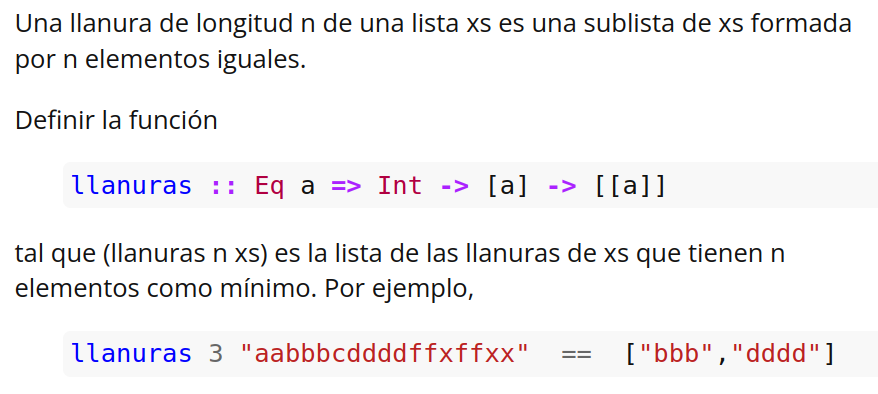
#Exercitium: Llanuras de longitud dada. https://jaalonso.github.io/exercitium/posts/2014/12/04-llanuras_de_longitud_dada/ #Haskell #ProgramaciónFuncional
@Jose_A_Alonso@mathstodon.xyz
Readings shared November 26, 2025. https://jaalonso.github.io/vestigium/posts/2025/11/27-readings_shared_11-26-25 #FunctionalProgramming #Haskell #ITP #IsabelleHOL #LambdaCalculus #Math #TypeTheory
@Jose_A_Alonso@mathstodon.xyz
@haskell@fosstodon.org
"Google Summer of Code 2025 Wrap-up" on the #Haskell blog! Come see what our students contributed to the ecosystem during their time! https://blog.haskell.org/gsoc-2025/
@Jose_A_Alonso@mathstodon.xyz
Lambda calculus and typing. ~ Noam Zeilberger. https://noamz.org/teaching/CSE301/2025/Notes/LambdaNotes.pdf #Haskell #FunctionalProgramming #LambdaCalculus #TypeTheory
@Jose_A_Alonso@mathstodon.xyz
Higher-order functions and type classes. ~ Noam Zeilberger. https://noamz.org/teaching/CSE301/2025/Notes/HONotes.pdf #Haskell #FunctionalProgramming
@Jose_A_Alonso@mathstodon.xyz
First-order data types and pattern-matching ~ Noam Zeilberger. https://noamz.org/teaching/CSE301/2025/Notes/DataNotes.pdf #Haskell #FunctionalProgramming
@Jose_A_Alonso@mathstodon.xyz
Introduction to functional programming. ~ Noam Zeilberger. https://noamz.org/teaching/CSE301/2025/Notes/IntroNotes.pdf #Haskell #FunctionalProgramming
@Jose_A_Alonso@mathstodon.xyz
Readings shared November 25, 2025. https://jaalonso.github.io/vestigium/posts/2025/11/26-readings_shared_11-25-25 #AI #FunctionalProgramming #Haskell #ITP #IsabelleHOL #LLMs #LeanProver #Math #Programming #Rocq
@haskell@fosstodon.org
"A tale of two kernels" on the DataHaskell blog https://www.datahaskell.org/blog/2025/11/25/a-tale-of-two-kernels.html
@Jose_A_Alonso@mathstodon.xyz
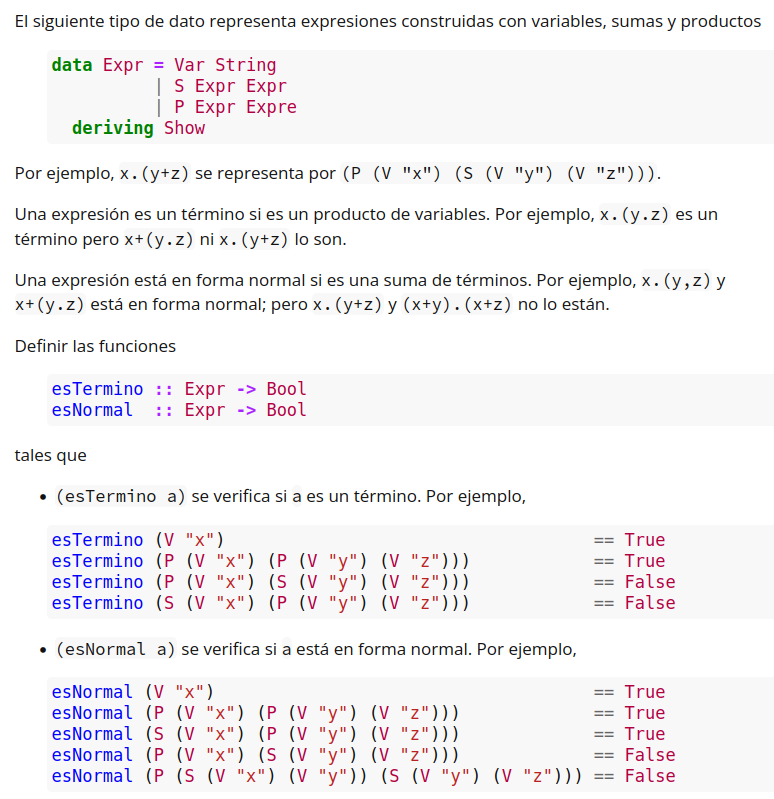
#Exercitium: Expresiones aritmética normalizadas. https://jaalonso.github.io/exercitium/posts/2014/12/02-expresiones_aritmeticas_normalizadas/ #Haskell #ProgramaciónFuncional #Matemáticas
@haskell@fosstodon.org
Did you know? While not a perfect replacement, `cabal` can use Stackage package sets by importing the version constraints file that is provided by stackage.org. Create a `cabal.project` file and add the lines:
```
packages: ./
import: https://www.stackage.org/lts-24.4/cabal.config
```
🥳
#Haskell
@Jose_A_Alonso@mathstodon.xyz
Readings shared November 20, 2025. https://jaalonso.github.io/vestigium/posts/2025/11/21-readings_shared_11-20-25 #FunctionalProgramming #Haskell #ITP #LeanProver #Math
@Jose_A_Alonso@mathstodon.xyz
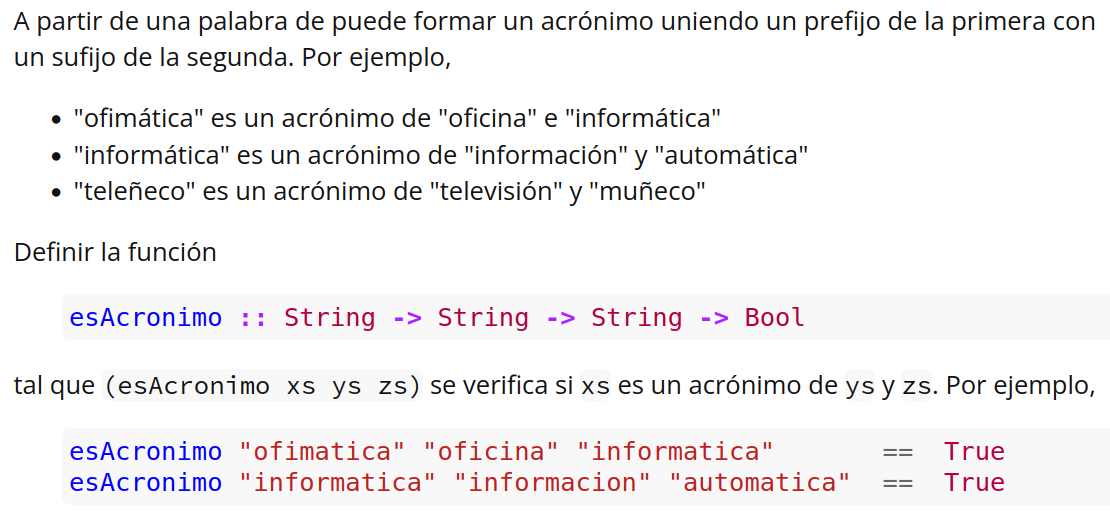
#Exercitium: Acrónimos. https://jaalonso.github.io/exercitium/posts/2014/12/01-acronimos/ #Haskell #ProgramaciónFuncional
@Jose_A_Alonso@mathstodon.xyz
Hyperfunctions: Communicating continuations. ~ Donnacha Oisín Kidney, Nicolas Wu. https://doisinkidney.com/pdfs/hyperfunctions.pdf #Haskell #FunctionalProgramming
@Jose_A_Alonso@mathstodon.xyz
On small functions (and Haskell). ~ Alexander Przemysław Kamiński. https://xlii.space/eng/small-functions/ #Haskell #FunctionalProgramming
@Jose_A_Alonso@mathstodon.xyz
Readings shared November 19, 2025. https://jaalonso.github.io/vestigium/posts/2025/11/20-readings_shared_11-19-25 #FunctionalProgramming #Haskell #ITP #IsabelleHOL #LeanProver #Math #Programming
@Jose_A_Alonso@mathstodon.xyz
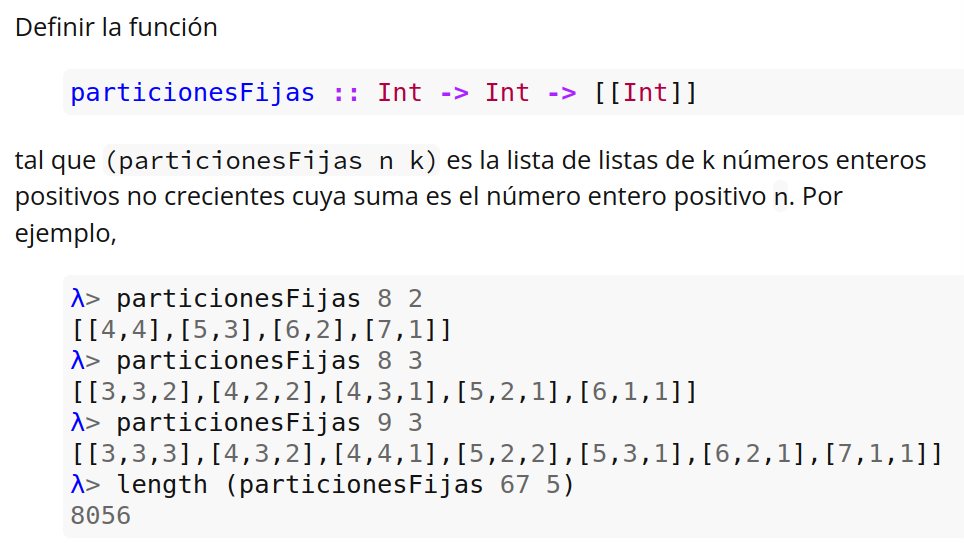
#Exercitium: Particiones de longitud fija. https://jaalonso.github.io/exercitium/posts/2014/11/28-particiones_de_longitud_fija/ #Haskell #ProgramaciónFuncional #Matemáticas
@Jose_A_Alonso@mathstodon.xyz
Readings shared November 18, 2025. https://jaalonso.github.io/vestigium/posts/2025/11/19-readings_shared_11-18-25 #AI #Autoformalization #FunctionalProgramming #Haskell #ITP #LeanProver #Math #Programming #Scheme
@Jose_A_Alonso@mathstodon.xyz
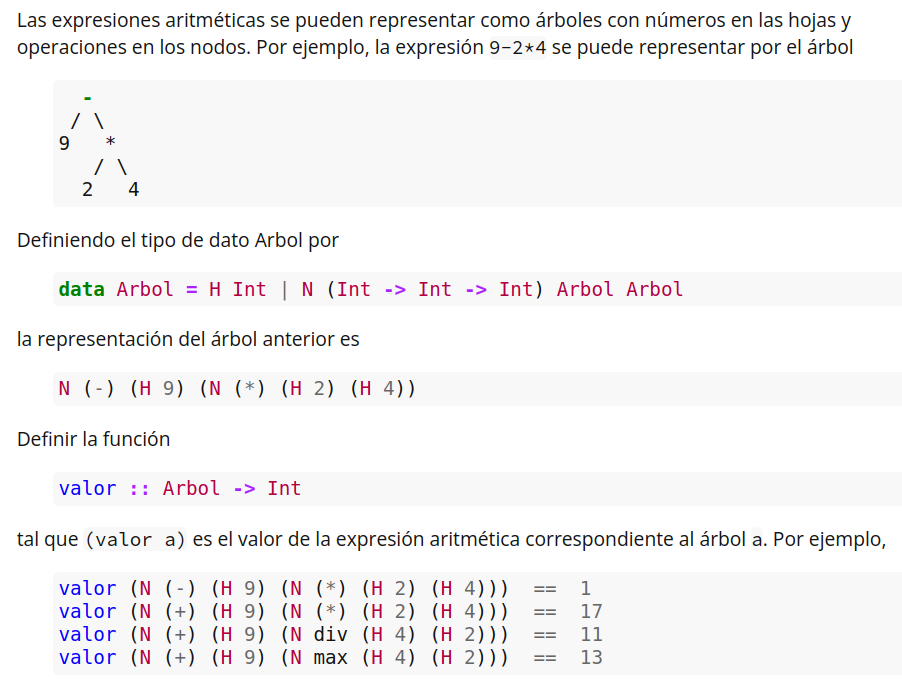
#Exercitium: Evaluación de árboles de expresiones aritméticas. https://jaalonso.github.io/exercitium/posts/2014/11/27-evaluacion_de_arboles_de_expresiones_aritmeticas/ #Haskell #ProgramaciónFuncional #Matemáticas
@Jose_A_Alonso@mathstodon.xyz
Readings shared November 17, 2025. https://jaalonso.github.io/vestigium/posts/2025/11/18-readings_shared_11-17-25 #FunctionalProgramming #Haskell #ITP #IsabelleHOL #LeanProver #Math #NeuralNetwork
@Jose_A_Alonso@mathstodon.xyz
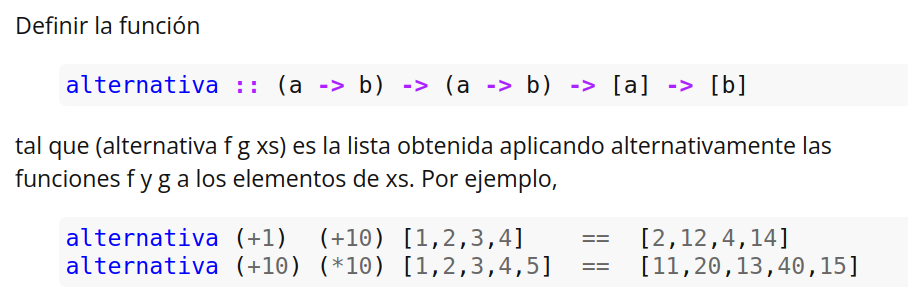
#Exercitium: Aplicaciones alternativas. https://jaalonso.github.io/exercitium/posts/2014/11/26-aplicaciones_alternativas/ #Haskell #ProgramaciónFuncional
@pandoc@fosstodon.org
Pandoc allows to access and modify the Haskell runtime system (RTS) that the program runs on.
E.g., to print memory usage:
pandoc +RTS -s -RTS …
Or to limit the maximum heap size available to pandoc to 2 GB:
pandoc +RTS -M2G -RTS …
See all available options by running:
pandoc +RTS -?
This can be helpful when facing performance issues.
@Jose_A_Alonso@mathstodon.xyz
xeus-haskell: a Jupyter kernel for Haskell based on the native implementation of the Jupyter protocol xeus. ~ Masaya Taniguchi. https://github.com/tani/xeus-haskell #Haskell #FunctionalProgramming
@Jose_A_Alonso@mathstodon.xyz
Readings shared November 16, 2025. https://jaalonso.github.io/vestigium/posts/2025/11/17-readings_shared_11-16-25 #AI #ATP #Autoformalization #FunctionalProgramming #Haskell #ITP #LLMs #LeanProver #Math #SatSolvers
@Jose_A_Alonso@mathstodon.xyz
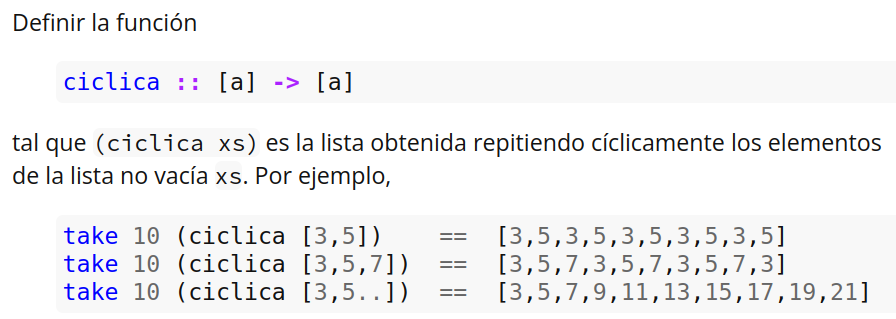
#Exercitium: Repetición cíclica. https://jaalonso.github.io/exercitium/posts/2014/11/25-repeticion_ciclica/ #Haskell #ProgramaciónFuncional
@Jose_A_Alonso@mathstodon.xyz
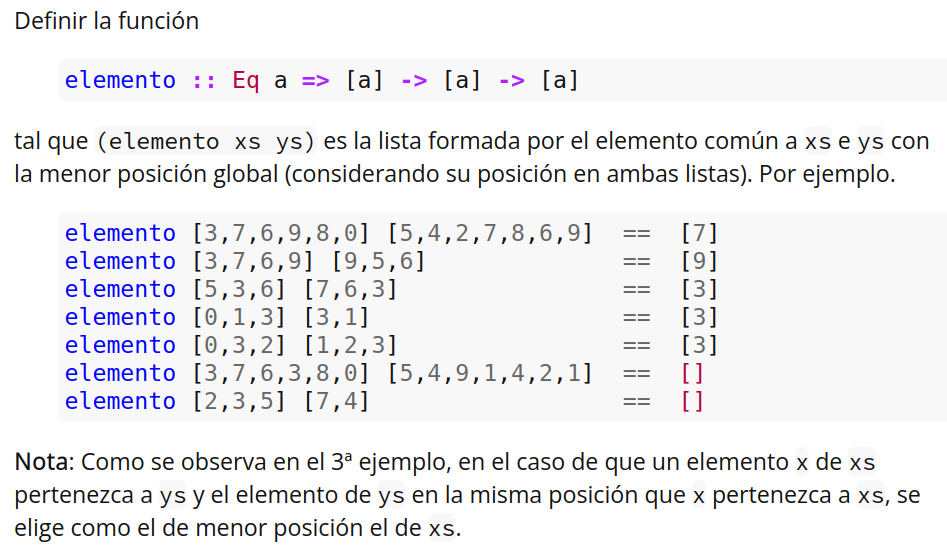
#Exercitium: Elemento común en la menor posición. https://jaalonso.github.io/exercitium/posts/2014/11/24-elemento_comun_en_menor_posicion/ #Haskell #ProgramaciónFuncional #Matemáticas
@Jose_A_Alonso@mathstodon.xyz
Readings shared November 14, 2025. https://jaalonso.github.io/vestigium/posts/2025/11/15-readings_shared_11-14-25 #AI #Agda #AlphaProof #CoqProver #FunctionalProgramming #Haskell #ITP #LeanProver #Math #OCaml #Rocq
@Jose_A_Alonso@mathstodon.xyz
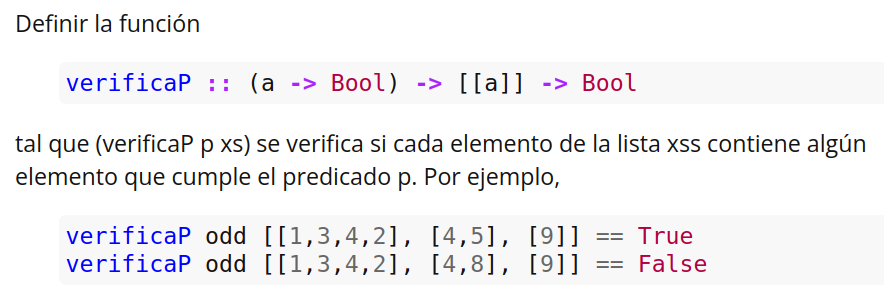
#Exercitium: Cuantificadores sobre listas. https://jaalonso.github.io/exercitium/posts/2014/11/21-cuantificadores_sobre_listas/ #Haskell #ProgramaciónFuncional
@Jose_A_Alonso@mathstodon.xyz
The Haskell Unfolder Episode 51: Typed servers using sop-core. ~ Edsko de Vries, Andres Löh. https://www.youtube.com/live/3XeIoA0aVLQ #Haskell #FunctionalProgramming
@Jose_A_Alonso@mathstodon.xyz
The Haskell Unfolder Episode 50: Singletons. ~ Edsko de Vries, Andres Löh. https://www.youtube.com/live/-zxxl-WuwuE #Haskell #FunctionalProgramming
@Jose_A_Alonso@mathstodon.xyz
The Haskell Unfolder Episode 49: Shrinking. ~ Edsko de Vries, Andres Löh. https://www.youtube.com/live/EcV4rb-Czfg #Haskell #FunctionalProgramming
@Jose_A_Alonso@mathstodon.xyz
Patterns and paradoxes: The logic of pattern synonyms. ~ Koz Ross. https://www.mlabs.city/blog/patterns-and-paradoxes #Haskell #FunctionalProgramming
@Jose_A_Alonso@mathstodon.xyz
You could have invented Fenwick trees. ~ Brent Yorgey. https://www.cambridge.org/core/journals/journal-of-functional-programming/article/you-could-have-invented-fenwick-trees/B4628279D4E54229CED97249E96F721D #Haskell #FunctionalProgramming
@Jose_A_Alonso@mathstodon.xyz
Experiences of early assessment to teach functional programming. ~ Peter Chapman. https://www.cambridge.org/core/journals/journal-of-functional-programming/article/experiences-of-early-assessment-to-teach-functional-programming/667F18D3611D4A3A7C7C6A2A2FA4FB3C #Haskell #FunctionalProgramming
@Jose_A_Alonso@mathstodon.xyz
How much is in a square? Calculating functional programs with squares. ~ Jose Nuno Oliveira. https://www.cambridge.org/core/journals/journal-of-functional-programming/article/how-much-is-in-a-square-calculating-functional-programs-with-squares/F48258008F47DC9F53AA2E61B4E511A7 #Haskell #FunctionalProgramming
@Jose_A_Alonso@mathstodon.xyz
Domain-specific tensor languages. ~ Jean-Philippe Bernardy, Patrik Jansson. https://www.cambridge.org/core/journals/journal-of-functional-programming/article/domainspecific-tensor-languages/19B95794B66C66E117DFCFC7A21E22D5 #Haskell #FunctionalProgramming
@Jose_A_Alonso@mathstodon.xyz
Parallel dual-numbers reverse AD. ~ Tom J. Smeding, Matthijs I.L. Vákár. https://www.cambridge.org/core/journals/journal-of-functional-programming/article/parallel-dualnumbers-reverse-ad/ECFEF5DE72D5CB7C5BBA0AD7C203BF38 #Haskell #FunctionalProgramming
@Jose_A_Alonso@mathstodon.xyz
Automatically testing console I/O behavior of student submissions in Haskell. ~ Oliver Westphal, Janis Voigtländer. https://www.cambridge.org/core/journals/journal-of-functional-programming/article/automatically-testing-console-io-behavior-of-student-submissions-in-haskell/20BF7DCA6330A2115C2C2B9BA47AB2E0 #Haskell #FunctionalProgramming
@Jose_A_Alonso@mathstodon.xyz
Checking equivalence in a non-strict language. ~ John Charles Kolesar, Ruzica Piskac, William Triest Hallahan. https://www.cambridge.org/core/journals/journal-of-functional-programming/article/checking-equivalence-in-a-nonstrict-language/82D1E4CE7541BDDF5B954B471549C447#supplementary-materials #Haskell #FunctionalProgramming
@Jose_A_Alonso@mathstodon.xyz
Turner, Bird, Eratosthenes: An eternal burning thread. ~ Jeremy Gibbons. https://www.cambridge.org/core/journals/journal-of-functional-programming/article/turner-bird-eratosthenes-an-eternal-burning-thread/32E2EDF5D5EAEC95F13D313BC97B86F0 #Haskell #FunctionalProgramming
@Jose_A_Alonso@mathstodon.xyz
Readings shared November 13, 2025. https://jaalonso.github.io/vestigium/posts/2025/11/14-readings_shared_11-13-25 #AI #Education #FunctionalProgramming #Haskell #ITP #LeanProver #Math

@hungryjoe@functional.cafe
I'm going to be talking about using #Haskell for #3dPrinting at London #Scala (January 14th)
@haskell@fosstodon.org
"Composing Event Migrations with Default Implementations" from the Hindsight blog https://hindsight.events/content/posts/composing-event-migrations-with-default-implementations.html
@kosmikus@functional.cafe
There's going to be a new episode of the #Haskell #Unfolder today, 2025-11-12, at 1930 UTC. We're going to discuss how to implement (more) type-safe APIs via some type-level programming using the sop-core package.
https://www.youtube.com/watch?v=3XeIoA0aVLQ&list=PLD8gywOEY4HaG5VSrKVnHxCptlJv2GAn7&index=51
@haskell@fosstodon.org
Welcome to dataHaskell (revived)! https://www.datahaskell.org/blog/2025/11/11/welcome-to-datahaskell.html
by @mchav
@abnv@fantastic.earth
Would people be interested in a series of #blog posts where I implement the C #compiler from "Writing a C Compiler" book by Nora Sandler in #Haskell? I'd focus on Haskell specific libraries and techniques with some additional bits not present in the book.
| Option | Voters |
|---|---|
| Yes | 21 (84%) |
| No | 3 (12%) |
| I hate book implementations | 1 (4%) |
@haskell@fosstodon.org
Welcome to dataHaskell (revived)! https://www.datahaskell.org/blog/2025/11/11/welcome-to-datahaskell.html
by @mchav
@Jose_A_Alonso@mathstodon.xyz
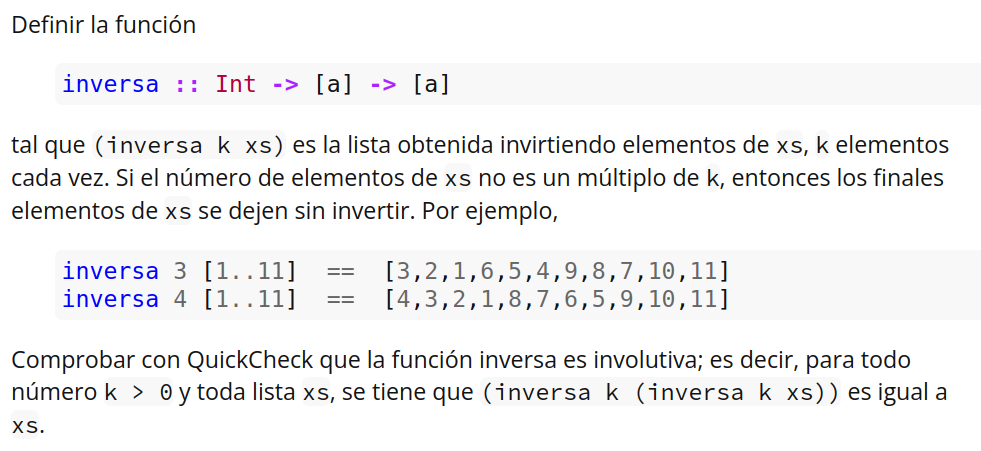
#Exercitium: Inversa a trozos. https://jaalonso.github.io/exercitium/posts/2014/11/20-inversa_a_trozos/ #Haskell #ProgramaciónFuncional
@haskell@fosstodon.org
@Jose_A_Alonso@mathstodon.xyz
Readings shared November 10, 2025. https://jaalonso.github.io/vestigium/posts/2025/11/11-readings_shared_11-10-25 #AI #FunctionalProgramming #Haskell #Math
@abnv@fantastic.earth
Would people be interested in a series of #blog posts where I implement the C #compiler from "Writing a C Compiler" book by Nora Sandler in #Haskell? I'd focus on Haskell specific libraries and techniques with some additional bits not present in the book.
| Option | Voters |
|---|---|
| Yes | 21 (84%) |
| No | 3 (12%) |
| I hate book implementations | 1 (4%) |
@hackuador@functional.cafe
@hackuador@functional.cafe
@Jose_A_Alonso@mathstodon.xyz
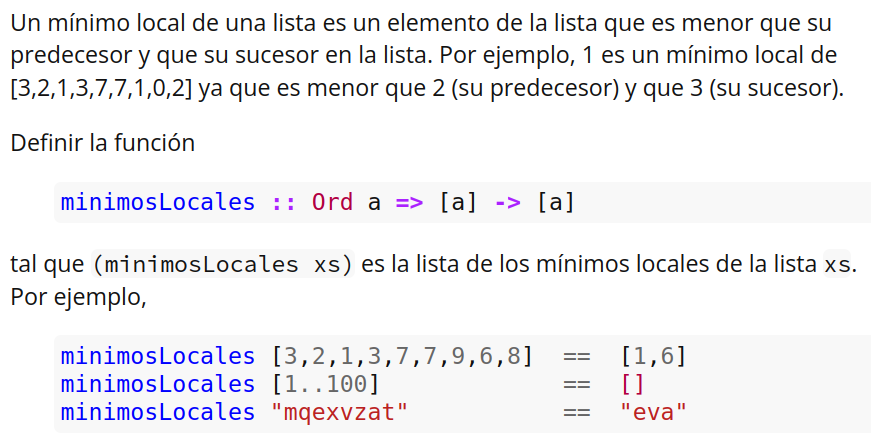
#Exercitium: Mínimos locales. https://jaalonso.github.io/exercitium/posts/2014/11/19-minimos_locales/ #Haskell #ProgramaciónFuncional #Matemáticas
@ellyxir@humanwords.cc
lessgo, short video on basic lambda calculus for learning #haskell
YouTube: https://youtu.be/Z2zV3fr8hEM?si=rrbu0a19KW1jXShN
PeerTube: https://video.mycrowd.ca/w/jtiN7siyVkubnh2XVZHqW9
@Jose_A_Alonso@mathstodon.xyz
Readings shared November 8, 2025. https://jaalonso.github.io/vestigium/posts/2025/11/09-readings_shared_11-08-25 #AI #Agda #FunctionalProgramming #Haskell #ITP #LeanProver #Math
@Jose_A_Alonso@mathstodon.xyz
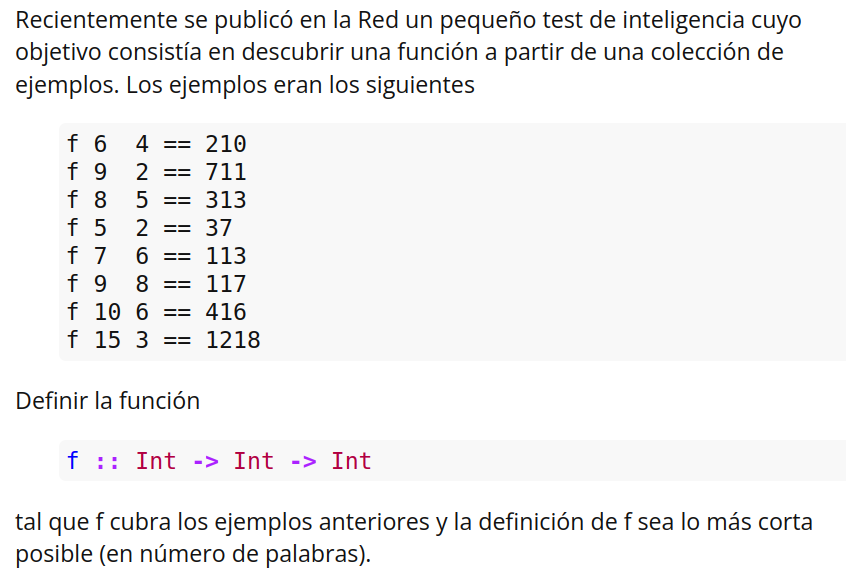
#Exercitium: Pequeño test de inteligencia. https://jaalonso.github.io/exercitium/posts/2014/11/18-pequeno_test_de_inteligencia/ #Haskell #ProgramaciónFuncional #Matemáticas
@Jose_A_Alonso@mathstodon.xyz
Readings shared November 7, 2025. https://jaalonso.github.io/vestigium/posts/2025/11/08-readings_shared_11-07-25 #AI #Agda #AlphaEvolve #FormalVerification #FunctionalProgramming #Haskell #HoTT #ITP #LLM #LeanProver #Math #Rocq
@Jose_A_Alonso@mathstodon.xyz
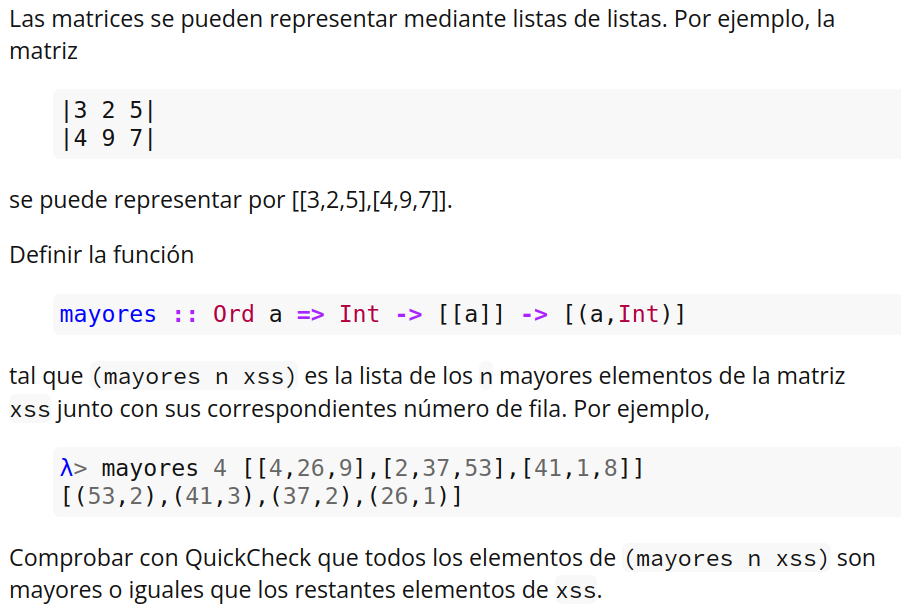
#Exercitium: Mayores elementos de una matriz. https://jaalonso.github.io/exercitium/posts/2014/11/17-mayores_elementos_de_una_matriz/ #Haskell #ProgramaciónFuncional #Matemáticas
@hackuador@functional.cafe
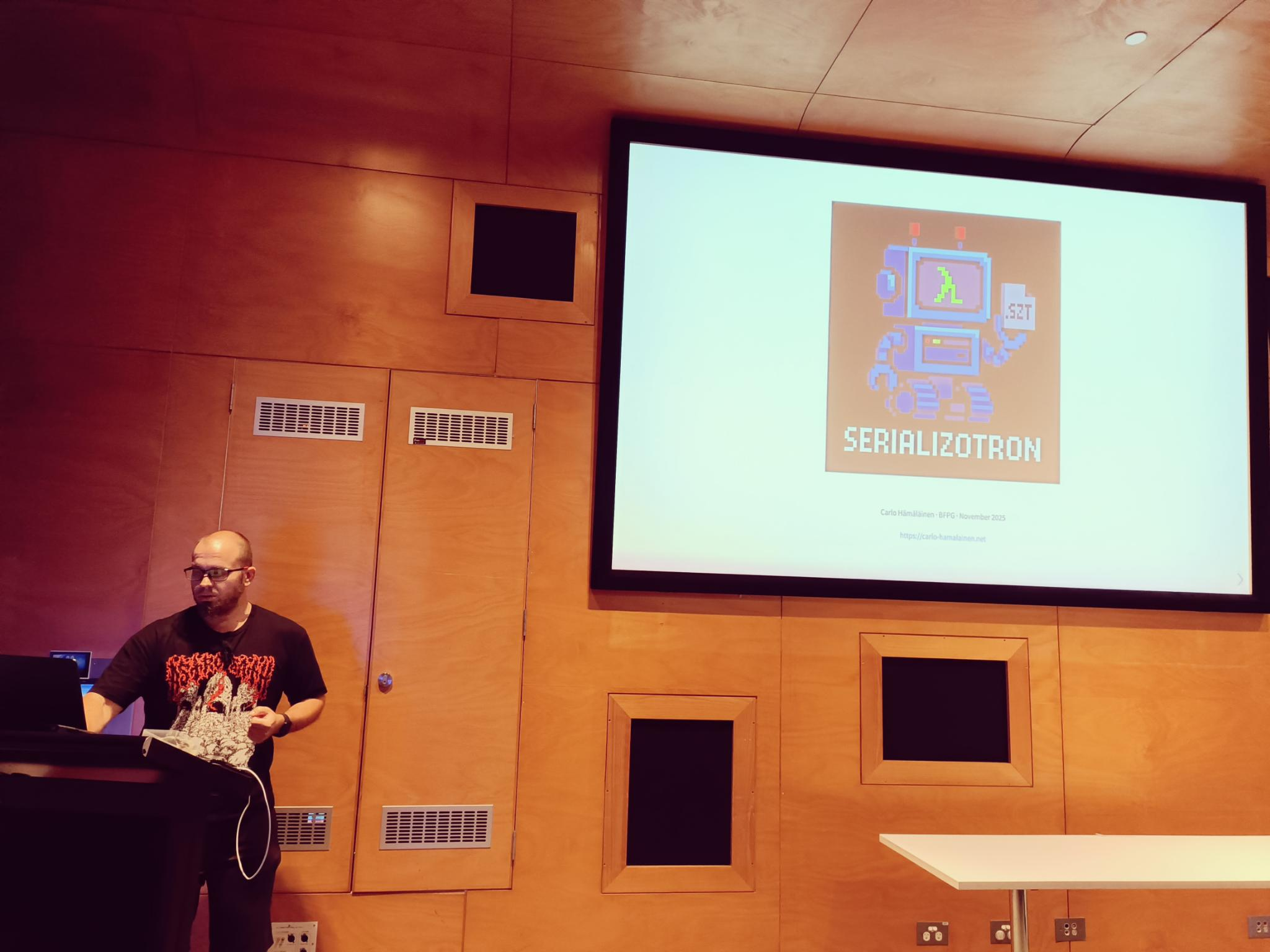
Great lineup for Brisbane Functional Programming Group #BFPG next Tuesday November 11!
- Serializotron: zero-boilerplate serialisation for #Haskell (Carlo Hamalainen)
- tmefunc: syntactic sugar for #FP in #Python (T. Mark Ellison and Siva Kalyan)
This is our final regular session for 2025, with a social event planned for December. Be there or be a lambda cube!
@haskell@fosstodon.org
"Patterns and Paradoxes: The Logic of Pattern Synonyms" by @koz https://www.mlabs.city/blog/patterns-and-paradoxes
@haskell@fosstodon.org
"Cheaper: producing a program with less developer time" by Alexandre Esteves: https://github.com/alexfmpe/semantic-satiation/blob/main/src/Posts/002-cheaper.md
@Jose_A_Alonso@mathstodon.xyz
Readings shared November 5, 2025. https://jaalonso.github.io/vestigium/posts/2025/11/06-readings_shared_11-05-25 #AI #FunctionalProgramming #Haskell #ITP #LeanProver #Math
@Jose_A_Alonso@mathstodon.xyz
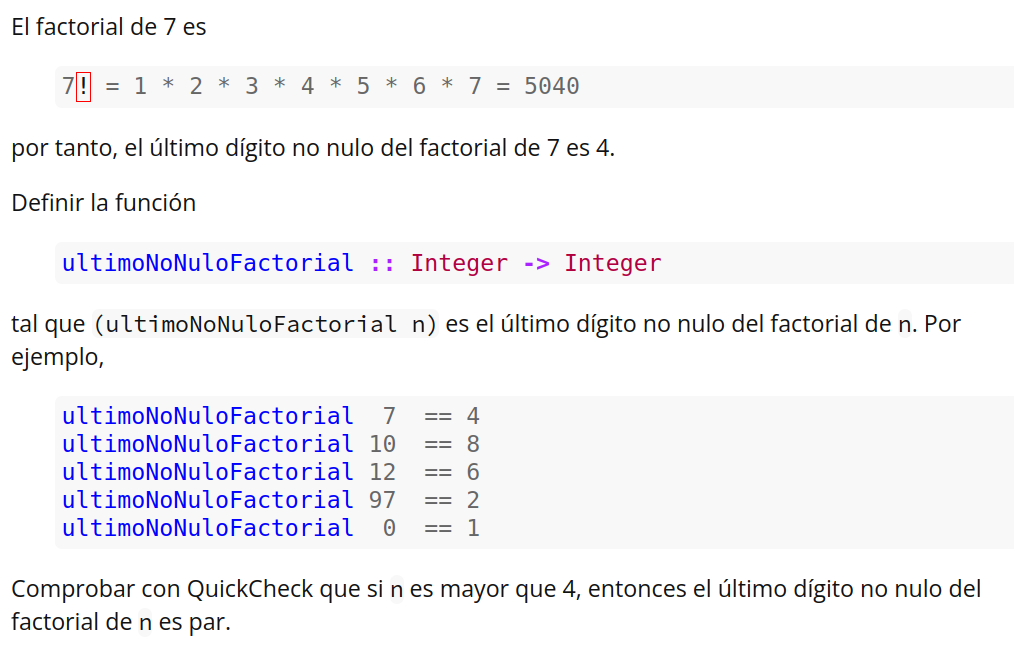
#Exercitium: Último dígito no nulo del factorial. https://jaalonso.github.io/exercitium/posts/2014/11/14-ultimo_digito_no_nulo_del_factorial/ #Haskell #ProgramaciónFuncional #Matemáticas
@Jose_A_Alonso@mathstodon.xyz
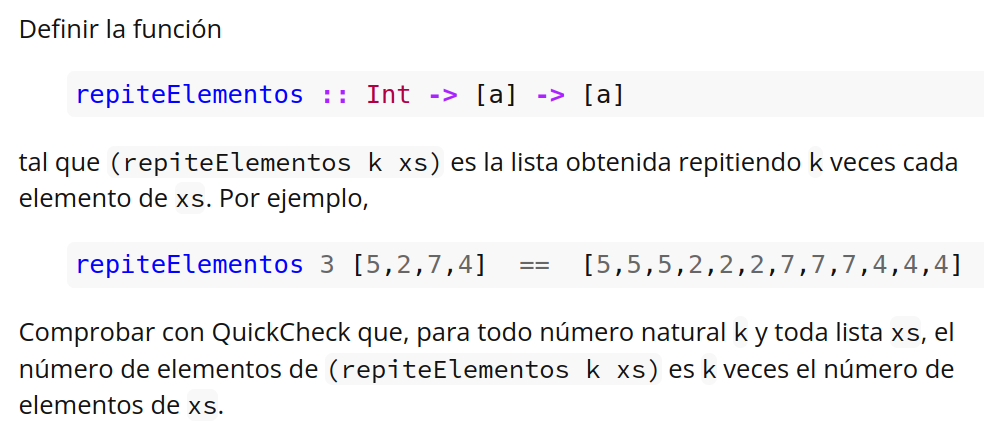
#Exercitium: Repetición de elementos. https://jaalonso.github.io/exercitium/posts/2014/11/13-repeticion_de_elementos/ #Haskell #ProgramaciónFuncional
@Jose_A_Alonso@mathstodon.xyz
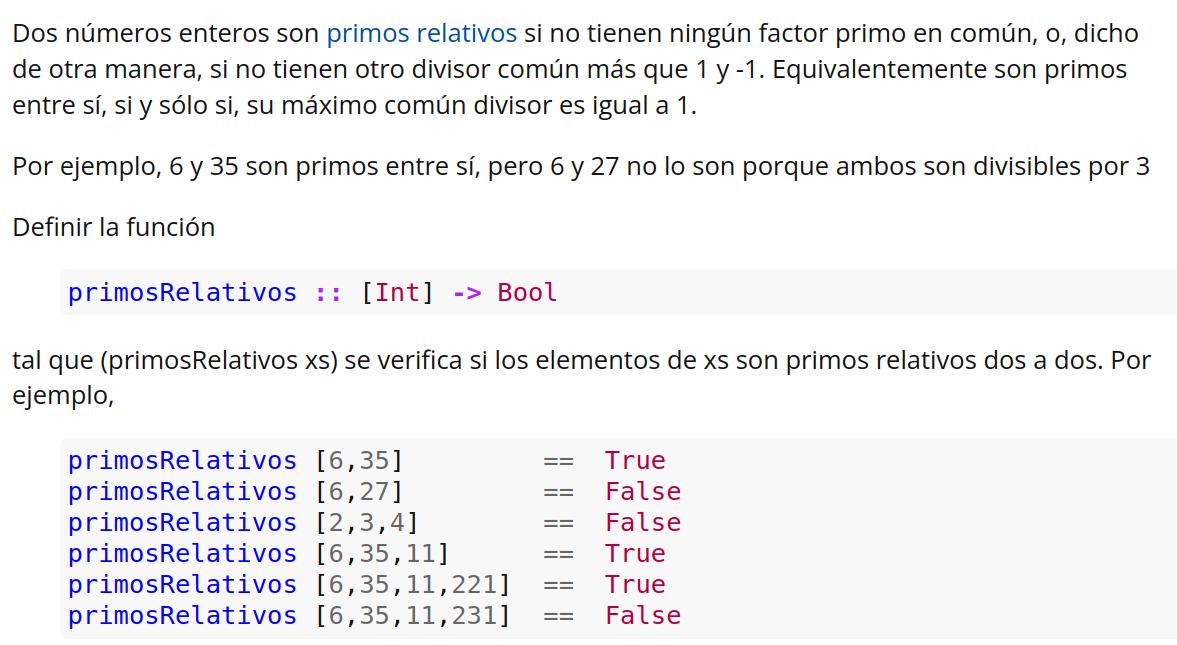
#Exercitium: Conjunto de primos relativos. https://jaalonso.github.io/exercitium/posts/2014/11/12-conjunto_de_primos_relativos/ #Haskell #ProgramaciónFuncional #Matemáticas
@abnv@fantastic.earth · Reply to Abhinav 🌏's post
Interesting poll results! I didn't expect Attoparsec to go toe-to-toe with Megaparsec.
So I did some digging into #Haskell based programming language projects on Github, and here's what I found (lexer and parser mentioned separately, if different):
- Purescript: handwritten + Happy
- Elm: handwritten
- Agda: Alex + Happy
- Dex: Megaparsec
- Carp: Parsec
- Dhall: Megaparsec
- Grace: Megaparsec + Earley
- Plutus: Megaparsec
- Grin: Megaparsec
- Futhark: Alex + Happy
- Granule / Gerty: Alex + Happy
- Kaleidoscope: Parsec
- Egison: Megaparsec
- Amulet: Alex + Happy
- Paskell: Parsec
- Facet: Handwritten + Parsec
- Eclair: Megaparsec
- Olifant: Megaparsec
- Shellcheck: Parsec
- Nixfmt: Megaparsec
It seems like Megaparsec is the clear winner when it comes to parsing programming languages in Haskell. However, if I focus on projects that parse file formats and network protocols, Attoparsec is the most popular one.
@abnv@fantastic.earth · Reply to Abhinav 🌏's post
Interesting poll results! I didn't expect Attoparsec to go toe-to-toe with Megaparsec.
So I did some digging into #Haskell based programming language projects on Github, and here's what I found (lexer and parser mentioned separately, if different):
- Purescript: handwritten + Happy
- Elm: handwritten
- Agda: Alex + Happy
- Dex: Megaparsec
- Carp: Parsec
- Dhall: Megaparsec
- Grace: Megaparsec + Earley
- Plutus: Megaparsec
- Grin: Megaparsec
- Futhark: Alex + Happy
- Granule / Gerty: Alex + Happy
- Kaleidoscope: Parsec
- Egison: Megaparsec
- Amulet: Alex + Happy
- Paskell: Parsec
- Facet: Handwritten + Parsec
- Eclair: Megaparsec
- Olifant: Megaparsec
- Shellcheck: Parsec
- Nixfmt: Megaparsec
It seems like Megaparsec is the clear winner when it comes to parsing programming languages in Haskell. However, if I focus on projects that parse file formats and network protocols, Attoparsec is the most popular one.
@abnv@fantastic.earth · Reply to Abhinav 🌏's post
Interesting poll results! I didn't expect Attoparsec to go toe-to-toe with Megaparsec.
So I did some digging into #Haskell based programming language projects on Github, and here's what I found (lexer and parser mentioned separately, if different):
- Purescript: handwritten + Happy
- Elm: handwritten
- Agda: Alex + Happy
- Dex: Megaparsec
- Carp: Parsec
- Dhall: Megaparsec
- Grace: Megaparsec + Earley
- Plutus: Megaparsec
- Grin: Megaparsec
- Futhark: Alex + Happy
- Granule / Gerty: Alex + Happy
- Kaleidoscope: Parsec
- Egison: Megaparsec
- Amulet: Alex + Happy
- Paskell: Parsec
- Facet: Handwritten + Parsec
- Eclair: Megaparsec
- Olifant: Megaparsec
- Shellcheck: Parsec
- Nixfmt: Megaparsec
It seems like Megaparsec is the clear winner when it comes to parsing programming languages in Haskell. However, if I focus on projects that parse file formats and network protocols, Attoparsec is the most popular one.
@abnv@fantastic.earth · Reply to Abhinav 🌏's post
Interesting poll results! I didn't expect Attoparsec to go toe-to-toe with Megaparsec.
So I did some digging into #Haskell based programming language projects on Github, and here's what I found (lexer and parser mentioned separately, if different):
- Purescript: handwritten + Happy
- Elm: handwritten
- Agda: Alex + Happy
- Dex: Megaparsec
- Carp: Parsec
- Dhall: Megaparsec
- Grace: Megaparsec + Earley
- Plutus: Megaparsec
- Grin: Megaparsec
- Futhark: Alex + Happy
- Granule / Gerty: Alex + Happy
- Kaleidoscope: Parsec
- Egison: Megaparsec
- Amulet: Alex + Happy
- Paskell: Parsec
- Facet: Handwritten + Parsec
- Eclair: Megaparsec
- Olifant: Megaparsec
- Shellcheck: Parsec
- Nixfmt: Megaparsec
It seems like Megaparsec is the clear winner when it comes to parsing programming languages in Haskell. However, if I focus on projects that parse file formats and network protocols, Attoparsec is the most popular one.
@abnv@fantastic.earth
| Option | Voters |
|---|---|
| Parsec | 2 (25%) |
| ReadP | 0 (0%) |
| Attoparsec | 1 (13%) |
| Megaparsec | 4 (50%) |
| Alex + Happy | 0 (0%) |
| Flatparse | 1 (13%) |
| Earley | 0 (0%) |
| Parsley | 0 (0%) |
| Streamly | 0 (0%) |
| Polyparse | 0 (0%) |
@Jose_A_Alonso@mathstodon.xyz
Readings shared November 2, 2025. https://jaalonso.github.io/vestigium/posts/2025/11/03-readings_shared_11-02-25 #AI #Agda #Automath #FunctionalProgramming #Haskell #ITP #IsabelleHOL #LCF #LLM #LeanProver #Physics #TypeTheory
@abnv@fantastic.earth
| Option | Voters |
|---|---|
| Parsec | 2 (25%) |
| ReadP | 0 (0%) |
| Attoparsec | 1 (13%) |
| Megaparsec | 4 (50%) |
| Alex + Happy | 0 (0%) |
| Flatparse | 1 (13%) |
| Earley | 0 (0%) |
| Parsley | 0 (0%) |
| Streamly | 0 (0%) |
| Polyparse | 0 (0%) |
@Jose_A_Alonso@mathstodon.xyz
Property-based testing for asynchronous functional reactive programming using linear temporal logic. ~ Christian Emil Nielsen, Mathias Faber Kristiansen, Patrick Bahr. https://bahr.io/pubs/files/propratt-paper.pdf #Haskell #FunctionalProgramming
@Jose_A_Alonso@mathstodon.xyz
Readings shared November 1, 2025. https://jaalonso.github.io/vestigium/posts/2025/11/02-readings_shared_11-01-25 #Agda #FunctionalProgramming #Haskell #ITP #LeanProver #Math
@Jose_A_Alonso@mathstodon.xyz
#Exercitium: Precio total. https://jaalonso.github.io/exercitium/posts/2014/11/11-precio_total/ #Haskell #ProgramaciónFuncional
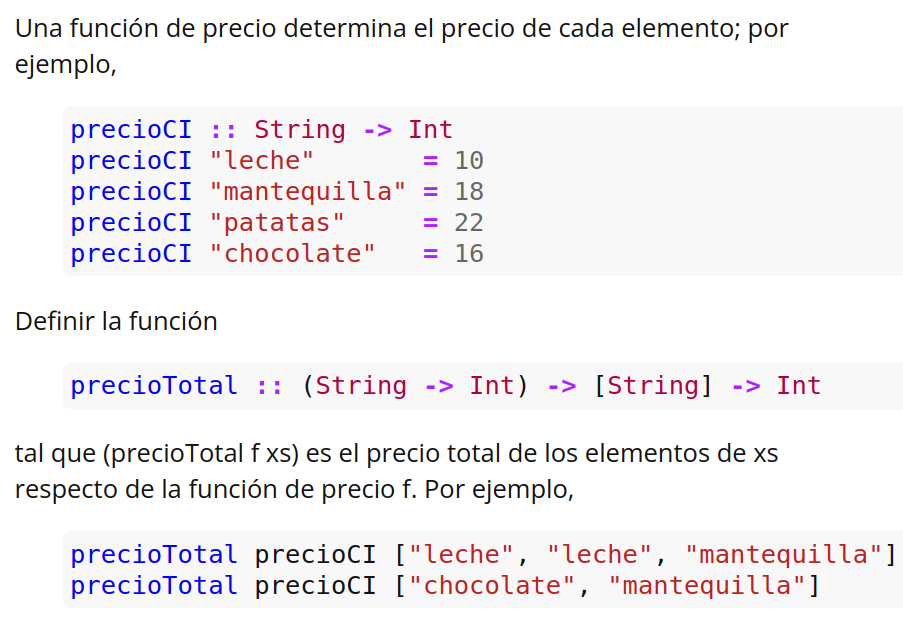
@haskell@fosstodon.org
"Case Study: Debugging a Haskell space leak" by Matthew Pickering from Well-Typed https://www.well-typed.com/blog/2025/10/case-study-debugging-space-leak/
@Jose_A_Alonso@mathstodon.xyz
@Jose_A_Alonso@mathstodon.xyz
#Exercitium: Extensión de un fichero. https://jaalonso.github.io/exercitium/posts/2014/11/10-extension_de_un_fichero/ #Haskell #ProgramaciónFuncional
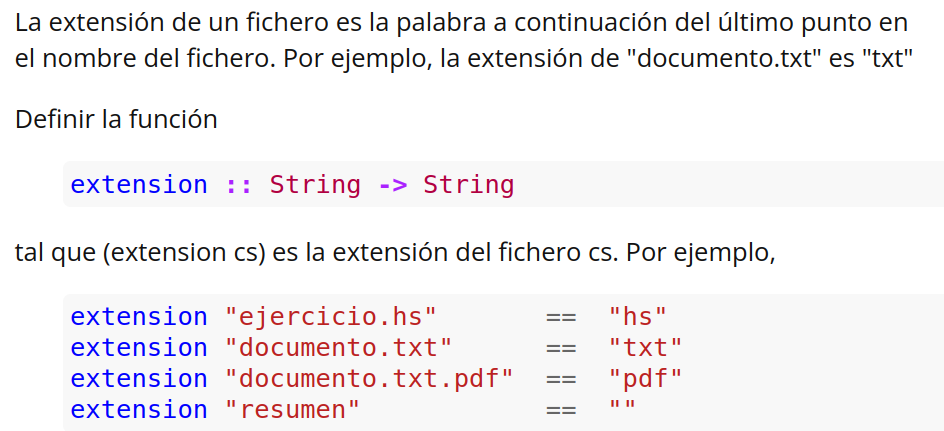
@Jose_A_Alonso@mathstodon.xyz
Readings shared October 30, 2025. https://jaalonso.github.io/vestigium/posts/2025/10/31-readings_shared_10-30-25 #FunctionalProgramming #Haskell #ITP #LeanProver #Math

@bgamari@mastodon.social
After a long wait, GHC 9.14.1-rc1 is now available. This includes an important fix which ensures compatibility with macOS 26 and later. We expect that this same fix will be backported to GHC 9.12 and 9.10 in the coming months.
Happy Haskelling!
https:/ /www.haskell.org/ghc/blog/20251030-ghc-9.14.1-rc1-released.html
@bgamari@mastodon.social
After a long wait, GHC 9.14.1-rc1 is now available. This includes an important fix which ensures compatibility with macOS 26 and later. We expect that this same fix will be backported to GHC 9.12 and 9.10 in the coming months.
Happy Haskelling!
https:/ /www.haskell.org/ghc/blog/20251030-ghc-9.14.1-rc1-released.html
@Jose_A_Alonso@mathstodon.xyz
#Exercitium: Distancia de Hamming. https://jaalonso.github.io/exercitium/posts/2014/11/07-distancia_de_hamming/ #Haskell #ProgramaciónFuncional #Matemáticas

@Jose_A_Alonso@mathstodon.xyz
#Exercitium: Rompecabeza matemático. https://jaalonso.github.io/exercitium/posts/2014/11/06-rompecabeza_matematico/ #Haskell #ProgramaciónFuncional #Matemáticas
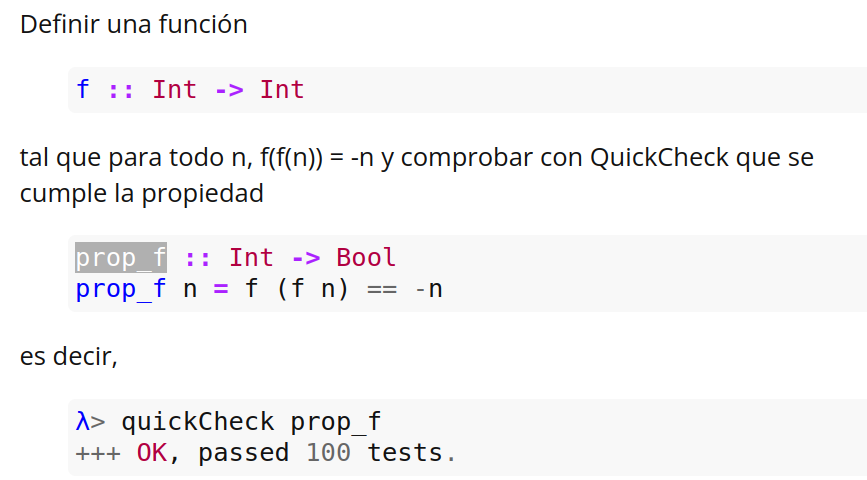
@Jose_A_Alonso@mathstodon.xyz
Lists are geometric series. ~ iacgm. https://iacgm.com/articles/adts/ #Haskell #FunctionalProgramming
@Jose_A_Alonso@mathstodon.xyz
@Jose_A_Alonso@mathstodon.xyz
#Exercitium: Suma de todos los anteriores. https://jaalonso.github.io/exercitium/posts/2014/11/05-suma_de_todos_los_anteriores/ #Haskell #ProgramaciónFuncional #Matemáticas
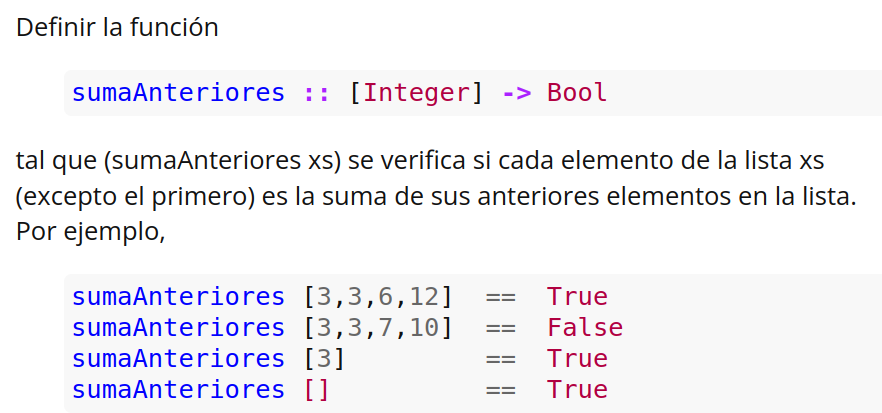
@DiazCarrete@hachyderm.io
[ICFP/SPLASH'25] join points in practice https://youtu.be/bzVXrVaQwM8?t=17257
@kosmikus@functional.cafe
Join us tonight for the 50th (!) episode of the #Haskell #Unfolder, on singletons! Live on YouTube 1930 UTC (note the changed time in some countries due to DST-related fluctuations).
https://www.youtube.com/watch?v=-zxxl-WuwuE&list=PLD8gywOEY4HaG5VSrKVnHxCptlJv2GAn7&index=50
@haskell@fosstodon.org
Announcing Hindsight, an event sourcing library for #Haskell, designed to bring type safety and correctness to event-driven architectures.
https://hindsight.events/content/posts/announcing-hindsight.html
@Jose_A_Alonso@mathstodon.xyz
Readings shared October 28, 2025. https://jaalonso.github.io/vestigium/posts/2025/10/29-readings_shared_10-28-25 #AI #FormalMethods #FunctionalProgramming #Haskell #ITP #LeanProver #Logic #Math
@Jose_A_Alonso@mathstodon.xyz
@Jose_A_Alonso@mathstodon.xyz
Readings shared October 27, 2025. https://jaalonso.github.io/vestigium/posts/2025/10/27-readings_shared_10-26-25 #FunctionalProgramming #Haskell #ITP #LLM #LeanProver #RustLang
@Jose_A_Alonso@mathstodon.xyz
#Exercitium: Poner en mayúscula la primera letra y las restantes en minúsculas. https://jaalonso.github.io/exercitium/posts/2014/11/03-mayusculas_inicial/ #Haskell #ProgramaciónFuncional
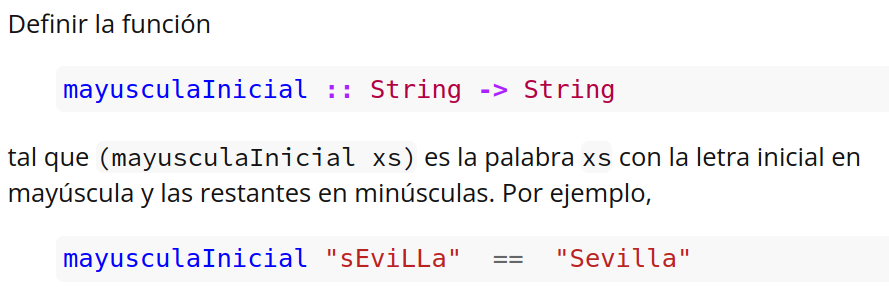
@Jose_A_Alonso@mathstodon.xyz
Stock market shark: More multidimensional DP. ~ James Bowen. https://mmhaskell.com/blog/2025/10/27/stock-market-shark-more-multidimensional-dp #Haskell #FunctionalProgramming #RustLang
@Jose_A_Alonso@mathstodon.xyz
Readings shared October 26, 2025. https://jaalonso.github.io/vestigium/posts/2025/10/27-readings_shared_10-26-25 #FunctionalProgramming #Haskell #ITP #IsabelleHOL #LeanProver #Math
@Jose_A_Alonso@mathstodon.xyz
#Exercitium: Parte impar de un número. https://jaalonso.github.io/exercitium/posts/2014/11/02-parte_impar/ #Haskell #ProgramaciónFuncional #Matemáticas
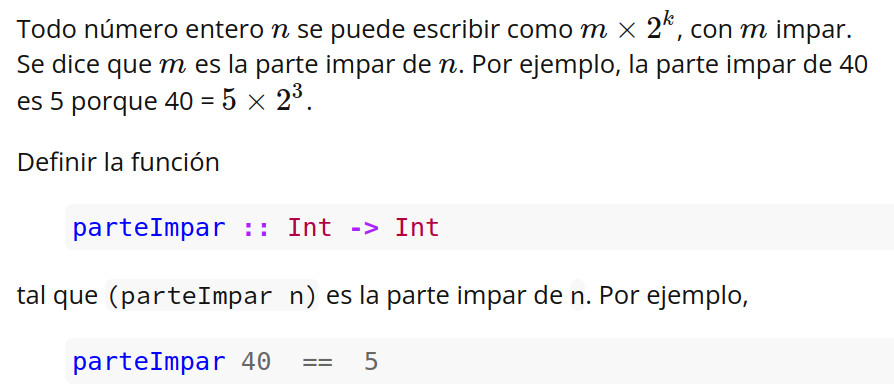

@quincy@chaos.social · Reply to Quincy ⁂'s post
@haskell@fosstodon.org
This is not a drill: GHC (the #Haskell compiler) now runs in your browser. See the announcement (and please report any bugs) here: https://discourse.haskell.org/t/ghc-now-runs-in-your-browser/13169
@Jose_A_Alonso@mathstodon.xyz
Readings shared October 22, 2025. https://jaalonso.github.io/vestigium/posts/2025/10/23-readings_shared_10-22-25 #AI #ChatGPT #FunctionalProgramming #Haskell #ITP #LLM #LeanProver #Math #Physics
@haskell@fosstodon.org
Call for Servant cookbooks in preparation of v0.21
https://discourse.haskell.org/t/call-for-servant-cookbooks-in-preparation-of-v0-21/13162
@Jose_A_Alonso@mathstodon.xyz
#Exercitium: Elementos no repetidos. https://jaalonso.github.io/exercitium/posts/2014/11/01-elementos_no_repetidos/ #Haskell #ProgramaciónFuncional #Matemáticas
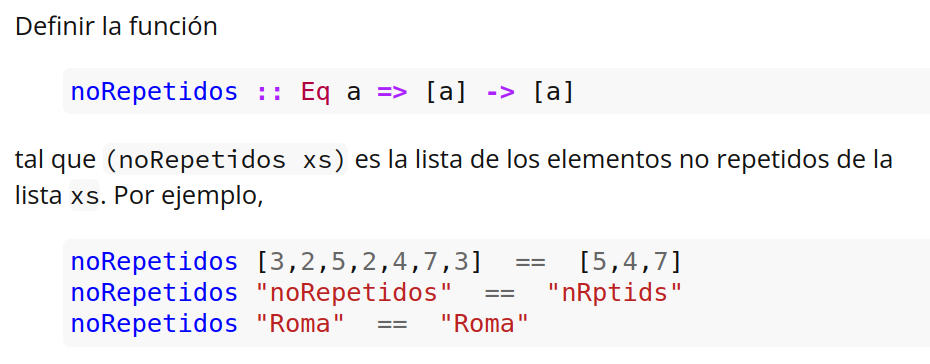
@Jose_A_Alonso@mathstodon.xyz
Readings shared October 21, 2025. https://jaalonso.github.io/vestigium/posts/2025/10/22-readings_shared_10-21-25 #FunctionalProgramming #Haskell #ITP #IsabelleHOL #LLMs #LeanProver #Math #Rocq
@Jose_A_Alonso@mathstodon.xyz
#Exercitium: Listas equidigitales. https://jaalonso.github.io/exercitium/posts/2014/10/31-listas_equidigitales/ #Haskell #ProgramaciónFuncional #Matemáticas
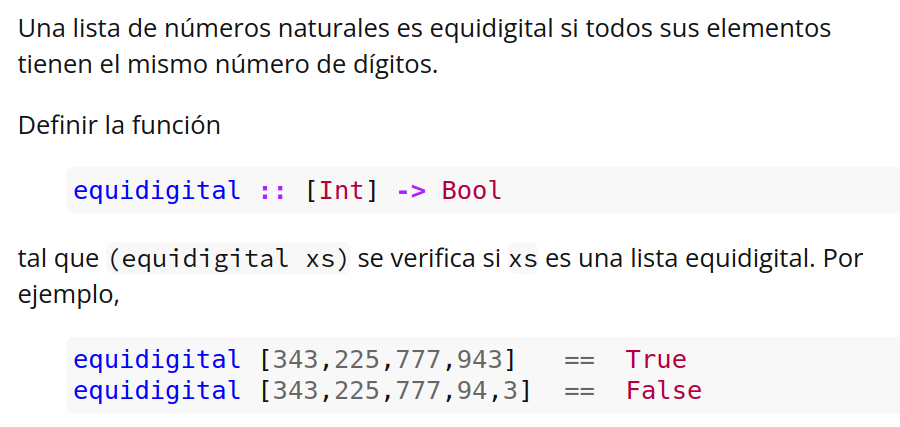
@Jose_A_Alonso@mathstodon.xyz
Readings shared October 20, 2025. https://jaalonso.github.io/vestigium/posts/2025/10/21-readings_shared_10-20-25 #ACL2 #Autoformalization #FunctionalProgramming #Haskell #ITP #LLMs #LeanProver #Logic #Math #Mizar #RustLang
@abnv@fantastic.earth
I've written a series of blog posts, in which I write a #bytecode #compiler and a #virtualMachine for arithmetic in #Haskell. We explore the following topics in the series:
- Parsing arithmetic expressions to ASTs.
- Compiling ASTs to bytecode.
- Interpreting ASTs.
- Efficiently executing bytecode in a VM.
- Disassembling bytecode and decompiling opcodes for debugging and testing.
- Unit testing and property-based testing for our compiler and VM.
- Benchmarking our code to see how the different passes perform.
- All the while keeping an eye on performance.
The third and final post of the series that focuses on writing the virtual machine is now out: https://abhinavsarkar.net/posts/arithmetic-bytecode-vm/
@Jose_A_Alonso@mathstodon.xyz
#Exercitium: Divisibles por el primero. https://jaalonso.github.io/exercitium/posts/2014/10/30-divisibles_por_el_primero/ #Haskell #ProgramaciónFuncional #Matemáticas
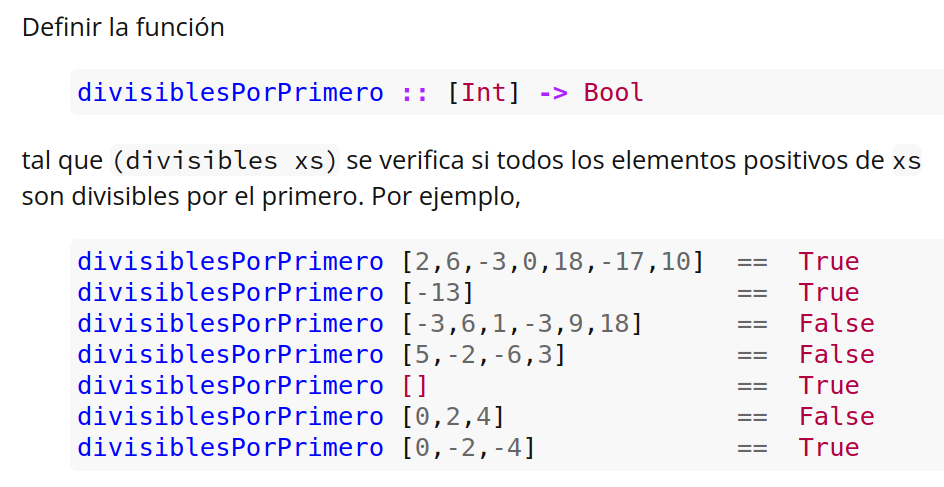
@Jose_A_Alonso@mathstodon.xyz
Spatial DP: Finding the largest square. ~ James Bowen. https://mmhaskell.com/blog/2025/10/20/spatial-dp-finding-the-largest-square #Haskell #FunctionalProgramming #RustLang
@Jose_A_Alonso@mathstodon.xyz
@DiazCarrete@hachyderm.io
Rebound: Efficient, Expressive, and Well-Scoped Binding
https://youtu.be/IlQQElKaFvM?t=1448
https://www.reddit.com/r/haskell/comments/1o7p2z5/rebound_efficient_expressive_and_wellscoped/
https://arxiv.org/abs/2509.13261
@Jose_A_Alonso@mathstodon.xyz
#Exercitium: Actualización de ejercicios del curso 2014-15. https://jaalonso.github.io/exercitium/posts/2025/10/17-actualizacion_de_ejercicios_del_curso_2014-15/ #Haskell #ProgramaciónFuncional #Matemáticas
@Jose_A_Alonso@mathstodon.xyz
Bridging category theory and functional programming for enhanced learning. ~ Fethi Kadhi. https://www.mecs-press.org/ijmsc/ijmsc-v11-n3/IJMSC-V11-N3-1.pdf #Haskell #FunctionalProgramming #CategoryTheory
@Jose_A_Alonso@mathstodon.xyz
Non-obvious Haskell idiom: Bind to lambda case. ~ kqr. https://entropicthoughts.com/non-obvious-haskell-idiom-bind-to-lambda-case #Haskell #FunctionalProgramming
@Jose_A_Alonso@mathstodon.xyz
Exploring Arrows for sequencing effects. ~ Chris Penner. https://chrispenner.ca/posts/arrow-effects #Haskell #FunctionalProgramming
@Jose_A_Alonso@mathstodon.xyz
Readings shared October 16, 2025. https://jaalonso.github.io/vestigium/posts/2025/10/17-readings_shared_10-16-25 #AI #CompSci #FunctionalProgramming #Haskell #ITP #IsabelleHOL #LLMs #LeanProver #Math
@Jose_A_Alonso@mathstodon.xyz
Libro «Exercitium: Ejercicios de programación funcional con Haskell (Volumen 1: curso 2013–14)». https://github.com/jaalonso/Exercitium/raw/main/libros/Exercitium_Vol1.pdf #Haskell #ProgramaciónFuncional #Matemáticas
@Jose_A_Alonso@mathstodon.xyz
Readings shared October 15, 2025. https://jaalonso.github.io/vestigium/posts/2025/10/16-readings_shared_10-15-25 #AI #CoqProver #FunctionalProgramming #Haskell #ITP #IsabelleHOL #LLMs #LeanProver #LiquidHaskell #Math #OCaml #Rocq
@Jose_A_Alonso@mathstodon.xyz
Arrows to arrows, categories to queries. ~ Sandy Maguire. https://reasonablypolymorphic.com/blog/arrows-to-arrows/index.html #Haskell #FunctionalProgramming
@kosmikus@functional.cafe
Join us today, 2025-10-15, at 1830 UTC, for a new episode of the #Haskell #Unfolder, on the importance of shrinking for property-based testing: https://www.youtube.com/watch?v=EcV4rb-Czfg&list=PLD8gywOEY4HaG5VSrKVnHxCptlJv2GAn7&index=49
@Jose_A_Alonso@mathstodon.xyz
Verifying the functional correctness of Braun trees with LiquidHaskell. ~ Felipe de León, Alberto Pardo, Marcos Viera. https://systemf.epfl.ch/etc/vstte2025/preprints/Verifying%20the%20Functional%20Correctness%20of%20Braun%20Trees%20with%20LiquidHaskell.pdf #Haskell #FunctionalProgramming #LiquidHaskell
@Jose_A_Alonso@mathstodon.xyz
How much is in a square? Calculating functional programs with squares. ~ Jose Nuno Oliveira. https://lmf.di.uminho.pt/Ibex/oliveira25.pdf #Haskell #FunctionalProgramming
@Jose_A_Alonso@mathstodon.xyz
Readings shared October 14, 2025. https://jaalonso.github.io/vestigium/posts/2025/10/15-readings_shared_10-14-25 #FunctionalProgramming #Haskell #ITP #IsabelleHOL #LeanProver #Logic #Math #Python #RustLang #SetTheory
@Jose_A_Alonso@mathstodon.xyz
Making change: Array-based dynamic programming. ~ James Bowen. https://mmhaskell.com/blog/2025/10/13/making-change-array-based-dp #Haskell #FunctionalProgramming #RustLang
@Jose_A_Alonso@mathstodon.xyz
Readings shared October 13, 2025. https://jaalonso.github.io/vestigium/posts/2025/10/14-readings_shared_10-13-25 #Agda #CoqProver #Erlang #FunctionalProgramming #Haskell #ITP #LeanProver #Math #OCaml #PVS #Programming #Python #Rocq
@Jose_A_Alonso@mathstodon.xyz
Freer arrows and why you need them in Haskell. ~ Grant VanDomelen, Gan Shen, Lindsey Kuper, Yao Li. https://dl.acm.org/doi/10.1145/3759164.3759352 #Haskell #FunctionalProgramming
@Jose_A_Alonso@mathstodon.xyz
Lightweight testing of persistent amortized time complexity in the credit monad. ~ Anton Lorenzen. https://dl.acm.org/doi/10.1145/3759164.3759351 #Haskell #FunctionalProgramming
@Jose_A_Alonso@mathstodon.xyz
Automatic C bindings generation for Haskell. ~ Travis Cardwell, Sam Derbyshire, Edsko de Vries, Dominik Schrempf. https://dl.acm.org/doi/10.1145/3759164.3759350 #Haskell #FunctionalProgramming
@Jose_A_Alonso@mathstodon.xyz
Total type classes. ~ Robert Weingart, Nicolas Wu. https://dl.acm.org/doi/10.1145/3759164.3759349 #Haskell #FunctionalProgramming
@Jose_A_Alonso@mathstodon.xyz
Rebound: Efficient, expressive, and well-scoped binding. ~ Noé De Santo, Stephanie Weirich. https://dl.acm.org/doi/10.1145/3759164.3759348 #Haskell #FunctionalProgramming
@Jose_A_Alonso@mathstodon.xyz
Plinth: A plugin-powered language built on Haskell. ~ Ziyang Liu, Kenneth MacKenzie, Roman Kireev, Michael Peyton Jones, Philip Wadler, Manuel Chakravarty. https://dl.acm.org/doi/10.1145/3759164.3759347 #Haskell #FunctionalProgramming
@Jose_A_Alonso@mathstodon.xyz
The calculated typer (Functional pearl). ~ Zac Garby, Patrick Bahr, Graham Hutton. https://dl.acm.org/doi/10.1145/3759164.3759346 #Haskell #FunctionalProgramming
@Jose_A_Alonso@mathstodon.xyz
A Clash course in solving Sudoku (Functional pearl). ~ Gergő Érdi. https://dl.acm.org/doi/10.1145/3759164.3759345 #Haskell #FunctionalProgramming
@Jose_A_Alonso@mathstodon.xyz
A tale of two lambdas: A haskeller’s journey into OCaml. ~ Richard A. Eisenberg. https://dl.acm.org/doi/10.1145/3759164.3771264 #Haskell #OCaml #FunctionalProgramming
@Jose_A_Alonso@mathstodon.xyz
Staging automatic differentiation with fusion. ~ Samuel Klumpers, Tom Schrijvers. https://dl.acm.org/doi/abs/10.1145/3759164.3759353 #Haskell #FunctionalProgramming
@Jose_A_Alonso@mathstodon.xyz
Unification modulo isomorphisms between dependent types for type-based library search. ~ Satoshi Takimoto, Sosuke Moriguchi, Takuo Watanabe. https://dl.acm.org/doi/10.1145/3759538.3759651 #Haskell #FunctionalProgramming
@Jose_A_Alonso@mathstodon.xyz
Representing data structures with invariants in Haskell: The cases of BST and AVL. ~ Nicolas Rodriguez, Alberto Pardo, Marcos Viera. https://dl.acm.org/doi/abs/10.1145/3759538.3759652 #Haskell #FunctionalProgramming
@Jose_A_Alonso@mathstodon.xyz
Readings shared October 11, 2025. https://jaalonso.github.io/vestigium/posts/2025/10/12-readings_shared_10-11-25 #FunctionalProgramming #Haskell #ITP #LeanProver #Math
@Jose_A_Alonso@mathstodon.xyz
#Exercitium: Laberinto numérico. https://jaalonso.github.io/exercitium/posts/2014/07/25-laberinto_numerico/ #Haskell #ProgramaciónFuncional #Matemáticas
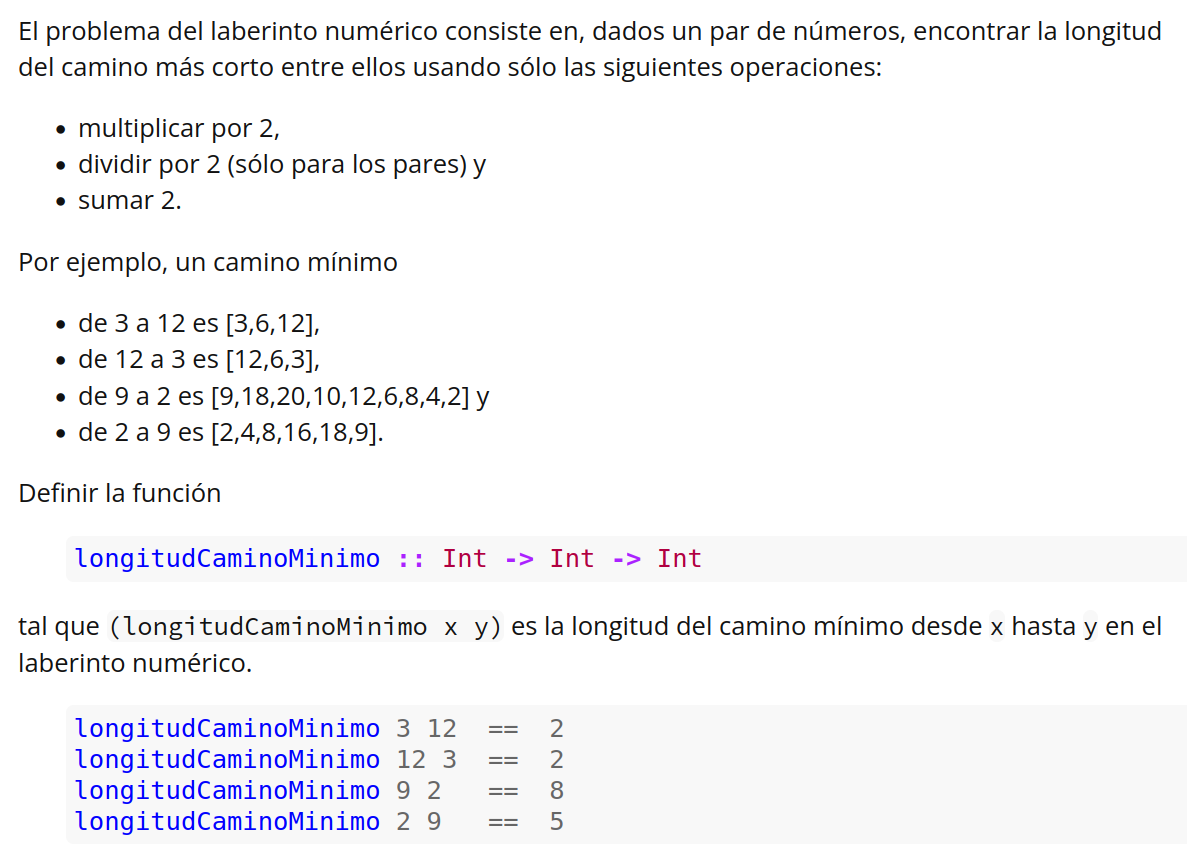
@Jose_A_Alonso@mathstodon.xyz
@Jose_A_Alonso@mathstodon.xyz
#Exercitium: Sustitución en una expresión aritmética. https://jaalonso.github.io/exercitium/posts/2014/07/24-sustitucion_en_una_expresion/ #Haskell #ProgramaciónFuncional #Matemáticas
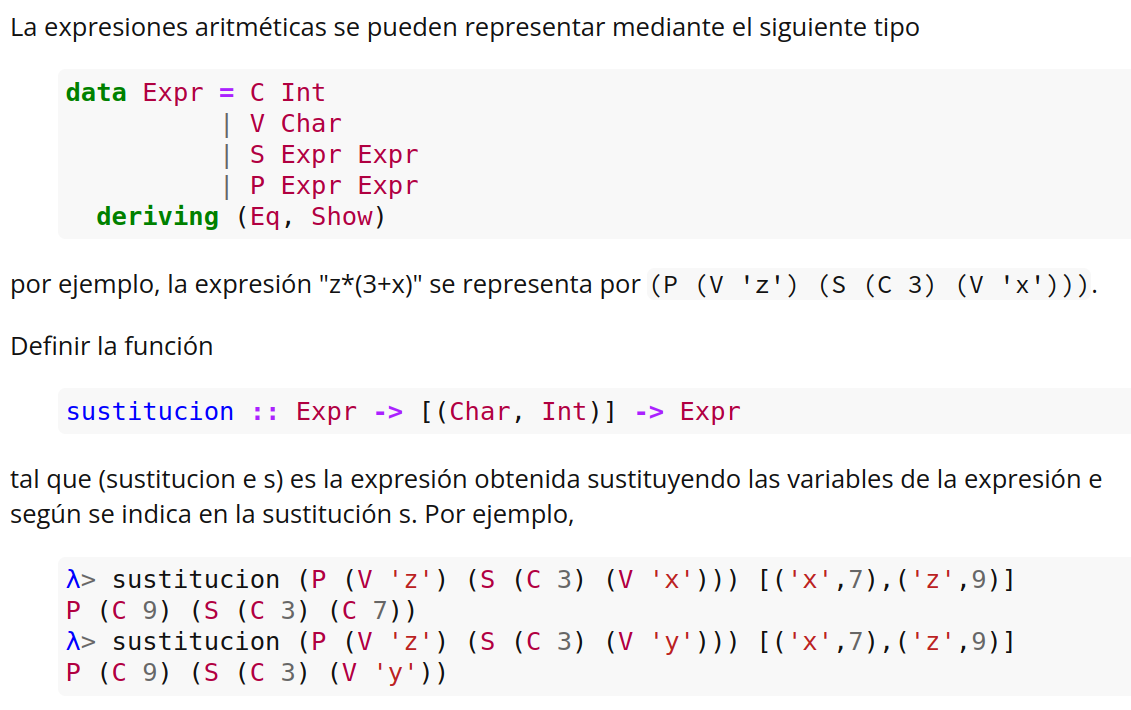
@Jose_A_Alonso@mathstodon.xyz
Readings shared October 9, 2025. https://jaalonso.github.io/vestigium/posts/2025/10/10-readings_shared_10-09-25 #AI #FunctionalProgramming #Haskell #ITP #LLMs #LeanProver #Math
@Jose_A_Alonso@mathstodon.xyz
Why Haskell is the perfect fit for renewable energy tech. ~ Marc Jakobi. https://mrcjkb.dev/posts/2025-10-08-haskell-for-renewables.html #Haskell #FunctionalProgramming
@Jose_A_Alonso@mathstodon.xyz
State management in Haskell. ~ Ajeet Grewal. https://grewal.dev/posts/haskell-state #Haskell #FunctionalProgramming
@Jose_A_Alonso@mathstodon.xyz
#Exercitium: Clausura de un conjunto respecto de una función. https://jaalonso.github.io/exercitium/posts/2014/07/23-clausura/ #Haskell #ProgramaciónFuncional #Matemáticas
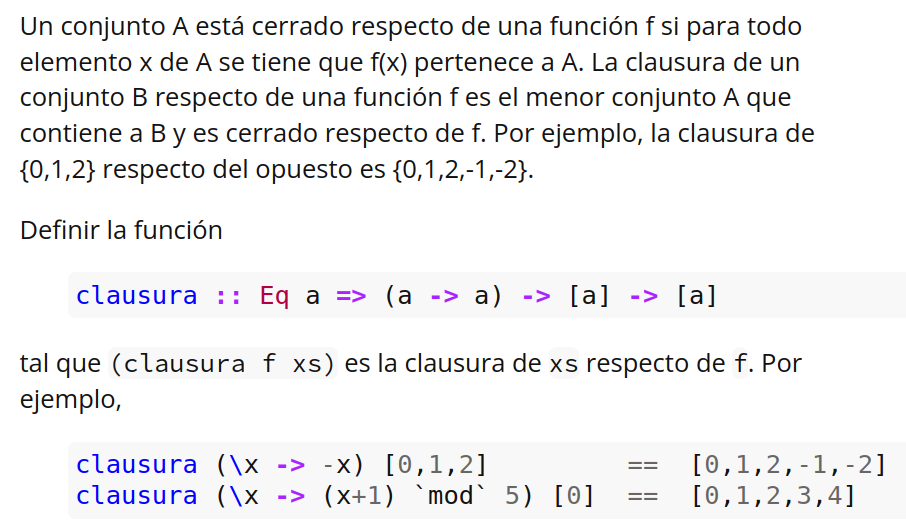
@Jose_A_Alonso@mathstodon.xyz
Readings shared October 8, 2025. https://jaalonso.github.io/vestigium/posts/2025/10/09-readings_shared_10-08-25 #FunctionalProgramming #Haskell #ITP #LeanProver #Math #Mathlib
@haskell@fosstodon.org
The mad lads have made it: Two Haskellers went to the town of #Haskell, TX. They documented their journey here: https://www.youtube.com/watch?v=9KwWGulBtyA
See on Reddit: https://www.reddit.com/r/haskell/comments/1o1202q/cowboys_from_haskell/
@Jose_A_Alonso@mathstodon.xyz
#Exercitium: Cadenas de ceros y unos. https://jaalonso.github.io/exercitium/posts/2014/07/22-cadenas0y1/ #Haskell #ProgramaciónFuncional #Matemáticas
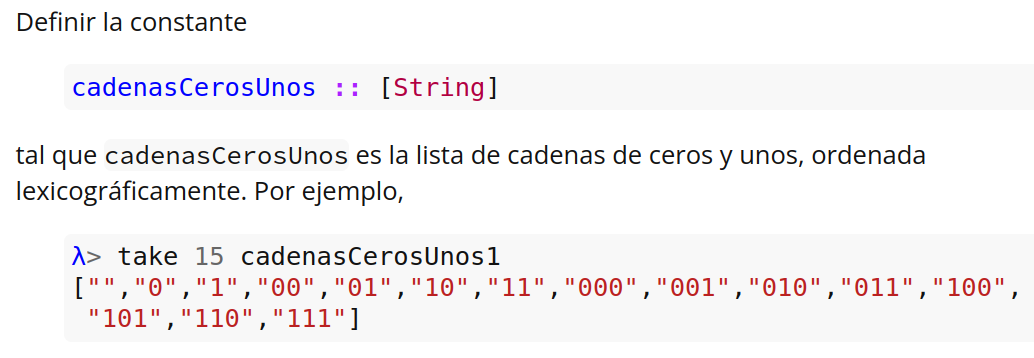
@Jose_A_Alonso@mathstodon.xyz
@Jose_A_Alonso@mathstodon.xyz
#Exercitium: Números con todos sus dígitos primos. https://jaalonso.github.io/exercitium/posts/2014/07/21-numeros_con_digitos_primos/ #Haskell #ProgramaciónFuncional #Matemáticas
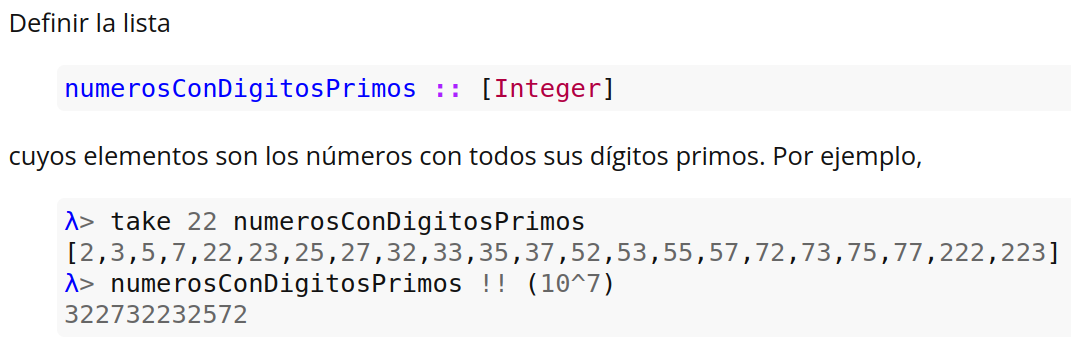
@Jose_A_Alonso@mathstodon.xyz
The Mondrian introduction to functional optics. ~ Marco Perone. https://marcosh.github.io/post/2025/10/07/the-mondrian-introduction-to-functional-optics.html #Haskell #FunctionalProgramming
@Jose_A_Alonso@mathstodon.xyz
Readings shared October 6, 2025. https://jaalonso.github.io/vestigium/posts/2025/10/07-readings_shared_10-06-25 #AI #CoqProver #FunctionalProgramming #Haskell #ITP #LLMs #LeanProver #Math #PVS #RustLang
@Jose_A_Alonso@mathstodon.xyz
Dynamic programming primer. ~ James Bowen. https://mmhaskell.com/blog/2025/10/6/dynamic-programming-primer #Haskell #FunctionalProgramming #RustLang
@Jose_A_Alonso@mathstodon.xyz
#Exercitium: Matriz permutación. https://jaalonso.github.io/exercitium/posts/2014/07/18-matriz_permutacion/ #Haskell #ProgramaciónFuncional #Matemáticas
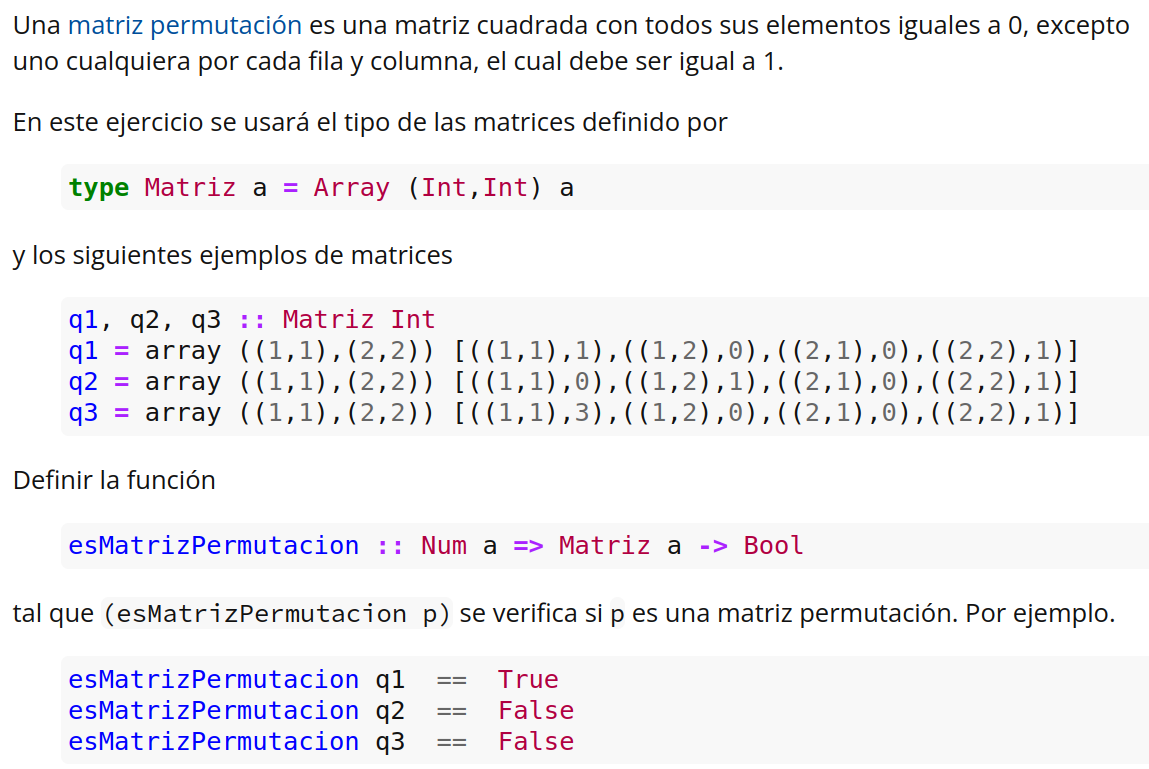
@Jose_A_Alonso@mathstodon.xyz
Readings shared October 3, 2025. https://jaalonso.github.io/vestigium/posts/2025/10/04-readings_shared_10-03-25 #AI #ATP #AlphaProof #FunctionalProgramming #Haskell #ITP #LeanProver #Math #Mathlib
@Jose_A_Alonso@mathstodon.xyz
#Exercitium: Inserción en árboles binarios de búsqueda. https://jaalonso.github.io/exercitium/posts/2014/07/17-insercion_en_arboles_binarios_de_busqueda/ #Haskell #ProgramaciónFuncional #Matemáticas
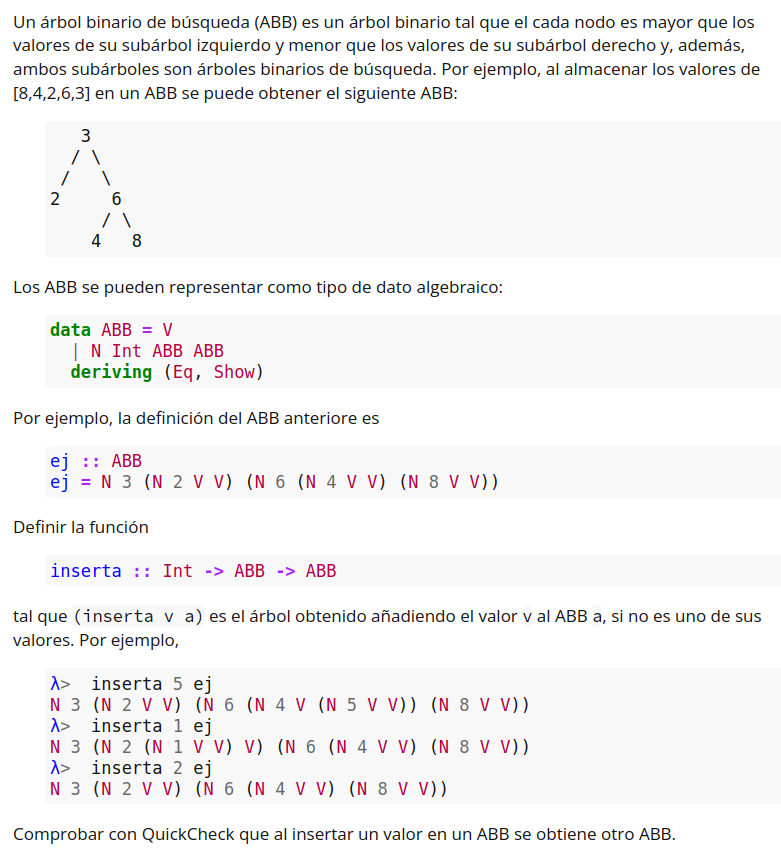
@Jose_A_Alonso@mathstodon.xyz
Readings shared October 2, 2025. https://jaalonso.github.io/vestigium/posts/2025/10/03-readings_shared_10-02-25 #FunctionalProgramming #Haskell #ITP #LeanProver #Math #Physics
@Jose_A_Alonso@mathstodon.xyz
The Haskell Unfolder Episode 48: Safe coercions. ~ Edsko de Vries, Andres Löh. https://www.youtube.com/live/NC0wkFsVPDU #Haskell #FunctionalProgramming
@Jose_A_Alonso@mathstodon.xyz
Readings shared September 30, 2025. https://jaalonso.github.io/vestigium/posts/2025/10/01-readings_shared_09-30-25 #FunctionalProgramming #Haskell #ITP #LeanProver #Math
@kosmikus@functional.cafe
After a long summer break, we're finally back for a new episode of the #Haskell #Unfolder: Edsko and I are going to talk about safe coercions, newtype vs data, roles and more ... Today, 2025-10-01, 1830 UTC on YouTube: https://www.youtube.com/watch?v=NC0wkFsVPDU&list=PLD8gywOEY4HaG5VSrKVnHxCptlJv2GAn7&index=48
@Jose_A_Alonso@mathstodon.xyz
#Exercitium: Producto de matrices como listas de listas. https://jaalonso.github.io/exercitium/posts/2014/07/16-producto_de_matrices_como_listas_de_listas/ #Haskell #ProgramaciónFuncional #Matemáticas
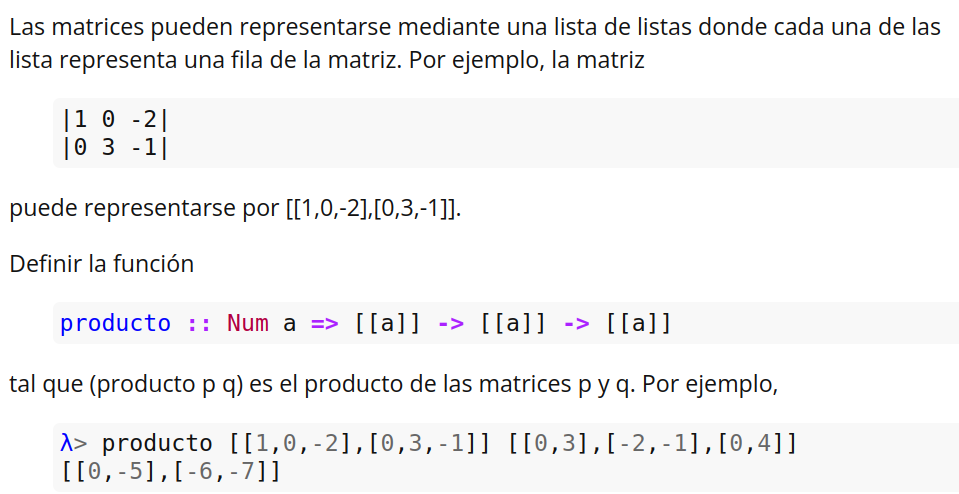
@Jose_A_Alonso@mathstodon.xyz
Readings shared September 29, 2025. https://jaalonso.github.io/vestigium/posts/2025/09/30-readings_shared_09-29-25 #Agda #FunctionalProgramming #Haskell #ITP #IsabelleHOL #LeanProver #Rocq #RustLang
@Jose_A_Alonso@mathstodon.xyz
Apply the trie: Word search. ~ James Bowen. https://mmhaskell.com/blog/2025/9/29/apply-the-trie-word-search #Haskell #FunctionalProgramming #RustLang
@Jose_A_Alonso@mathstodon.xyz
Readings shared September 28, 2025. https://jaalonso.github.io/vestigium/posts/2025/09/29-readings_shared_09-28-25 #AI #ATP #FunctionalProgramming #Haskell #ITP #IsabelleHOL #LLMs #LeanProver #Math #Rocq
@Jose_A_Alonso@mathstodon.xyz
#Exercitium: Sucesiones pucelanas. https://jaalonso.github.io/exercitium/posts/2014/07/15-sucesiones_pucelanas/ #Haskell #ProgramaciónFuncional #Matemáticas
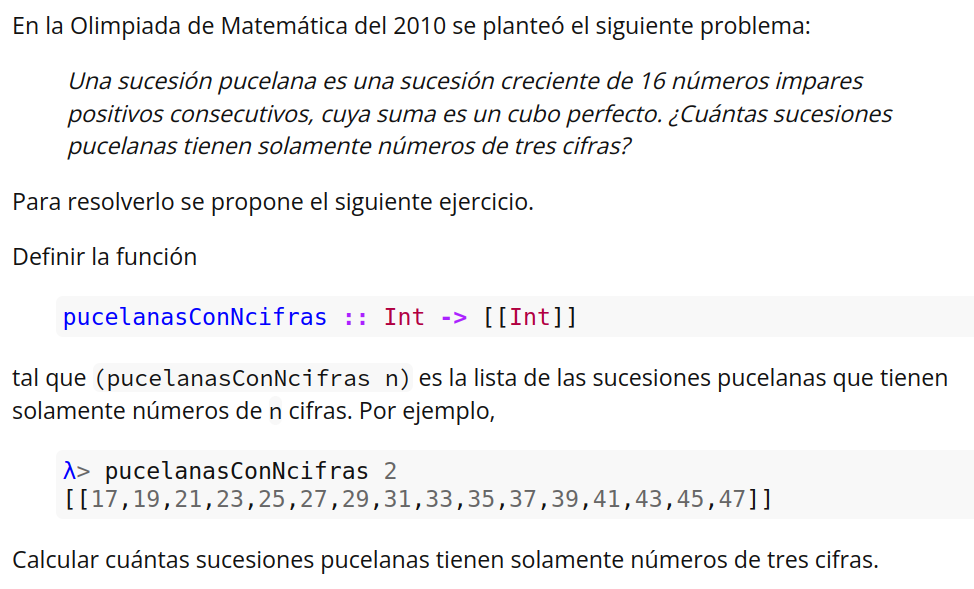
@Jose_A_Alonso@mathstodon.xyz
Monads are too powerful: The expressiveness spectrum. ~ Chris Penner. https://chrispenner.ca/posts/expressiveness-spectrum #Haskell #FunctionalProgramming
@Jose_A_Alonso@mathstodon.xyz
Readings shared September 25, 2025. https://jaalonso.github.io/vestigium/posts/2025/09/26-readings_shared_09-25-25 #FunctionalProgramming #Haskell #ITP #LLMs #LeanProver #Math
@Jose_A_Alonso@mathstodon.xyz
Micrograd in Haskell: Evaluation and backward pass. ~ Ajeet Grewal https://grewal.dev/posts/micrograd-haskell-2 #Haskell #FunctionalProgramming
@pandoc@fosstodon.org
Looking for a LaTeX symbol, but don't know the command to produce it?
https://detexify.kirelabs.org can help. Draw the symbol, and the app will produce a list of matching symbols.
Incidentally, the tool is written in #Haskell, just like #pandoc.
@pandoc@fosstodon.org
Looking for a LaTeX symbol, but don't know the command to produce it?
https://detexify.kirelabs.org can help. Draw the symbol, and the app will produce a list of matching symbols.
Incidentally, the tool is written in #Haskell, just like #pandoc.
@Jose_A_Alonso@mathstodon.xyz
Readings shared September 24, 2025. https://jaalonso.github.io/vestigium/posts/2025/09/25-readings_shared_09-24-25 #FunctionalProgramming #Haskell #Math
@Jose_A_Alonso@mathstodon.xyz
#Exercitium: Todas tienen par. https://jaalonso.github.io/exercitium/posts/2014/07/14-todas_tienen_par/ #Haskell #ProgramaciónFuncional #Matemáticas
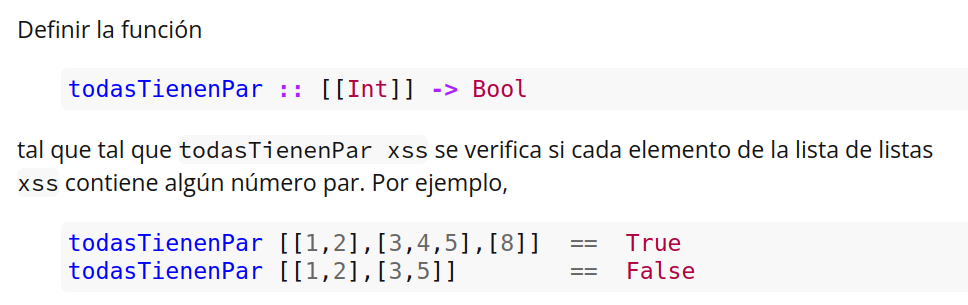
@Jose_A_Alonso@mathstodon.xyz
PenroseKiteDart user guide. ~ Chris Reade. https://readerunner.wordpress.com/2024/04/08/penrosekitedart-user-guides/ #Haskell #FunctionalProgramming
@Jose_A_Alonso@mathstodon.xyz
@Jose_A_Alonso@mathstodon.xyz
Writing our own structure: Tries in Haskell & Rust. ~ James Bowen. https://mmhaskell.com/blog/2025/9/22/writing-our-own-structure-tries-in-haskell-amp-rust #Haskell #FunctionalProgramming #RustLang
@Jose_A_Alonso@mathstodon.xyz
Readings shared September 22, 2025. https://jaalonso.github.io/vestigium/posts/2025/09/23-readings_shared_09-22-25 #AI #ATP #CompSci #CoqProver #FunctionalProgramming #Haskell #ITP #LLMs #LeanProver #Logic #Math #Rocq #SMT
@DiazCarrete@hachyderm.io
Formalising Graph Algorithms with Coinduction
https://discourse.haskell.org/t/a-haskell-representation-of-graphs/13016/5
@Jose_A_Alonso@mathstodon.xyz
#Exercitium: Producto cartesiano de una familia de conjuntos. https://jaalonso.github.io/exercitium/posts/2014/07/11-producto_cartesiano/ #Haskell #ProgramaciónFuncional #Matemáticas
@Jose_A_Alonso@mathstodon.xyz
Refinement-types driven development: A study. ~ Facundo Domínguez, Arnaud Spiwack. https://arxiv.org/abs/2509.15005v1 #FunctionalProgramming #Liquid #Haskell #SMT
@Jose_A_Alonso@mathstodon.xyz
Refinement-types driven development: A study. ~ Facundo Domínguez, Arnaud Spiwack. https://arxiv.org/abs/2509.15005v1 #FunctionalProgramming #Liquid #Haskell #SMT
@Jose_A_Alonso@mathstodon.xyz
Readings shared September 18, 2025. https://jaalonso.github.io/vestigium/posts/2025/09/19-readings_shared_09-18-25 #AI #ATP #Dedukti #FunctionalProgramming #Haskell #ITP #LLMs #Vampire
@Jose_A_Alonso@mathstodon.xyz
#Exercitium: Código Morse. https://jaalonso.github.io/exercitium/posts/2014/07/10-codigo_morse/ #Haskell #ProgramaciónFuncional



@pmidden@fosstodon.org
None of the #haskell regular expression libraries supports named captures? Is the feature that niche?
@Jose_A_Alonso@mathstodon.xyz
@Jose_A_Alonso@mathstodon.xyz
Plinth: A plugin-powered language built on Haskell (Experience report). ~ Ziyang Liu, Kenneth MacKenzie, Roman Kireev, Michael Peyton Jones, Philip Wadler, Manuel Chakravarty. https://homepages.inf.ed.ac.uk/wadler/papers/plinth/plinth.pdf #Haskell #FunctionalProgramming
@Jose_A_Alonso@mathstodon.xyz
Quantum structures and functional programming. ~ Jerzy Karczmarczuk. https://karczmarczuk.users.greyc.fr/TEACH/Semin/quastru.pdf #Haskell #FunctionalProgramming
@haskell@fosstodon.org
"Haskell's WebDriver package is back in business" by Tom McLaughlin
https://thomasjm.github.io/posts/webdriver-13/
@Jose_A_Alonso@mathstodon.xyz
Readings shared September 15, 2025. https://jaalonso.github.io/vestigium/posts/2025/09/16-readings_shared_09-15-25 #Haskell #FunctionalProgramming #RustLang
@Jose_A_Alonso@mathstodon.xyz
Topological sort: Managing mutable structures in Haskell. ~ James Bowen. https://mmhaskell.com/blog/2025/9/15/topological-sort-managing-mutable-structures-in-haskell #Haskell #FunctionalProgramming #RustLang
@Jose_A_Alonso@mathstodon.xyz
#Exercitium: Elemento más cercano que cumple una propiedad. https://jaalonso.github.io/exercitium/posts/2014/07/09-mas_cercano_cumpliendo_la_propiedad/ #Haskell #ProgramaciónFuncional
@Jose_A_Alonso@mathstodon.xyz
Readings shared September 11, 2025. https://jaalonso.github.io/vestigium/posts/2025/09/12-readings_shared_09-11-25 #FunctionalProgramming #Haskell #ITP #LeanProver #Math
@Jose_A_Alonso@mathstodon.xyz
#Exercitium: Representación de Zeckendorf. https://jaalonso.github.io/exercitium/posts/2014/07/08-representacion_de_zeckendorf/ #Haskell #ProgramaciónFuncional #Matemáticas
@Jose_A_Alonso@mathstodon.xyz
Better Haskell stack traces via user annotations. ~ Hannes Siebenhandl, Matthew Pickering. https://www.well-typed.com/blog/2025/09/better-haskell-stack-traces/ #Haskell #FunctionalProgramming
@Jose_A_Alonso@mathstodon.xyz
Haskell equations, thirty-eight years later. ~ Philip Wadler. https://wadler.blogspot.com/2025/09/haskell-equations-thirty-eight-years.html #Haskell #FunctionalProgramming
@Jose_A_Alonso@mathstodon.xyz
Readings shared September 10, 2025. https://jaalonso.github.io/vestigium/posts/2025/09/11-readings_shared_09-10-25 #FunctionalProgramming #Haskell #ITP #LeanProver #Math
@Jose_A_Alonso@mathstodon.xyz
#Exercitium: Ventana deslizante. https://jaalonso.github.io/exercitium/posts/2014/07/07-ventana_deslizante/ #Haskell #ProgramaciónFuncional
@Jose_A_Alonso@mathstodon.xyz
Using Haskell in production. ~ Agentultra. https://agentultra.com/blog/using-haskell-in-production/ #Haskell #FunctionalProgramming
@Jose_A_Alonso@mathstodon.xyz
Readings shared September 9, 2025. https://jaalonso.github.io/vestigium/posts/2025/09/10-readings_shared_09-09-25 #Agda #FunctionalProgramming #Haskell #HoTT #ITP #LeanProver #Math
@Jose_A_Alonso@mathstodon.xyz
#Exercitium: Divide si todos son múltiplos. https://jaalonso.github.io/exercitium/posts/2014/07/04-divide_si_todos_multiplos/ #Haskell #ProgramaciónFuncional #Matemáticas
@Jose_A_Alonso@mathstodon.xyz
#Exercitium: Renombramiento de un árbol. https://jaalonso.github.io/exercitium/posts/2014/07/03-renombra_arbol/ #Haskell #ProgramaciónFuncional
@hackuador@functional.cafe
George Wilson demoing typed holes and hole-driven development at Brisbane Functional Programming Group #BFPG #Haskell #FP
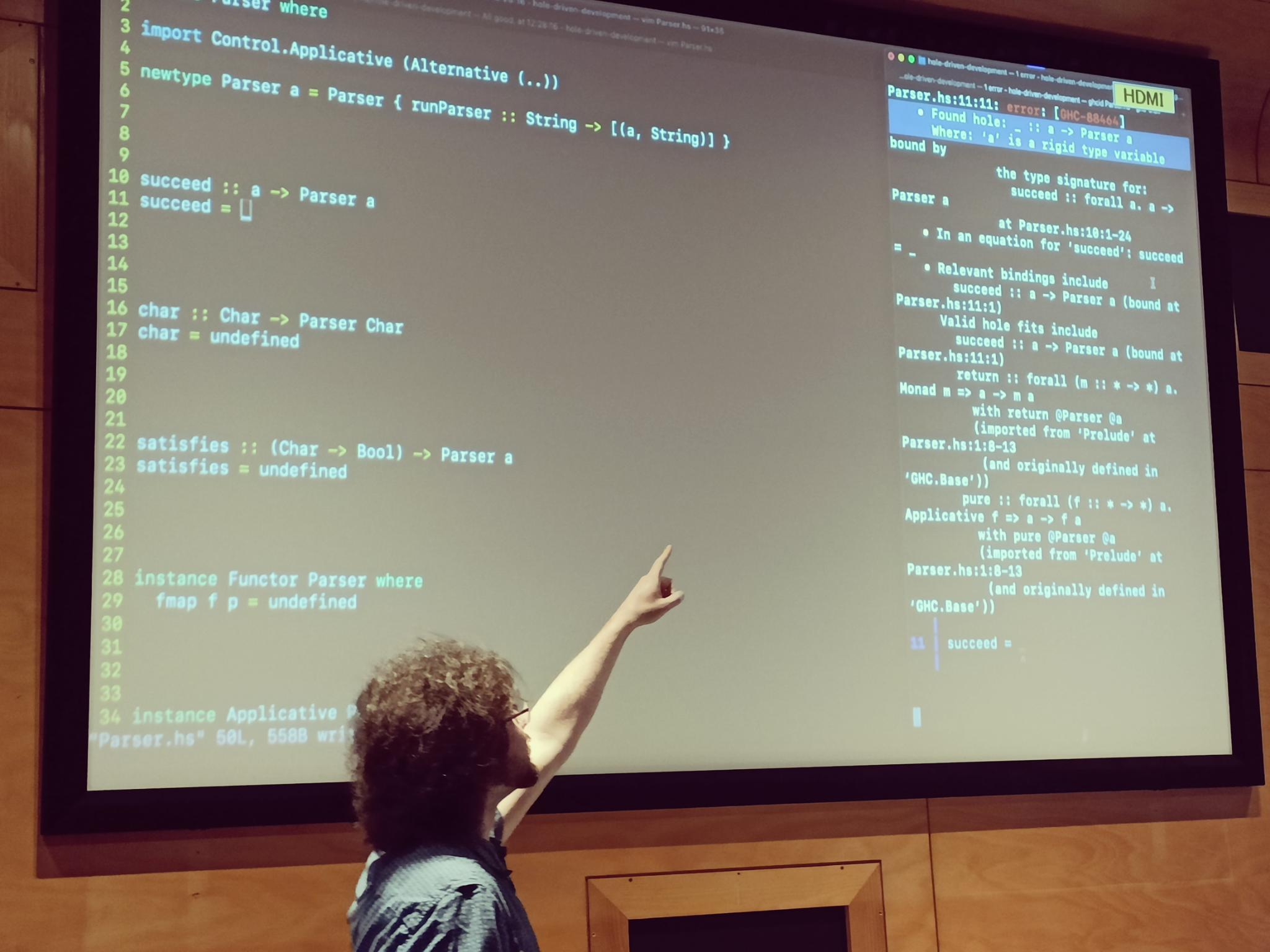
@Jose_A_Alonso@mathstodon.xyz
Readings shared September 8, 2025. https://jaalonso.github.io/vestigium/posts/2025/09/09-readings_shared_09-08-25 #Haskell #FunctionalProgramming #RustLang
@Jose_A_Alonso@mathstodon.xyz
#Exercitium: Empiezan con mayúscula. https://jaalonso.github.io/exercitium/posts/2014/07/02-empiezan_con_mayuscula/ #Haskell #ProgramaciónFuncional
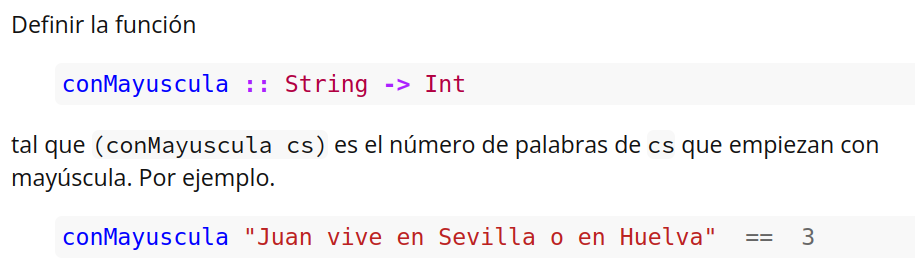
@Jose_A_Alonso@mathstodon.xyz
Graph algorithms in board games! ~ James Bowen. https://mmhaskell.com/blog/2025/9/8/graph-algorithms-in-board-games #Haskell #FunctionalProgramming #RustLang
@Jose_A_Alonso@mathstodon.xyz
Readings shared September 7, 2025. https://jaalonso.github.io/vestigium/posts/2025/09/08-readings_shared_09-07-25 #FunctionalProgramming #Haskell #ITP #LeanProver #Math
@Jose_A_Alonso@mathstodon.xyz
#Exercitium: Límite de sucesiones. https://jaalonso.github.io/exercitium/posts/2014/07/01-limite/ #Haskell #ProgramaciónFuncional #Matemáticas
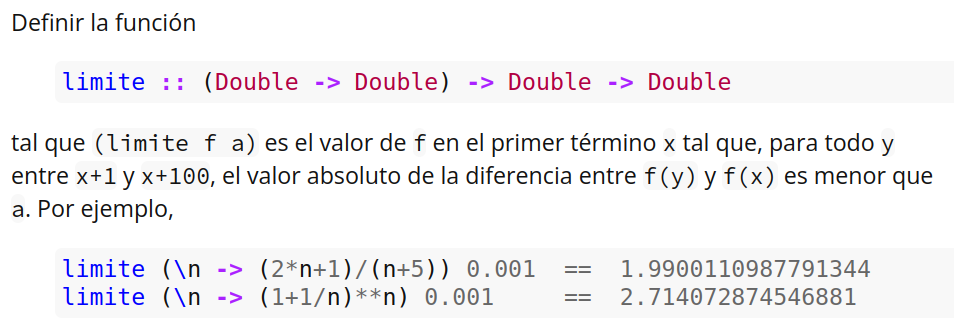
@Jose_A_Alonso@mathstodon.xyz
Readings shared September 5, 2025. https://jaalonso.github.io/vestigium/posts/2025/09/06-readings_shared_09-05-25 #AI #FormalVerification #FunctionalProgramming #Haskell #ITP #LLMs #LeanProver #Math
@Jose_A_Alonso@mathstodon.xyz
#Exercitium: Eliminación de n elementos. https://jaalonso.github.io/exercitium/posts/2014/06/30-elimina_n_elementos/ #Haskell #ProgramaciónFuncional
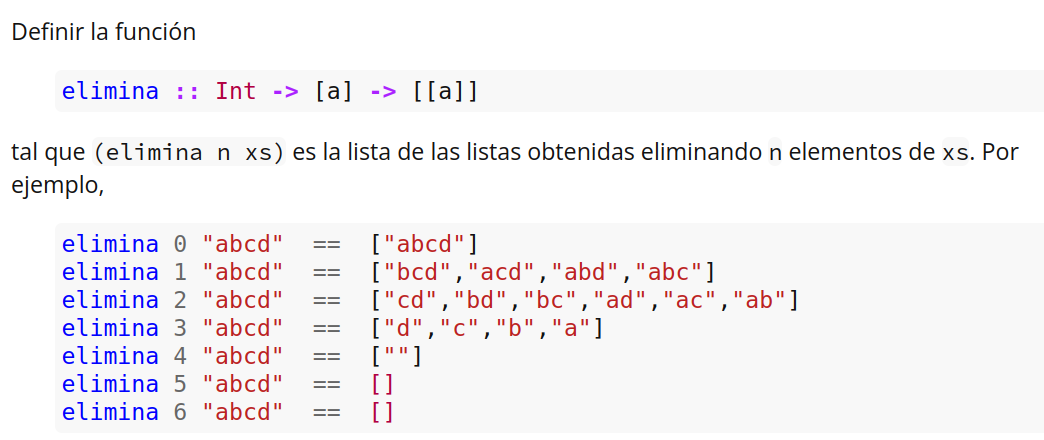
@Jose_A_Alonso@mathstodon.xyz
#Exercitium: Intercalación de n copias. https://jaalonso.github.io/exercitium/posts/2014/06/27-intercala_n_copias/ #Haskell #ProgramaciónFuncional
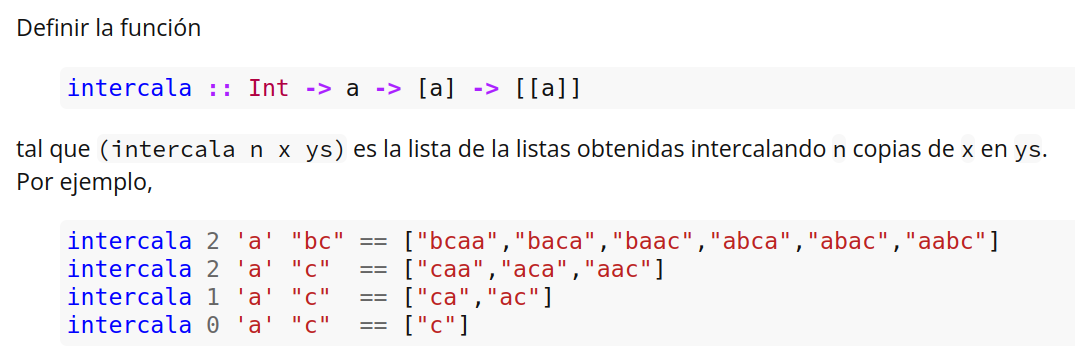
@haskell@fosstodon.org
"Monad of No Return: Next Steps" https://discourse.haskell.org/t/monad-of-no-return-next-steps/11443
@Jose_A_Alonso@mathstodon.xyz
Better Haskell stack traces via user annotations. ~ Hannes Siebenhandl, Matthew Pickering. https://well-typed.com/blog/2025/09/better-haskell-stack-traces/ #Haskell #FunctionalProgramming
@Jose_A_Alonso@mathstodon.xyz
Readings shared September 4, 2025. https://jaalonso.github.io/vestigium/posts/2025/09/05-readings_shared_09-04-25 #Emacs #FunctionalProgramming #Haskell #ITP #IsabelleHOL #LLMs #LeanProver #OrgMode
@Jose_A_Alonso@mathstodon.xyz
#Exercitium: Sopa de letras. https://jaalonso.github.io/exercitium/posts/2014/06/26-sopa_de_letras/ #Haskell #ProgramaciónFuncional #Matemáticas
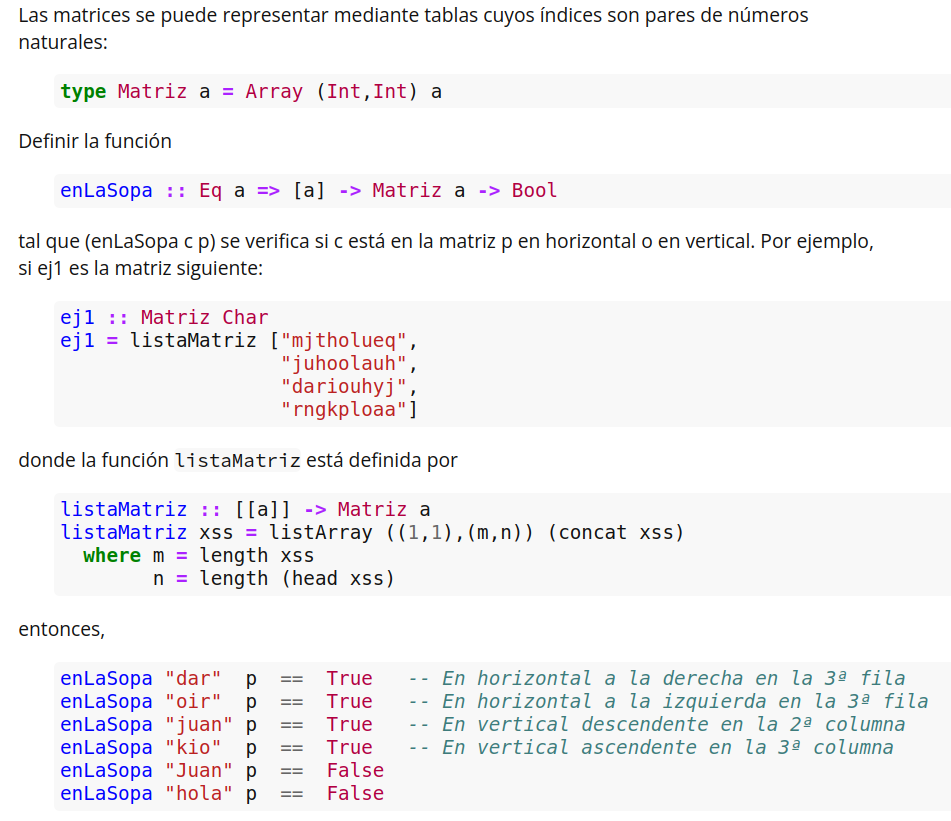
@Jose_A_Alonso@mathstodon.xyz
#Exercitium: N gramas. https://jaalonso.github.io/exercitium/posts/2014/06/25-n_gramas/ #Haskell #ProgramaciónFuncional #Matemáticas
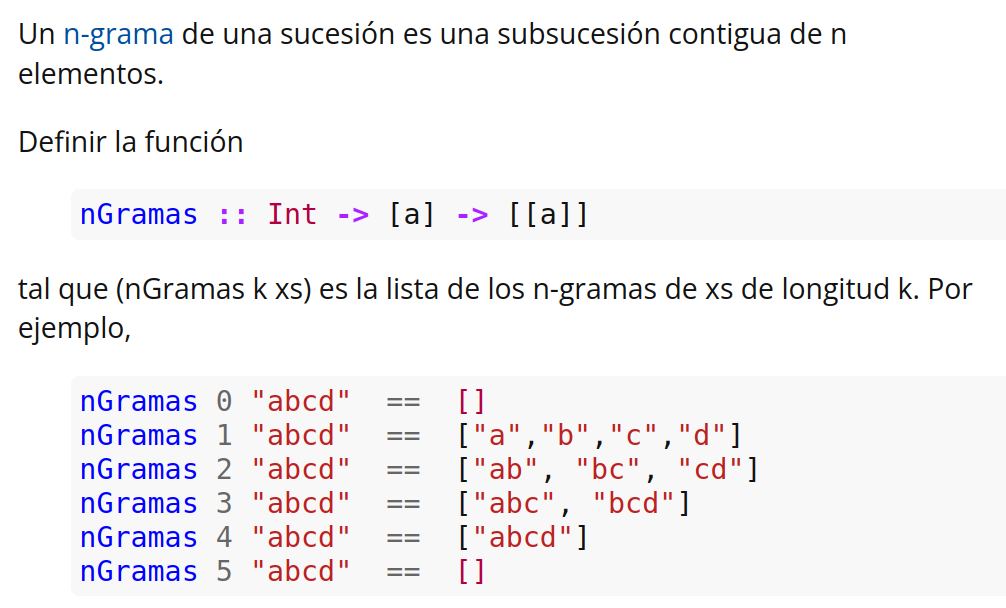
@haskell@fosstodon.org
"Better #Haskell stack traces via user annotations", on the Well-Typed blog!
https://www.well-typed.com/blog/2025/09/better-haskell-stack-traces/
@haskell@fosstodon.org
"Better #Haskell stack traces via user annotations", on the Well-Typed blog!
https://www.well-typed.com/blog/2025/09/better-haskell-stack-traces/
@Jose_A_Alonso@mathstodon.xyz
Distributors (Unifying parsers, printers & grammars). ~ Eitan Chatav. https://github.com/morphismtech/distributors/blob/main/blog.md #Haskell #FunctionalProgramming
@Jose_A_Alonso@mathstodon.xyz
Readings shared September 3, 2025. https://jaalonso.github.io/vestigium/posts/2025/09/04-readings_shared_09-03-25 #CompSci #FunctionalProgramming #Haskell #ITP #IsabelleHOL #LeanProver #Logic #Math #Rocq
@Jose_A_Alonso@mathstodon.xyz
#Exercitium: Entero positivo de la cadena. https://jaalonso.github.io/exercitium/posts/2014/06/24-entero_positivo_de_la_cadena/ #Haskell #ProgramaciónFuncional #Matemáticas
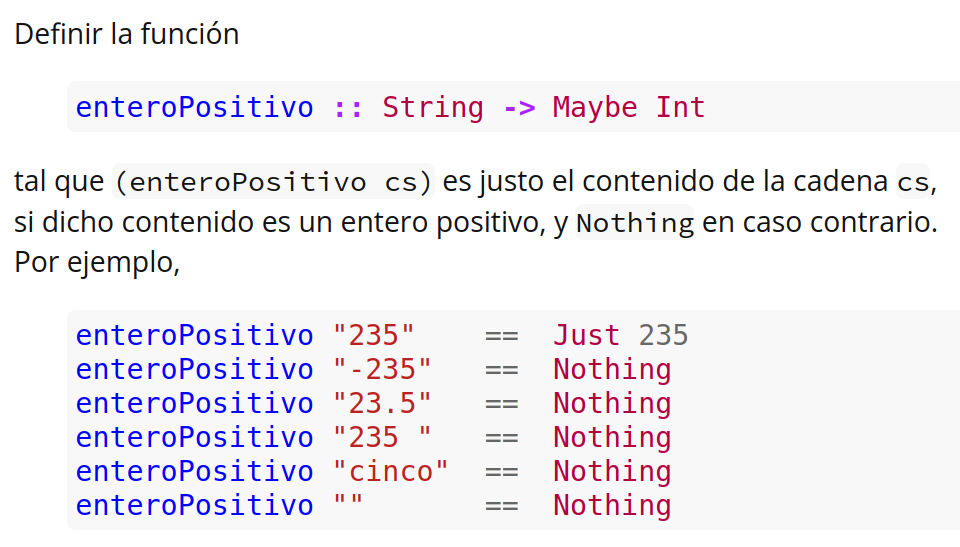
@pmidden@fosstodon.org
Is there a "hlint to GitLab code quality report" tool/plug-in? I can't find one... #haskell
@Jose_A_Alonso@mathstodon.xyz
Readings shared September 2, 2025. https://jaalonso.github.io/vestigium/posts/2025/09/03-readings_shared_09-02-25 #CategoryTheory #CoqProver #FunctionalProgramming #Haskell #ITP #IsabelleHOL #Math
@haskell@fosstodon.org
New kid on the block: Granite is the new terminal plotting library from @mchav's dataframe project
https://discourse.haskell.org/t/granite-a-terminal-plotting-library/12778
@Jose_A_Alonso@mathstodon.xyz
#Exercitium: Actualizaciones de ejercicios. https://jaalonso.github.io/exercitium/posts/2025/08/22-actualizaciones-de-ejercicios/ #Haskell #ProgramaciónFuncional #Matemáticas
@Jose_A_Alonso@mathstodon.xyz
Readings shared September 1, 2025. https://jaalonso.github.io/vestigium/posts/2025/09/02-readings_shared_09-01-25 #FunctionalProgramming #Haskell #ITP #LeanProver #Math #Mathlib #RustLang
@Jose_A_Alonso@mathstodon.xyz
Alpha-beta pruning is just minimax in a lattice of clamping functions. ~ Li-yao Xia. https://blog.poisson.chat/posts/2025-09-01-alpha-beta.html #Haskell #FunctionalProgramming
@Jose_A_Alonso@mathstodon.xyz
Starting out with graph algorithms: Basic DFS. ~ James Bowen. https://mmhaskell.com/blog/2025/9/1/starting-out-with-graph-algorithms-basic-dfs #Haskell #FunctionalProgramming #RustLang
@Jose_A_Alonso@mathstodon.xyz
#Exercitium: Filtro booleano. https://jaalonso.github.io/exercitium/posts/2014/06/23-filtro_booleano/ #Haskell #ProgramaciónFuncional #Matemáticas
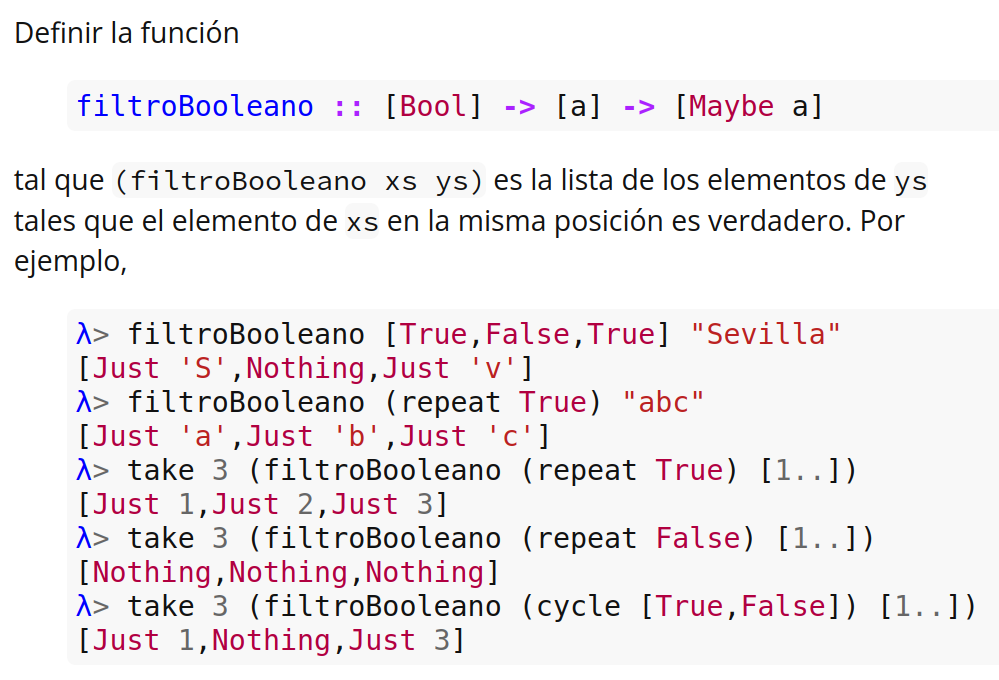
@Jose_A_Alonso@mathstodon.xyz
#Exercitium: Mayor sucesión del problema 3n+1. https://jaalonso.github.io/exercitium/posts/2014/06/20-mayor_sucesion_3n%2B1/ #Haskell #ProgramaciónFuncional #Matemáticas
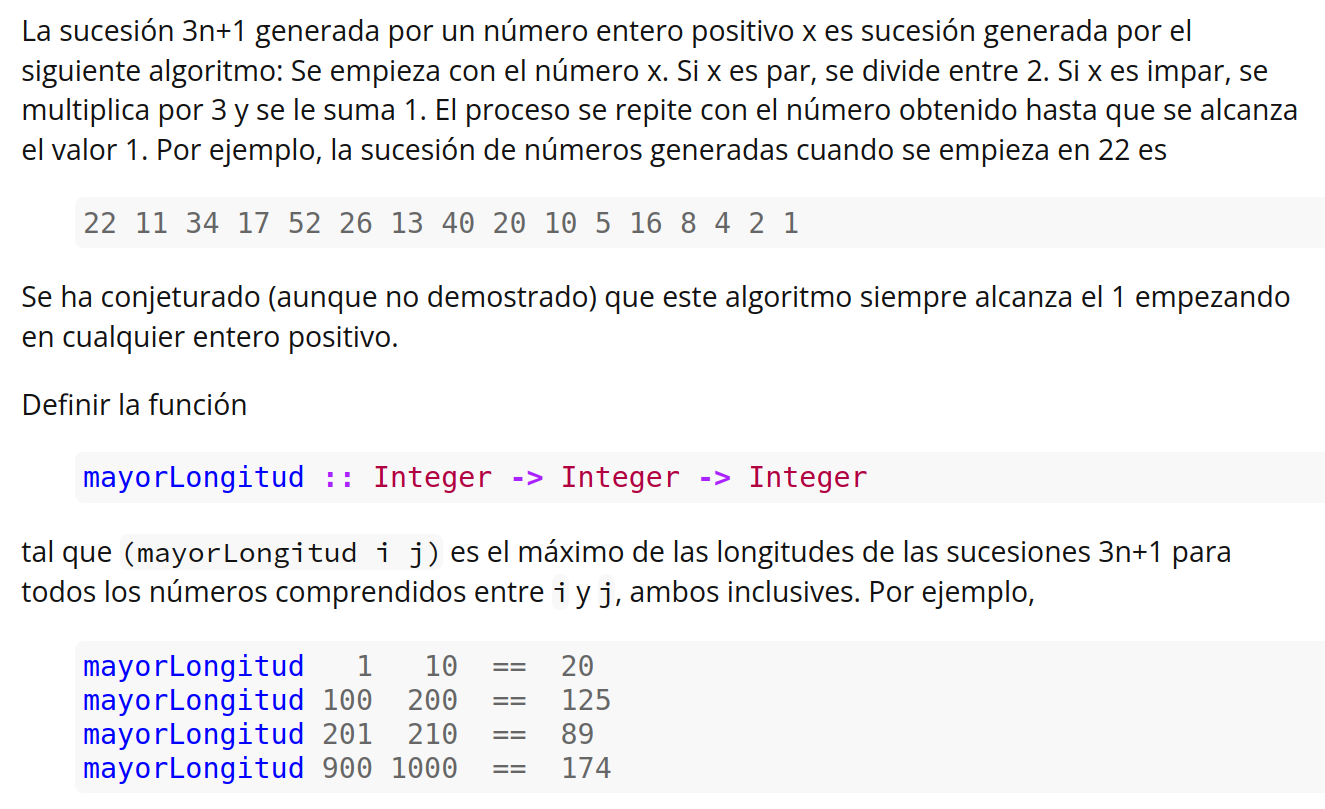
@haskell@fosstodon.org
“Embedding MicroHs” by Thomas Mahler
https://thma.github.io/posts/2025-08-30-Embedding-MicroHs.html
@Jose_A_Alonso@mathstodon.xyz
#Exercitium: Buscaminas. https://jaalonso.github.io/exercitium/posts/2014/06/19-buscaminas/ #Haskell #ProgramaciónFuncional #Matemáticas
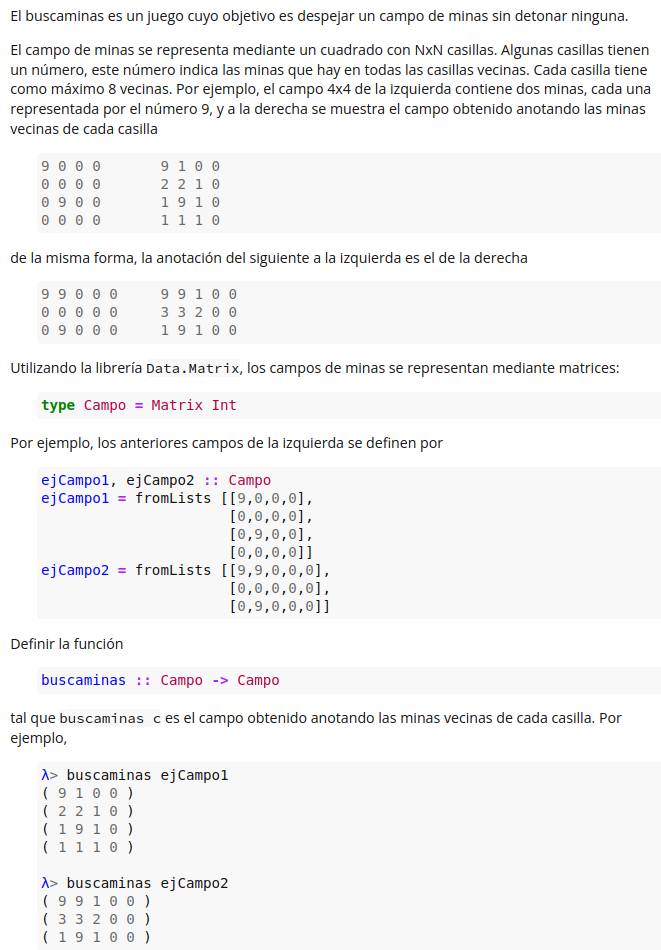
@Jose_A_Alonso@mathstodon.xyz
Readings shared August 31, 2025. https://jaalonso.github.io/vestigium/posts/2025/09/01-readings_shared_08-31-25 #FunctionalProgramming #Haskell #Math
@Jose_A_Alonso@mathstodon.xyz
#Exercitium: Selección hasta el primero que falla inclusive. https://jaalonso.github.io/exercitium/posts/2014/06/18-seleccion_con_fallo/ #Haskell #ProgramaciónFuncional #Matemáticas
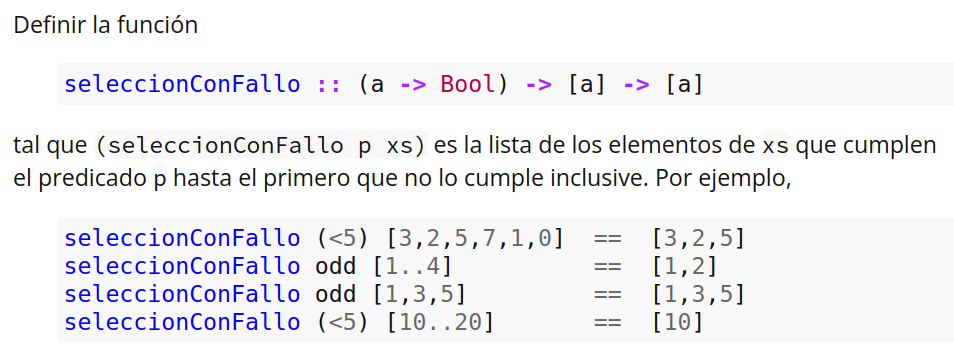
@Jose_A_Alonso@mathstodon.xyz
#Exercitium: Selección hasta el primero que falla inclusive. https://jaalonso.github.io/exercitium/posts/2014/06/18-seleccion_con_fallo/ #Haskell #ProgramaciónFuncional #Matemáticas
@Jose_A_Alonso@mathstodon.xyz
#Exercitium: Descomposiciones como sumas de n sumandos. https://jaalonso.github.io/exercitium/posts/2014/06/17-descomposiciones_con_n_sumandos/ #Haskell #ProgramaciónFuncional #Matemáticas
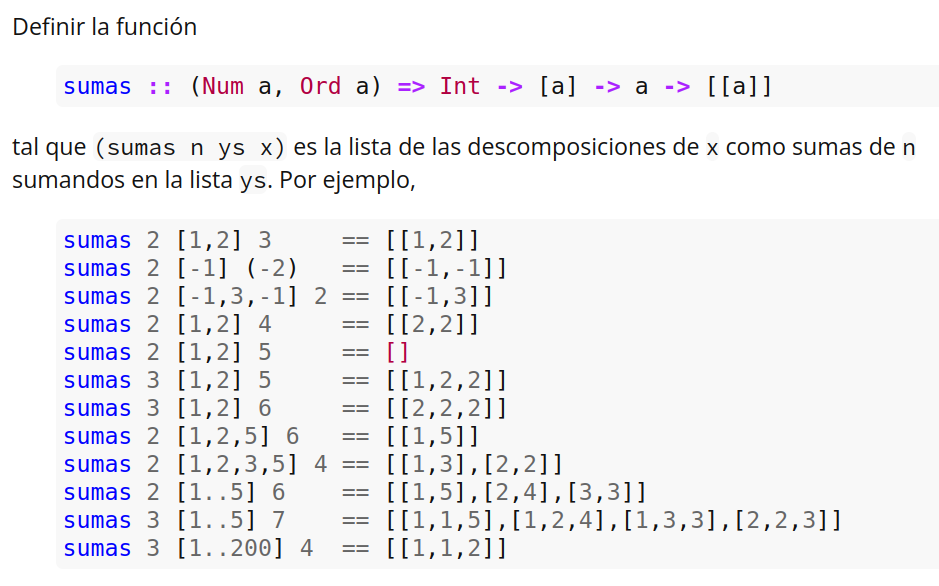
@Jose_A_Alonso@mathstodon.xyz
Readings shared August 30, 2025. https://jaalonso.github.io/vestigium/posts/2025/08/31-readings_shared_08-30-25 #FunctionalProgramming #Haskell #ITP #IsabelleHOL #Math
@Jose_A_Alonso@mathstodon.xyz
#Exercitium: Divisores de un número con final dado. https://jaalonso.github.io/exercitium/posts/2014/06/16-divisores_con_final/ #Haskell #ProgramaciónFuncional #Matemáticas
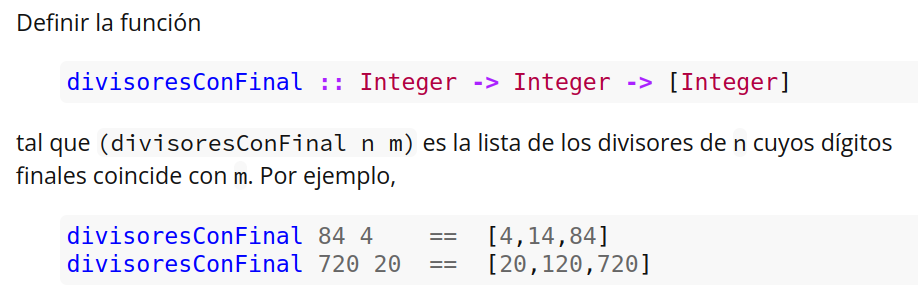
@Jose_A_Alonso@mathstodon.xyz
#Exercitium: Órbita prima. https://jaalonso.github.io/exercitium/posts/2014/06/13-orbita_prima/ #Haskell #ProgramaciónFuncional #Matemáticas
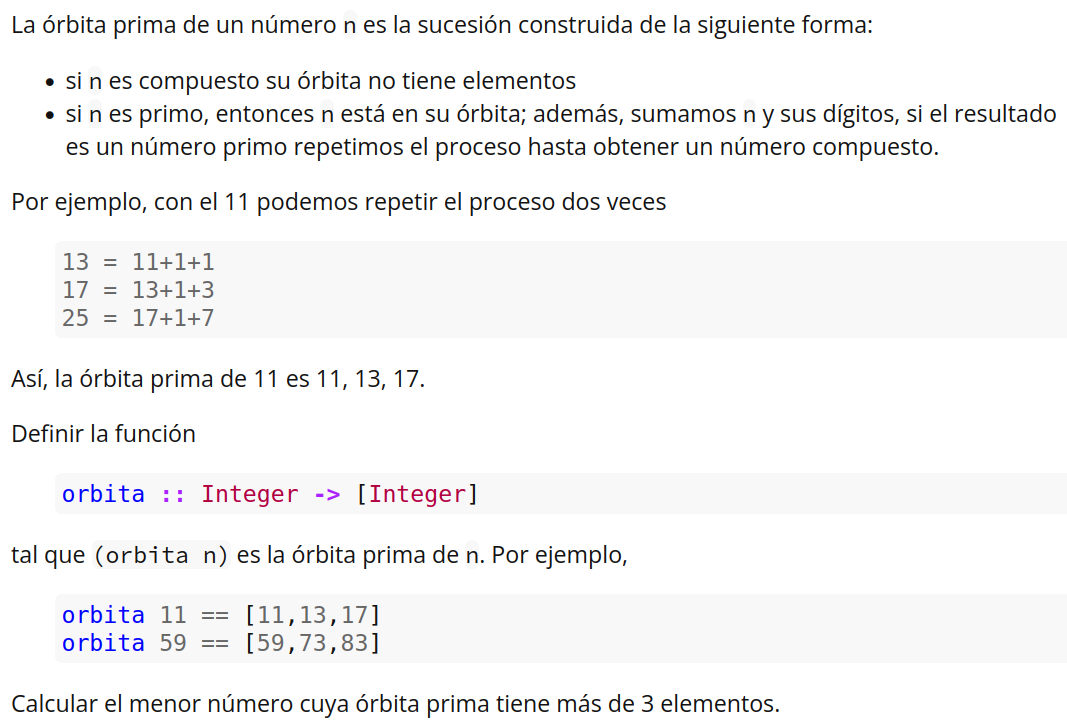
@Jose_A_Alonso@mathstodon.xyz
#Exercitium: Ordenada cíclicamente. https://jaalonso.github.io/exercitium/posts/2014/06/12-ordenada_ciclicamente/ #Haskell #ProgramaciónFuncional
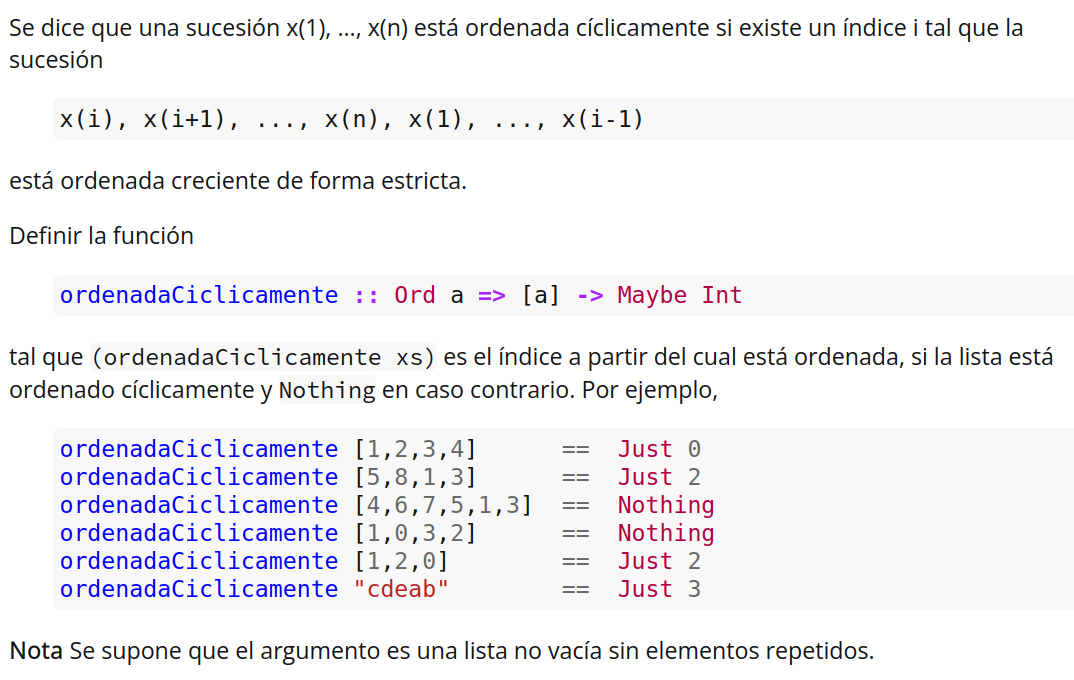
@Jose_A_Alonso@mathstodon.xyz
#Exercitium: Eliminación de las ocurrencias aisladas. https://jaalonso.github.io/exercitium/posts/2014/06/11-elimina_aisladas/ #Haskell #ProgramaciónFuncional #Matemáticas
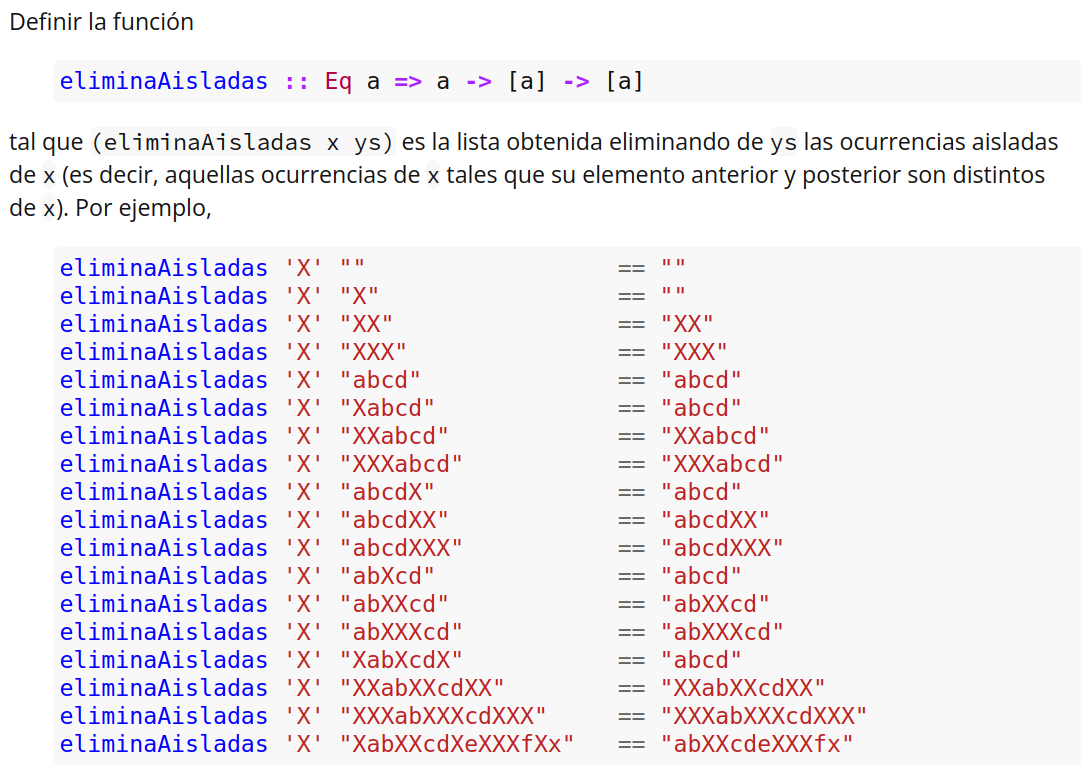
@Jose_A_Alonso@mathstodon.xyz
#Exercitium: Emparejamiento de árboles. https://jaalonso.github.io/exercitium/posts/2014/06/10-emparejamiento_de_arboles/ #Haskell #ProgramaciónFuncional #Matemáticas
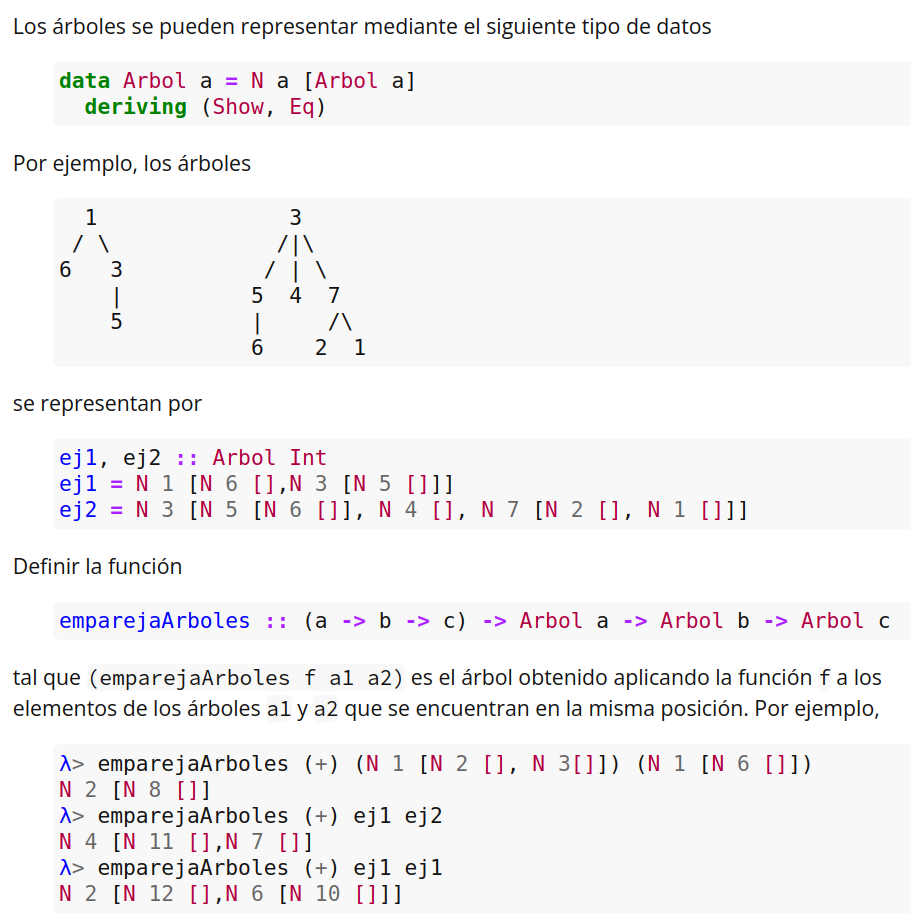
@Jose_A_Alonso@mathstodon.xyz
#Exercitium: Separación por posición. https://jaalonso.github.io/exercitium/posts/2014/06/09-separacion_por_posicion/ #Haskell #ProgramaciónFuncional #Matemáticas

@Jose_A_Alonso@mathstodon.xyz
#Exercitium: Número de inversiones. https://jaalonso.github.io/exercitium/posts/2014/06/06-numero_de_inversiones/ #Haskell #ProgramaciónFuncional #Matemáticas
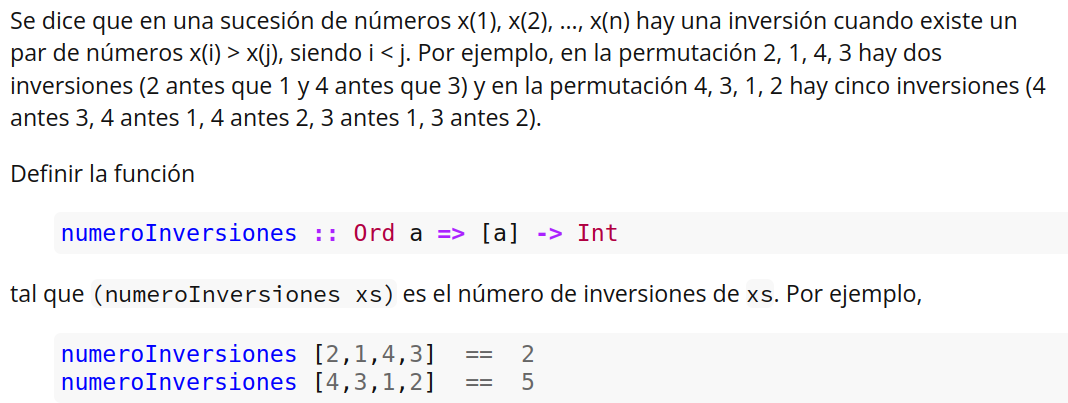
@Jose_A_Alonso@mathstodon.xyz
#Exercitium: Descomposiciones triangulares. https://jaalonso.github.io/exercitium/posts/2014/06/05-descomposiciones_triangulares/ #Haskell #ProgramaciónFuncional #Matemáticas
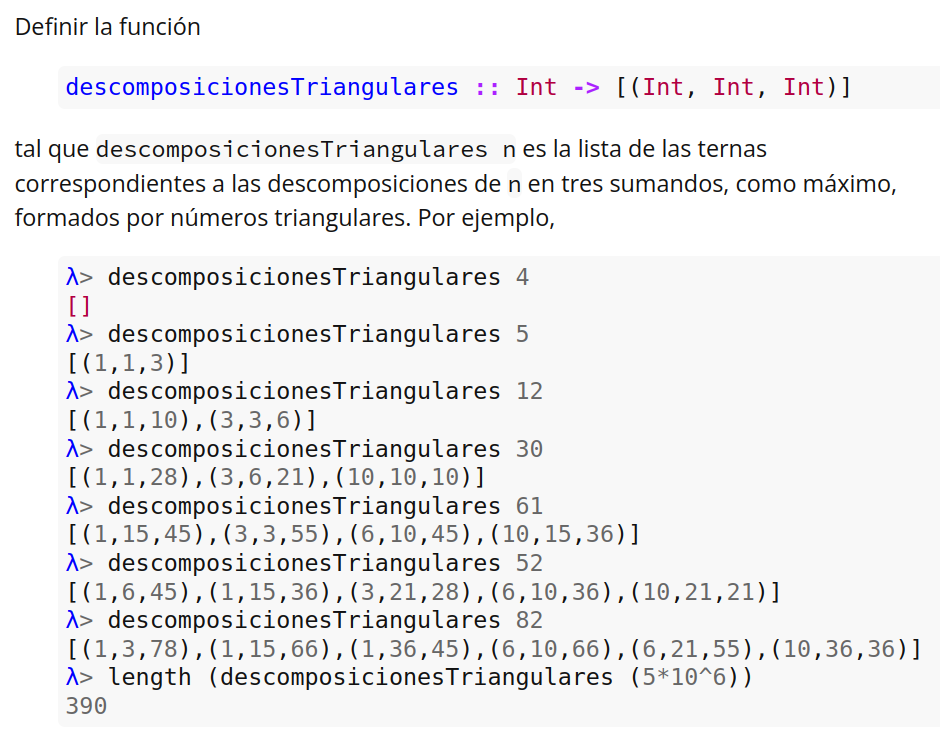
@Jose_A_Alonso@mathstodon.xyz
Readings shared August 29, 2025. https://jaalonso.github.io/vestigium/posts/2025/08/30-readings_shared_08-29-25 #Agda #FunctionalProgramming #Haskell #ITP #LeanProver #Math

@byorgey@mathstodon.xyz
The folks at #Kattis finally published the problems from a bunch of old #competitiveprogramming contests that they have hosted over the years, including quite a few that I helped organize. Yay! (I have been bugging them to do this literally for years.) In particular, the list of available problems written by me instantly went from 2 to about 35:
https://open.kattis.com/problem-authors/Brent%20Yorgey
I have solved many (though not all) of them in #Haskell. Give them a try and let me know what you think! 😄
@hackuador@functional.cafe
@byorgey@mathstodon.xyz
The folks at #Kattis finally published the problems from a bunch of old #competitiveprogramming contests that they have hosted over the years, including quite a few that I helped organize. Yay! (I have been bugging them to do this literally for years.) In particular, the list of available problems written by me instantly went from 2 to about 35:
https://open.kattis.com/problem-authors/Brent%20Yorgey
I have solved many (though not all) of them in #Haskell. Give them a try and let me know what you think! 😄
@Jose_A_Alonso@mathstodon.xyz
#Exercitium: Índices de valores verdaderos. https://jaalonso.github.io/exercitium/posts/2014/06/04-indices_verdaderos/ #Haskell #ProgramaciónFuncional #Matemáticas
@Jose_A_Alonso@mathstodon.xyz
@Jose_A_Alonso@mathstodon.xyz
#Exercitium: Pim, Pam, Pum y divisibilidad. https://jaalonso.github.io/exercitium/posts/2014/06/02-pimpampum/ #Haskell #ProgramaciónFuncional #Matemáticas
@Jose_A_Alonso@mathstodon.xyz
@Jose_A_Alonso@mathstodon.xyz
#Exercitium: Elementos de una matriz con algún vecino menor. https://jaalonso.github.io/exercitium/posts/2014/05/29-algun_vecino_menor/ #Haskell #ProgramaciónFuncional #Matemáticas
@Jose_A_Alonso@mathstodon.xyz
#Exercitium: Enumeración de árboles binarios. https://jaalonso.github.io/exercitium/posts/2014/05/28-enumera_arbol/ #Haskell #ProgramaciónFuncional #Matemáticas
@Jose_A_Alonso@mathstodon.xyz
#Exercitium: Números triangulares con n cifras distintas. https://jaalonso.github.io/exercitium/posts/2014/05/27-triangulares_con_cifras/ #Haskell #ProgramaciónFuncional #Matemáticas
@Jose_A_Alonso@mathstodon.xyz
Readings shared August 28, 2025. https://jaalonso.github.io/vestigium/posts/2025/08/29-readings_shared_08-28-25 #Haskell #FunctionalProgramming #Math
@Jose_A_Alonso@mathstodon.xyz
@Jose_A_Alonso@mathstodon.xyz
@Jose_A_Alonso@mathstodon.xyz
#Exercitium: Mayor producto de las ramas de un árbol. https://jaalonso.github.io/exercitium/posts/2014/05/22-mayor_producto_de_las_ramas_de_un_arbol/ #Haskell #ProgramaciónFuncional #Matemáticas
@Jose_A_Alonso@mathstodon.xyz
#Exercitium: Número de pares de elementos adyacentes iguales en una matriz. https://jaalonso.github.io/exercitium/posts/2014/05/21-pares_adyacentes_iguales/ #Haskell #ProgramaciónFuncional #Matemáticas
@Jose_A_Alonso@mathstodon.xyz
#Exercitium: Elemento más repetido de manera consecutiva. https://jaalonso.github.io/exercitium/posts/2014/05/20-mas_repetido/ #Haskell #ProgramaciónFuncional #Matemáticas
@Jose_A_Alonso@mathstodon.xyz
#Exercitium: Regiones determinadas por n rectas del plano. https://jaalonso.github.io/exercitium/posts/2014/05/19-regiones/ #Haskell #ProgramaciónFuncional #Matemáticas
@Jose_A_Alonso@mathstodon.xyz
#Exercitium: Ampliación de matrices por columnas. https://jaalonso.github.io/exercitium/posts/2014/05/16-amplia_columnas/ #Haskell #ProgramaciónFuncional #Matemáticas
@Jose_A_Alonso@mathstodon.xyz
@Jose_A_Alonso@mathstodon.xyz
@Jose_A_Alonso@mathstodon.xyz
#Exercitium: Numeración de las ternas de números naturales. https://jaalonso.github.io/exercitium/posts/2014/05/13-numeracion_de_ternas/ #Haskell #ProgramaciónFuncional #Matemáticas
@Jose_A_Alonso@mathstodon.xyz
#Exercitium: Alfabeto comenzando en un carácter. https://jaalonso.github.io/exercitium/posts/2014/05/12-alfabeto_desde/ #Haskell #ProgramaciónFuncional #Matemáticas
@Jose_A_Alonso@mathstodon.xyz
Haskell Course: Lesson 21: Reader, Writer, and State Monads. ~ Robertino Martinez. https://youtu.be/RN9Fr7YRt5c #Haskell #FunctionalProgramming
@Jose_A_Alonso@mathstodon.xyz
Readings shared August 27, 2025. https://jaalonso.github.io/vestigium/posts/2025/08/28-readings_shared_08-27-25 #CategoryTheory #FunctionalProgramming #Haskell #Math
@Jose_A_Alonso@mathstodon.xyz
@Jose_A_Alonso@mathstodon.xyz
#Exercitium: Valores de polinomios representados con vectores. https://jaalonso.github.io/exercitium/posts/2014/05/08-valor_de_un_polinomio/ #Haskell #ProgramaciónFuncional #Matemáticas
@Jose_A_Alonso@mathstodon.xyz
#Exercitium: Segmentos maximales con elementos consecutivos. https://jaalonso.github.io/exercitium/posts/2014/05/07-segmentos_consecutivos/ #Haskell #ProgramaciónFuncional #Matemáticas
@Jose_A_Alonso@mathstodon.xyz
Readings shared August 26, 2025. https://jaalonso.github.io/vestigium/posts/2025/08/27-readings_shared_08-26-25 #ATP #FunctionalProgramming #Haskell #ITP #LLMs #LeanProver #Math #Reasoning #Vampire
@Jose_A_Alonso@mathstodon.xyz
@Jose_A_Alonso@mathstodon.xyz
@Jose_A_Alonso@mathstodon.xyz
@Jose_A_Alonso@mathstodon.xyz
Readings shared August 25, 2025. https://jaalonso.github.io/vestigium/posts/2025/08/26-readings_shared_08-25-25 #Agda #FunctionalProgramming #Haskell #ITP #LLMs #LeanProver #Logic #Math #Rocq #RustLang #Waterproof
@Jose_A_Alonso@mathstodon.xyz
#Exercitium: Suma si todos los valores son justos. https://jaalonso.github.io/exercitium/posts/2014/05/01-suma_si_todos_justos/ #Haskell #ProgramaciónFuncional #Matemáticas
@Jose_A_Alonso@mathstodon.xyz
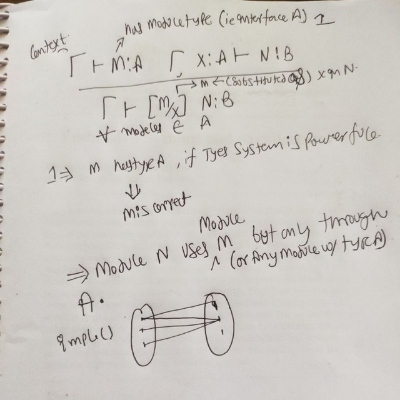
@xameer@mathstodon.xyz · Reply to Quincy ⁂'s post
@quincy@chaos.social
@Jose_A_Alonso@mathstodon.xyz
Sets & heaps in Haskell and Rust. ~ James Bowen. https://mmhaskell.com/blog/2025/8/25/sets-amp-heaps-in-haskell-and-rust #Haskell #FunctionalProgramming #RustLang
@Jose_A_Alonso@mathstodon.xyz
Readings shared August 24, 2025. https://jaalonso.github.io/vestigium/posts/2025/08/25-readings_shared_08-24-25 #FunctionalProgramming #Haskell #ITP #LLMs #LeanProver #Math
@Jose_A_Alonso@mathstodon.xyz
@Jose_A_Alonso@mathstodon.xyz
#Exercitium: Primos consecutivos con media capicúa. https://jaalonso.github.io/exercitium/posts/2014/04/28-primos_consecutivos_con_media_capicua/ #Haskell #ProgramaciónFuncional #Matemáticas
@Jose_A_Alonso@mathstodon.xyz
@abnv@fantastic.earth
I'm writing a series of blog posts, in which I write a #bytecode #compiler and a #virtualMachine for arithmetic in #Haskell. We explore the following topics in the series:
- Parsing arithmetic expressions to ASTs.
- Compiling ASTs to bytecode.
- Interpreting ASTs.
- Efficiently executing bytecode in a VM.
- Disassembling bytecode and decompiling opcodes for debugging and testing.
- Unit testing and property-based testing for our compiler and VM.
- Benchmarking our code to see how the different passes perform.
- All the while keeping an eye on performance.
The second post of the series that focuses on writing the #compiler is now out: https://abhinavsarkar.net/posts/arithmetic-bytecode-vm-compiler
@Jose_A_Alonso@mathstodon.xyz
To zip through the cost analysis of probabilistic programs. ~ Matthias Hetzenberger, Georg Moser, Florian Zuleger. https://arxiv.org/abs/2508.14249v1 #Haskell #FunctionalProgramming
@Jose_A_Alonso@mathstodon.xyz
Readings shared August 22, 2025. https://jaalonso.github.io/vestigium/posts/2025/08/23-readings_shared_08-22-25 #Agda #FunctionalProgramming #Haskell #ITP #IsabelleHOL #Logic #Math #Rocq
@Jose_A_Alonso@mathstodon.xyz
#Exercitium: Determinación de los elementos minimales. https://jaalonso.github.io/exercitium/posts/2014/04/24-elementosminimales/ #Haskell #ProgramaciónFuncional #Matemáticas
@Jose_A_Alonso@mathstodon.xyz
@Jose_A_Alonso@mathstodon.xyz
#Exercitium: Ordenación por el máximo. https://jaalonso.github.io/exercitium/posts/2014/04/22-ordenados_por_maximo/ #Haskell #FunctionalProgramming
@Jose_A_Alonso@mathstodon.xyz
@Jose_A_Alonso@mathstodon.xyz
Applicative-wired monad pattern. ~ Chris Done. https://chrisdone.com/posts/applicative-wired-monad #Haskell #FunctionalProgramming
@Jose_A_Alonso@mathstodon.xyz
The Baby paradox in Haskell. ~ Justin Le. https://blog.jle.im/entry/the-baby-paradox-in-haskell.html #Haskell #FunctionalProgramming #Logic
@Jose_A_Alonso@mathstodon.xyz
Readings shared August 20, 2025. https://jaalonso.github.io/vestigium/posts/2025/08/21-readings_shared_08-20-25 #AI #ATP #FunctionalProgramming #Haskell #LLMs #Math #SAT_Solving
@Jose_A_Alonso@mathstodon.xyz
#Exercitium: Problemas de programación con Haskell (junio de 2014). https://jaalonso.github.io/exercitium/2014/06 #Haskell #ProgramaciónFuncional #Matemáticas
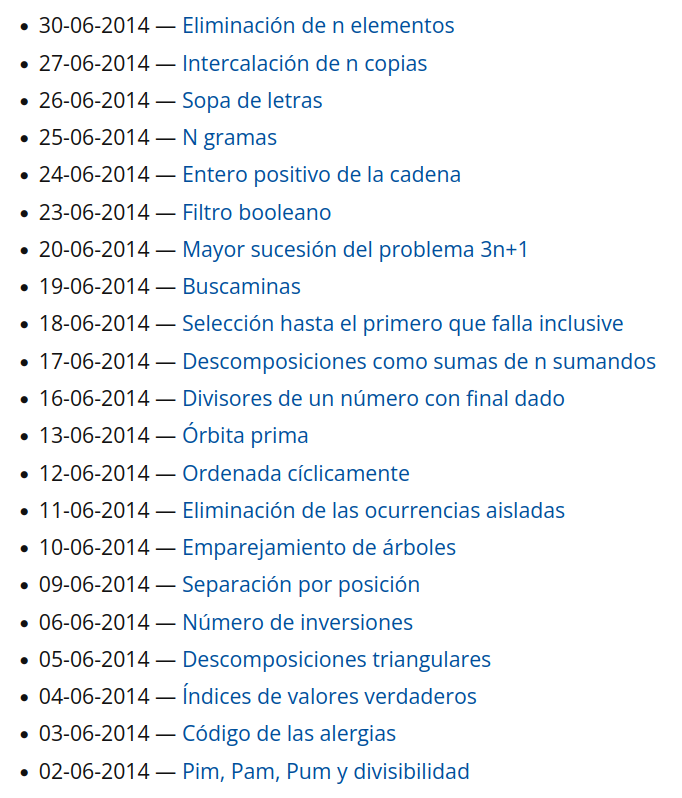
@Jose_A_Alonso@mathstodon.xyz
#Exercitium: Problemas de programación con Haskell (julio de 2014). https://jaalonso.github.io/exercitium/2014/07 #Haskell #ProgramaciónFuncional #Matemáticas
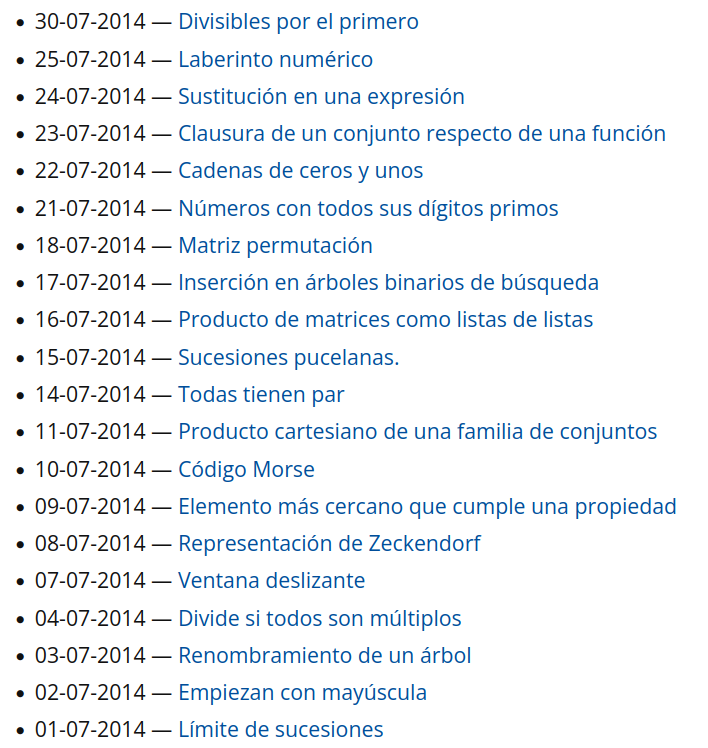
@Jose_A_Alonso@mathstodon.xyz
#Exercitium: Problemas de programación con Haskell (octubre de 2014). https://jaalonso.github.io/exercitium/2014/10 #Haskell #ProgramaciónFuncional #Matemáticas
@Jose_A_Alonso@mathstodon.xyz
#Exercitium: Problemas de programación con Haskell (noviembre de 2014). https://jaalonso.github.io/exercitium/2014/11 #Haskell #ProgramaciónFuncional #Matemáticas
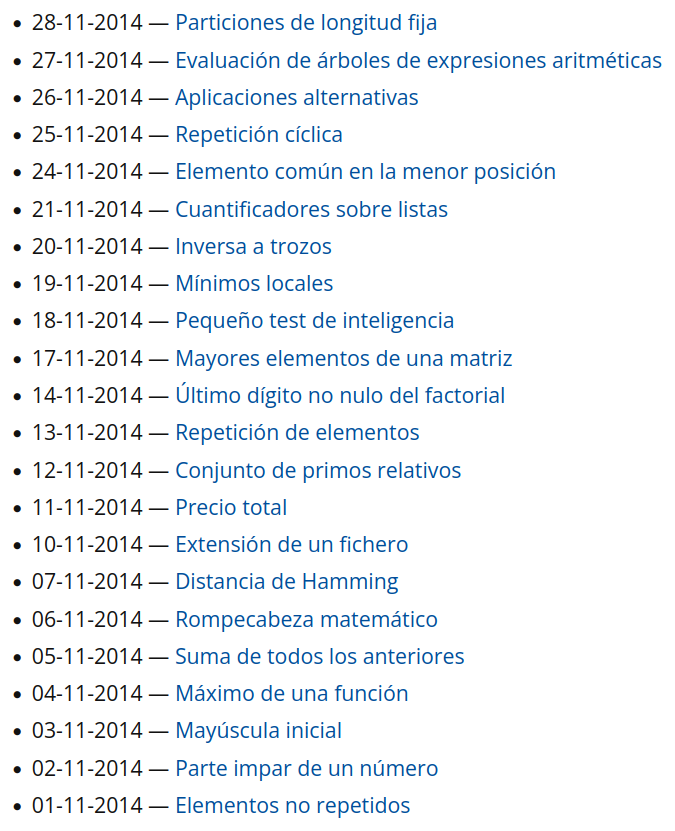

@mdrslmr@sciences.social · Reply to HaskellOrg's post
@Jose_A_Alonso@mathstodon.xyz
Readings shared August 19, 2025. https://jaalonso.github.io/vestigium/posts/2025/08/20-readings_shared_08-19-25 #Haskell #FunctionalProgramming #Math
@haskell@fosstodon.org
The GHC developers are very pleased to announce the availability of the first alpha prerelease of GHC 9.14.1.
Highlights:
* Major improvements to the Specialiser
* SSE/AVX support in the x86 native backend
* Significant improvements in the GHCi debugger
@Jose_A_Alonso@mathstodon.xyz
#Exercitium: Problemas de programación con Haskell (diciembre de 2014). https://jaalonso.github.io/exercitium/2014/12 #Haskell #ProgramaciónFuncional #Matemáticas
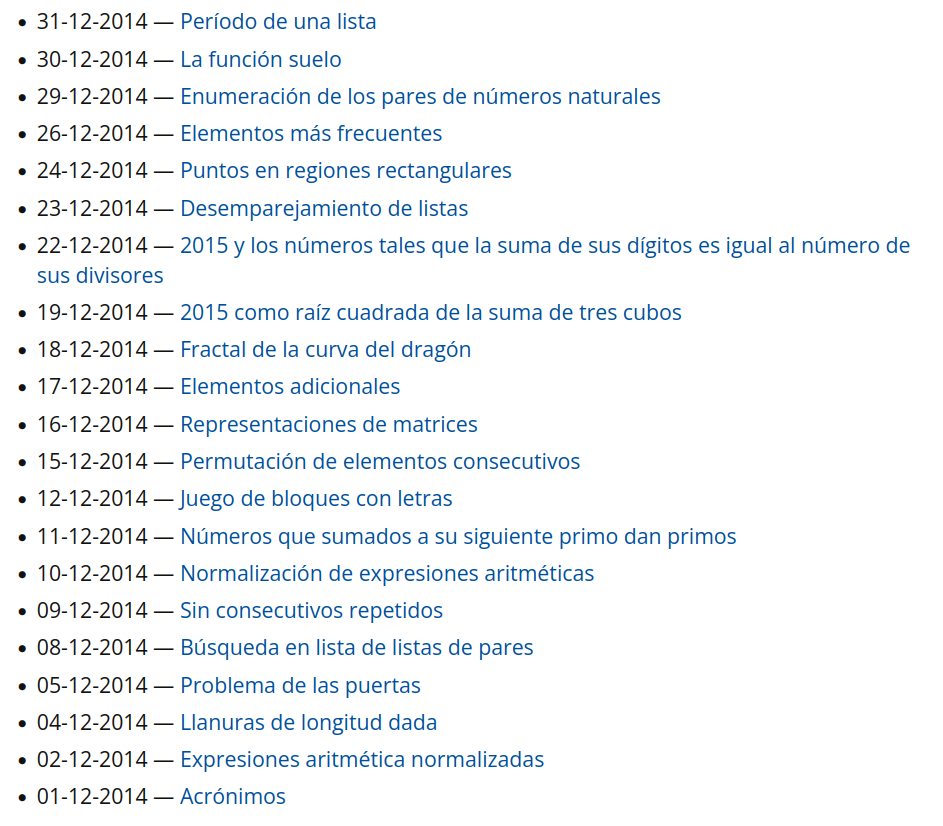
@haskell@fosstodon.org
New kid on the block: Granite is the new terminal plotting library from @mchav's dataframe project
https://discourse.haskell.org/t/granite-a-terminal-plotting-library/12778
@Jose_A_Alonso@mathstodon.xyz
Granite: A library for producing terminal plots. It depends only on Haskell's base package so it should be easy to use and install. ~ Michael Chavinda. https://github.com/mchav/granite #Haskell #FunctionalProgramming
@pmidden@fosstodon.org
Interesting that #haskell's "Alternative" has "some" and "many", but not "atMost", for example. Although it's easy to write.
@Jose_A_Alonso@mathstodon.xyz
Readings shared August 18, 2025. https://jaalonso.github.io/vestigium/posts/2025/08/19-readings_shared_08-18-25 #Agda #FunctionalProgramming #Haskell #ITP #IsabelleHOL #Logic #Math #RustLang
@Jose_A_Alonso@mathstodon.xyz
#Exercitium: Problemas de programación con Haskell (enero de 2015). https://jaalonso.github.io/exercitium/2015/01 #Haskell #ProgramaciónFuncional #Matemáticas
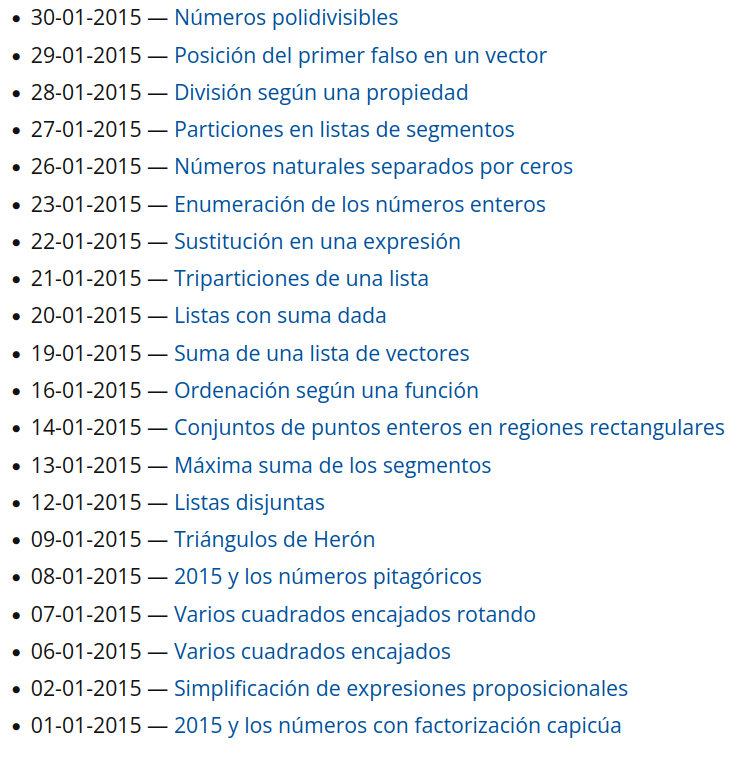
@Jose_A_Alonso@mathstodon.xyz
#Exercitium: Problemas de programación con Haskell (febrero de 2015). https://jaalonso.github.io/exercitium/2015/02 #Haskell #ProgramaciónFuncional #Matemáticas
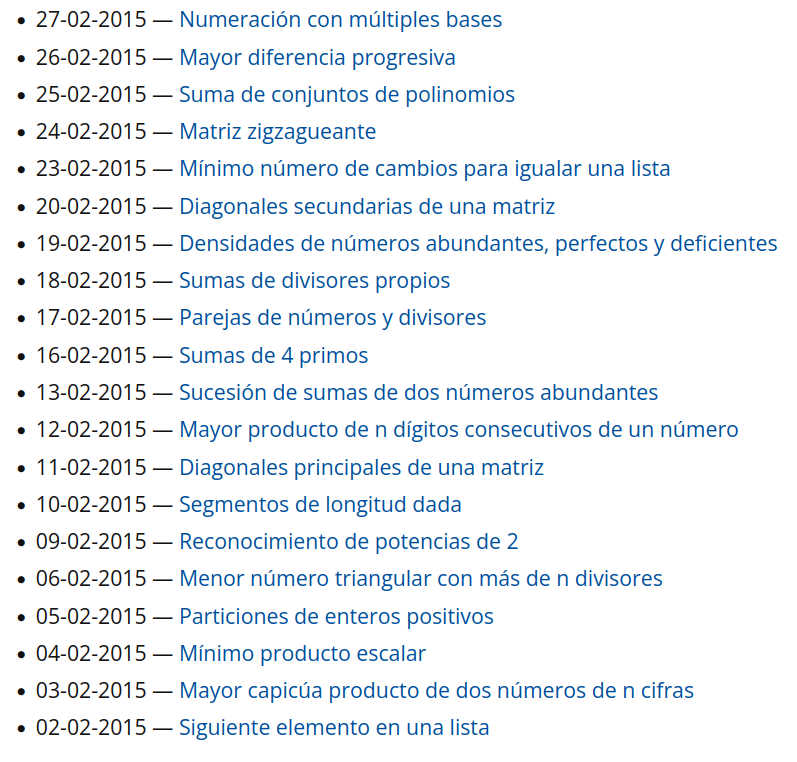
@Jose_A_Alonso@mathstodon.xyz
#Exercitium: Problemas de programación con Haskell (marzo de 2015). https://jaalonso.github.io/exercitium/2015/03 #Haskell #ProgramaciónFuncional #Matemáticas
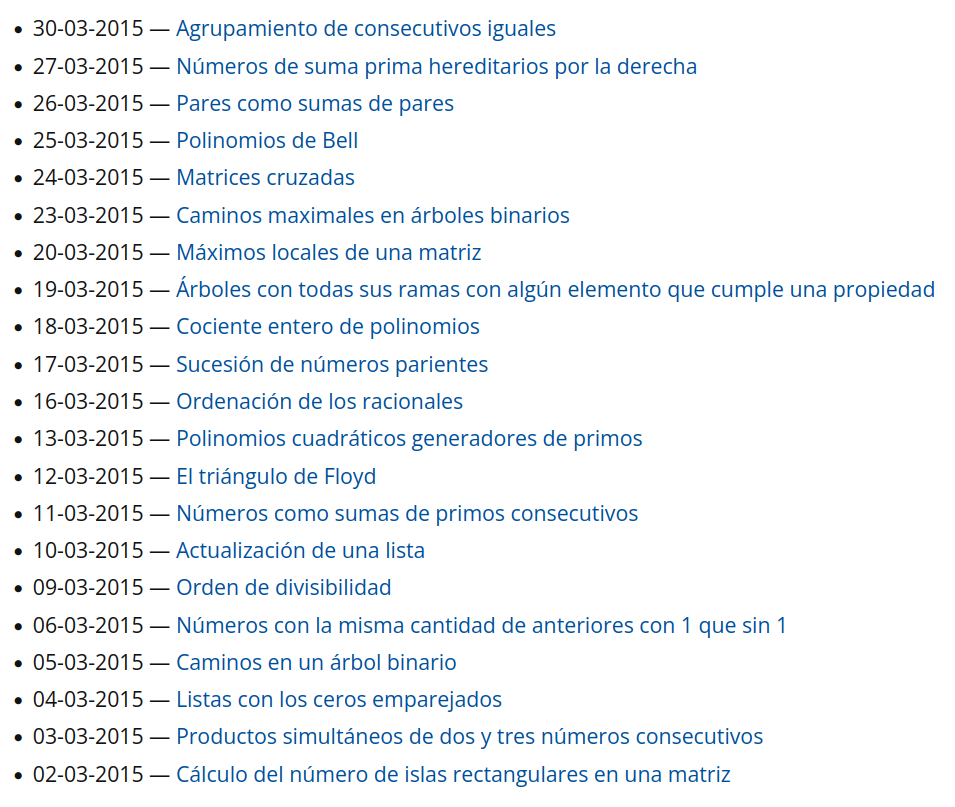
@Jose_A_Alonso@mathstodon.xyz
Binary tree BFS: Zigzag order. ~ James Bowen. https://mmhaskell.com/blog/2025/8/18/binary-tree-bfs-zigzag-order #Haskell #FunctionalProgramming #RustLang
@Jose_A_Alonso@mathstodon.xyz
Readings shared August 17, 2025. https://jaalonso.github.io/vestigium/posts/2025/08/18-readings_shared_08-17-25 #Abella #Agda #FunctionalProgramming #Haskell #ITP #LeanProver #Math
@hackuador@functional.cafe
#Haskell #jose v0.12 release: https://hackage.haskell.org/package/jose-0.12/changelog
@Jose_A_Alonso@mathstodon.xyz
Invertible syntax without the tuples (Functional Pearl). ~ Mathieu Boespflug, Arnaud Spiwack. https://arxiv.org/abs/2508.09856v1 #Haskell #FunctionalProgramming
@Jose_A_Alonso@mathstodon.xyz
Invertible syntax without the tuples (Functional Pearl). ~ Mathieu Boespflug, Arnaud Spiwack. https://arxiv.org/abs/2508.09856v1 #Haskell #FunctionalProgramming
@Jose_A_Alonso@mathstodon.xyz
Readings shared August 16, 2025. https://jaalonso.github.io/vestigium/posts/2025/08/17-readings_shared_08-16-25 #Haskell #FunctionalProgramming #Math
@Jose_A_Alonso@mathstodon.xyz
#Exercitium: Problemas de programación con Haskell (abril de 2015). https://jaalonso.github.io/exercitium/2015/04 #Haskell #ProgramaciónFuncional #Matemáticas
@Jose_A_Alonso@mathstodon.xyz
#Exercitium: Problemas de programación con Haskell (mayo de 2015). https://jaalonso.github.io/exercitium/2015/05 #Haskell #ProgramaciónFuncional #Matemáticas
@Jose_A_Alonso@mathstodon.xyz
#Exercitium: Problemas de programación con Haskell (junio de 2015). https://jaalonso.github.io/exercitium/2015/06 #Haskell #ProgramaciónFuncional #Matemáticas
@Jose_A_Alonso@mathstodon.xyz
Readings shared August 15, 2025. https://jaalonso.github.io/vestigium/posts/2025/08/16-readings_shared_08-15-25 #AI #ATP #FunctionalProgramming #Haskell #ITP #IsabelleHOL #Math #Rocq #Vampire
@haskell@fosstodon.org
"Well-Typed at ZuriHac 2025"
https://well-typed.com/blog/2025/08/zurihac-well-typed-2025/
@Jose_A_Alonso@mathstodon.xyz
#Exercitium: Problemas de programación con Haskell (octubre de 2015). https://jaalonso.github.io/exercitium/2015/10 #Haskell #ProgramaciónFuncional #Matemáticas
@Jose_A_Alonso@mathstodon.xyz
#Exercitium: Problemas de programación con Haskell (noviembre de 2015). https://jaalonso.github.io/exercitium/2015/11 #Haskell #ProgramaciónFuncional #Matemáticas
@Jose_A_Alonso@mathstodon.xyz
#Exercitium: Problemas de programación con Haskell (diciembre de 2015). https://jaalonso.github.io/exercitium/2015/12 #Haskell #ProgramaciónFuncional #Matemáticas
@haskell@fosstodon.org
"Well-Typed at ZuriHac 2025"
https://well-typed.com/blog/2025/08/zurihac-well-typed-2025/
@Jose_A_Alonso@mathstodon.xyz
Readings shared August 14, 2025. https://jaalonso.github.io/vestigium/posts/2025/08/15-readings_shared_08-14-25 #FunctionalProgramming #Haskell #ITP #LeanProver #Math

@unison@fosstodon.org
There's not one but TWO articles about optimizing Unison tooling by the illustrious Chris Penner in today's Haskell Weekly newsletter! Check it out!
Unison 💜 #Haskell
https://haskellweekly.news/issue/485.html?utm_source=mastodon
@Jose_A_Alonso@mathstodon.xyz
#Exercitium: Problemas de programación con Haskell (enero de 2016). https://jaalonso.github.io/exercitium/2016/01 #Haskell #ProgramaciónFuncional #Matemáticas
@Jose_A_Alonso@mathstodon.xyz
Using traversals to batch database queries. ~ Chris Penner. https://chrispenner.ca/posts/traversals-for-batching #Haskell #FunctionalProgramming
@Jose_A_Alonso@mathstodon.xyz
Type-machine (Using Template Haskell to derive the structure of records and simulate structural subtyping). ~ Arthur Jamet. https://arthichaud.xyz/posts/type-machine/ #Haskell #FunctionalProgramming
@Jose_A_Alonso@mathstodon.xyz
Type inference for plain data. ~ Gabriella Gonzalez. https://www.haskellforall.com/2025/08/type-inference-for-plain-data.html #Haskell #FunctionalProgramming
@Jose_A_Alonso@mathstodon.xyz
Type inference for plain data. ~ Gabriella Gonzalez. https://www.haskellforall.com/2025/08/type-inference-for-plain-data.html #Haskell #FunctionalProgramming
@Jose_A_Alonso@mathstodon.xyz
Readings shared August 13, 2025. https://jaalonso.github.io/vestigium/posts/2025/08/14-readings_shared_08-13-25 ACL2 #AI #FunctionalProgramming #Haskell #ITP #LeanProver #Logic #Math #RustLang
@Jose_A_Alonso@mathstodon.xyz
#Exercitium: Problemas de programación con Haskell (febrero de 2016). https://jaalonso.github.io/exercitium/2016/02 #Haskell #ProgramaciónFuncional #Matemáticas
@hackuador@functional.cafe
Super interesting talks at #BFPG tonight - STLC with explicit substitutions + #Nix flakes and #haskell-flake. Thanks to our speakers Donovan and Jack.
Our next session is Tue Sep 9th, with talks on hole-driven development, and #Gleam: https://lu.ma/kukbikp7
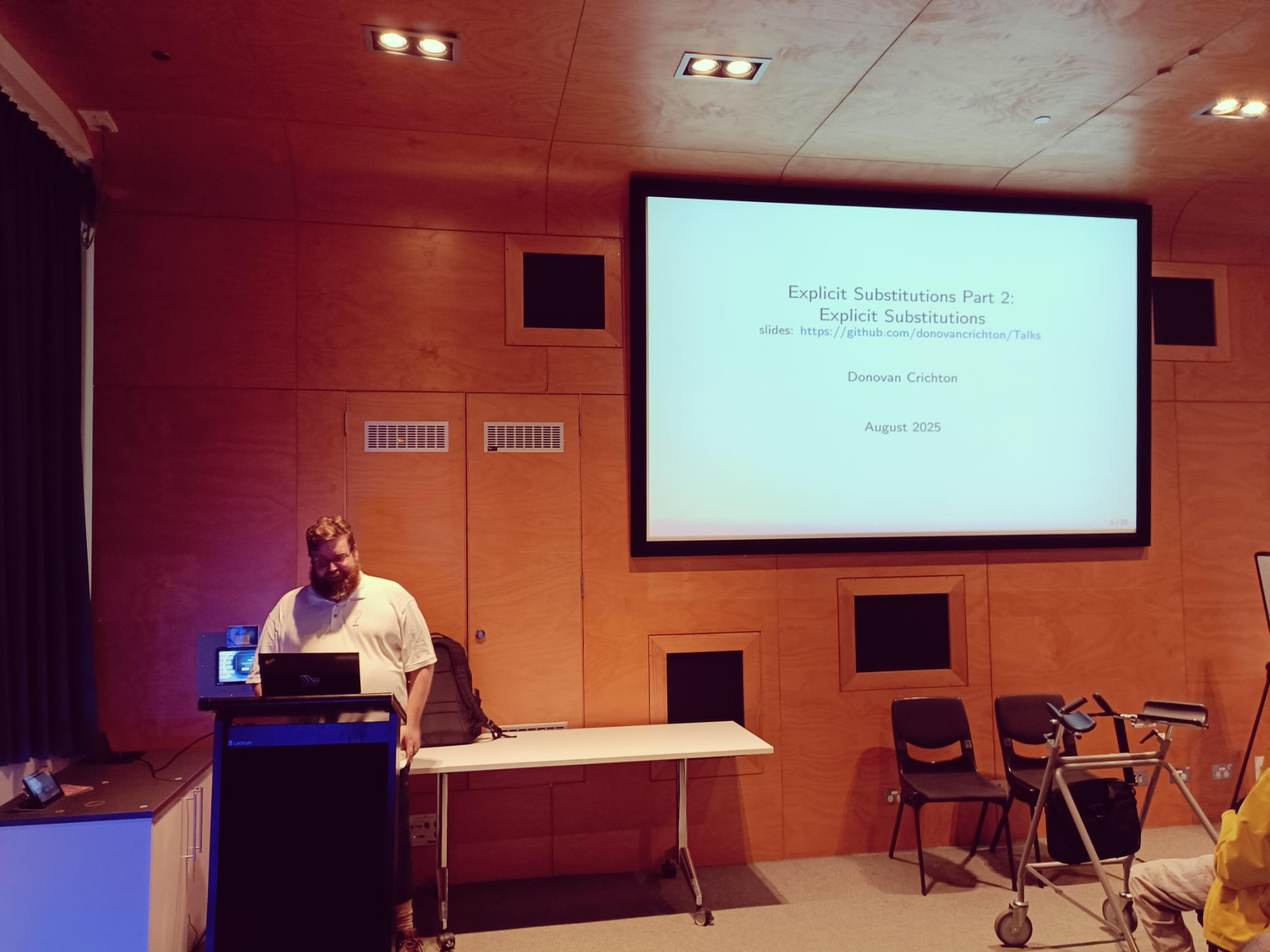
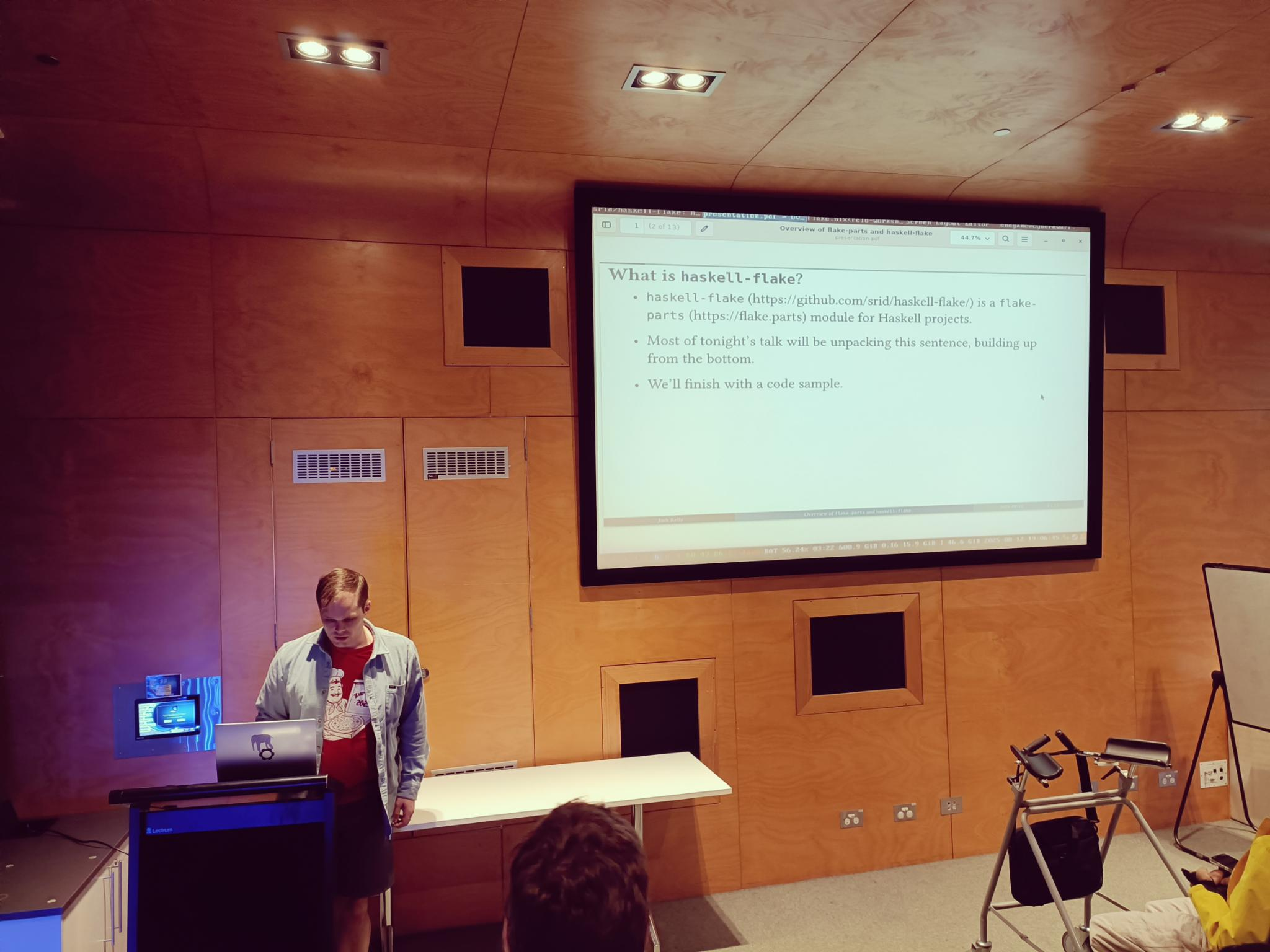
@haskell@fosstodon.org
"RFC: Introduce a serialisable bytecode format"
@Jose_A_Alonso@mathstodon.xyz
#Exercitium: Problemas de programación con Haskell (marzo de 2016). https://jaalonso.github.io/exercitium/2016/03 #Haskell #ProgramaciónFuncional #Matemáticas
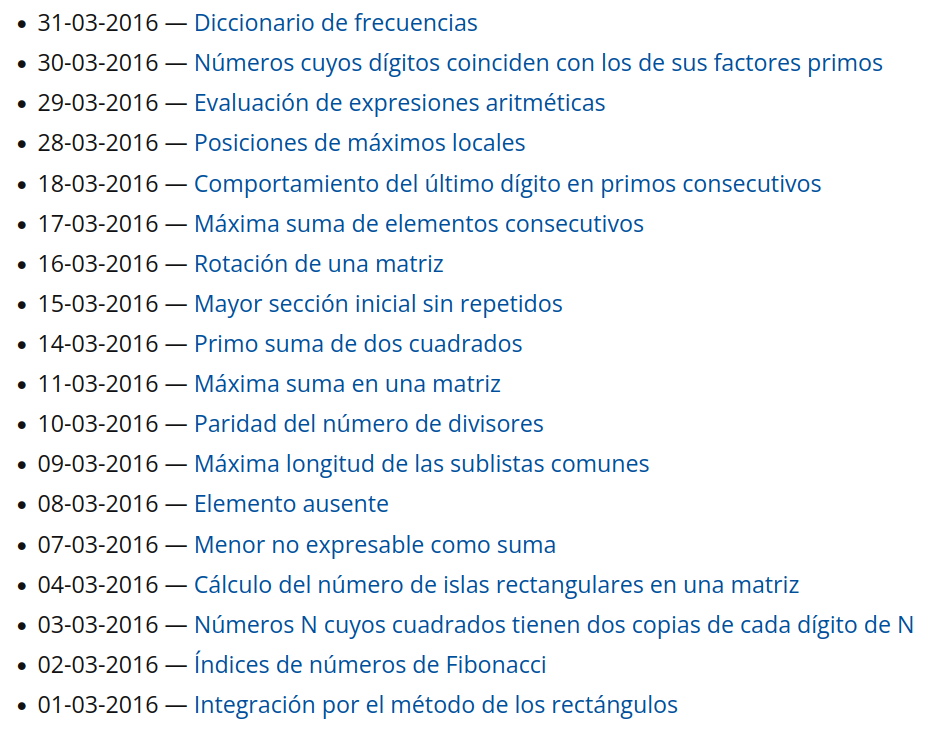
@Jose_A_Alonso@mathstodon.xyz
#Exercitium: Problemas de programación con Haskell (abril de 2016). https://jaalonso.github.io/exercitium/2016/04 #Haskell #ProgramaciónFuncional #Matemáticas
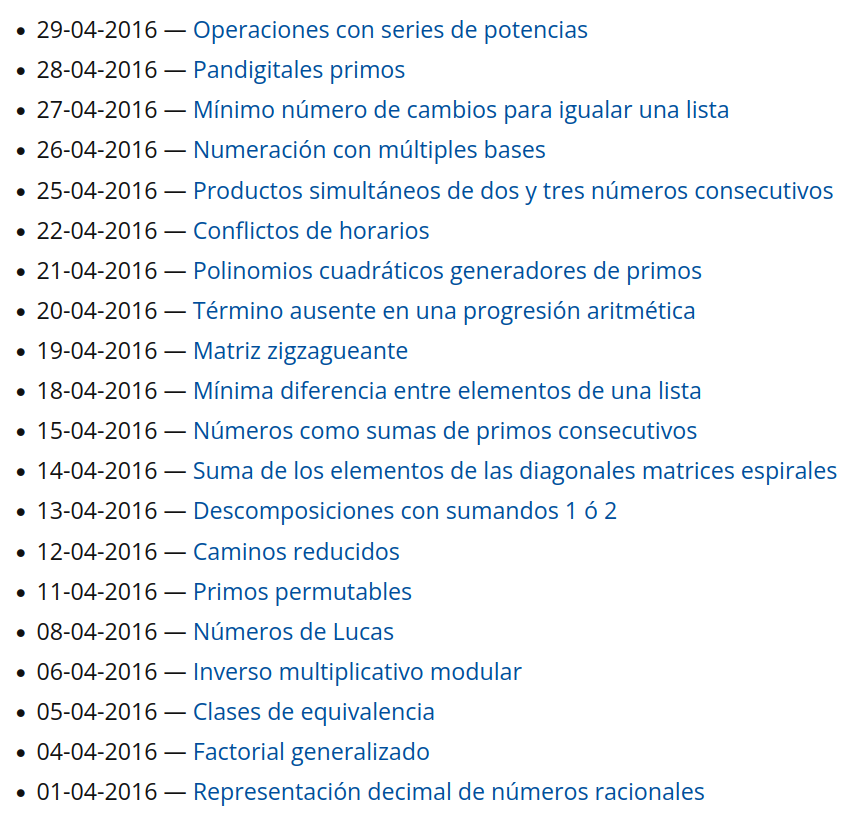
@Jose_A_Alonso@mathstodon.xyz
In-order traversal in Haskell and Rust. ~ James Bowen. https://mmhaskell.com/blog/2025/8/11/in-order-traversal-in-haskell-and-rust #Haskell #FunctionalProgramming #RustLang
@hackuador@functional.cafe
Brisbane Functional Programming Group #BFPG tomorrow Tue 12th! Explicit Substitutions pt2 (Donovan Crichton) + Overview of #Nix flake-parts and #haskell-flake (Jack Kelly). Be there or be a lambda cube! https://lu.ma/r002tby5
@Jose_A_Alonso@mathstodon.xyz
Readings shared August 10, 2025. https://jaalonso.github.io/vestigium/posts/2025/08/11-readings_shared_08-10-25 #Agda #CategoryTheory #CoqProver #FunctionalProgramming #Haskell #ITP #IsabelleHOL #Math #OCaml
@Jose_A_Alonso@mathstodon.xyz
#Exercitium: Problemas de programación con Haskell (mayo de 2016). https://jaalonso.github.io/exercitium/2016/05 #Haskell #ProgramaciónFuncional #Matemáticas
@Jose_A_Alonso@mathstodon.xyz
#Exercitium: Problemas de programación con Haskell (noviembre de 2016). https://jaalonso.github.io/exercitium/2016/11 #Haskell #ProgramaciónFuncional #Matemáticas
@Jose_A_Alonso@mathstodon.xyz
Domain-specific tensor languages. ~ Jean-Philippe Bernardy, Patrik Jansson. https://www.cambridge.org/core/journals/journal-of-functional-programming/article/domainspecific-tensor-languages/19B95794B66C66E117DFCFC7A21E22D5 #Haskell #FunctionalProgramming
@Jose_A_Alonso@mathstodon.xyz
@Jose_A_Alonso@mathstodon.xyz
#Exercitium: Problemas de programación con Haskell (diciembre de 2016). https://jaalonso.github.io/exercitium/2016/12 #Haskell #ProgramaciónFuncional #Matemáticas
@Jose_A_Alonso@mathstodon.xyz
Truly functional solutions to the longest uptrend problem (Functional pearl). ~ Alexander Dinges, Ralf Hinze. https://dl.acm.org/doi/pdf/10.1145/3747520 #Haskell #FunctionalProgramming
@Jose_A_Alonso@mathstodon.xyz
Teaching introductory functional programming using Haskelite. ~ Pedro Vasconcelos. https://arxiv.org/abs/2508.03640 #Haskell #FunctionalProgramming
@Jose_A_Alonso@mathstodon.xyz
Truly functional solutions to the longest uptrend problem (Functional pearl). ~ Alexander Dinges, Ralf Hinze. https://dl.acm.org/doi/pdf/10.1145/3747520 #Haskell #FunctionalProgramming
@Jose_A_Alonso@mathstodon.xyz
Teaching introductory functional programming using Haskelite. ~ Pedro Vasconcelos. https://arxiv.org/abs/2508.03640 #Haskell #FunctionalProgramming
@Jose_A_Alonso@mathstodon.xyz
Readings shared August 8, 2025. https://jaalonso.github.io/vestigium/posts/2025/08/09-readings_shared_08-08-25 #FunctionalProgramming #Haskell #ITP #LLMs #LeanProver #Logic #Math #Reasoning
@Jose_A_Alonso@mathstodon.xyz
#Exercitium: Problemas de programación con Haskell (enero de 2017). https://jaalonso.github.io/exercitium/2017/01 #Haskell #ProgramaciónFuncional #Matemáticas
@Jose_A_Alonso@mathstodon.xyz
#Exercitium: Problemas de programación con Haskell (febrero de 2017). https://jaalonso.github.io/exercitium/2017/02 #Haskell #ProgramaciónFuncional #Matemáticas
@abnv@fantastic.earth
Type-level literals + GADTs = Type-safe AST representation for #nanopass #compilers in #Haskell? 🤔
@Jose_A_Alonso@mathstodon.xyz
Readings shared August 6, 2025. https://jaalonso.github.io/vestigium/posts/2025/08/07-readings_shared_08-06-25 #AI #FunctionalProgramming #Haskell #Math #Neurosymbolic
@Jose_A_Alonso@mathstodon.xyz
#Exercitium: Problemas de programación con Haskell (marzo de 2017). https://jaalonso.github.io/exercitium/2017/03 #Haskell #ProgramaciónFuncional #Matemáticas
@Jose_A_Alonso@mathstodon.xyz
#Exercitium: Problemas de programación con Haskell (abril de 2017). https://jaalonso.github.io/exercitium/2017/04 #Haskell #ProgramaciónFuncional #Matemáticas
@6d03@mathstodon.xyz · Reply to Andrej Bauer's post
I have on occasion lamented that #Haskell isn't used more in scientific computing.
It's puzzling, because you would think that it's more important to a mathematician to understand their programs, than for them to run fast.
@Jose_A_Alonso@mathstodon.xyz
#Exercitium: Problemas de programación con Haskell (mayo de 2017). https://jaalonso.github.io/exercitium/2017/05 #Haskell #ProgramaciónFuncional #Matemáticas
@Jose_A_Alonso@mathstodon.xyz
#Exercitium: Problemas de programación con Haskell (junio de 2017). https://jaalonso.github.io/exercitium/2017/06 #Haskell #ProgramaciónFuncional #Matemáticas
@Jose_A_Alonso@mathstodon.xyz
#Exercitium: Problemas de programación con Haskell (noviembre de 2017). https://jaalonso.github.io/exercitium/2017/11 #Haskell #ProgramaciónFuncional #Matemáticas
@Jose_A_Alonso@mathstodon.xyz
#MULCIA: Haskell software engineer for remote position at IOG (Input Output Global). https://tinyurl.com/23x85sha #Jobs #Haskell #FunctionalProgramming
@Jose_A_Alonso@mathstodon.xyz
Readings shared August 4, 2025. https://jaalonso.github.io/vestigium/posts/2025/08/05-readings_shared_08-04-25 #AI #CoqProver #FunctionalProgramming #Haskell #ITP #LLMs
@Jose_A_Alonso@mathstodon.xyz
Reflections on Haskell@Meta. ~ Simon Marlow. https://youtu.be/gEWBHP0PvRw #Haskell #FunctionalProgramming
@Jose_A_Alonso@mathstodon.xyz
Readings shared August 3, 2025. https://jaalonso.github.io/vestigium/posts/2025/08/04-readings_shared_08-03-25 #AI #FunctionalProgramming #Haskell #IMO #ITP #LLMs #LeanProver #Math
@haskell@fosstodon.org · Reply to HaskellOrg's post
The talks of the 2025 Haskell Implementor's Workshop, also co-located with @zurihac are available on YouTube: https://www.youtube.com/playlist?list=PLQpeDZt0_xQfpBPdVV3hUZ3_pDxmYhsbr
@haskell@fosstodon.org · Reply to HaskellOrg's post
The talks of the 2025 Haskell Implementor's Workshop, also co-located with @zurihac are available on YouTube: https://www.youtube.com/playlist?list=PLQpeDZt0_xQfpBPdVV3hUZ3_pDxmYhsbr
@haskell@fosstodon.org
The talks of the 2025 Haskell Ecosystem Workshop, co-located with @zurihac, are now available on YouTube: https://www.youtube.com/playlist?list=PLQpeDZt0_xQe319u9EdkpxjibYFtGsugc
@Jose_A_Alonso@mathstodon.xyz
Readings shared August 2, 2025. https://jaalonso.github.io/vestigium/posts/2025/08/03-readings_shared_08-02-25 #FunctionalProgramming #Haskell #ITP #LLMs #Math #Rocq
@DiazCarrete@hachyderm.io
"Overloading harms type inference, so undesirable"
"OverloadedLists harms hole-driven development."
https://www.youtube.com/watch?v=CCDz-_aq5g0&t=2032s
I wonder what the presenter thinks about the QualifiedLiterals GHC proposal https://github.com/ghc-proposals/ghc-proposals/pull/698 In a way, that proposal aims to tame Overloaded-type extensions.
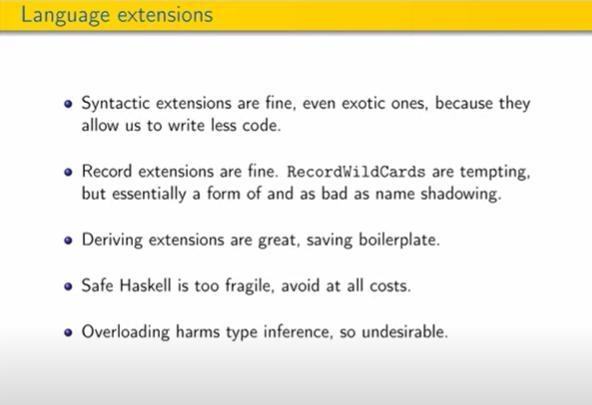
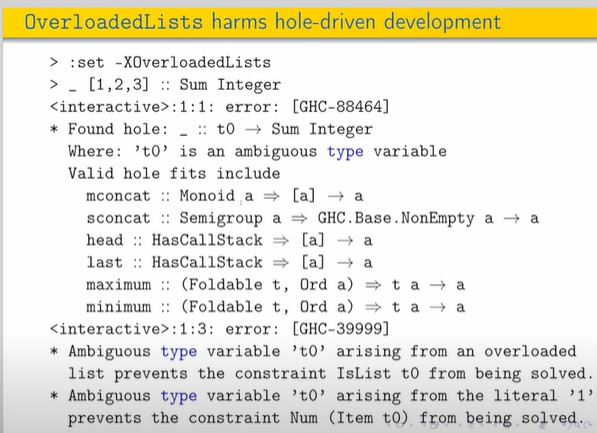
@abnv@fantastic.earth
I'm starting a series of blog posts, in which I write a #bytecode #compiler and a #virtualMachine for arithmetic in #Haskell. We explore the following topics in the series:
- Parsing arithmetic expressions to ASTs.
- Compiling ASTs to bytecode.
- Interpreting ASTs.
- Efficiently executing bytecode in a VM.
- Disassembling bytecode and decompiling opcodes for debugging and testing.
- Unit testing and property-based testing for our compiler and VM.
- Benchmarking our code to see how the different passes perform.
- All the while keeping an eye on performance.
The first post of the series that focuses on writing the #parser is now out: https://abhinavsarkar.net/posts/arithmetic-bytecode-vm-parser/
@Jose_A_Alonso@mathstodon.xyz
#Exercitium: Problemas de programación con Haskell (enero de 2018). https://jaalonso.github.io/exercitium/2018/01 #Haskell #ProgramaciónFuncional #Matemáticas
@Jose_A_Alonso@mathstodon.xyz
Fixed-point-oriented programming: A concise and elegant paradigm. ~ Yong Qi Foo, Brian Sze-Kai Cheong, Michael D. Adams. https://arxiv.org/abs/2507.21439v1 #Haskell #FunctionalProgramming
@Jose_A_Alonso@mathstodon.xyz
Readings shared August 1, 2025. https://jaalonso.github.io/vestigium/posts/2025/08/02-readings_shared_08-01-25 #Haskell #LeanProver #Math #ProofAssistant
@Jose_A_Alonso@mathstodon.xyz
#Exercitium: Problemas de programación con Haskell (febrero de 2018). https://jaalonso.github.io/exercitium/2018/02 #Haskell #ProgramaciónFuncional #Matemáticas
@Jose_A_Alonso@mathstodon.xyz
#Exercitium: Problemas de programación con Haskell (marzo de 2018). https://jaalonso.github.io/exercitium/2018/03 #Haskell #ProgramaciónFuncional #Matemáticas
@Jose_A_Alonso@mathstodon.xyz
#Exercitium: Problemas de programación con Haskell (abril de 2018). https://jaalonso.github.io/exercitium/2018/04 #Haskell #ProgramaciónFuncional #Matemáticas
@Jose_A_Alonso@mathstodon.xyz
Readings shared July 31, 2025. https://jaalonso.github.io/vestigium/posts/2025/08/01-readings_shared_08-01-25 FunctionalProgramming #Haskell #LeanProver #Math #ProofAssistant
@Jose_A_Alonso@mathstodon.xyz
#Exercitium: Problemas de programación con Haskell (mayo de 2018). https://jaalonso.github.io/exercitium/2018/05 #Haskell #ProgramaciónFuncional #Matemáticas
@Jose_A_Alonso@mathstodon.xyz
#Exercitium: Problemas de programación con Haskell (junio de 2018). https://jaalonso.github.io/exercitium/2018/06 #Haskell #ProgramaciónFuncional #Matemáticas
@Jose_A_Alonso@mathstodon.xyz
#Exercitium: Problemas de programación con Haskell (julio de 2018). https://jaalonso.github.io/exercitium/2018/07 #Haskell #ProgramaciónFuncional #Matemáticas
@hackuador@functional.cafe
The study loan (#HECS) repayment changes are now law. Here's how to calculate your repayment using the #Haskell *tax* library:
```
help = lesserOf ((flat 0.1) (marginal [(67000, 0.15),(125000,0.02)])
due = min helpBalance (getTax help repaymentIncome)
```
https://hackage-content.haskell.org/package/tax
Have fun!
@Jose_A_Alonso@mathstodon.xyz
#Exercitium: Problemas de programación con Haskell (abril de 2022). https://jaalonso.github.io/exercitium/2022/04 #Haskell #ProgramaciónFuncional #Matemáticas
@Jose_A_Alonso@mathstodon.xyz
#Exercitium: Problemas de programación con Haskell (mayo de 2022). https://jaalonso.github.io/exercitium/2022/05 #Haskell #ProgramaciónFuncional #Matemáticas
@hackuador@functional.cafe
Exciting lineup for Brisbane Functional Programming Group #BFPG August 12 meetup: Explicit Substitutions pt2 (Donovan Crichton) + Overview of #Nix flake-parts and #haskell-flake (Jack Kelly). https://lu.ma/r002tby5
@Jose_A_Alonso@mathstodon.xyz
@Jose_A_Alonso@mathstodon.xyz
#Exercitium: Problemas de programación con Haskell (junio de 2022). https://jaalonso.github.io/exercitium/2022/06 #Haskell #ProgramaciónFuncional #Matemáticas
@Jose_A_Alonso@mathstodon.xyz
#Exercitium: Problemas de programación con Haskell (julio de 2022). https://jaalonso.github.io/exercitium/2022/07 #Haskell #ProgramaciónFuncional #Matemáticas
@Jose_A_Alonso@mathstodon.xyz
#Exercitium: Problemas de programación con Haskell (noviembre de 2018). https://jaalonso.github.io/exercitium/2018/11 #Haskell #ProgramaciónFuncional #Matemáticas
@Jose_A_Alonso@mathstodon.xyz
Comparing codes: Spiral matrix (another matrix layer problem). ~ James Bowen. https://mmhaskell.com/blog/2025/7/28/spiral-matrix-another-matrix-layer-problem #Haskell #FunctionalProgramming #Rust
@Jose_A_Alonso@mathstodon.xyz
@Jose_A_Alonso@mathstodon.xyz
#Exercitium: Problemas de programación con Haskell (diciembre de 2018). https://jaalonso.github.io/exercitium/2018/12 #Haskell #ProgramaciónFuncional #Matemáticas
@Jose_A_Alonso@mathstodon.xyz
#Exercitium: Problemas de programación con Haskell (enero de 2019). https://jaalonso.github.io/exercitium/2019/01 #Haskell #ProgramaciónFuncional #Matemáticas
@Jose_A_Alonso@mathstodon.xyz
@Jose_A_Alonso@mathstodon.xyz
#Exercitium: Problemas de programación con Haskell (febrero de 2019). https://jaalonso.github.io/exercitium/2019/02 #Haskell #ProgramaciónFuncional #Matemáticas
@Jose_A_Alonso@mathstodon.xyz
Formally verified suffix array construction (in Isabelle/HOL). ~ Louis Cheung, Alistair Moffat, Christine Rizkallah. https://link.springer.com/article/10.1007/s10817-025-09735-8 #FormalVerification #ProofAssistants #IsabelleHOL #Haskell #FunctionalProgramming
@Jose_A_Alonso@mathstodon.xyz
Readings shared July 26, 2025. https://jaalonso.github.io/vestigium/posts/2025/07/27-readings_shared_07-26-25 #Emacs #FunctionalProgramming #Haskell #Logic #Math #OrgMode

@kakkun61@pawoo.net · Reply to kakkun61's post
📣『俺々言語にだって型推論が欲しい!』も印刷版が買えるようになりました! #Haskell #型推論 #同人誌 #技術書典 https://kakkun61.booth.pm/items/1317485
@kakkun61@pawoo.net · Reply to kakkun61's post
📣『手続き Haskell』も印刷版が買えるようになりました! #Haskell #同人誌 #技術書典 https://kakkun61.booth.pm/items/829369
@Jose_A_Alonso@mathstodon.xyz
#Exercitium: Problemas de programación con Haskell (marzo de 2019). https://jaalonso.github.io/exercitium/2019/03 #Haskell #ProgramaciónFuncional #Matemáticas
@Jose_A_Alonso@mathstodon.xyz
#Exercitium: Problemas de programación con Haskell (abril de 2019). https://jaalonso.github.io/exercitium/2019/04 #Haskell #ProgramaciónFuncional #matematicas
@Jose_A_Alonso@mathstodon.xyz
#Exercitium: Problemas de programación con Haskell (mayo de 2019). https://jaalonso.github.io/exercitium/2019/05 #Haskell #ProgramaciónFuncional #Matemáticas
@Jose_A_Alonso@mathstodon.xyz
#Exercitium: Problemas de programación con Haskell (junio de 2019). https://jaalonso.github.io/exercitium/2019/06 #Haskell #ProgramaciónFuncional #Matemáticas
@Jose_A_Alonso@mathstodon.xyz
Readings shared July 25, 2025. https://jaalonso.github.io/vestigium/posts/2025/07/26-readings_shared_07-25-25 #ACL2 #AI4Math #FunctionalProgramming #Haskell #ITP #LeanProver #Math
@Jose_A_Alonso@mathstodon.xyz
#Exercitium: Problemas de programación con Haskell de noviembre de 2019. https://jaalonso.github.io/exercitium/2019/11 #Haskell #ProgramaciónFuncional #Matemáticas
@Jose_A_Alonso@mathstodon.xyz
#Exercitium: Problemas de programación con Haskell de diciembre de 2019. https://jaalonso.github.io/exercitium/2019/12 #Haskell #ProgramaciónFuncional #Matemáticas
@Jose_A_Alonso@mathstodon.xyz
A Liquid Haskell kick-start. ~ Xavier Góngora. https://ninioartillero.github.io/2025/04/15/lh-kickstart.html #Haskell #FunctionalProgramming
@Jose_A_Alonso@mathstodon.xyz
Readings shared July 24, 2025. https://jaalonso.github.io/vestigium/posts/2025/07/25-readings_shared_07-24-25 #AI #FunctionalProgramming #Haskell #ITP #LLMs #LeanProver #Math
@Jose_A_Alonso@mathstodon.xyz
#Exercitium: Problemas de programación con Haskell de enero de 2020. https://jaalonso.github.io/exercitium/2020/01 #Haskell #ProgramaciónFuncional #Matemáticas
@kakkun61@pawoo.net
@haskell@fosstodon.org
Cabal 3.16 is released with numerous quality-of-life improvements! https://blog.haskell.org/cabal-3-16-0-0-release/
@Jose_A_Alonso@mathstodon.xyz
The Haskell Unfolder Episode 47: Pure parallelism. ~ Edsko de Vries, Andres Löh. https://www.youtube.com/live/trDqqZldxQA #Haskell #FunctionalProgramming
@Jose_A_Alonso@mathstodon.xyz
Type-level programming for safer resource management. ~ Fraser Tweedale. https://frasertweedale.github.io/blog-fp/posts/2025-07-19-type-nats-and-constraints.html #Haskell #FunctionalProgramming
@haskell@fosstodon.org
Cabal 3.16 is released with numerous quality-of-life improvements! https://blog.haskell.org/cabal-3-16-0-0-release/
@Jose_A_Alonso@mathstodon.xyz
Inlining in the Glasgow Haskell Compiler: empirical investigation and improvement. ~ Celeste Hollenbeck. https://era.ed.ac.uk/bitstream/handle/1842/43690/Hollenbeck2025.pdf #Haskell #FunctionalProgramming
@Jose_A_Alonso@mathstodon.xyz
Four ways of declaring interfaces in Haskell. ~ Marco Perone. https://marcosh.github.io/post/2025/07/22/four-ways-of-declaring-interfaces-in-haskell.html #FunctionalProgramming #haskell
@Jose_A_Alonso@mathstodon.xyz
Competitive programming in Haskell: sparse tables. ~ Brent Yorgey. https://byorgey.github.io/blog/posts/2025/07/18/sparse-table.html #Haskell #FunctionalProgramming
@Jose_A_Alonso@mathstodon.xyz
Readings shared July 23, 2025. https://jaalonso.github.io/vestigium/posts/2025/07/24-readings_shared_07-23-25 #AI #FunctionalProgramming #Haskell #ITP #LLMs #LeanProver #Math
@Jose_A_Alonso@mathstodon.xyz
#Exercitium: Problemas de programación con Haskell de febrero de 2020. https://jaalonso.github.io/exercitium/2020/02 #Haskell #ProgramaciónFuncional #Matemáticas
@kosmikus@functional.cafe
Join us today, 2025-07-23, 1830 UTC, live on YouTube for a new episode of the #Haskell #Unfolder, this time on "pure parallelism".
https://www.youtube.com/watch?v=trDqqZldxQA&list=PLD8gywOEY4HaG5VSrKVnHxCptlJv2GAn7&index=47
@Jose_A_Alonso@mathstodon.xyz
Readings shared July 22, 2025. https://jaalonso.github.io/vestigium/posts/2025/07/23-readings_shared_07-22-25 #FunctionalProgramming #Haskell #IMO #ITP #LLMs #Math #Rocq #Rust
@Jose_A_Alonso@mathstodon.xyz
Comparing codes: Image rotation (Mutable arrays in Haskell). ~ James Bowen. https://mmhaskell.com/blog/2025/7/21/image-rotation-mutable-arrays-in-haskell #Haskell #FunctionalProgramming #Rust
@Jose_A_Alonso@mathstodon.xyz
Readings shared July 21, 2025. https://jaalonso.github.io/vestigium/posts/2025/07/22-readings_shared_07-21-25 #FunctionalProgramming #Haskell #ITP #IsabelleHOL #LeanProver #Math #Rocq
@Jose_A_Alonso@mathstodon.xyz
#Exercitium: Problemas de programación con Haskell de marzo de 2020. https://jaalonso.github.io/exercitium/2020/03 #Haskell #ProgramaciónFuncional #Matemáticas
@Jose_A_Alonso@mathstodon.xyz
#Exercitium: Problemas de programación con Haskell de abril de 2020. https://jaalonso.github.io/exercitium/2020/04 #Haskell #ProgramaciónFuncional #Matemáticas
@pmidden@fosstodon.org
#haskell pretty print structured data, recommendations? I currently recurse over my structure, tracking indentation level. Works, but is definitely a little clumsy.
@Jose_A_Alonso@mathstodon.xyz
@Jose_A_Alonso@mathstodon.xyz
#Exercitium: Problemas de programación con Haskell de mayo de 2020. https://jaalonso.github.io/exercitium/2020/05 #Haskell #FunctionalProgramming #Math
@Jose_A_Alonso@mathstodon.xyz
#Exercitium: Problemas de programación con Haskell de junio de 2020. https://jaalonso.github.io/exercitium/2020/06 #Haskell #FunctionalProgramming
@Jose_A_Alonso@mathstodon.xyz
The calculated typer (Functional Pearl). ~ Zac Garby, Patrick Bahr, Graham Hutton. https://people.cs.nott.ac.uk/pszgmh/typer.pdf #Haskell #FunctionalProgramming
@Jose_A_Alonso@mathstodon.xyz
Readings shared July 18, 2025. https://jaalonso.github.io/vestigium/posts/2025/07/19-readings_shared_07-18-25 #ACL2 #CompSci #FunctionalProgramming #Haskell #ITP #LLMs #LeanProver #Rocq #Rust #Teaching
@Jose_A_Alonso@mathstodon.xyz
Comparing codes: Binary search in a 2D matrix. ~ James Bowen. https://mmhaskell.com/blog/2025/7/14/binary-search-in-a-2d-matrix #Haskell #FunctionalProgramming #Rust

@jbz@indieweb.social
"C is a simple language. This is fact I agree with and appreciate. It is the reason for C's endurance. If someone posts a patch or submits a PR to a codebase written in C, it is easier to review than any other mainstream language. There is no spooky at a distance."
@Jose_A_Alonso@mathstodon.xyz
Readings shared July 17, 2025. https://jaalonso.github.io/vestigium/posts/2025/07/18-readings_shared_07-17-25 #FunctionalProgramming #Haskell #ITP #LeanProver #Math #Rocq
@Jose_A_Alonso@mathstodon.xyz
#Exercitium: Problemas de programación con Haskell de enero de 2021. https://jaalonso.github.io/exercitium/2021/01 #Haskell #FunctionalProgramming
@Jose_A_Alonso@mathstodon.xyz
Readings shared July 16, 2025. https://jaalonso.github.io/vestigium/posts/2025/07/17-readings_shared_07-16-25 #CoqProver #FunctionalProgramming #Haskell #ITP #LeanProver #Lisa #Math #Rocq
@lobsters@mastodon.social
FGL: a functional graph library (2002) via @fanf https://lobste.rs/s/jfyek4 #haskell #ml
http://web.engr.oregonstate.edu/~erwig/fgl/
@Jose_A_Alonso@mathstodon.xyz
#Exercitium: Problemas de programación con Haskell de febrero de 2021. https://jaalonso.github.io/exercitium/2021/02 #Haskell #FunctionalProgramming
@Jose_A_Alonso@mathstodon.xyz
Readings shared July 15, 2025. https://jaalonso.github.io/vestigium/posts/2025/07/16-readings_shared_07-15-25 #FunctionalProgramming #Haskell #ITP #LeanProver #Math
@haskell@fosstodon.org
GHC will start maintaining an LTS release – https://blog.haskell.org/ghc-lts-releases/ by Andreas Klebinger
@haskell@fosstodon.org
GHC will start maintaining an LTS release – https://blog.haskell.org/ghc-lts-releases/ by Andreas Klebinger
@haskell@fosstodon.org
GHC will start maintaining an LTS release – https://blog.haskell.org/ghc-lts-releases/ by Andreas Klebinger
@Jose_A_Alonso@mathstodon.xyz
#Exercitium: Problemas de programación con Haskell de marzo de 2021. https://jaalonso.github.io/exercitium/2021/03 #Haskell #FunctionalProgramming
@DiazCarrete@hachyderm.io
Suffering from the scourge of insomnia? Want to fall asleep to the sounds of a Haskell application being assembled component by component?
If so, you're in luck. In this 1-hour video I give a demo of how to use the "cauldron" library to wire all the components of a Haskell application at the composition root.
@Jose_A_Alonso@mathstodon.xyz
#Exercitium: Problemas de programación con Haskell de abril de 2021. https://jaalonso.github.io/exercitium/2021/04 #Haskell #FunctionalProgramming
@Jose_A_Alonso@mathstodon.xyz
#Exercitium: Problemas de programación con Haskell de mayo de 2021. https://jaalonso.github.io/exercitium/2021/05 #Haskell #FunctionalProgramming
@Jose_A_Alonso@mathstodon.xyz
#Exercitium: Problemas de programación con Haskell de junio de 2021. https://jaalonso.github.io/exercitium/2021/06/ #Haskell #FunctionalProgramming
@Jose_A_Alonso@mathstodon.xyz
Readings shared July 13, 2025. https://jaalonso.github.io/vestigium/posts/2025/07/14-readings_shared_07-13-25 #FunctionalProgramming #Haskell #ITP #LLMs #LeanProver
@Jose_A_Alonso@mathstodon.xyz
A simple AI chatbot (ChatGPT clone) built entirely in Haskell. ~ Tushar Adhatrao. https://github.com/tusharad/ai-chatbot-hs #Haskell #FunctionalProgramming #LLMs
@Jose_A_Alonso@mathstodon.xyz
@abnv@fantastic.earth
After 15 years of writing #Haskell code, I think I am finally ready to understand Lenses and Optics.
@Jose_A_Alonso@mathstodon.xyz
Categorical semantics in Haskell. ~ Mohamed Amine Ayari. https://kondylidou.github.io/assets/pdf/BA-mohamed.pdf #Haskell #FunctionalProgramming #CategoryTheory
@Jose_A_Alonso@mathstodon.xyz
Generic second-order matching, higher-order preunification and pattern unification - Implementations in Haskell. ~ Nikolai Kudasov et als. https://hal.science/hal-05148806/document #Haskell #FunctionalProgramming
@DiazCarrete@hachyderm.io
SBV v12.0 "much enhanced interface and support for semi-automated theorem proving"
https://discourse.haskell.org/t/formally-verify-haskell-code/7301/18
https://www.reddit.com/r/haskell/comments/1lrk600/announce_a_new_release_of_sbv_v120_is_released_on/
@Jose_A_Alonso@mathstodon.xyz
Readings shared July 10, 2025. https://jaalonso.github.io/vestigium/posts/2025/07/11-readings_shared_07-10-25 #FunctionalProgramming #Haskell #ITP #IsabelleHOL

@swiftlang@mastodon.social
Packaging #Haskell code for easy Swift interoperability: easy thanks to these tips: https://alt-romes.github.io/posts/2025-07-05-packaging-a-haskell-library-as-a-swift-binary-xcframework.html @haskell
@haskell@fosstodon.org
To those who could not attend #ZuriHac 2025, we salute you!
The videos of this year's talks are now available https://discourse.haskell.org/t/zurihac-2025-videos-online/12430
@haskell@fosstodon.org
To those who could not attend #ZuriHac 2025, we salute you!
The videos of this year's talks are now available https://discourse.haskell.org/t/zurihac-2025-videos-online/12430
@Jose_A_Alonso@mathstodon.xyz
The Haskell Unfolder Episode 46: Developing an application from scratch. ~ Edsko de Vries, Andres Löh. https://www.youtube.com/live/5W0ZUY_l1dU #Haskell #FunctionalProgramming
@Jose_A_Alonso@mathstodon.xyz
@haskell@fosstodon.org
To those who could not attend #ZuriHac 2025, we salute you!
The videos of this year's talks are now available https://discourse.haskell.org/t/zurihac-2025-videos-online/12430
@kosmikus@functional.cafe
Today, Wednesday, 2025-07-09, at 1830 UTC, there's going to be a new episode of the #Haskell #Unfolder. Edsko and I will show how to develop a small but useful Haskell CLI application completely from scratch.
https://www.youtube.com/watch?v=5W0ZUY_l1dU&list=PLD8gywOEY4HaG5VSrKVnHxCptlJv2GAn7&index=46
@hackuador@functional.cafe
Siva up now to explain #Pandoc fundamentals at Brisbane Functional Programming Group #BFPG #FP #Haskell.

@hackuador@functional.cafe
Rob showing us how to build a #Hakyll site at Brisbane Functional Programming Group #BFPG #FP #Haskell

@Jose_A_Alonso@mathstodon.xyz
Comparing codes: Binary search in Haskell and Rust. ~ James Bowen. https://mmhaskell.com/blog/2025/7/7/binary-search-in-haskell-and-rust #Haskell #FunctionalProgramming #Rust
@Jose_A_Alonso@mathstodon.xyz
Readings shared July 7, 2025. https://jaalonso.github.io/vestigium/posts/2025/07/08-readings_shared_07-07-25 #Coq #FunctionalProgramming #Haskell #ITP #IsabelleHOL #LeanProver #Logic #Maxima
@haskell@fosstodon.org
Better infrastructure, fewer surprises. We’re raising $6K for a dedicated ARM server to support #Haskell’s infrastructure - CI, backups, and more. Let’s build infra you can reliably pattern match on. Every contribution helps!
Donate: https://donorbox.org/infrastructure-independence
Read more: https://discourse.haskell.org/t/infrastructure-independence/12419
@Jose_A_Alonso@mathstodon.xyz
Exámenes de programación funcional con Haskell (curso 2019-20). https://web.archive.org/web/https://raw.githubusercontent.com/jaalonso/Examenes_de_PF_con_Haskell_Vol11/master/Libro/Examenes_de_PF_con_Haskell_Vol11.pdf #Haskell #ProgramaciónFuncional
@Jose_A_Alonso@mathstodon.xyz
Ejercicios de programación funcional con Haskell (curso 2019-20). https://web.archive.org/web/http://www.cs.us.es/~jalonso/cursos/i1m-19/ejercicios/ejercicios-I1M-2019.pdf #Haskell #ProgramaciónFuncional
@Jose_A_Alonso@mathstodon.xyz
Temas de "Programación funcional" (2019-20). https://web.archive.org/web/http://www.cs.us.es/~jalonso/cursos/i1m-19/temas/2019-20-I1M-temas-PF.pdf #Haskell #ProgramaciónFuncional
@Jose_A_Alonso@mathstodon.xyz
Curso "Informática (2019-20)". https://jaalonso.github.io/cursos/i1m-19 #Haskell #ProgramaciónFuncional #Algorítmica #CálculoSimbólico #Maxima
@haskell_foundation@mastodon.social
Better infrastructure, fewer surprises. We’re raising $6K for a dedicated ARM server to support #Haskell’s infrastructure (CI, backups, etc). Let’s build infra you can rely on! Every contribution helps!
Donate: https://donorbox.org/infrastructure-independence
Read more: https://discourse.haskell.org/t/infrastructure-independence/12419
@haskell_foundation@mastodon.social
Better infrastructure, fewer surprises. We’re raising $6K for a dedicated ARM server to support #Haskell’s infrastructure (CI, backups, etc). Let’s build infra you can rely on! Every contribution helps!
Donate: https://donorbox.org/infrastructure-independence
Read more: https://discourse.haskell.org/t/infrastructure-independence/12419
@haskell@fosstodon.org
Better infrastructure, fewer surprises. We’re raising $6K for a dedicated ARM server to support #Haskell’s infrastructure - CI, backups, and more. Let’s build infra you can reliably pattern match on. Every contribution helps!
Donate: https://donorbox.org/infrastructure-independence
Read more: https://discourse.haskell.org/t/infrastructure-independence/12419
@hackuador@functional.cafe

@teixi@mastodon.social · Reply to Marcel Fröhlich's post
Oh là là just dropped:
2.5 hour "Introduction To Category Theory"
by Richard Southwell
https://youtu.be/H32kyA4BMz4
#categorytheory #haskell #ZuriHac #ZuriHac2025 #functionalprogramming
HT @zurihac
@teixi@mastodon.social · Reply to Marcel Fröhlich's post
Oh là là just dropped:
2.5 hour "Introduction To Category Theory"
by Richard Southwell
https://youtu.be/H32kyA4BMz4
#categorytheory #haskell #ZuriHac #ZuriHac2025 #functionalprogramming
HT @zurihac
@Jose_A_Alonso@mathstodon.xyz
@DiazCarrete@hachyderm.io
A short video about structuring multiple resource allocations in Haskell using the "Managed" datatype
@Jose_A_Alonso@mathstodon.xyz
Exámenes de programación funcional con Haskell (curso 2018-19). https://web.archive.org/web/https://raw.githubusercontent.com/jaalonso/Examenes_de_PF_con_Haskell_Vol10/master/Libro/Examenes_de_PF_con_Haskell_Vol10.pdf #Haskell #ProgramaciónFuncional
@Jose_A_Alonso@mathstodon.xyz
Ejercicios de programación funcional con Haskell (curso 2018-19). https://web.archive.org/web/http://www.cs.us.es/~jalonso/cursos/i1m-18/ejercicios/ejercicios-I1M-2018.pdf #Haskell #ProgramaciónFuncional
@Jose_A_Alonso@mathstodon.xyz
Temas de "Programación funcional" (2018-19). https://web.archive.org/web/http://www.cs.us.es/~jalonso/cursos/i1m-18/temas/2018-19-I1M-temas-PF.pdf #Haskell #ProgramaciónFuncional
@Jose_A_Alonso@mathstodon.xyz
Curso "Informática (2018-19)". https://jaalonso.github.io/cursos/i1m-18 #Haskell #ProgramaciónFuncional #Algorítmica #CálculoSimbólico #Maxima
@Jose_A_Alonso@mathstodon.xyz
A diagrammatic calculus for a functional model of natural language semantics. ~ Matthieu Pierre Boyer. https://arxiv.org/abs/2507.00782v1 #Haskell #FunctionalProgramming
@Jose_A_Alonso@mathstodon.xyz
Implementing a type theory with observational equality, using normalisation by evaluation. ~ Matthew Sirman, Meven Lennon-Bertrand, Neel Krishnaswami. https://drops.dagstuhl.de/entities/document/10.4230/LIPIcs.TYPES.2024.5 #Haskell #FunctionalProgramming
@Jose_A_Alonso@mathstodon.xyz
@Jose_A_Alonso@mathstodon.xyz
Reflections on Haskell and Rust. ~ Sibi Prabakaran. https://academy.fpblock.com/blog/rust-haskell-reflections #Haskell #FunctionalProgramming #Rust
@hackuador@functional.cafe
@pmidden@fosstodon.org
I'm sorry but couldn't the #haskell people have chosen something less funny than .|. for bitwise OR?


@momo@woof.tech
#introduction mreeow! Hi! My name is Momo! I'm a transfemme, and she/they is my preferred pronouns.
I code as a hobby in #rust and #haskell. I also use #nixos as my main daily driver since last year. 

I enjoy creating casual game mods in my free time, including Stardew Valley, #twohoursonelife, and various other games. 
I also love playing Cataclysm: Bright Nights (#cbn) and #Stardew Valley. Sometimes, #widelands, and #openttd too, because why not? I like the look and feel of these games. 
During the weekends, I try to finish reading a fantasy book or two, if I'm feeling reaaaaally cozy 

I will be posting about techy stuff that I encounter (mainly #nix and #rust), share my gaming experiences, and rant about random things, ranging from politics to personal life.
And I like to sip a cup of coffee while watching camping videos, too, for some reason. 
Feel free to follow me if you want to hear more of my blabbing! 

PS: I will put distressing or NSFW posts behind CW. 
@Jose_A_Alonso@mathstodon.xyz
Readings shared June 30, 2025. https://jaalonso.github.io/vestigium/posts/2025/07/01-readings_shared_07-01-25 #CompSci #FunctionalProgramming #Haskell #ITP #IsabelleHOL #Logic #Maxima #Teaching
@Jose_A_Alonso@mathstodon.xyz
Curso "Lógica matemática y fundamentos (2016-17)". https://jaalonso.github.io/cursos/lmf-16 #Lógica #Haskell #ProgramaciónFuncional #IsabelleHOL
@Jose_A_Alonso@mathstodon.xyz
Exámenes de programación funcional con Haskell (curso 2017-18). https://web.archive.org/web/https://raw.githubusercontent.com/jaalonso/Examenes_de_PF_con_Haskell_Vol9/master/Libro/Examenes_de_PF_con_Haskell_Vol9.pdf #Haskell #ProgramaciónFuncional
@Jose_A_Alonso@mathstodon.xyz
Ejercicios de programación funcional con Haskell (curso 2017-18). https://web.archive.org/web/http://www.cs.us.es/~jalonso/cursos/i1m-17/ejercicios/ejercicios-I1M-2017.pdf #Haskell #ProgramaciónFuncional
@Jose_A_Alonso@mathstodon.xyz
Temas de "Programación funcional" (2017-18). https://web.archive.org/web/http://www.cs.us.es/~jalonso/cursos/i1m-17/temas/2017-18-IM-temas-PF.pdf #Haskell #ProgramaciónFuncional
@Jose_A_Alonso@mathstodon.xyz
Curso "Informática (2017-18)". https://jaalonso.github.io/cursos/i1m-17 #Haskell #ProgramaciónFuncional #Algorítmica #CálculoSimbólico #Maxima
@Jose_A_Alonso@mathstodon.xyz
@Jose_A_Alonso@mathstodon.xyz
Exámenes de programación funcional con Haskell (curso 2015-16). https://web.archive.org/web/https://raw.githubusercontent.com/jaalonso/Examenes_de_PF_con_Haskell_Vol8/master/Libro/Examenes_de_PF_con_Haskell_Vol8.pdf #Haskell #ProgramaciónFuncional
@Jose_A_Alonso@mathstodon.xyz
Ejercicios de programación funcional con Haskell (curso 2015-16). https://web.archive.org/web/http://www.cs.us.es/~jalonso/cursos/i1m-16/ejercicios/ejercicios-I1M-2016.pdf #Haskell #ProgramaciónFuncional
@Jose_A_Alonso@mathstodon.xyz
Temas de "Programación funcional" (2016-17). https://web.archive.org/web/http://www.cs.us.es/~jalonso/cursos/i1m-16/temas/2016-17-IM-temas-PF.pdf #Haskell #ProgramaciónFuncional
@Jose_A_Alonso@mathstodon.xyz
Curso "Informática (2016-17)". https://jaalonso.github.io/cursos/i1m-16 #Haskell #ProgramaciónFuncional #Algorítmica #CálculoSimbólico #Maxima
@Jose_A_Alonso@mathstodon.xyz
Curso "Lógica matemática y fundamentos (2015-16)". https://jaalonso.github.io/cursos/lmf-15 #Lógica #Haskell #ProgramaciónFuncional #IsabelleHOL
@Jose_A_Alonso@mathstodon.xyz
Exámenes de programación funcional con Haskell (curso 2015–16). https://web.archive.org/web/https://raw.githubusercontent.com/jaalonso/Examenes_de_PF_con_Haskell_Vol7/master/Libro/Examenes_de_PF_con_Haskell_Vol7.pdf #Haskell #ProgramaciónFuncional
@Jose_A_Alonso@mathstodon.xyz
Ejercicios de programación funcional con Haskell (curso 2015–16). https://web.archive.org/web/http://www.cs.us.es/~jalonso/cursos/i1m-15/ejercicios/ejercicios-I1M-2015.pdf #Haskell #ProgramaciónFuncional
@Jose_A_Alonso@mathstodon.xyz
Temas de "Programación funcional" (2015-16). https://web.archive.org/web/http://www.cs.us.es/~jalonso/cursos/i1m-15/temas/2015-16-IM-temas-PF.pdf #Haskell #ProgramaciónFuncional
@Jose_A_Alonso@mathstodon.xyz
Curso "Informática (2015-16)". https://jaalonso.github.io/cursos/i1m-15 #Haskell #ProgramaciónFuncional #Algorítmica #CálculoSimbólico #Maxima
@pmidden@fosstodon.org
The #haskell ByteString functions like "take" and "drop" take "Int64" instead of plain "Int". Curious. 🤔
@Jose_A_Alonso@mathstodon.xyz
Functional programming (with some type theory) for metrology. ~ André Videla, Keith Lines. https://eprintspublications.npl.co.uk/10181/1/MS60.pdf #Haskell #Idris #FunctionalProgramming
@Jose_A_Alonso@mathstodon.xyz
@Jose_A_Alonso@mathstodon.xyz
Curso "Lógica matemática y fundamentos (2014-15)". https://jaalonso.github.io/cursos/lmf-14 #Lógica #Haskell #ProgramaciónFuncional #IsabelleHOL
@Jose_A_Alonso@mathstodon.xyz
Competitive programming in Haskell: prefix sums. ~ Brent Yorgey. https://byorgey.github.io/blog/posts/2025/06/27/prefix-sums.html #Haskell #FunctionalProgramming
@Jose_A_Alonso@mathstodon.xyz
Readings shared June 26, 2025. https://jaalonso.github.io/vestigium/posts/2025/06/27-readings_shared_06-26-25 #FunctionalProgramming #Haskell #ITP #IsabelleHOL #LeanProver #Math
@Jose_A_Alonso@mathstodon.xyz
Solving LinkedIn queens with Haskell. ~ Agnishom Chattopadhyay. https://imiron.io/post/linkedin-queens/ #Haskell #FunctionalProgramming
@Jose_A_Alonso@mathstodon.xyz
The Haskell Unfolder Episode 45: Haskell records in 2025. ~ Edsko de Vries, Andres Löh. https://www.youtube.com/live/9hrDm7xDpig #Haskell #FunctionalProgramming
@Jose_A_Alonso@mathstodon.xyz
Readings shared June 25, 2025. https://jaalonso.github.io/vestigium/posts/2025/06/26-readings_shared_06-25-25 #Haskell #FunctionalProgramming #Rust
@kosmikus@functional.cafe
On Wednesday, 2025-06-25, at 1830 UTC, there will be a new episode of the #Haskell #Unfolder. This time, Edsko and I will discuss the current situation of records in Haskell.
https://www.youtube.com/watch?v=9hrDm7xDpig&list=PLD8gywOEY4HaG5VSrKVnHxCptlJv2GAn7&index=45
@Jose_A_Alonso@mathstodon.xyz
Competitive programming in Haskell: range queries, classified. ~ Brent Yorgey. https://byorgey.github.io/blog/posts/2025/06/23/range-queries-classified.html #Haskell #FunctionalProgramming
@Jose_A_Alonso@mathstodon.xyz
Competitive programming in Haskell: range queries, classified. ~ Brent Yorgey. https://byorgey.github.io/blog/posts/2025/06/23/range-queries-classified.html #Haskell #FunctionalProgramming
@Jose_A_Alonso@mathstodon.xyz
Comparing codes: The sliding window in Haskell & Rust. ~ James Bowen. https://mmhaskell.com/blog/2025/6/23/the-sliding-window-in-haskell-amp-rust #Haskell #FunctionalProgramming #Rust
@DiazCarrete@hachyderm.io
@Jose_A_Alonso@mathstodon.xyz
@DiazCarrete@hachyderm.io
Enough. The reign of terror of the bare type synonyms in Network.Wai must come to an end.
Application https://hackage.haskell.org/package/wai-3.2.4/docs/Network-Wai.html#t:Application
Middleware https://hackage.haskell.org/package/wai-3.2.4/docs/Network-Wai.html#t:Middleware

@Jose_A_Alonso@mathstodon.xyz
Curso "Informática (2014-15)". https://jaalonso.github.io/cursos/i1m-14 #Haskell #ProgramaciónFuncional #Algorítmica #CálculoSimbólico #Maxima
@Jose_A_Alonso@mathstodon.xyz
@DiazCarrete@hachyderm.io
Published on Hackage a new version of my "cauldron" dependency injection library, with some tweaks and a smaller dependency footprint (I vendored the parts I used from Andrey Mokhov's "algebraic-graphs" library, and exposed them as a sublibrary):
https://hackage.haskell.org/package/cauldron
Example of use https://github.com/danidiaz/comments-project/blob/f16fb09c90a851054e8e97a82b38a563ff0eea18/comments/app/Main.hs#L38 compared to manual wiring https://github.com/danidiaz/comments-project/blob/f16fb09c90a851054e8e97a82b38a563ff0eea18/comments/app/Main.hs#L53
@Jose_A_Alonso@mathstodon.xyz
Curso "Lógica matemática y fundamentos (2013-14)". https://jaalonso.github.io/cursos/lmf-13 #Lógica #Haskell #ProgramaciónFuncional #IsabelleHOL
@Jose_A_Alonso@mathstodon.xyz
Property-based testing of attribute grammars. ~ José Nuno Macedo, Marcos Viera, João Saraiva. https://dl.acm.org/doi/pdf/10.1145/3732771.3742710 #Haskell #FunctionalProgramming
@Jose_A_Alonso@mathstodon.xyz
Freer arrows and why you need them in Haskell. ~ Grant VanDomelen, Gan Shen, Lindsey Kuper, Yao Li. https://arxiv.org/abs/2506.12212v1 #Haskell #FunctionalProgramming
@pmidden@fosstodon.org
I've surprised myself how fun it is to write this pure #haskell #hdf5 parser. It's, in a way, gruesome, fiddling with raw bytes, guessing some details, getting new files with features still unsupported, and I have no clue how exciting it will be to implement all the common filters. But the language is delightful and I'm making constant glacial progress. That accounts for a lot I suppose...
@DiazCarrete@hachyderm.io
"I believe that effect libraries are good for actual effects (IO, State, Reader, Non-determinism, etc...) but not for creating software components"
https://www.reddit.com/r/haskell/comments/1lek8ch/comment/myhffsm/
Do we need effects to get abstraction? (2019) https://medium.com/barely-functional/do-we-need-effects-to-get-abstraction-7d5dc0edfbef

@AndrzejWasowski@social.itu.dk
I am using one tool implemented in Haskell. Cost: my #ArchLinux updates about 100 #Haskell packages every 2 days on average. Seriously? I am starting to think that even though I am a #functional programmer, programming in Haskell would not be for me - and not for the ferocious purity and laziness, but for the stability of the environment!
Disclaimer: I know nothing about the Haskell ecosystem. It may well be that these updates are just as innocuous as they are irritating.
@abnv@fantastic.earth
@Jose_A_Alonso@mathstodon.xyz
Readings shared June 17, 2025. https://jaalonso.github.io/vestigium/posts/2025/06/18-readings_shared_06-17-25 #FunctionalProgramming #Haskell #ITP #LeanProver #RustLang
@Jose_A_Alonso@mathstodon.xyz
Comparing codes: Two pointer algorithms. ~ James Bowen. https://mmhaskell.com/blog/2025/6/16/two-pointer-algorithms #Haskell #FunctionalProgramming #Rust
@Jose_A_Alonso@mathstodon.xyz
Making GHCi compatible with multiple home units. ~ Hannes Siebenhandl, Matthew Pickering. https://well-typed.com/blog/2025/06/ghci-multiple-home-units/ #Haskell #FunctionalProgramming
@Jose_A_Alonso@mathstodon.xyz
Monads are not like burritos. ~ Brent Yorgey. https://byorgey.github.io/blog/posts/2025/06/16/monads-are-not-burritos.html #Haskell #FunctionalProgramming
@pmidden@fosstodon.org · Reply to Brent Yorgey's post
@haskell@fosstodon.org
Picking up #Haskell is not a matter of "If" but of "When".
When your head overflows with UML diagrams instead of expressive yet concise types?
When your systems belch runtime exceptions like a Weezing?
When shared mutable state prevents you from understanding what the hell is happening?
@haskell@fosstodon.org
Some people hear “ #Haskell 's type system eliminates entire classes of bugs” and think “Cool, no tests needed”.
But what you should hear is “Cool, we can focus on more interesting tests”.
Golden tests, property tests, doctests…
https://wiki.haskell.org/index.php?title=How_to_write_a_Haskell_program#Testing
@Jose_A_Alonso@mathstodon.xyz
@Jose_A_Alonso@mathstodon.xyz
Data structures and algorithms for competitive programming in Haskell. ~ Soumik Sarkar. https://github.com/meooow25/haccepted #Haskell #FunctionalProgramming
@Jose_A_Alonso@mathstodon.xyz
Introduction to competitive programming in Haskell. ~ Brent Yorgey. https://byorgey.github.io/blog/posts/2025/06/10/comprog-hs-intro.html #Haskell #FunctionalProgramming
@Jose_A_Alonso@mathstodon.xyz
@Jose_A_Alonso@mathstodon.xyz
Curso "Informática (2013-14)". https://jaalonso.github.io/cursos/i1m-13 #Haskell #ProgramaciónFuncional #Algorítmica #CálculoSimbólico #Maxima
@byorgey@mathstodon.xyz
Turned my #zurihac2025 talk on #competitiveprogramming in #Haskell into an expanded blog post:
https://byorgey.github.io/blog/posts/2025/06/10/comprog-hs-intro.html
@byorgey@mathstodon.xyz
Turned my #zurihac2025 talk on #competitiveprogramming in #Haskell into an expanded blog post:
https://byorgey.github.io/blog/posts/2025/06/10/comprog-hs-intro.html
@Jose_A_Alonso@mathstodon.xyz
Readings shared June 12, 2025. https://jaalonso.github.io/vestigium/posts/2025/06/13-readings_shared_06-12-25 #ATP #CoqProver #FunctionalProgramming #Haskell #ITP #LLMs #LeanProver #Logic #Math #Rocq

@racketlang@functional.cafe
Racket meet-up Sunday 29 June, Coffee & More Cafe, Sunnyvale, CA. https://www.eventbrite.com/e/racket-and-friends-tickets-1409432042179
#racket #lisp #scheme #functionalprogramming #haskell #rhombus

@DiazCarrete@hachyderm.io
You should be using Hackage tokens
https://taylor.fausak.me/2025/06/11/hackage-tokens/
https://discourse.haskell.org/t/issue-476-haskell-weekly-newsletter/12294
@Jose_A_Alonso@mathstodon.xyz
Reinventing records and variants. ~ Murat Kasimov. https://muratkasimov.art/Ya/Articles/Reinventing-records-and-variants #Haskell #FunctionalProgramming

@haskell_discussions@mastodon.social
Inline-Verilog: Execute Verilog circuits from Haskell
https://mazzo.li/posts/inline-verilog
Discussions: https://discu.eu/q/https://mazzo.li/posts/inline-verilog
@haskell_discussions@mastodon.social
Type-safe neural networks in Haskell, correct by construction
https://github.com/ndzik/heuron
Discussions: https://discu.eu/q/https://github.com/ndzik/heuron

@francesco@mastodon.social
Cooked up this abomination at ZuriHac 2025 -- execute Verilog circuits right from your Haskell! All the blame for the idea goes to @kmett https://mazzo.li/posts/inline-verilog.html
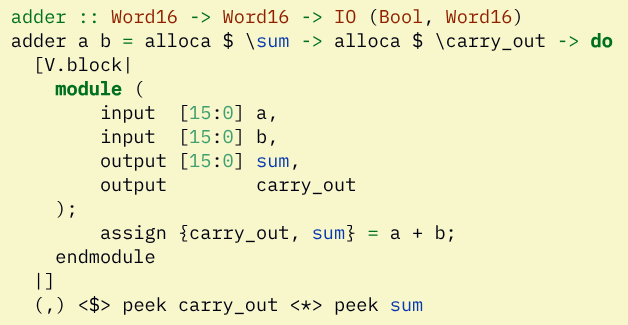
@Jose_A_Alonso@mathstodon.xyz
@hackuador@functional.cafe
Huge new release tax-ato v2025.1 - Australian tax library for #Haskell. Check out the changelog: https://hackage.haskell.org/package/tax-ato-2025.1/changelog

@BoydStephenSmithJr@hachyderm.io
Just put in another application via #LinkedIn so I also wanted to try to get #FediHired again.
I've been a programmer since 1985 (as a child), I've been an IT professional since 1995 (pulling wires and swapping cards and configuring MS Windows). I graduated from University of Arkansas Fayetteville with a BS in CS in December of 2003. A full resume is available.
I currently require a 100% remote position. I cannot relocate from Cove, #Arkansas.
I prefer something where I can be a high-performing individual contributor: reading, writing and improving source text the majority of my day, with some time spent knowledge-sharing with other developers -- learning and teaching. I'd like to work with #Haskell, #Purescript, or #Idris as the primary source language, but I can be productive in almost any language (no PHP, please; I promised myself never again).
I would prefer W-2 employment with a base salary of at least 130k USD/yr, plus some sort of retirement offering (401k or similar) and healthcare benefits (HDCP + HSA or similar).
(Boosts appreciated.)
@haskell_discussions@mastodon.social
Please use Generically instead of DefaultSignatures!
https://jvanbruegge.github.io/blog/2025/please-use-generically/
Discussions: https://discu.eu/q/https://jvanbruegge.github.io/blog/2025/please-use-generically/
@Jose_A_Alonso@mathstodon.xyz
Curso "Lógica matemática y fundamentos (2012-13)". https://jaalonso.github.io/cursos/lmf-12 #Lógica #Haskell #ProgramaciónFuncional #Isabelle/HOL
@BoydStephenSmithJr@hachyderm.io
Just put in another application via #LinkedIn so I also wanted to try to get #FediHired again.
I've been a programmer since 1985 (as a child), I've been an IT professional since 1995 (pulling wires and swapping cards and configuring MS Windows). I graduated from University of Arkansas Fayetteville with a BS in CS in December of 2003. A full resume is available.
I currently require a 100% remote position. I cannot relocate from Cove, #Arkansas.
I prefer something where I can be a high-performing individual contributor: reading, writing and improving source text the majority of my day, with some time spent knowledge-sharing with other developers -- learning and teaching. I'd like to work with #Haskell, #Purescript, or #Idris as the primary source language, but I can be productive in almost any language (no PHP, please; I promised myself never again).
I would prefer W-2 employment with a base salary of at least 130k USD/yr, plus some sort of retirement offering (401k or similar) and healthcare benefits (HDCP + HSA or similar).
(Boosts appreciated.)
@francesco@mastodon.social
Cooked up this abomination at ZuriHac 2025 -- execute Verilog circuits right from your Haskell! All the blame for the idea goes to @kmett https://mazzo.li/posts/inline-verilog.html
@Jose_A_Alonso@mathstodon.xyz
Comparing code: Spatial reasoning with zigzag patterns! ~ James Bowen. https://mmhaskell.com/blog/2025/6/9/spatial-reasoning-with-zigzag-patterns #Haskell #FunctionalProgramming #Rust
@Jose_A_Alonso@mathstodon.xyz
@6d03@mathstodon.xyz · Reply to Björn Gohla's post
The motivation being to formalize the Haskell Report : https://github.com/BinderDavid/haskell-spec
@haskell_discussions@mastodon.social
Typing the futamura projections
https://gist.github.com/sciolizer/a081f8e51659205a6004766b11496829
Discussions: https://discu.eu/q/https://gist.github.com/sciolizer/a081f8e51659205a6004766b11496829
@DiazCarrete@hachyderm.io
Down with DefaultSignatures! Long live Generically!
https://discourse.haskell.org/t/please-use-generically-instead-of-defaultsignatures/12267
@haskell_discussions@mastodon.social
Proposal: add Data.List.NonEmpty.mapMaybe :: (a -> Maybe b) -> NonEmpty a -> [b]
https://github.com/haskell/core-libraries-committee/issues/337
Discussions: https://discu.eu/q/https://github.com/haskell/core-libraries-committee/issues/337
@Jose_A_Alonso@mathstodon.xyz
Readings shared June 6, 2025. https://jaalonso.github.io/vestigium/posts/2025/06/06-readings_shared_06-06-25 #FunctionalProgramming #Haskell #ITP #Lean4 #Math
@haskell_discussions@mastodon.social
Smalltalk, Haskell and Lisp
https://storytotell.org/smalltalk-haskell-and-lisp
Discussions: https://discu.eu/q/https://storytotell.org/smalltalk-haskell-and-lisp
@Jose_A_Alonso@mathstodon.xyz
Big steps in higher-order mathematical operational semantics. ~ Sergey Goncharov, Pouya Partow, Stelios Tsampas. https://arxiv.org/abs/2506.01076 #Haskell #FunctionalProgramming

@voyd@nullptr.rehab
"Look, I don't think there's anything wrong with programming in #python or #javascript, but you should probably switch to #haskell when you hit like 3 or 4 months of experience
@haskell@fosstodon.org
@voyd@nullptr.rehab
"Look, I don't think there's anything wrong with programming in #python or #javascript, but you should probably switch to #haskell when you hit like 3 or 4 months of experience
@haskell_discussions@mastodon.social
MicroHs: Haskell Implemented with Combinators
https://github.com/augustss/MicroHs
Discussions: https://discu.eu/q/https://github.com/augustss/MicroHs
@haskell_discussions@mastodon.social
Introducing Haskell into my team (and looking for a really good senior engineer to help)
Discussions: https://discu.eu/q/https://www.converge.io
@pmidden@fosstodon.org
Am I correct in assuming that in #haskell, parsing a huge file with attoparsec is a bad idea, because the memory footprint will be equally huge?
Is there an alternative?

@apl_discussions@mastodon.social
APL Interpreter – An implementation of APL, written in Haskell (2024)
https://scharenbroch.dev/projects/apl-interpreter/
Discussions: https://discu.eu/q/https://scharenbroch.dev/projects/apl-interpreter/
@apl_discussions@mastodon.social
APL Interpreter – An implementation of APL, written in Haskell (2024)
https://scharenbroch.dev/projects/apl-interpreter/
Discussions: https://discu.eu/q/https://scharenbroch.dev/projects/apl-interpreter/
@haskell_discussions@mastodon.social
What Works (and Doesn't) Selling Formal Methods
https://www.galois.com/articles/what-works-and-doesnt-selling-formal-methods
Discussions: https://discu.eu/q/https://www.galois.com/articles/what-works-and-doesnt-selling-formal-methods
@haskell_discussions@mastodon.social
Я ☞ Structural wrapper subtyping
https://muratkasimov.art/Ya/Articles/Structural-wrapper-subtyping
Discussions: https://discu.eu/q/https://muratkasimov.art/Ya/Articles/Structural-wrapper-subtyping
@haskell_discussions@mastodon.social
List Unfolding - `unfold` as the Computational Dual of `fold`, and how `unfold` relates to `iterate`
https://fpilluminated.org/deck/263
Discussions: https://discu.eu/q/https://fpilluminated.org/deck/263
@haskell_discussions@mastodon.social
Zero-Cost 'Tagless Final' in Rust with GADT-style Enums
https://www.inferara.com/en/blog/rust-tagless-final-gadt/
Discussions: https://discu.eu/q/https://www.inferara.com/en/blog/rust-tagless-final-gadt/
@haskell_discussions@mastodon.social
[ANN] haskell-google-genai-client: API Client for Google Gemini
https://hackage.haskell.org/package/haskell-google-genai-client
Discussions: https://discu.eu/q/https://hackage.haskell.org/package/haskell-google-genai-client
@haskell_discussions@mastodon.social
Issues with `instance Ord (STRef s a)`
https://pithlessly.github.io/ord-stref.html
Discussions: https://discu.eu/q/https://pithlessly.github.io/ord-stref.html

@mathr@post.lurk.org · Reply to Syntə's post
today (thanks to augustss fixing some MicroHs bugs) I managed to get tidal-core working in MicroHs!
this is just the pattern language, not including live scheduler, OSC message sending, etc.
The next step is to combine this toot with previous toot and have a Tidal/Haskell thing running inside a web browser. But there's a lot of rest of owl before that will do anything useful.
I pushed my branch to Microsoft Github for ease of review:
https://github.com/claudeha/Tidal/tree/topic-microhs-compat

@mathr@post.lurk.org · Reply to Syntə's post
today (thanks to augustss fixing some MicroHs bugs) I managed to get tidal-core working in MicroHs!
this is just the pattern language, not including live scheduler, OSC message sending, etc.
The next step is to combine this toot with previous toot and have a Tidal/Haskell thing running inside a web browser. But there's a lot of rest of owl before that will do anything useful.
I pushed my branch to Microsoft Github for ease of review:
https://github.com/claudeha/Tidal/tree/topic-microhs-compat
@Jose_A_Alonso@mathstodon.xyz
Readings shared June 2, 2025. https://jaalonso.github.io/vestigium/posts/2025/06/02-readings_shared_06-02-25 #FunctionalProgramming #Haskell #ITP #LeanProver #Physics
@mathr@post.lurk.org
seems I somehow got #MicroHs #Haskell interpreter compiled and working in a browser using #Emscripten #WebDev
used a require.js I found online (from Tarp https://pixelsvsbytes.com/2013/02/js-require-for-browsers-better-faster-stronger/ ) and slighly patched for my use case / url layout, and some minimal #NodeModules folder (npm install --save path) with custom symlinks inside to choose the browser js.
the HTML from Emscripten is patched lightly to add the require script and a couple of require() calls. the standard library is included with preload file; the total size of the served folder is about 3.5MB.
the usability is terrible (have to enter input in a modal form with no history or completion etc, output goes to browser console) but it's a start!

@Jose_A_Alonso@mathstodon.xyz
Learn physics with functional programming. ~ Esteban Marin. https://youtu.be/Zp5D_wMi97Q #Haskell #FunctionalProgramming #Physics
@Jose_A_Alonso@mathstodon.xyz
Readings shared May 31, 2025. https://jaalonso.github.io/vestigium/posts/2025/05/31-readings_shared_05-31-25 #Agda #Coq #FunctionalProgramming #Haskell #HoTT #ITP #LeanProver #Logic #Math #Minlog #Rocq
@Jose_A_Alonso@mathstodon.xyz
Efficient program extraction in elementary number theory using the proof assistant Minlog. ~ Franziskus Wiesnet. https://msp.cis.strath.ac.uk/types2025/abstracts/TYPES2025_paper1.pdf #ITP #Minlog #Haskell #FunctionalProgramming #Math

@aj@id1.in
Playing around with #DependentTypes and started writing a (currently pretty silly) #Singletons library port for #PureScript - https://forge.id1.in/aj/purescript-singletons/
#Haskell #FunctionalProgramming
@aj@id1.in
Playing around with #DependentTypes and started writing a (currently pretty silly) #Singletons library port for #PureScript - https://forge.id1.in/aj/purescript-singletons/
#Haskell #FunctionalProgramming
@haskell_discussions@mastodon.social
I've been working on a haskell-language-server plugin
https://www.youtube.com/watch?t=5s&v=_6VHt0thoII
Discussions: https://discu.eu/q/https://www.youtube.com/watch?t=5s&v=_6VHt0thoII
@haskell_discussions@mastodon.social
@haskell_discussions@mastodon.social
Blog: Simple Hindley-Milner in Practice
https://www.andrevdm.com/posts/2025-05-29-simple-hm-in-practice.html
Discussions: https://discu.eu/q/https://www.andrevdm.com/posts/2025-05-29-simple-hm-in-practice.html
@abnv@fantastic.earth
The tiny but complete #JSON #parser that I wrote in #Haskell years ago is now featured in the 200-and-change collection of programs by @dubroy: https://pdubroy.github.io/200andchange

@maralorn@chaos.social
I will be teaching the #Nix track at #zurihac2025 🇨🇭 ⛰️
Looking forward to showing you all the best(TM) way to setup #Haskell packages with Nix 😎 Maybe we can even upstream some Haskell packages to #NixOS? 😆
I jumped in a bit on short notice and am still collecting ideas. So let me know what you would like to learn!
@abnv@fantastic.earth
It is a good day to unleash the agent of chaos. #Haskell #programming
@haskell_discussions@mastodon.social
Avoiding IO as much as possible is the key to long-lasting software
https://x.com/Jonathan_Blow/status/1923414922484232404
Discussions: https://discu.eu/q/https://x.com/Jonathan_Blow/status/1923414922484232404
@haskell_discussions@mastodon.social
Why should we label effects?
https://muratkasimov.art/Ya/Articles/Why-should-we-label-effects
Discussions: https://discu.eu/q/https://muratkasimov.art/Ya/Articles/Why-should-we-label-effects
@maralorn@chaos.social
I will be teaching the #Nix track at #zurihac2025 🇨🇭 ⛰️
Looking forward to showing you all the best(TM) way to setup #Haskell packages with Nix 😎 Maybe we can even upstream some Haskell packages to #NixOS? 😆
I jumped in a bit on short notice and am still collecting ideas. So let me know what you would like to learn!
@haskell_discussions@mastodon.social
Haskell project: RAG with text embeddings and cosine similarity graph
Discussions: https://discu.eu/q/https://github.com/DaviTostes
@haskell_discussions@mastodon.social
Indexing Hackage: Glean vs. hiedb
https://simonmar.github.io/posts/2025-05-22-Glean-Haskell.html
Discussions: https://discu.eu/q/https://simonmar.github.io/posts/2025-05-22-Glean-Haskell.html
@haskell_discussions@mastodon.social
Violating memory safety with Haskell's value restriction
https://welltypedwit.ch/posts/value-restriction
Discussions: https://discu.eu/q/https://welltypedwit.ch/posts/value-restriction
@Jose_A_Alonso@mathstodon.xyz
Readings shared May 24, 2025. https://jaalonso.github.io/vestigium/posts/2025/05/24-readings_shared_05-24-25 #AIforCode #FunctionalProgramming #Haskell #ITP #IsabelleHOL #Math #Physics
@Jose_A_Alonso@mathstodon.xyz
Learning Physics with functional programming and Haskell. ~ Esteban Marín. https://dev.to/estebanmarin/learning-physics-with-functional-programming-and-haskell-l1h #Haskell #FunctionalProgramming #Physics
@pmidden@fosstodon.org
Amazing how difficult it is to format a float using thousands separators and decimal places in #haskell.
@haskell_discussions@mastodon.social
Silly job interview questions in Haskell
https://chrispenner.ca/posts/interview
Discussions: https://discu.eu/q/https://chrispenner.ca/posts/interview
@abnv@fantastic.earth
#Pocket is dying so it's appropriate to talk about the minimal #ReadLater service I wrote for myself: LinkFodder.
You can save links via an API, or a form, or a Telegram bot, and you get an HTML page (shown below) and an Atom #feed. That’s it.
Supports multiple users, written in #Haskell, deployable as a single binary (or a Docker image) behind the reverse-proxy server of your choice in your #SelfHosting setup.
It doesn't even need a database to run; it simply rewrites the HTML and Atom files when you save a new link.
@haskell_discussions@mastodon.social
Operators generator for Я written in Я itself
http://muratkasimov.art/Ya/Packages/ya-operators
Discussions: https://discu.eu/q/http://muratkasimov.art/Ya/Packages/ya-operators
@haskell_discussions@mastodon.social
Functional Pearl: F for Functor
https://www.cs.ox.ac.uk/people/daniel.james/functor/functor.pdf
Discussions: https://discu.eu/q/https://www.cs.ox.ac.uk/people/daniel.james/functor/functor.pdf
@haskell_discussions@mastodon.social
Artiflakery, an easy way to distribute static Nix flake artifacts
https://luj.fr/blog/artiflakery-webserver-flake-artifacts.html
Discussions: https://discu.eu/q/https://luj.fr/blog/artiflakery-webserver-flake-artifacts.html
@Jose_A_Alonso@mathstodon.xyz
@Jose_A_Alonso@mathstodon.xyz
Comparing code: LeetCode problems in Rust vs. Haskell. ~ James Bowen. https://mmhaskell.com/blog/2025/5/19/comparing-code-leetcode-problems-in-rust-vs-haskell #Haskell #FunctionalProgramming #Rust
@haskell_discussions@mastodon.social
Haskell recap for week 20/2025
https://discu.eu/weekly/haskell/2025/20/
Get RSS feeds and support this bot with the premium plan: https://discu.eu/premium
@haskell_discussions@mastodon.social
Tipos Abstractos y Polimorfismo en Programación Funcional
https://emanuelpeg.blogspot.com/2025/05/tipos-abstractos-y-polimorfismo-en.html
Discussions: https://discu.eu/q/https://emanuelpeg.blogspot.com/2025/05/tipos-abstractos-y-polimorfismo-en.html
@Jose_A_Alonso@mathstodon.xyz
Readings shared May 18, 2025. https://jaalonso.github.io/vestigium/posts/2025/05/18-readings_shared_05-18-25 #CompSci #FunctionalProgramming #Haskell #ITP #IsabelleHOL #LeanProver #Math
@Jose_A_Alonso@mathstodon.xyz
Tipos abstractos y polimorfismo en programación funcional. ~ Emanuel Goette. https://emanuelpeg.blogspot.com/2025/05/tipos-abstractos-y-polimorfismo-en.html #Haskell #FunctionalProgramming
@Jose_A_Alonso@mathstodon.xyz
Freer arrows and why you need them. ~ Grant Vandomelen, Yao Li. https://lastland.github.io/pdfs/freer-arrow.pdf #Haskell #FunctionalProgramming
@DiazCarrete@hachyderm.io
Violating memory safety with Haskell's value restriction https://welltypedwit.ch/posts/value-restriction
https://discourse.haskell.org/t/violating-memory-safety-with-haskells-value-restriction/12116/2

@das_g@chaos.social · Reply to Ramin Honary's post
@ramin_hal9001 I've got a question about that:
https://discourse.haskell.org/t/is-the-io-type-built-in/12115
@haskell_discussions@mastodon.social
Violating memory safety with Haskell's value restriction
https://welltypedwit.ch/posts/value-restriction
Discussions: https://discu.eu/q/https://welltypedwit.ch/posts/value-restriction
@Jose_A_Alonso@mathstodon.xyz
Readings shared May 17, 2025. https://jaalonso.github.io/vestigium/posts/2025/05/17-readings_shared_05-17-25 #AI #CompSci #FunctionalProgramming #Haskell #ITP #LeanProver #Math
@das_g@chaos.social · Reply to Ramin Honary's post
@ramin_hal9001 I've got a question about that:
https://discourse.haskell.org/t/is-the-io-type-built-in/12115
@haskell_discussions@mastodon.social
[ANN] GHCup 0.1.50.2 release (LD breakage)
https://discourse.haskell.org/t/ann-ghcup-0-1-50-2-release-ld-breakage/12114
Discussions: https://discu.eu/q/https://discourse.haskell.org/t/ann-ghcup-0-1-50-2-release-ld-breakage/12114
@ramin_hal9001@fe.disroot.org · Reply to das-g's post
@das_g True. It is certainly magical that there is a programming language which defines a state monad called “IO” (or sometimes “Effect”) which carries around with it a symbol of the entire Real World in order to model the idea that any evaluation of a function of that type of monad may (or may not) create a change somewhere out in the real world, as opposed to “pure” functions which can only ever manipulate the stack.
#tech #software #Haskell #ProgrammingLanguage #TypeTheory #CategoryTheory
@das_g@chaos.social
🧚 The Real World is deeply magical. ✨
(Or at least type RealWorld is, according to #Haskell documentation.)
https://hackage.haskell.org/package/base/docs/Control-Monad-ST.html#t:RealWorld
@Jose_A_Alonso@mathstodon.xyz
The Haskell Unfolder Episode 44: State-based testing with quickcheck-lockstep. ~ Edsko de Vries, Andres Löh. https://www.youtube.com/live/RPQVsaZ46Dk #Haskell #FunctionalProgramming
@DiazCarrete@hachyderm.io
In Haskell, the humble dot . can have several meanings.
- The composition operator https://hackage.haskell.org/package/base-4.21.0.0/docs/Data-Function.html
- Module separator https://www.haskell.org/onlinereport/haskell2010/haskellch5.html
- With OverloadedRecordDot, field access https://downloads.haskell.org/ghc/latest/docs/users_guide/exts/overloaded_record_dot.html#extension-OverloadedRecordDot
First one doesn't cause problems as long as you do the right thing and always surround it with spaces.
The last two can suffer from ambiguity. Are we referring to a qualified value, or (admittedly a rare thing) accessing a field on a datatype constructor?
To resolve the ambiguity, parentheses seem to be enough.
This kind of ambiguity might also happen with the QualifiedDo extension https://downloads.haskell.org/ghc/latest/docs/users_guide/exts/qualified_do.html and (if it gets accepted 🤞) the QualifiedLiterals extension https://github.com/ghc-proposals/ghc-proposals/pull/698


@pmidden@fosstodon.org
I'm using #shellcheck's excellent #haskell GitHub workflow to produce statically linked Haskell binaries. It's curious, however, that ghc-9.0.4 produces a binary that's roughly 1MiB in size, whereas 9.4 produces a whopping 30MiB binary. Haven't tested the later ghc versions yet, but I hope they're a bit more conservative w.r.t. size...

@jesper@agda.club

@pmidden@fosstodon.org
Typical #haskell packaging situation. I want to decompress a zip file. I search hackage for "zip". Lots of results. The first two are "zip" and "zip-archive". Similar amount of downloads, similar "Last U/L" date. What the hell do I use here? :D I'm now going by number of downloads, where "zip-archive" is the clear winner.
@Jose_A_Alonso@mathstodon.xyz
Readings shared May 15, 2025. https://jaalonso.github.io/vestigium/posts/2025/05/15-readings_shared_05-15-25 #Haskell #FunctionalProgramming
@jesper@agda.club
@Jose_A_Alonso@mathstodon.xyz
Quasiquoting for fun, profit, expressions and patterns. ~ MLabs. https://www.mlabs.city/blog/quasiquoting-for-fun-and-profit #Haskell #FunctionalProgramming
@Jose_A_Alonso@mathstodon.xyz
Heftia: The final word in Haskell effect system libraries (Part 1.1). ~ Riyo. https://sayo-hs.github.io/blog/heftia/heftia-part-1-1 #Haskell #FunctionalProgramming
@haskell_discussions@mastodon.social
State-based testing with quickcheck-lockstep (Haskell Unfolder #44)
https://www.youtube.com/watch?index=44&list=PLD8gywOEY4HaG5VSrKVnHxCptlJv2GAn7&v=RPQVsaZ46Dk
Discussions: https://discu.eu/q/https://www.youtube.com/watch?index=44&list=PLD8gywOEY4HaG5VSrKVnHxCptlJv2GAn7&v=RPQVsaZ46Dk
@kosmikus@functional.cafe
If you want to hear from Edsko and me how to test stateful APIs using quickcheck(-lockstep), join us today, 2025-05-14, at 1830 UTC, live on YouTube for a new episode of the #Haskell #Unfolder: https://www.youtube.com/watch?v=RPQVsaZ46Dk&list=PLD8gywOEY4HaG5VSrKVnHxCptlJv2GAn7&index=44
@aj@id1.in
Is it just me, or is this a weird post by Sandy Maguire?
The Maybe formulation is incorrect -
`unionWith :: (Maybe a -> Maybe b -> c) -> Map k a -> Map k b -> Map k c`
And that the version with `These` is the right one to use -
`unionWith :: (These a b -> c) -> Map k a -> Map k b -> Map k c`
But then Sandy immediately discards this formulation, and instead builds up a monoidal strawman, which is equivalent to the Maybe formulation, to knock down. To get some law that doesn't hold anyway?
https://reasonablypolymorphic.com/blog/api-analysis/
#Haskell
@aj@id1.in
Is it just me, or is this a weird post by Sandy Maguire?
The Maybe formulation is incorrect -
`unionWith :: (Maybe a -> Maybe b -> c) -> Map k a -> Map k b -> Map k c`
And that the version with `These` is the right one to use -
`unionWith :: (These a b -> c) -> Map k a -> Map k b -> Map k c`
But then Sandy immediately discards this formulation, and instead builds up a monoidal strawman, which is equivalent to the Maybe formulation, to knock down. To get some law that doesn't hold anyway?
https://reasonablypolymorphic.com/blog/api-analysis/
#Haskell
@abnv@fantastic.earth
I wrote a new note: "Reading Time Estimates for #Pandoc Based Blog Generators" https://notes.abhinavsarkar.net/2025/pandoc-reading-time
@haskell_discussions@mastodon.social
What makes a Functor feel like Hom?
https://muratkasimov.art/Ya/Articles/What-makes-a-Functor-feel-like-Hom
Discussions: https://discu.eu/q/https://muratkasimov.art/Ya/Articles/What-makes-a-Functor-feel-like-Hom
@haskell_discussions@mastodon.social
Haskell recap for week 19/2025
https://discu.eu/weekly/haskell/2025/19/
Get RSS feeds and support this bot with the premium plan: https://discu.eu/premium
@haskell_discussions@mastodon.social
@hackuador@functional.cafe
Brisbane Functional Programming Group #BFPG THIS TUESDAY. Compiling parametric polymorphism (Isaac Elliott) + 2 years of the #Haskell Security Response Team (Fraser Tweedale). See yas there, curious minds. https://lu.ma/yfkrxawh
@haskell_discussions@mastodon.social
Tesla hiring for Haskell Software engineer
https://www.linkedin.com/jobs/view/4224032068
Discussions: https://discu.eu/q/https://www.linkedin.com/jobs/view/4224032068
@haskell_discussions@mastodon.social
Full Time Nix | Horizon Haskell with Daniel Firth (Podcast)
https://fulltimenix.com/episodes/horizon-haskell-with-daniel-firth
Discussions: https://discu.eu/q/https://fulltimenix.com/episodes/horizon-haskell-with-daniel-firth
@Jose_A_Alonso@mathstodon.xyz
@Jose_A_Alonso@mathstodon.xyz
Lógicas de orden superior y verificación formal [Slides]. ~ Lourdes del Carmen González Huesca. https://drive.google.com/drive/folders/1cE1a0N-2ZMrVx8i58W0KG8s3KMVHawZn #Logic #Math #Haskell #FunctionalProgramming #ITP #Coq #Rocq
@Jose_A_Alonso@mathstodon.xyz
Lógicas de orden superior y verificación formal. ~ Lourdes del Carmen González Huesca. https://youtu.be/9uTD7BMvbjw #Logic #Math #Haskell #FunctionalProgramming #ITP #Coq #Rocq
@Jose_A_Alonso@mathstodon.xyz
Scrap your iteration combinators. ~ Tom Ellis. https://h2.jaguarpaw.co.uk/posts/scrap-your-iteration-combinators/ #Haskell #FunctionalProgramming
@Jose_A_Alonso@mathstodon.xyz
Beginnings of a Haskell game engine. ~ Mitchell Vitez. https://vitez.me/haskell-game-engine-beginnings #Haskell #FunctionalProgramming
@Jose_A_Alonso@mathstodon.xyz
Analyzing API design via algebraic laws. ~ Sandy Maguire. https://reasonablypolymorphic.com/blog/api-analysis #Haskell #FunctionalProgramming
@haskell_discussions@mastodon.social
Quasiquoting for Fun, Profit, Expressions and Patterns
https://www.mlabs.city/blog/quasiquoting-for-fun-and-profit
Discussions: https://discu.eu/q/https://www.mlabs.city/blog/quasiquoting-for-fun-and-profit
@aj@id1.in
Come join us for another day of geeking out over functional programming! The FPIndia May meetup is here!
https://hasgeek.com/fpindia/bangalore-fp-may-meetup/
#Bangalore #FunctionalProgramming #FPIndia #Meetup #India #Haskell #PureScript #OCaml #Elixir #Clojure #Scala
@aj@id1.in
Come join us for another day of geeking out over functional programming! The FPIndia May meetup is here!
https://hasgeek.com/fpindia/bangalore-fp-may-meetup/
#Bangalore #FunctionalProgramming #FPIndia #Meetup #India #Haskell #PureScript #OCaml #Elixir #Clojure #Scala
@Jose_A_Alonso@mathstodon.xyz
From Haskell to a new structured combinator processor. ~ Yukang Xie et als. https://pure.hw.ac.uk/ws/portalfiles/portal/149643713/TFP-2025-Author-Submitted-Manuscript.pdf #Haskell #FunctionalProgramming
@Jose_A_Alonso@mathstodon.xyz
@haskell_discussions@mastodon.social
Haskell's killer app is maintainability
https://taylor.fausak.me/2019/11/17/haskells-killer-app-is-maintainability/
Discussions: https://discu.eu/q/https://taylor.fausak.me/2019/11/17/haskells-killer-app-is-maintainability/
@haskell_discussions@mastodon.social
Haskell's killer app is maintainability
https://taylor.fausak.me/2019/11/17/haskells-killer-app-is-maintainability/
Discussions: https://discu.eu/q/https://taylor.fausak.me/2019/11/17/haskells-killer-app-is-maintainability/
@haskell_discussions@mastodon.social
From Haskell to a New Structured Combinator Processor
@haskell_discussions@mastodon.social
Haskell Weekly Issue 471
https://haskellweekly.news/issue/471.html
Discussions: https://discu.eu/q/https://haskellweekly.news/issue/471.html
@Jose_A_Alonso@mathstodon.xyz
Compiling Haskell into Lean: A common abstract syntax for Haskell and interactive theorem provers. ~ Talitha Holcombe. https://digitalcommons.chapman.edu/eecs_theses/3/ #Haskell #FunctionalProgramming #ITP #LeanProver
@haskell_discussions@mastodon.social
Simon Peyton Jones on fearless refactoring over the long term in Haskell
https://discourse.haskell.org/t/emphasize-why-haskell-on-haskell-org-landing-page/12036
Discussions: https://discu.eu/q/https://discourse.haskell.org/t/emphasize-why-haskell-on-haskell-org-landing-page/12036
@Jose_A_Alonso@mathstodon.xyz
The Haskell Unfolder Episode 43: Monomorphism restriction and defaulting. ~ Edsko de Vries, Andres Löh. https://www.youtube.com/live/nD93M2qlwMk #Haskell #FunctionalProgramming
@haskell_discussions@mastodon.social
The Haskell Unfolder Episode 43: monomorphism restriction and defaulting
https://www.youtube.com/watch?index=43&list=PLD8gywOEY4HaG5VSrKVnHxCptlJv2GAn7&v=nD93M2qlwMk
Discussions: https://discu.eu/q/https://www.youtube.com/watch?index=43&list=PLD8gywOEY4HaG5VSrKVnHxCptlJv2GAn7&v=nD93M2qlwMk

@benc@mastodon.hawaga.org.uk
@kosmikus@functional.cafe
Today, there will be a new #Haskell #Unfolder episode, where Edsko and I will talk about the monomorphism restriction and defaulting. Join us live on YouTube 2025-05-07 at 1830 UTC (or watch later) via https://www.youtube.com/watch?v=nD93M2qlwMk&list=PLD8gywOEY4HaG5VSrKVnHxCptlJv2GAn7&index=43
@kosmikus@functional.cafe
Today, there will be a new #Haskell #Unfolder episode, where Edsko and I will talk about the monomorphism restriction and defaulting. Join us live on YouTube 2025-05-07 at 1830 UTC (or watch later) via https://www.youtube.com/watch?v=nD93M2qlwMk&list=PLD8gywOEY4HaG5VSrKVnHxCptlJv2GAn7&index=43
@haskell_discussions@mastodon.social
ML Dialects and Haskell: SML, OCaml, F#, Haskell
Discussions: https://discu.eu/q/https://hyperpolyglot.org/ml
@haskell_discussions@mastodon.social
Journal of Functional Programming - Call for PhD Abstracts
https://people.cs.nott.ac.uk/pszgmh/jfp-phd-abstracts.html
Discussions: https://discu.eu/q/https://people.cs.nott.ac.uk/pszgmh/jfp-phd-abstracts.html
@haskell_discussions@mastodon.social
Scrap your iteration combinators
https://h2.jaguarpaw.co.uk/posts/scrap-your-iteration-combinators/
Discussions: https://discu.eu/q/https://h2.jaguarpaw.co.uk/posts/scrap-your-iteration-combinators/
@Jose_A_Alonso@mathstodon.xyz
@haskell_discussions@mastodon.social
Prompt chaining reimagined with type inference
https://www.haskellforall.com/2025/05/prompt-chaining-reimagined-with-type_2.html
Discussions: https://discu.eu/q/https://www.haskellforall.com/2025/05/prompt-chaining-reimagined-with-type_2.html
@haskell_discussions@mastodon.social
Beginnings of a Haskell Game Engine
https://vitez.me/haskell-game-engine-beginnings
Discussions: https://discu.eu/q/https://vitez.me/haskell-game-engine-beginnings
@haskell_discussions@mastodon.social
Vienna Haskell Meetup on the 22nd of May 2025
Discussions: https://discu.eu/q/https://well-typed.com/
@haskell_discussions@mastodon.social
Haskell recap for week 18/2025
https://discu.eu/weekly/haskell/2025/18/
Get RSS feeds and support this bot with the premium plan: https://discu.eu/premium
@haskell_discussions@mastodon.social
@Jose_A_Alonso@mathstodon.xyz
Compiling Haskell into Lean: A common abstract syntax for Haskell and interactive theorem provers. ~ Talitha Holcombe. https://digitalcommons.chapman.edu/eecs_theses/3/ #Haskell #FunctionalProgramming #ITP #LeanProver
@Jose_A_Alonso@mathstodon.xyz
Typed Lisp, a primer. ~ Musa Al-hassy (2019). https://alhassy.com/TypedLisp.html #CommonLisp #Haskell
@Jose_A_Alonso@mathstodon.xyz
Readings shared May 4, 2025. https://jaalonso.github.io/vestigium/posts/2025/05/04-readings_shared_05-04-25 #ACL2 #Coq #FunctionalProgramming #Haskell #ITP #Math #Rocq
@Jose_A_Alonso@mathstodon.xyz
Integrating effectful and persistent. ~ Jack Kelly. https://exploring-better-ways.bellroy.com/integrating-effectful-and-persistent.html #Haskell #FunctionalProgramming
@Jose_A_Alonso@mathstodon.xyz
The minimal megaparsec tutorial. ~ Clément Hurlin. https://www.tweag.io/blog/2025-04-24-minimal-megaparsec-tutorial/ #Haskell #FunctionalProgramming
@Jose_A_Alonso@mathstodon.xyz
The minimal megaparsec tutorial. ~ Clément Hurlin. https://www.tweag.io/blog/2025-04-24-minimal-megaparsec-tutorial/ #Haskell #FunctionalProgramming
@DiazCarrete@hachyderm.io
"Data.Graph.stronglyConnCompR" from "containers" distinguishes between isolated vertices and vertices with self-loops, which is the behavior I needed 👍
https://hackage-content.haskell.org/package/containers-0.8/docs/Data-Graph.html#v:stronglyConnCompR
https://hackage-content.haskell.org/package/containers-0.8/docs/Data-Graph.html#t:SCC
![ghci> import Data.Graph
ghci> stronglyConnCompR [((),"foo",[])]
[AcyclicSCC ((),"foo",[])]
ghci> stronglyConnCompR [((),"foo",["foo"])]
[NECyclicSCC (((),"foo",["foo"]) :| [])]](https://media.hachyderm.io/media_attachments/files/114/445/367/028/068/250/original/2e82dae7c9bf153e.png)
@abnv@fantastic.earth
I've created a PR in #Nixkell, a simple #Nix #Haskell setup framework, to add support for easy building of statically-linked executables (https://github.com/pwm/nixkell/pull/50). I'd appreciate it if any Nixkell users gives it a try for their projects. I've been using this code for a couple of my projects, and it works fine for me, but I'd like to have more working examples.
@aj@id1.in
Is there any org in #Bangalore that would like to lend their space for an #FPIndia meetup? Please dm
#India #FunctionalProgramming #Meetup #Haskell #PureScript #Erlang #Elixir #OCaml #Scala #Clojure
@aj@id1.in
Is there any org in #Bangalore that would like to lend their space for an #FPIndia meetup? Please dm
#India #FunctionalProgramming #Meetup #Haskell #PureScript #Erlang #Elixir #OCaml #Scala #Clojure
@haskell_discussions@mastodon.social
Full Time Nix | Horizon Haskell with Daniel Firth (Podcast)
https://fulltimenix.com/episodes/horizon-haskell-with-daniel-firth
Discussions: https://discu.eu/q/https://fulltimenix.com/episodes/horizon-haskell-with-daniel-firth
@haskell_discussions@mastodon.social
@haskell_discussions@mastodon.social
GHC String Interpolation Survey - Final Results
https://discourse.haskell.org/t/ghc-string-interpolation-survey-final-results/11971
Discussions: https://discu.eu/q/https://discourse.haskell.org/t/ghc-string-interpolation-survey-final-results/11971
@haskell_discussions@mastodon.social
[Well-Typed] Explicit Level Imports awarded best paper at TFP 2025
https://www.well-typed.com/blog/2025/04/explicit-level-imports/
Discussions: https://discu.eu/q/https://www.well-typed.com/blog/2025/04/explicit-level-imports/
@haskell_discussions@mastodon.social
[Well-Typed] Explicit Level Imports awarded best paper at TFP 2025
https://www.well-typed.com/blog/2025/04/explicit-level-imports/
Discussions: https://discu.eu/q/https://www.well-typed.com/blog/2025/04/explicit-level-imports/
@DiazCarrete@hachyderm.io
Explicit Level Imports awarded best paper at TFP 2025
https://www.well-typed.com/blog/2025/04/explicit-level-imports/
The paper (pdf) https://www.well-typed.com/blog/aux/files/explicit-level-imports.pdf
![In a cross-compilation setting, the need for the stage distinction is even
clearer, because the runtime stage needs programs that run on the target architecture, whereas the compile-time stage expects programs to run on the host.
Cross-compilers may benefit from three or more stages (see section 5.7).
Levels and stages are often confused in literature but for clarity it is important
to distinguish between them [16]. Both may be represented as numbers, but levels
are offsets (differences relative to common reference point), whereas stages are
absolute values. Levels are a type-system concept as part of the specification of
valid programs, whereas stages are an implementation detail of the compiler.](https://media.hachyderm.io/media_attachments/files/114/428/085/594/399/827/original/2d908156df4f3e40.png)


@haskell_discussions@mastodon.social
Packed Data support in Haskell
https://arthichaud.xyz/posts/packed/
Discussions: https://discu.eu/q/https://arthichaud.xyz/posts/packed/
@hackuador@functional.cafe
Brisbane Functional Programming Group #BFPG May meetup Tue 2025-05-13. Compiling parametric polymorphism (Isaac Elliott) + 2 years of the #Haskell Security Response Team (Fraser Tweedale). Be there or a be a lambda cube! https://lu.ma/yfkrxawh
@haskell_discussions@mastodon.social
Packed Data Support in Haskell
https://arthi-chaud.github.io/posts/packed/
Discussions: https://discu.eu/q/https://arthi-chaud.github.io/posts/packed/
@Jose_A_Alonso@mathstodon.xyz
Readings shared April 28, 2025. https://jaalonso.github.io/vestigium/posts/2025/04/28-readings_shared_04-28-25 #FunctionalProgramming #Haskell #ITP #LeanProver #Logic #Math #Python
@haskell_discussions@mastodon.social
Generating Mazes with Inductive Graphs (2017)
https://jelv.is/blog/Generating-Mazes-with-Inductive-Graphs/
Discussions: https://discu.eu/q/https://jelv.is/blog/Generating-Mazes-with-Inductive-Graphs/
@haskell_discussions@mastodon.social
From 1 to 100k users: Lessons learned from scaling a Haskell app - Felix Miño | Lambda Days 2024
https://www.youtube.com/watch?v=1LEjxwahQgY
Discussions: https://discu.eu/q/https://www.youtube.com/watch?v=1LEjxwahQgY
@haskell_discussions@mastodon.social
Haskell recap for week 17/2025
https://discu.eu/weekly/haskell/2025/17/
Get RSS feeds and support this bot with the premium plan: https://discu.eu/premium
@Jose_A_Alonso@mathstodon.xyz
Haskelling my Python (Reimplementing Haskell lazy infinite lists using Python generators). ~ Unnamed Website. https://unnamed.website/posts/haskelling-my-python/ #Python #Haskell #FunctionalProgramming #Math
@Jose_A_Alonso@mathstodon.xyz
Power series, power serious. ~ M. Douglas McIlroy (1998). https://citeseerx.ist.psu.edu/document?repid=rep1&type=pdf&doi=4666d43d39c890cfe88630eb93e39afe3110f930 #Haskell #FunctionalProgramming #Math

@manlycoffee@techhub.social
@Jose_A_Alonso@mathstodon.xyz
Readings shared April 25, 2025. https://jaalonso.github.io/vestigium/posts/2025/04/25-readings_shared_04-25-25 #AI #CommonLisp #FunctionalProgramming #Haskell #ITP #IsabelleHOL #LLMs #LeanProver #Logic #Math #Python
@Jose_A_Alonso@mathstodon.xyz
#Exercitium: Duplicación de cada elemento. https://jaalonso.github.io/exercitium/posts/2025/04/25-duplicacion_de_cada_elemento #Haskell #Python #CommonLisp
@Jose_A_Alonso@mathstodon.xyz
Magical Haskell: A friendly approach to modern functional programming, type theory, and artificial intelligence. ~ Anton Antich. https://books.google.com/books?id=aLBWEQAAQBAJ #Haskell #FunctionalProgramming #AI
@Jose_A_Alonso@mathstodon.xyz
Porting song recommendations to Haskell. ~ Mark Seemann. https://blog.ploeh.dk/2025/04/21/porting-song-recommendations-to-haskell/ #Haskell #FunctionalProgramming
@Jose_A_Alonso@mathstodon.xyz
Integrating effectful and persistent. ~ Jack Kelly. https://exploring-better-ways.bellroy.com/integrating-effectful-and-persistent.html #Haskell #FunctionalProgramming
@Jose_A_Alonso@mathstodon.xyz
Implementing Unsure Calculator in 100 lines of Haskell. ~ Rodrigo Mesquita. https://alt-romes.github.io/posts/2025-04-25-unsure-calculator-in-100-lines-of-haskell.html #Haskell #FunctionalProgramming
@Jose_A_Alonso@mathstodon.xyz
Readings shared April 24, 2025. https://jaalonso.github.io/vestigium/posts/2025/04/24-readings_shared_04-24-25 #CommonLisp #Haskell #ITP #IsabelleHOL #LeanProver #Math #Python
@haskell_discussions@mastodon.social
Implementing Unsure Calculator in 100 lines of Haskell
https://alt-romes.github.io/posts/2025-04-25-unsure-calculator-in-100-lines-of-haskell.html
Discussions: https://discu.eu/q/https://alt-romes.github.io/posts/2025-04-25-unsure-calculator-in-100-lines-of-haskell.html
@haskell_discussions@mastodon.social
Accidentally Quadratic — Revisiting Haskell Network.HTTP (2015)
https://accidentallyquadratic.tumblr.com/post/114149142587/revisiting-haskell-networkhttp
Discussions: https://discu.eu/q/https://accidentallyquadratic.tumblr.com/post/114149142587/revisiting-haskell-networkhttp
@Jose_A_Alonso@mathstodon.xyz
#Exercitium: Sistema factorádico de numeración. https://jaalonso.github.io/exercitium/posts/2025/04/24-sistema_factoradico_de_numeracion #Haskell #Python #CommonLisp
@Jose_A_Alonso@mathstodon.xyz
Readings shared April 23, 2025. https://jaalonso.github.io/vestigium/posts/2025/04/23-readings_shared_04-23-25 #CommonLisp #Education #GenerativeAI #Haskell #IsabelleHOL #LeanProver #Math #Python
@haskell_discussions@mastodon.social
Haskell Interlude 64: Sandy Maguire
https://haskell.foundation/podcast/64/
Discussions: https://discu.eu/q/https://haskell.foundation/podcast/64/
@haskell_discussions@mastodon.social
Active Automata Learning in Haskell
https://github.com/steve-anunknown/haal
Discussions: https://discu.eu/q/https://github.com/steve-anunknown/haal
@haskell_discussions@mastodon.social
@Jose_A_Alonso@mathstodon.xyz
@Jose_A_Alonso@mathstodon.xyz
Readings shared April 22, 2025. https://jaalonso.github.io/vestigium/posts/2025/04/22-readings_shared_04-22-25 #CommonLisp #Datalog #Haskell #IsabelleHOL #LLMs #LeanProver #Logic #Math #Python
@haskell_discussions@mastodon.social
Project: M36 (Relational Algebra Engine)
https://github.com/agentm/project-m36
Discussions: https://discu.eu/q/https://github.com/agentm/project-m36
@haskell_discussions@mastodon.social
Hell: Shell Scripting Haskell Dialect
https://chrisdone.github.io/hell/examples/
Discussions: https://discu.eu/q/https://chrisdone.github.io/hell/examples/
@DiazCarrete@hachyderm.io
"Writing modules with the assumption they will be imported qualified made a big improvement to my Haskell code."
https://discourse.haskell.org/t/long-function-names-for-real-world-code/11837/14
@haskell_discussions@mastodon.social
GHC String Interpolation - Final Survey
https://discourse.haskell.org/t/ghc-string-interpolation-final-survey/11895
Discussions: https://discu.eu/q/https://discourse.haskell.org/t/ghc-string-interpolation-final-survey/11895
@Jose_A_Alonso@mathstodon.xyz
@Jose_A_Alonso@mathstodon.xyz
Readings shared April 21, 2025. https://jaalonso.github.io/vestigium/posts/2025/04/21-readings_shared_04-21-25 #CommonLisp #FunctionalProgramming #Haskell #ITP #IsabelleHOL #LLMs #LeanProver #Logic #Math
@zurihac@fosstodon.org
Greetings ZuriHackers!
Do you have a project you want to work on during ZuriHac? Now is a great time to get some contributors on board!
Do you not have a project yet? Then perhaps you want to have a look to get an idea about what others are working on!
Please find already registered projects at
https://zfoh.ch/zurihac2025/projects/ or submit a PR at https://github.com/zfoh/zfoh.ch/edit/main/content/zurihac2025/projects/projects.json!
@haskell_discussions@mastodon.social
Haskell recap for week 16/2025
https://discu.eu/weekly/haskell/2025/16/
Get RSS feeds and support this bot with the premium plan: https://discu.eu/premium
@zurihac@fosstodon.org
Greetings ZuriHackers!
Do you have a project you want to work on during ZuriHac? Now is a great time to get some contributors on board!
Do you not have a project yet? Then perhaps you want to have a look to get an idea about what others are working on!
Please find already registered projects at
https://zfoh.ch/zurihac2025/projects/ or submit a PR at https://github.com/zfoh/zfoh.ch/edit/main/content/zurihac2025/projects/projects.json!
@haskell_discussions@mastodon.social
@Jose_A_Alonso@mathstodon.xyz
#Exercitium: Divisores de un número con final dado. https://jaalonso.github.io/exercitium/posts/2014/06/16-divisores_con_final/ #Haskell #ProgramaciónFuncional #Matemáticas
@Jose_A_Alonso@mathstodon.xyz
Readings shared April 20, 2025. https://jaalonso.github.io/vestigium/posts/2025/04/20-readings_shared_04-20-25 #FunctionalProgramming #Haskell #IsabelleHOL #LeanProver #Math

@harryprayiv@mastodon.social
If you’re a #haskell user or a proponent of #functionalprogramming please consider donating to the #Purescript project to keep it alive.
It’s a fairly obscure project but, IMO, it is THE language for web #frontend.
On top of that, the backend was recently rewritten in #ChezScheme which tends to be very popular choice in the #formalmethods world due to its rigor.
I see #ghcjs nipping at its heels but IMO, PS will always be a more bespoke and opinionated tool.
@harryprayiv@mastodon.social
If you’re a #haskell user or a proponent of #functionalprogramming please consider donating to the #Purescript project to keep it alive.
It’s a fairly obscure project but, IMO, it is THE language for web #frontend.
On top of that, the backend was recently rewritten in #ChezScheme which tends to be very popular choice in the #formalmethods world due to its rigor.
I see #ghcjs nipping at its heels but IMO, PS will always be a more bespoke and opinionated tool.
@haskell_discussions@mastodon.social
@haskell_discussions@mastodon.social
GSoC proposal : Documenting and improving cmm
https://discourse.haskell.org/t/gsoc-2025-documenting-and-improving-cmm/11870
Discussions: https://discu.eu/q/https://discourse.haskell.org/t/gsoc-2025-documenting-and-improving-cmm/11870
@Jose_A_Alonso@mathstodon.xyz
@Jose_A_Alonso@mathstodon.xyz
@haskell_discussions@mastodon.social
falsify: Hypothesis-inspired shrinking for Haskell
https://well-typed.com/blog/2023/04/falsify/
Discussions: https://discu.eu/q/https://well-typed.com/blog/2023/04/falsify/
@Jose_A_Alonso@mathstodon.xyz
@Jose_A_Alonso@mathstodon.xyz
Readings shared April 18, 2025. https://jaalonso.github.io/vestigium/posts/2025/04/18-readings_shared_04-18-25 #FunctionalProgramming #Haskell #IsabelleHOL #LeanProver #Math
@haskell_discussions@mastodon.social
[ANNOUNCE] GHC 9.10.2 is now available
https://discourse.haskell.org/t/ghc-9-10-2-rc1-is-now-available/11882
Discussions: https://discu.eu/q/https://discourse.haskell.org/t/ghc-9-10-2-rc1-is-now-available/11882
@bgamari@mastodon.social
GHC 9.10.2 release candidate 1 is now available for your testing. This is a big release for a minor release; far too many bug fixes to list. As always, please do open a ticket if you findanything amiss.
Happy Haskelling!
@DiazCarrete@hachyderm.io
"Really, ShowS should have been an abstract type."
https://www.hedonisticlearning.com/posts/functional-lists-are-not-difference-lists.html

@jmtd@pleroma.debian.social
@jmtd@pleroma.debian.social
@Jose_A_Alonso@mathstodon.xyz
#Exercitium: Eliminación de las ocurrencias aisladas. https://jaalonso.github.io/exercitium/posts/2014/06/11-elimina_aisladas/ #Haskell #ProgramaciónFuncional
@Jose_A_Alonso@mathstodon.xyz
Readings shared April 17, 2025. https://jaalonso.github.io/vestigium/posts/2025/04/17-readings_shared_04-17-25 #Agda #FunctionalProgramming #Haskell #ITP #IsabelleHOL #LeanProver #Math
@haskell_discussions@mastodon.social
@haskell_discussions@mastodon.social
Save the date: Munihac • 2025-09-[12..14] • Munich
Discussions: https://discu.eu/q/https://munihac.de/2025.html
@haskell_discussions@mastodon.social
Frontend live-coding via ghci
https://www.tweag.io/blog/2025-04-17-wasm-ghci-browser
Discussions: https://discu.eu/q/https://www.tweag.io/blog/2025-04-17-wasm-ghci-browser
@Jose_A_Alonso@mathstodon.xyz
#Exercitium: Emparejamiento de árboles. https://jaalonso.github.io/exercitium/posts/2014/06/10-emparejamiento_de_arboles/ #Haskell #ProgramaciónFuncional
@Jose_A_Alonso@mathstodon.xyz
The Haskell Unfolder Episode 42: Logic programming with typedKanren. ~ Edsko de Vries, Andres Löh. https://www.youtube.com/live/ukk5JDRYQSc #Haskell #FunctionalProgramming
@haskell_discussions@mastodon.social
Concurrency in Haskell: Fast, Simple, Correct
https://bitbashing.io/haskell-concurrency.html
Discussions: https://discu.eu/q/https://bitbashing.io/haskell-concurrency.html
@Jose_A_Alonso@mathstodon.xyz
The Haskell Unfolder Episode 42: Logic programming with typedKanren. ~ Edsko de Vries, Andres Löh. https://www.youtube.com/live/ukk5JDRYQSc #Haskell #FunctionalProgramming
@haskell_discussions@mastodon.social
The Haskell Unfolder Episode 42: logic programming with typedKanren
https://www.youtube.com/watch?index=42&list=PLD8gywOEY4HaG5VSrKVnHxCptlJv2GAn7&v=ukk5JDRYQSc
Discussions: https://discu.eu/q/https://www.youtube.com/watch?index=42&list=PLD8gywOEY4HaG5VSrKVnHxCptlJv2GAn7&v=ukk5JDRYQSc
@haskell_discussions@mastodon.social
Automating VGAPlanets using Free Monad
https://github.com/drshade/planets
Discussions: https://discu.eu/q/https://github.com/drshade/planets
@haskell_discussions@mastodon.social
LLM-powered Typed-Holes
https://github.com/Tritlo/OllamaHoles
Discussions: https://discu.eu/q/https://github.com/Tritlo/OllamaHoles
@Jose_A_Alonso@mathstodon.xyz
@haskell@fosstodon.org
#Haskell Language Server 2.10.0.0 release announcement!
@haskell_discussions@mastodon.social
Horizon Haskell (Road To GHC 9.14) Playlist
https://www.youtube.com/playlist?list=PL5S993hswMpSEXZpYFt4o0PzPpxZQ_UOu
Discussions: https://discu.eu/q/https://www.youtube.com/playlist?list=PL5S993hswMpSEXZpYFt4o0PzPpxZQ_UOu
@haskell@fosstodon.org
#Haskell Language Server 2.10.0.0 release announcement!
@Jose_A_Alonso@mathstodon.xyz
@kosmikus@functional.cafe
The #Haskell #Unfolder is two years old! Join us for a new episode tomorrow, 2025-04-16, at 1830 UTC, live on YouTube. This time, the topic is logic programming with typedKanren, which is a typed version of #miniKanren embedded into Haskell.
https://www.youtube.com/watch?v=ukk5JDRYQSc&list=PLD8gywOEY4HaG5VSrKVnHxCptlJv2GAn7&index=42
@haskell_discussions@mastodon.social
Adding SVG support to my Haskell CAD Library
https://doscienceto.it/blog/posts/2025-04-14-waterfall-cad-svg.html
Discussions: https://discu.eu/q/https://doscienceto.it/blog/posts/2025-04-14-waterfall-cad-svg.html
@haskell_discussions@mastodon.social
Evaluating AI's Impact on Haskell Open Source Development
https://www.well-typed.com/blog/2025/04/ai-impact-open-source-haskell/
Discussions: https://discu.eu/q/https://www.well-typed.com/blog/2025/04/ai-impact-open-source-haskell/
@haskell_discussions@mastodon.social
"Super Haskell": an introduction to Agda by André Muricy
https://adabeat.com/fps/super-haskell-an-introduction-to-agda-by-andre-muricy/
Discussions: https://discu.eu/q/https://adabeat.com/fps/super-haskell-an-introduction-to-agda-by-andre-muricy/
@Jose_A_Alonso@mathstodon.xyz
@haskell_discussions@mastodon.social
Haskell recap for week 15/2025
https://discu.eu/weekly/haskell/2025/15/
Get RSS feeds and support this bot with the premium plan: https://discu.eu/premium
@Jose_A_Alonso@mathstodon.xyz
Readings shared April 13, 2025. https://jaalonso.github.io/vestigium/posts/2025/04/13-readings_shared_04-13-25 #AI #ATP #Coq #FunctionalProgramming #Haskell #ITP #IsabelleHOL #LLMs #LeanProver #Mace4 #Math #Prover9 #SetTheory
@haskell_discussions@mastodon.social
Review of Coalton
https://coalton-lang.github.io/
Discussions: https://discu.eu/q/https://coalton-lang.github.io/
@Jose_A_Alonso@mathstodon.xyz
#Exercitium: Descomposiciones triangulares. https://jaalonso.github.io/exercitium/posts/2014/06/05-descomposiciones_triangulares/ #Haskell #ProgramaciónFuncional #Matemáticas
@Jose_A_Alonso@mathstodon.xyz
Readings shared April 12, 2025. https://jaalonso.github.io/vestigium/posts/2025/04/12-readings_shared_04-12-25 #FunctionalProgramming #Haskell #LLMs
@BoydStephenSmithJr@hachyderm.io
Whelp. Just got let go. They actually disabled my account while I was in the exit interview. Corporate IT is _cold_.
Anyway, I guess I'm looking for a new position maybe even be #FediHired ?
I have to live in Cove, AR with my disabled family, so it will probably need to be 100% remote.
I'd prefer to keep doing #Haskell or try out #PureScript in production, or even something more exotic like #Agda or #Idris
@Jose_A_Alonso@mathstodon.xyz
#Exercitium: Índices de valores verdaderos. https://jaalonso.github.io/exercitium/posts/2014/06/04-indices_verdaderos/ #Haskell #ProgramaciónFuncional
@Jose_A_Alonso@mathstodon.xyz
Evaluating AI's impact on Haskell open source development. ~ Matthew Pickering, Sam Derbyshire. https://well-typed.com/blog/2025/04/ai-impact-open-source-haskell/ #LLMs #Haskell #FunctionalProgramming
@Jose_A_Alonso@mathstodon.xyz
Readings shared April 11, 2025. https://jaalonso.github.io/vestigium/posts/2025/04/11-readings_shared_04-11-25 #Agda #Coq #FunctionalProgramming #Hakell #Haskell #ITP #IsabelleHOL #LeanProver #Math #Rocq #SetTheory
@BoydStephenSmithJr@hachyderm.io
Whelp. Just got let go. They actually disabled my account while I was in the exit interview. Corporate IT is _cold_.
Anyway, I guess I'm looking for a new position maybe even be #FediHired ?
I have to live in Cove, AR with my disabled family, so it will probably need to be 100% remote.
I'd prefer to keep doing #Haskell or try out #PureScript in production, or even something more exotic like #Agda or #Idris
@Jose_A_Alonso@mathstodon.xyz
@Jose_A_Alonso@mathstodon.xyz
A (very niche) footgun in GHC.Generics. ~ welltypedwitch. https://welltypedwitch.bearblog.dev/a-very-niche-footgun-in-ghcgenerics/ #Haskell #FunctionalProgramming
@haskell_discussions@mastodon.social
Horizon Haskell (Road To GHC 9.14) #4: Updating horizon-core
https://www.youtube.com/watch?v=Y_Du4trh7qs
Discussions: https://discu.eu/q/https://www.youtube.com/watch?v=Y_Du4trh7qs
@Jose_A_Alonso@mathstodon.xyz
@haskell_discussions@mastodon.social
Purely Functional Sliding Window Aggregation Algorithm
https://byorgey.github.io/blog/posts/2024/11/27/stacks-queues.html
Discussions: https://discu.eu/q/https://byorgey.github.io/blog/posts/2024/11/27/stacks-queues.html
@Jose_A_Alonso@mathstodon.xyz
Search index in 150 lines of Haskell. ~ kqr. https://entropicthoughts.com/search-index-150-lines-haskell #Haskell #FunctionalProgramming

@ipxfong@mastodon.sdf.org
Hey my Haskell curious friends. When I got started I picked up a copy of Learn You a Haskell. It's good but for someone who thought that functional programming meant breaking your c code into functions, it's a bit like sipping from the fire hose. I picked up a copy of Haskell: The Craft of Functional Programming. It's got a lot more background on how to think about Functional Programming. Paper copies are cheap but you can get a copy here for free: https://www.haskellcraft.com/craft3e/Home.html #haskell #programming
@haskell_discussions@mastodon.social
Back and forth communication with Streaming library
https://hackage.haskell.org/package/streaming
Discussions: https://discu.eu/q/https://hackage.haskell.org/package/streaming
@haskell_discussions@mastodon.social
Non-Obvious Haskell Idiom: Conditional For
https://entropicthoughts.com/non-obvious-haskell-idiom-conditional-for
Discussions: https://discu.eu/q/https://entropicthoughts.com/non-obvious-haskell-idiom-conditional-for
@haskell_discussions@mastodon.social
Search Index in 150 Lines of Haskell
https://entropicthoughts.com/search-index-150-lines-haskell
Discussions: https://discu.eu/q/https://entropicthoughts.com/search-index-150-lines-haskell
@Jose_A_Alonso@mathstodon.xyz

@ffaff@aleph.land
cabal-install 3.14.2.0 released
https://discourse.haskell.org/t/cabal-install-3-14-2-0-released/11800
With a number of very important regression fixes! Try it now!
Many thanks to our release manager Mikolaj Konarski and all contributors!
Boosts for reach appreciated!
@haskell_discussions@mastodon.social
Parser Combinators Beat Regexes
https://entropicthoughts.com/parser-combinators-beat-regexes
Discussions: https://discu.eu/q/https://entropicthoughts.com/parser-combinators-beat-regexes
@Jose_A_Alonso@mathstodon.xyz
@haskell_discussions@mastodon.social
text-builder: Fast strict text builder
https://hackage.haskell.org/package/text-builder
Discussions: https://discu.eu/q/https://hackage.haskell.org/package/text-builder
@ffaff@aleph.land
cabal-install 3.14.2.0 released
https://discourse.haskell.org/t/cabal-install-3-14-2-0-released/11800
With a number of very important regression fixes! Try it now!
Many thanks to our release manager Mikolaj Konarski and all contributors!
Boosts for reach appreciated!
@Jose_A_Alonso@mathstodon.xyz
Readings shared April 7, 2025. https://jaalonso.github.io/vestigium/posts/2025/04/07-readings_shared_04-07-25 #ATP #FunctionalProgramming #Haskell #ITP #IsabelleHOL #LeanProver #LogicProgramming #Logic #Math #Minlog #Prolog #SMT

@haskell_discussions@mastodon.social
A small Haskell task
https://abuseofnotation.github.io/haskell-task/
Discussions: https://discu.eu/q/https://abuseofnotation.github.io/haskell-task/
@haskell_discussions@mastodon.social
[ANN] dataframe 0.1.0.0
https://hackage.haskell.org/package/dataframe-0.1.0.0
Discussions: https://discu.eu/q/https://hackage.haskell.org/package/dataframe-0.1.0.0
@haskell_discussions@mastodon.social
Hasochism: The Pleasure and Pain of Dependently Typed Haskell Programming
https://personal.cis.strath.ac.uk/conor.mcbride/pub/hasochism.pdf
Discussions: https://discu.eu/q/https://personal.cis.strath.ac.uk/conor.mcbride/pub/hasochism.pdf
@Jose_A_Alonso@mathstodon.xyz
Curso "Lógica matemática y fundamentos (2011-12)". https://jaalonso.github.io/cursos/lmf-11 #Lógica #Haskell #ProgramaciónFuncional
@haskell_discussions@mastodon.social
Haskell recap for week 14/2025
https://discu.eu/weekly/haskell/2025/14/
Get RSS feeds and support this bot with the premium plan: https://discu.eu/premium
@aj@id1.in
Ready to geek out over functional programming? Join us for the upcoming FPIndia Bangalore meetup!
https://hasgeek.com/fpindia/bangalore-fp-april-meetup/
#Bangalore #FunctionalProgramming #FPIndia #Meetup #India #Haskell #PureScript #OCaml #Elixir #Clojure #Scala
@Jose_A_Alonso@mathstodon.xyz
#Exercitium: Elementos de una matriz con algún vecino menor. https://jaalonso.github.io/exercitium/posts/2014/05/29-algun_vecino_menor/ #Haskell #ProgramaciónFuncional #Matemáticas
@Jose_A_Alonso@mathstodon.xyz
An introduction to typeclass metaprogramming. ~ Alexis King. https://lexi-lambda.github.io/blog/2021/03/25/an-introduction-to-typeclass-metaprogramming/ #Haskell #FunctionalProgramming
@Jose_A_Alonso@mathstodon.xyz
Verified program extraction in number theory: The fundamental theorem of arithmetic and relatives. ~ Franziskus Wiesnet. https://arxiv.org/abs/2504.03460 #ITP #Minlog #Haskell #FunctionalProgramming #Math
@Jose_A_Alonso@mathstodon.xyz
@haskell_discussions@mastodon.social
The Open-Closed Principle - Part 2 - The Contemporary Version - An Introduction - oldie but goodie
https://fpilluminated.org/deck/259
Discussions: https://discu.eu/q/https://fpilluminated.org/deck/259
@haskell_discussions@mastodon.social
The Open-Closed Principle - Part 1 - oldie but goodie
https://fpilluminated.org/deck/258
Discussions: https://discu.eu/q/https://fpilluminated.org/deck/258
@Jose_A_Alonso@mathstodon.xyz
#Exercitium: Enumeración de árboles binarios. https://jaalonso.github.io/exercitium/posts/2014/05/28-enumera_arbol/ #Haskell #ProgramaciónFuncional
@Jose_A_Alonso@mathstodon.xyz
@haskell_discussions@mastodon.social
What chapters from the GHC User's Guide you'd recommend?
https://lexi-lambda.github.io/blog/2021/03/25/an-introduction-to-typeclass-metaprogramming/
Discussions: https://discu.eu/q/https://lexi-lambda.github.io/blog/2021/03/25/an-introduction-to-typeclass-metaprogramming/
@Jose_A_Alonso@mathstodon.xyz
#Exercitium: Números triangulares con n cifras distintas. https://jaalonso.github.io/exercitium/posts/2014/05/27-triangulares_con_cifras/ #Haskell #ProgramaciónFuncional #Matemáticas
@Jose_A_Alonso@mathstodon.xyz
Readings shared April 4, 2025. https://jaalonso.github.io/vestigium/posts/2025/04/04-readings_shared_04-04-25 #FunctionalProgramming #Haskell #ITP #IsabelleHOL #LLMs #LeanProver #Math #Maxima
@Jose_A_Alonso@mathstodon.xyz
Exámenes de programación funcional con Haskell (curso 2011–12). https://web.archive.org/web/https://raw.githubusercontent.com/jaalonso/Examenes_de_PF_con_Haskell_Vol3/master/Libro/Examenes_de_PF_con_Haskell_Vol3.pdf #Haskell #ProgramaciónFuncional
@Jose_A_Alonso@mathstodon.xyz
Ejercicios de programación funcional con Haskell (curso 2011–12). https://web.archive.org/web/http://www.cs.us.es/~jalonso/cursos/i1m-11/ejercicios/ejercicios-I1M-2011.pdf #Haskell #ProgramaciónFuncional
@Jose_A_Alonso@mathstodon.xyz
Temas de "Programación funcional" (2011-12). https://web.archive.org/web/http://www.cs.us.es/~jalonso/cursos/i1m-11/temas/2011-12-IM-temas-PF.pdf #Haskell #ProgramaciónFuncional
@Jose_A_Alonso@mathstodon.xyz
Curso "Informática (2011-12)". https://jaalonso.github.io/cursos/i1m-11 #Haskell #ProgramaciónFuncional #Algorítmica #CálculoSimbólico #Maxima
@Jose_A_Alonso@mathstodon.xyz
@haskell_discussions@mastodon.social
Guessing Game: Haskell Style
https://entropicthoughts.com/guessing-game-haskell-style
Discussions: https://discu.eu/q/https://entropicthoughts.com/guessing-game-haskell-style
@Jose_A_Alonso@mathstodon.xyz
Function application needs to grow a spine already. ~ Thunderseethe. https://thunderseethe.dev/posts/function-application-grow-a-spine/ #Haskell #FunctionalProgramming
@Jose_A_Alonso@mathstodon.xyz
Guessing game: Haskell style. ~ kqr. https://entropicthoughts.com/guessing-game-haskell-style #Haskell #FunctionalProgramming
@Jose_A_Alonso@mathstodon.xyz
@haskell_discussions@mastodon.social
Why we decided to go for the Big Rewrite (2019)
https://www.channable.com/tech/why-we-decided-to-go-for-the-big-rewrite
Discussions: https://discu.eu/q/https://www.channable.com/tech/why-we-decided-to-go-for-the-big-rewrite
@haskell_discussions@mastodon.social
Horizon Haskell: Road To GHC 9.14 #3: Updating horizon-build-packages
https://www.youtube.com/watch?v=eU0Ip3XYS9M
Discussions: https://discu.eu/q/https://www.youtube.com/watch?v=eU0Ip3XYS9M
@haskell_discussions@mastodon.social
@Jose_A_Alonso@mathstodon.xyz
#Exercitium: Biparticiones de una lista. https://jaalonso.github.io/exercitium/posts/2014/05/23-biparticiones_de_una_lista/ #Haskell #ProgramaciónFuncional
@Jose_A_Alonso@mathstodon.xyz
Category theory using Haskell (An introduction with Moggi and Yoneda). ~ Shuichi Yukita. https://books.google.com/books?id=4Xc2EQAAQBAJ #CategoryTheory #Math #Haskell #FunctionalProgramming
@Jose_A_Alonso@mathstodon.xyz
@Jose_A_Alonso@mathstodon.xyz
#Exercitium: Mayor producto de las ramas de un árbol. https://jaalonso.github.io/exercitium/posts/2014/05/22-mayor_producto_de_las_ramas_de_un_arbol/ #Haskell #ProgramaciónFuncional #Matemáticas
@Jose_A_Alonso@mathstodon.xyz
Faking ADTs and GADTs in languages that shouldn't have them. ~ Justin Lê. https://blog.jle.im/entry/faking-adts-and-gadts.html #Haskell #FunctionalProgramming
@Jose_A_Alonso@mathstodon.xyz
Unfolding trees breadth-first in Haskell. ~ Li-yao Xia. https://blog.poisson.chat/posts/2025-03-30-breadth-first-unfolds.html #Haskell #FunctionalProgramming
@Jose_A_Alonso@mathstodon.xyz
Readings shared April 1, 2025. https://jaalonso.github.io/vestigium/posts/2025/04/01-readings_shared_04-01-25 #AI #Haskell #ITP #IsabelleHOL #LLMs #LeanProver #Logic #LogicProgramming #Math #Prolog #SMT #Z3
@haskell_discussions@mastodon.social
[Not April Fools] Faking ADTs and GADTs in Languages That Shouldn't Have Them
https://blog.jle.im/entry/faking-adts-and-gadts.html
Discussions: https://discu.eu/q/https://blog.jle.im/entry/faking-adts-and-gadts.html
@Jose_A_Alonso@mathstodon.xyz
#Exercitium: Número de pares de elementos adyacentes iguales en una matriz. https://jaalonso.github.io/exercitium/posts/2014/05/21-pares_adyacentes_iguales/ #Haskell #ProgramaciónFuncional #Matemáticas
@haskell_discussions@mastodon.social
Declarative UIs in a functional language - Felipe Almeida Lessa | Lambda Days 2024
https://www.youtube.com/watch?v=R51tulAtIoE
Discussions: https://discu.eu/q/https://www.youtube.com/watch?v=R51tulAtIoE
@Jose_A_Alonso@mathstodon.xyz
Readings shared March 31, 2025. https://jaalonso.github.io/vestigium/posts/2025/03/31-readings_shared_03-31-25 #CompSci #FunctionalProgramming #Haskell #ITP #IsabelleHOL #LeanProver #Logic #Math
@haskell_discussions@mastodon.social
Function Application Needs to Grow a Spine Already
https://thunderseethe.dev/posts/function-application-grow-a-spine/
Discussions: https://discu.eu/q/https://thunderseethe.dev/posts/function-application-grow-a-spine/
@lobsters@mastodon.social
Introducing the Haskell Foundation Stability Working Group https://lobste.rs/s/2mpqub #haskell
https://blog.haskell.org/stability-working-group/
@haskell_discussions@mastodon.social
Horizon Haskell (Road To GHC 9.14) #2: Building GHC from master
https://www.youtube.com/watch?v=sj5Vyl6LUs4
Discussions: https://discu.eu/q/https://www.youtube.com/watch?v=sj5Vyl6LUs4
@lobsters@mastodon.social
Introducing the Haskell Foundation Stability Working Group https://lobste.rs/s/2mpqub #haskell
https://blog.haskell.org/stability-working-group/
@haskell_discussions@mastodon.social
Haskell recap for week 13/2025
https://discu.eu/weekly/haskell/2025/13/
Get RSS feeds and support this bot with the premium plan: https://discu.eu/premium
@haskell_foundation@mastodon.social
Today the Haskell Foundation is migrating some of our server infrastructure and upgrading our storage. 💪 #haskellfoundation #haskell




@haskell_discussions@mastodon.social
Introducing the Haskell Foundation Stability Working Group
https://blog.haskell.org/stability-working-group/
Discussions: https://discu.eu/q/https://blog.haskell.org/stability-working-group/
@Jose_A_Alonso@mathstodon.xyz
#Exercitium: Elemento más repetido de manera consecutiva. https://jaalonso.github.io/exercitium/posts/2014/05/20-mas_repetido/ #Haskell #ProgramaciónFuncional
@haskell@fosstodon.org
Introducing the #Haskell Foundation Stability Working Group
@haskell_discussions@mastodon.social
Unfolding trees breadth-first in Haskell
https://blog.poisson.chat/posts/2025-03-30-breadth-first-unfolds.html
Discussions: https://discu.eu/q/https://blog.poisson.chat/posts/2025-03-30-breadth-first-unfolds.html
@Jose_A_Alonso@mathstodon.xyz
Readings shared March 30, 2025. https://jaalonso.github.io/vestigium/posts/2025/03/30-readings_shared_03-30-25 #Coq #FunctionalProgramming #Haskell #ITP #IsabelleHOL #LeanProver #Math #Maxima
@haskell_discussions@mastodon.social
Can't load image as static asset with Servant
Discussions: https://discu.eu/q/http://data.aeson.th
@Jose_A_Alonso@mathstodon.xyz
Exámenes de "Programación funcional con Haskell" Vol. 2 (Curso 2010–11). https://web.archive.org/web/https://raw.githubusercontent.com/jaalonso/Examenes_de_PF_con_Haskell_Vol2/master/Libro/Examenes_de_PF_con_Haskell_Vol2.pdf #Haskell #ProgramaciónFuncional #Matemáticas
@Jose_A_Alonso@mathstodon.xyz
Ejercicios de "Informática de 1º de Matemáticas" (2010–11). https://web.archive.org/web/https://www.cs.us.es/~jalonso/cursos/i1m-10/ejercicios/ejercicios-I1M-2010.pdf #Haskell #ProgramaciónFuncional #Matemáticas
@Jose_A_Alonso@mathstodon.xyz
Temas de "Programación funcional" (2010-11). https://web.archive.org/web/https://www.cs.us.es/~jalonso/cursos/i1m-10/temas/2010-11-IM-temas-PF.pdf #Haskell #ProgramaciónFuncional
@Jose_A_Alonso@mathstodon.xyz
Curso "Informática (2010-11)". https://jaalonso.github.io/cursos/i1m-10 #Haskell #ProgramaciónFuncional #Algorítmica #CálculoSimbólico #Maxima
@DiazCarrete@hachyderm.io
Unfolding trees breadth-first in Haskell https://discourse.haskell.org/t/unfolding-trees-breadth-first-in-haskell/11739/1
@haskell_discussions@mastodon.social
Malware is harder to find when written in obscure languages like Delphi and Haskell
https://www.theregister.com/2025/03/29/malware_obscure_languages/
Discussions: https://discu.eu/q/https://www.theregister.com/2025/03/29/malware_obscure_languages/
@Jose_A_Alonso@mathstodon.xyz
#Exercitium: Regiones determinadas por n rectas del plano. https://jaalonso.github.io/exercitium/posts/2014/05/19-regiones/ #Haskell #ProgramaciónFuncional #Matemáticas
@Jose_A_Alonso@mathstodon.xyz
Readings shared March 29, 2025. https://jaalonso.github.io/vestigium/posts/2025/03/29-readings_shared_03-29-25 #FunctionalProgramming #Haskell #ITP #IsabelleHOL #LeanProver #Math
@haskell_discussions@mastodon.social
Contributing to Copilot 4.4
https://github.com/Copilot-Language/copilot/discussions/614
Discussions: https://discu.eu/q/https://github.com/Copilot-Language/copilot/discussions/614
@Jose_A_Alonso@mathstodon.xyz
#Exercitium: Ampliación de matrices por columnas. https://jaalonso.github.io/exercitium/posts/2014/05/16-amplia_columnas/ #Haskell #ProgramaciónFuncional #Matemáticas
@Jose_A_Alonso@mathstodon.xyz
@haskell_discussions@mastodon.social
I'm thinking about a second edition of Parallel and Concurrent Programming in Haskell...
https://bsky.app/profile/simonmar.bsky.social/post/3llh3fhdot22b
Discussions: https://discu.eu/q/https://bsky.app/profile/simonmar.bsky.social/post/3llh3fhdot22b
@haskell_discussions@mastodon.social
Scottish Programming Languages and Verification Summer School 2025
https://spli.scot/splv/2025-edinburgh/
Discussions: https://discu.eu/q/https://spli.scot/splv/2025-edinburgh/
@Jose_A_Alonso@mathstodon.xyz
Ejercicios de programación funcional con Haskell (versión del 20 de septiembre de 2007). https://web.archive.org/web/http://www.cs.us.es/~jalonso/cursos/pd-09/temas/ej_prog_Haskell.pdf #Haskell #FunctionalProgramming
@Jose_A_Alonso@mathstodon.xyz
Temas de "Programación funcional con Haskell" (2009-10). https://web.archive.org/web/20211024153243/http://www.cs.us.es/~jalonso/cursos/pd-09/temas/temas-PD-PF-2009-10.pdf #Haskell #FunctionalProgramming
@Jose_A_Alonso@mathstodon.xyz
Curso "Programación declarativa (2009-10)". https://jaalonso.github.io/cursos/pd-09 #Haskell #FunctionalProgramming #Prolog #LogicProgramming
@Jose_A_Alonso@mathstodon.xyz
@Jose_A_Alonso@mathstodon.xyz
@haskell_discussions@mastodon.social
[ANNOUNCE] gitlab.haskell.org outage this weekend
https://discourse.haskell.org/t/gitlab-haskell-org-outage-this-weekend/11718
Discussions: https://discu.eu/q/https://discourse.haskell.org/t/gitlab-haskell-org-outage-this-weekend/11718
@Jose_A_Alonso@mathstodon.xyz
#Exercitium: Ordenación de estructuras. https://jaalonso.github.io/exercitium/posts/2014/05/14-ordenacion_de_estructuras/ #Haskell #ProgramaciónFuncional
@haskell_discussions@mastodon.social
Basic snake game
https://github.com/sudo97/snake-hs
Discussions: https://discu.eu/q/https://github.com/sudo97/snake-hs
@Jose_A_Alonso@mathstodon.xyz
Functional programming in Haskell. ~ Graham Hutton. https://youtube.com/playlist?list=PLF1Z-APd9zK7usPMx3LGMZEHrECUGodd3 #Haskell #FunctionalProgramming
@Jose_A_Alonso@mathstodon.xyz
The Haskell Unfolder Episode 41: Generic monoids. ~ Edsko de Vries, Andres Löh. https://www.youtube.com/live/db-KjKOBMeA #Haskell #FunctionalProgramming
@Jose_A_Alonso@mathstodon.xyz
Readings shared March 26, 2025. https://jaalonso.github.io/vestigium/posts/2025/03/26-readings_shared_03-26-25 #AI #FunctionalProgramming #Haskell #ITP #IsabelleHOL #Logic #Math #Maxima
@haskell_discussions@mastodon.social
Horizon Haskell: Road To GHC 9.14: Introduction
https://www.youtube.com/watch?v=P0ib7B_L-Wk
Discussions: https://discu.eu/q/https://www.youtube.com/watch?v=P0ib7B_L-Wk
@haskell_discussions@mastodon.social
The Haskell Unfolder Episode 41: generic monoids
https://well-typed.com/blog/2025/03/haskell-unfolder-episode-41-generic-monoids/
Discussions: https://discu.eu/q/https://well-typed.com/blog/2025/03/haskell-unfolder-episode-41-generic-monoids/
@Jose_A_Alonso@mathstodon.xyz
#Exercitium: Numeración de las ternas de números naturales. https://jaalonso.github.io/exercitium/posts/2014/05/13-numeracion_de_ternas/ #Haskell #ProgramaciónFuncional #Matemáticas
@Jose_A_Alonso@mathstodon.xyz
Curso "Informática (2009-10)". https://jaalonso.github.io/cursos/i1m-09 #Haskell #ProgramaciónFuncional #Maxima
@kosmikus@functional.cafe
Tonight, 2025-03-26, at 1930 UTC (still an unusual time for US/Canada) there'll be a new episode of the #Haskell #Unfolder, and after all this time, we'll finally talk about generics! https://www.youtube.com/watch?v=db-KjKOBMeA&list=PLD8gywOEY4HaG5VSrKVnHxCptlJv2GAn7&index=41
@Jose_A_Alonso@mathstodon.xyz
Readings shared March 25, 2025. https://jaalonso.github.io/vestigium/posts/2025/03/25-readings_shared_03-25-25 #Emacs #FunctionalProgramming #Haskell #ITP #IsabelleHOL #LeanProver #Math
@robinp@mastodon.social · Reply to Haskell Weekly's post
@haskell_discussions using Simple #Haskell is certainly a good idea, but it will get you only so far. Also, the production issues don't go like "ah this is Simple Haskell so I'll produce just a Simple issue". If I wanted to really stick to simple, I might try Ocaml or Gleam?
@haskell_discussions@mastodon.social
Marco Sampellegrini - Stick to Simple Haskell (HaskellX 2019)
https://www.youtube.com/watch?v=zHSD7qC_4iI
Discussions: https://discu.eu/q/https://www.youtube.com/watch?v=zHSD7qC_4iI
@ipxfong@mastodon.sdf.org
Took a little break from trying to wrap my head around functional programming to play with 10 PRINT on the C64. #haskell #10print #c64
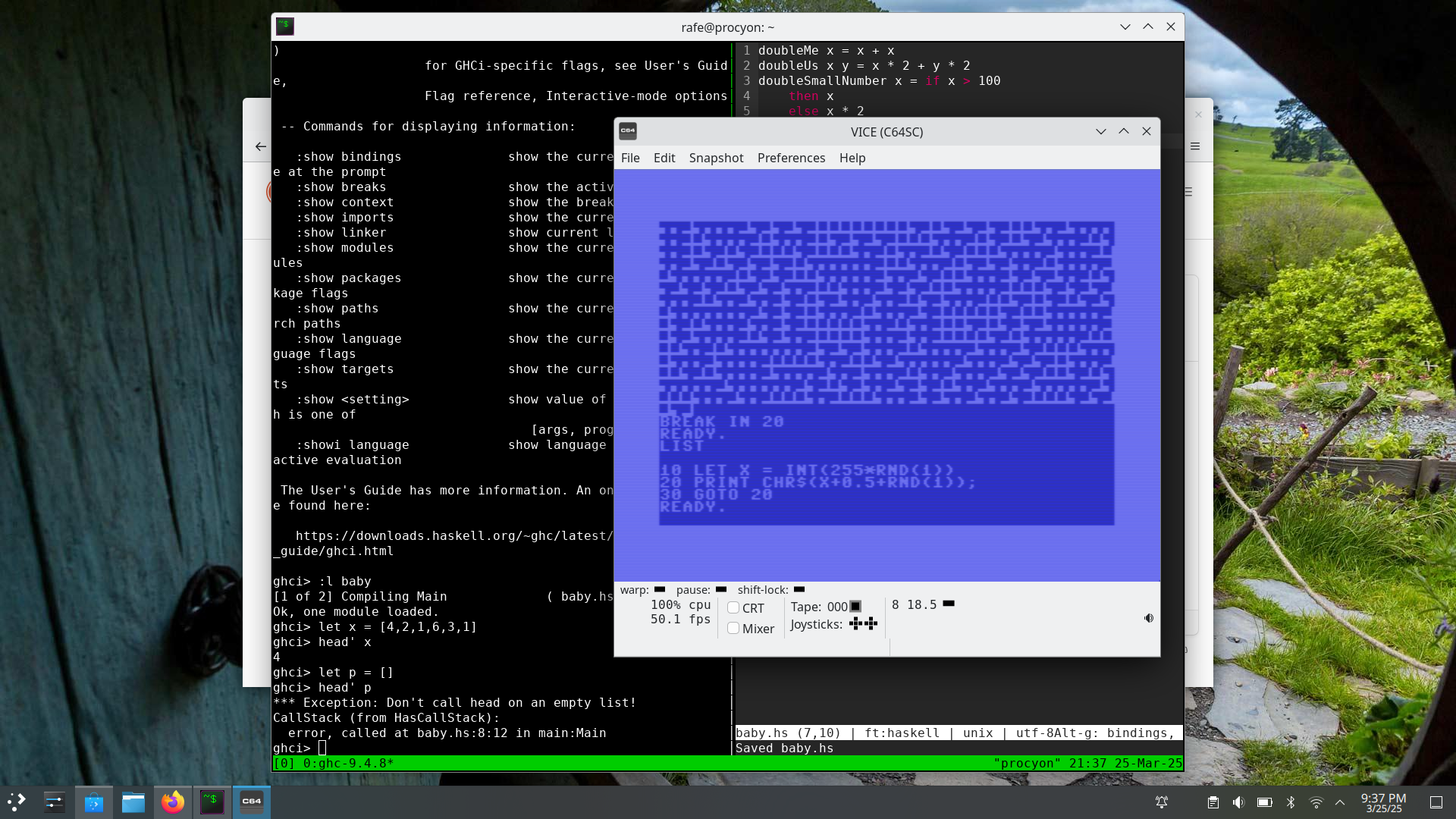
@haskell_discussions@mastodon.social
[ANN] ollama-haskell - 0.1.3.0 released!
https://github.com/tusharad/ollama-haskell/releases/tag/V0.1.3.0
Discussions: https://discu.eu/q/https://github.com/tusharad/ollama-haskell/releases/tag/V0.1.3.0
@Jose_A_Alonso@mathstodon.xyz
#Exercitium: Alfabeto comenzando en un carácter. https://jaalonso.github.io/exercitium/posts/2014/05/12-alfabeto_desde/ #Haskell #ProgramaciónFuncional
@Jose_A_Alonso@mathstodon.xyz
@haskell_discussions@mastodon.social
Non-Obvious Haskell Idiom: Conditional For
https://entropicthoughts.com/non-obvious-haskell-idiom-conditional-for
Discussions: https://discu.eu/q/https://entropicthoughts.com/non-obvious-haskell-idiom-conditional-for
@Jose_A_Alonso@mathstodon.xyz
@haskell_discussions@mastodon.social
Haskell recap for week 12/2025
https://discu.eu/weekly/haskell/2025/12/
Get RSS feeds and support this bot with the premium plan: https://discu.eu/premium
@Jose_A_Alonso@mathstodon.xyz
Exercitium (Un reto diario de programación). https://jaalonso.github.io/exercitium/about #Exercitium #Haskell #ProgramaciónFuncional
@haskell@fosstodon.org

@Jose_A_Alonso@mathstodon.xyz
@haskell_discussions@mastodon.social
[ANN] GHCup 0.1.50.0 released - Announcements
https://discourse.haskell.org/t/ann-ghcup-0-1-50-0-released/11695
Discussions: https://discu.eu/q/https://discourse.haskell.org/t/ann-ghcup-0-1-50-0-released/11695
@Jose_A_Alonso@mathstodon.xyz
#Exercitium: Valores de polinomios representados con vectores. https://jaalonso.github.io/exercitium/posts/2014/05/08-valor_de_un_polinomio/ #Haskell #ProgramaciónFuncional #Matemáticas
@Jose_A_Alonso@mathstodon.xyz
Readings shared March 22, 2025. https://jaalonso.github.io/vestigium/posts/2025/03/22-readings_shared_03-22-25 #Calculemus #FunctionalProgramming #Haskell #IsabelleHOL #LeanProver #Math

@dilawar@fosstodon.org
An underappreciated feature of #rust is that Rust code found in the wild is very much likely to work and is of good quality. The crate doesn't have to be super mature!
My experience with #rust code in the wild is much much better than JS or python code which is not suprising if you think about it. Programmers coding in
"hard" languages generally write better code? Perhaps same thing is with #Haskell and #TexLatex ?
@Jose_A_Alonso@mathstodon.xyz
#Exercitium: Segmentos maximales con elementos consecutivos. https://jaalonso.github.io/exercitium/posts/2014/05/07-segmentos_consecutivos/ #Haskell #ProgramaciónFuncional
@haskell_discussions@mastodon.social
GHC String Interpolation - Final Call for prototypes
@Jose_A_Alonso@mathstodon.xyz
Learn Haskell by example. ~ Phillip Hagenlocher. https://books.google.com/books?id=n38pEQAAQBAJ #Haskell #FunctionalProgramming
@Jose_A_Alonso@mathstodon.xyz
Non-obvious Haskell idiom: Guard-sequence. ~ kqr. https://entropicthoughts.com/non-obvious-haskell-idiom-guard-sequence #Haskell #FunctionalProgramming
@Jose_A_Alonso@mathstodon.xyz
@haskell_discussions@mastodon.social
US to limit Canadian access to built on border Haskell Free Library & Opera House
@haskell_discussions@mastodon.social
[Well-Typed] GHC activities report: December 2024-February 2025
https://www.well-typed.com/blog/2025/03/ghc-activities-report-december-2024-february-2025/
Discussions: https://discu.eu/q/https://www.well-typed.com/blog/2025/03/ghc-activities-report-december-2024-february-2025/
@Jose_A_Alonso@mathstodon.xyz
Curso "Programación declarativa (2008-09)". https://jaalonso.github.io/cursos/pd-08 #ProgramaciónFuncional #Haskell #ProgramaciónLógica #Prolog
@Jose_A_Alonso@mathstodon.xyz
A hundred pull requests for Liquid Haskell. ~ Facundo Domínguez. https://www.tweag.io/blog/2025-03-20-lh-release/ #Liquid #Haskell #FunctionalProgramming #SMT
@Jose_A_Alonso@mathstodon.xyz
A hundred pull requests for Liquid Haskell. ~ Facundo Domínguez. https://www.tweag.io/blog/2025-03-20-lh-release/ #Liquid #Haskell #FunctionalProgramming #SMT
@Jose_A_Alonso@mathstodon.xyz
@haskell_discussions@mastodon.social
@Jose_A_Alonso@mathstodon.xyz
Readings shared March 20, 2025. https://jaalonso.github.io/vestigium/posts/2025/03/20-readings_shared_03-20-25 #FunctionalProgramming #Haskell #IsabelleHOL #LeanProver #Math
@haskell_discussions@mastodon.social
haskell-dev-env - An opinionated pre-built Dev Container for Haskell
https://github.com/marijnvanwezel/haskell-dev-env
Discussions: https://discu.eu/q/https://github.com/marijnvanwezel/haskell-dev-env
@DiazCarrete@hachyderm.io
I wonder if initiatives like the Haskell Error Index https://errors.haskell.org/ become more important now that we have AI coding assistants that can potentially access the error descriptions in order to steer themselves.
@haskell_discussions@mastodon.social
Non-Obvious Haskell Idiom: Guard-Sequence
https://entropicthoughts.com/non-obvious-haskell-idiom-guard-sequence
Discussions: https://discu.eu/q/https://entropicthoughts.com/non-obvious-haskell-idiom-guard-sequence
@haskell_discussions@mastodon.social
Open Source at Bellroy: Supporting Old GHC Versions
https://exploring-better-ways.bellroy.com/open-source-at-bellroy-supporting-old-ghc-versions.html
Discussions: https://discu.eu/q/https://exploring-better-ways.bellroy.com/open-source-at-bellroy-supporting-old-ghc-versions.html
@Jose_A_Alonso@mathstodon.xyz
@haskell_discussions@mastodon.social
Making a multiplayer action game in Haskell
https://gitlab.com/-/snippets/4817016
Discussions: https://discu.eu/q/https://gitlab.com/-/snippets/4817016
@Jose_A_Alonso@mathstodon.xyz
@Jose_A_Alonso@mathstodon.xyz
@Jose_A_Alonso@mathstodon.xyz
@haskell_discussions@mastodon.social
Haskell debugging in Neovim with breakpoints is giving error
https://www.reddit.com/r/neovim/comments/1jcdxgc/comment/mi1h56e/?context=3
Discussions: https://discu.eu/q/https://www.reddit.com/r/neovim/comments/1jcdxgc/comment/mi1h56e/?context=3
@Jose_A_Alonso@mathstodon.xyz
Curso "Programación declarativa (2007-08)". https://jaalonso.github.io/cursos/pd-07 #ProgramaciónFuncional #Haskell #ProgramaciónLógica #Prolog
@Jose_A_Alonso@mathstodon.xyz
#Exercitium: Suma si todos los valores son justos. https://jaalonso.github.io/exercitium/posts/2014/05/01-suma_si_todos_justos/ #Haskell #ProgramaciónFuncional
@Jose_A_Alonso@mathstodon.xyz
Readings shared March 17, 2025. https://jaalonso.github.io/vestigium/posts/2025/03/17-readings_shared_03-17-25 #FunctionalProgramming #Haskell #IsabelleHOL #Logic #Math
@haskell_discussions@mastodon.social
Haskell Interlude 63: Farhad Mehta
https://haskell.foundation/podcast/63/
Discussions: https://discu.eu/q/https://haskell.foundation/podcast/63/
@haskell_discussions@mastodon.social
[ANN] Copilot 4.3
Discussions: https://discu.eu/q/https://github.com/nasa/ogma
@Jose_A_Alonso@mathstodon.xyz
@haskell_discussions@mastodon.social
Haskell recap for week 11/2025
https://discu.eu/weekly/haskell/2025/11/
Get RSS feeds and support this bot with the premium plan: https://discu.eu/premium
@Jose_A_Alonso@mathstodon.xyz
The calculated typer. ~ Zac Garby, Patrick Bahr, Graham Hutton. https://bahr.io/pubs/files/calctyper-paper.pdf #Haskell #FunctionalProgramming
@Jose_A_Alonso@mathstodon.xyz
Readings shared March 16, 2025. https://jaalonso.github.io/vestigium/posts/2025/03/16-readings_shared_03-16-25 #FunctionalProgramming #Haskell #Math #Programming #Python
@haskell_discussions@mastodon.social
[ANN] bearlibterminal v0.1 - Haskell bindings to the BearLibTerminal graphics library for roguelike games.
http://foo.wyrd.name/en:bearlibterminal
Discussions: https://discu.eu/q/http://foo.wyrd.name/en:bearlibterminal

@GerryT@mastodon.social
Share of programming languages used by #GTK3 / #GTK4 applications (2025-03-16):
28% #Python
21% #Vala
20% #Rust
17% #C
06% #C++ #Cplusplus
06% #gjs #Javascript
04% Other: #Csharp #Go #Lua #Haskell #Swift #Typescript #Crystal #Swift #D #Perl
63% use GTK4 (90% of them use #libadwaita), while still 37% use GTK3
Method: Source [1] lists 543 awesome #gtk (3/4) #opensource applications and their #programminglanguage
[1] https://github.com/valpackett/awesome-gtk
@Jose_A_Alonso@mathstodon.xyz
@GerryT@mastodon.social
Share of programming languages used by #GTK3 / #GTK4 applications (2025-03-16):
28% #Python
21% #Vala
20% #Rust
17% #C
06% #C++ #Cplusplus
06% #gjs #Javascript
04% Other: #Csharp #Go #Lua #Haskell #Swift #Typescript #Crystal #Swift #D #Perl
63% use GTK4 (90% of them use #libadwaita), while still 37% use GTK3
Method: Source [1] lists 543 awesome #gtk (3/4) #opensource applications and their #programminglanguage
[1] https://github.com/valpackett/awesome-gtk
@haskell_discussions@mastodon.social
Using lens-aeson to implement FromJSON
https://magnus.therning.org/2025-03-16-using-lens-aeson-to-implement-fromjson.html
Discussions: https://discu.eu/q/https://magnus.therning.org/2025-03-16-using-lens-aeson-to-implement-fromjson.html
@Jose_A_Alonso@mathstodon.xyz
@haskell_discussions@mastodon.social
[ANN] First release candidate for Stack 3.5.1
https://github.com/commercialhaskell/stack/releases/tag/rc/v3.5.0.1
Discussions: https://discu.eu/q/https://github.com/commercialhaskell/stack/releases/tag/rc/v3.5.0.1
@Jose_A_Alonso@mathstodon.xyz
#Exercitium: Primos consecutivos con media capicúa. https://jaalonso.github.io/exercitium/posts/2014/04/28-primos_consecutivos_con_media_capicua/ #Haskell #FunctionalProgramming #Math
@Jose_A_Alonso@mathstodon.xyz
@haskell_discussions@mastodon.social
Aztecs v0.10: A modular game-engine and ECS for Haskell (now with a simpler design featuring applicative queries and monadic systems)
https://github.com/aztecs-hs/aztecs
Discussions: https://discu.eu/q/https://github.com/aztecs-hs/aztecs
@haskell_discussions@mastodon.social
@Jose_A_Alonso@mathstodon.xyz
@haskell_discussions@mastodon.social
Curry: A Truly Integrated Functional Logic Programming Language
Discussions: https://discu.eu/q/https://curry-lang.org
@haskell_discussions@mastodon.social
A Short Survey on Type-Driven Development Tools
https://tudelft.fra1.qualtrics.com/jfe/form/SV_bIsMxYTKUJkhVuS
Discussions: https://discu.eu/q/https://tudelft.fra1.qualtrics.com/jfe/form/SV_bIsMxYTKUJkhVuS
@Jose_A_Alonso@mathstodon.xyz
#Exercitium: Determinación de los elementos minimales. https://jaalonso.github.io/exercitium/posts/2014/04/24-elementosminimales/ #Haskell #FunctionalProgramming #Math
@Jose_A_Alonso@mathstodon.xyz
The Haskell Unfolder Episode 40: Understanding through a model. ~ Edsko de Vries, Andres Löh. https://www.youtube.com/live/0QTt2W7CVnA #Haskell #FunctionalProgramming
@Jose_A_Alonso@mathstodon.xyz
@haskell_discussions@mastodon.social
The Haskell Unfolder Episode 40: understanding through a model
https://www.youtube.com/watch?index=40&list=PLD8gywOEY4HaG5VSrKVnHxCptlJv2GAn7&v=0QTt2W7CVnA
Discussions: https://discu.eu/q/https://www.youtube.com/watch?index=40&list=PLD8gywOEY4HaG5VSrKVnHxCptlJv2GAn7&v=0QTt2W7CVnA
@haskell_discussions@mastodon.social
LambdaConf's schedule has a couple of Haskell talks. Anyone going?
https://www.lambdaconf.us/schedule
Discussions: https://discu.eu/q/https://www.lambdaconf.us/schedule
@Jose_A_Alonso@mathstodon.xyz
#Exercitium: La bandera tricolor. https://jaalonso.github.io/exercitium/posts/2014/04/23-bandera_tricolor/ #Haskell

@h4ckernews@mastodon.social
The State of Coherence in the Land of Type Classes
https://programming-journal.org/2025/10/15/
#HackerNews #TheStateOfCoherence #TypeClasses #Haskell #ProgrammingTechniques #SoftwareDevelopment
@h4ckernews@mastodon.social
The State of Coherence in the Land of Type Classes
https://programming-journal.org/2025/10/15/
#HackerNews #TheStateOfCoherence #TypeClasses #Haskell #ProgrammingTechniques #SoftwareDevelopment
@Jose_A_Alonso@mathstodon.xyz
@ipxfong@mastodon.sdf.org
I think I love list comprehensions in Haskell. #haskell
@ipxfong@mastodon.sdf.org
I think I love list comprehensions in Haskell. #haskell
@ipxfong@mastodon.sdf.org
I think I love list comprehensions in Haskell. #haskell
@lobsters@mastodon.social
Making a multiplayer action game in Haskell https://lobste.rs/s/hoirtg #games #haskell
https://gitlab.com/-/snippets/4817016
@lobsters@mastodon.social
Making a multiplayer action game in Haskell https://lobste.rs/s/hoirtg #games #haskell
https://gitlab.com/-/snippets/4817016

@jnpn@mastodon.social
@jnpn@mastodon.social
@haskell_foundation@mastodon.social
Today the Haskell Foundation is migrating some of our server infrastructure and upgrading our storage. 💪 #haskellfoundation #haskell
@haskell_foundation@mastodon.social
Today the Haskell Foundation is migrating some of our server infrastructure and upgrading our storage. 💪 #haskellfoundation #haskell
@kosmikus@functional.cafe
Tomorrow, 2025-03-12, at 1930 UTC (note: one hour later than usual in Canada / US due to asynchronous DST shifts), there'll be a new episode of the #Haskell #Unfolder, titled "understanding through a model". We'll talk about QuickCheck and convolutions ...
https://www.youtube.com/watch?v=0QTt2W7CVnA&list=PLD8gywOEY4HaG5VSrKVnHxCptlJv2GAn7&index=40
@Jose_A_Alonso@mathstodon.xyz
#Exercitium: Ordenación por el máximo. https://jaalonso.github.io/exercitium/posts/2014/04/22-ordenados_por_maximo/ #Haskell
@haskell_discussions@mastodon.social
Making a multiplayer action game in Haskell
https://gitlab.com/-/snippets/4817016
Discussions: https://discu.eu/q/https://gitlab.com/-/snippets/4817016
@haskell_discussions@mastodon.social
Making a multiplayer action game in Haskell
https://gitlab.com/-/snippets/4817016
Discussions: https://discu.eu/q/https://gitlab.com/-/snippets/4817016
@haskell_discussions@mastodon.social
Making a multiplayer action game in Haskell
https://gitlab.com/-/snippets/4817016
Discussions: https://discu.eu/q/https://gitlab.com/-/snippets/4817016
@Jose_A_Alonso@mathstodon.xyz
@haskell_discussions@mastodon.social
Your friendly neighborhood queer Haskell enthusiast is writing a compiler
Discussions: https://discu.eu/q/https://www.twitch.tv/nicuveo
@haskell_discussions@mastodon.social
Stage Fright Peeled Away: Writing the 'peel' Function with Template Haskell
https://free.cofree.io/2025/03/10/template-haskell/
Discussions: https://discu.eu/q/https://free.cofree.io/2025/03/10/template-haskell/
@haskell_discussions@mastodon.social
Get started with Bluefin
https://www.youtube.com/watch?v=2g5ZZRN2LZE
Discussions: https://discu.eu/q/https://www.youtube.com/watch?v=2g5ZZRN2LZE
@Jose_A_Alonso@mathstodon.xyz
#Exercitium: Iguales al siguiente. https://jaalonso.github.io/exercitium/posts/2014/04/21-iguales_al_siguiente/ #Haskell


@hongminhee@hollo.social
Just what the internet needed: another attempt to explain #monads! 🙄 But this time I'm comparing #Haskell and #OCaml approaches to show why #typeclasses make all the difference. Turns out those JavaScript Promise analogies only tell half the story…

@hongminhee@hackers.pub
While exploring functional programming languages, I've been reflecting on how different communities approach similar concepts. One pattern that seems particularly fascinating is how Haskell and OCaml communities differ in their embrace of monads as an abstraction tool.
It's common to hear monads explained through analogies to concepts like JavaScript's Promise or jQuery chains. While these comparisons provide an entry point, they might miss what makes monads truly beautiful and powerful in Haskell's ecosystem.
The real strength appears to lie in the Monad typeclass itself. This elegant abstraction allows for creating generic functions and types that work with any type that shares the monad property. This seems to offer a profound unification of concepts that might initially appear unrelated:
Maybe, [], IO, State, etc.)sequence, mapM, and others become available across all monadic typesFor example, a simple conditional function like this works beautifully in any monadic context:
whenM :: Monad m => m Bool -> m () -> m ()
whenM condition action = do
  result <- condition
  if result then action else return ()
Whether dealing with potentially missing values, asynchronous operations, or state transformations, the same function can be employed without modification. There's something genuinely satisfying about this level of abstraction and reuse.
Interestingly, the OCaml community seems less enthusiastic about monads as a primary abstraction tool. This might stem from several factors related to language design:
OCaml lacks built-in typeclass support, relying instead on its module system and functors. While powerful in its own right, this approach might not make monad abstractions feel as natural or convenient:
(* OCaml monad implementation requires more boilerplate *)
module type MONAD = sig
  type 'a t
  val return : 'a -> 'a t
  val bind : 'a t -> ('a -> 'b t) -> 'b t
end

module OptionMonad : MONAD with type 'a t = 'a option = struct
  type 'a t = 'a option
  let return x = Some x
  let bind m f = match m with
    | None -> None
    | Some x -> f x
end
OCaml also doesn't offer syntactic sugar like Haskell's do notation, which makes monadic code in Haskell considerably more readable and expressive:
-- Haskell's elegant do notation
userInfo = do
  name <- getLine
  age <- readLn
  return (name, age)
Compared to the more verbose OCaml equivalent:
let user_info =
  get_line >>= fun name ->
  read_ln >>= fun age ->
  return (name, age)
The readability difference becomes even more pronounced in more complex monadic operations.
Beyond syntax, the languages differ in their fundamental approach to effects:
This allows OCaml programmers to write more direct code when appropriate:
(* Direct style in OCaml *)
let get_user_info () =
  print_string "Name: ";
  let name = read_line () in
  print_string "Age: ";
  let age = int_of_string (read_line ()) in
  (name, age)
OCaml's approach might favor pragmatism and directness in many cases, with programmers often preferring:
option and result typesWhile this directness can be beneficial for immediate readability, it might come at the cost of some of the elegant uniformity that Haskell's monadic approach provides.
These differences highlight how programming language design shapes the idioms and patterns that emerge within their communities. Neither approach is objectively superior—they represent different philosophies about abstraction, explicitness, and the role of the type system.
Haskell's approach encourages a high level of abstraction and consistency across different computational contexts, which can feel particularly satisfying when working with complex, interconnected systems. There's something intellectually pleasing about solving a problem once and having that solution generalize across many contexts.
OCaml often favors more direct solutions that might be easier to reason about locally, though potentially at the cost of less uniformity across the codebase. This approach has its own virtues, particularly for systems where immediate comprehensibility is paramount.
After working with both paradigms, I find myself drawn to the consistent abstractions that Haskell's approach provides, while still appreciating the pragmatic clarity that OCaml can offer in certain situations. The typeclasses and syntactic support in Haskell seem to unlock a particularly elegant way of structuring code that, while perhaps requiring a steeper initial learning curve, offers a uniquely satisfying programming experience.
What patterns have you noticed in how different programming language communities approach similar problems? And have you found yourself drawn to the elegant abstractions of Haskell or the pragmatic approach of OCaml?
@hongminhee@hollo.social
Just what the internet needed: another attempt to explain #monads! 🙄 But this time I'm comparing #Haskell and #OCaml approaches to show why #typeclasses make all the difference. Turns out those JavaScript Promise analogies only tell half the story…
@hongminhee@hackers.pub
While exploring functional programming languages, I've been reflecting on how different communities approach similar concepts. One pattern that seems particularly fascinating is how Haskell and OCaml communities differ in their embrace of monads as an abstraction tool.
It's common to hear monads explained through analogies to concepts like JavaScript's Promise or jQuery chains. While these comparisons provide an entry point, they might miss what makes monads truly beautiful and powerful in Haskell's ecosystem.
The real strength appears to lie in the Monad typeclass itself. This elegant abstraction allows for creating generic functions and types that work with any type that shares the monad property. This seems to offer a profound unification of concepts that might initially appear unrelated:
Maybe, [], IO, State, etc.)sequence, mapM, and others become available across all monadic typesFor example, a simple conditional function like this works beautifully in any monadic context:
whenM :: Monad m => m Bool -> m () -> m ()
whenM condition action = do
  result <- condition
  if result then action else return ()
Whether dealing with potentially missing values, asynchronous operations, or state transformations, the same function can be employed without modification. There's something genuinely satisfying about this level of abstraction and reuse.
Interestingly, the OCaml community seems less enthusiastic about monads as a primary abstraction tool. This might stem from several factors related to language design:
OCaml lacks built-in typeclass support, relying instead on its module system and functors. While powerful in its own right, this approach might not make monad abstractions feel as natural or convenient:
(* OCaml monad implementation requires more boilerplate *)
module type MONAD = sig
  type 'a t
  val return : 'a -> 'a t
  val bind : 'a t -> ('a -> 'b t) -> 'b t
end

module OptionMonad : MONAD with type 'a t = 'a option = struct
  type 'a t = 'a option
  let return x = Some x
  let bind m f = match m with
    | None -> None
    | Some x -> f x
end
OCaml also doesn't offer syntactic sugar like Haskell's do notation, which makes monadic code in Haskell considerably more readable and expressive:
-- Haskell's elegant do notation
userInfo = do
  name <- getLine
  age <- readLn
  return (name, age)
Compared to the more verbose OCaml equivalent:
let user_info =
  get_line >>= fun name ->
  read_ln >>= fun age ->
  return (name, age)
The readability difference becomes even more pronounced in more complex monadic operations.
Beyond syntax, the languages differ in their fundamental approach to effects:
This allows OCaml programmers to write more direct code when appropriate:
(* Direct style in OCaml *)
let get_user_info () =
  print_string "Name: ";
  let name = read_line () in
  print_string "Age: ";
  let age = int_of_string (read_line ()) in
  (name, age)
OCaml's approach might favor pragmatism and directness in many cases, with programmers often preferring:
option and result typesWhile this directness can be beneficial for immediate readability, it might come at the cost of some of the elegant uniformity that Haskell's monadic approach provides.
These differences highlight how programming language design shapes the idioms and patterns that emerge within their communities. Neither approach is objectively superior—they represent different philosophies about abstraction, explicitness, and the role of the type system.
Haskell's approach encourages a high level of abstraction and consistency across different computational contexts, which can feel particularly satisfying when working with complex, interconnected systems. There's something intellectually pleasing about solving a problem once and having that solution generalize across many contexts.
OCaml often favors more direct solutions that might be easier to reason about locally, though potentially at the cost of less uniformity across the codebase. This approach has its own virtues, particularly for systems where immediate comprehensibility is paramount.
After working with both paradigms, I find myself drawn to the consistent abstractions that Haskell's approach provides, while still appreciating the pragmatic clarity that OCaml can offer in certain situations. The typeclasses and syntactic support in Haskell seem to unlock a particularly elegant way of structuring code that, while perhaps requiring a steeper initial learning curve, offers a uniquely satisfying programming experience.
What patterns have you noticed in how different programming language communities approach similar problems? And have you found yourself drawn to the elegant abstractions of Haskell or the pragmatic approach of OCaml?
@hongminhee@hollo.social · Reply to 洪 民憙 (Hong Minhee) :nonbinary:'s post
またまた世界にモナドの解説が増えてしまいました。😅 今回はHaskellとOCamlのアプローチを比較して、型クラスがどれだけ重要な違いを齎すかに就いて書いてみました。JavaScriptのPromiseと比べる譬えは半分しか真実を語っていないんですよね…
@hongminhee@hackers.pub
While exploring functional programming languages, I've been reflecting on how different communities approach similar concepts. One pattern that seems particularly fascinating is how Haskell and OCaml communities differ in their embrace of monads as an abstraction tool.
It's common to hear monads explained through analogies to concepts like JavaScript's Promise or jQuery chains. While these comparisons provide an entry point, they might miss what makes monads truly beautiful and powerful in Haskell's ecosystem.
The real strength appears to lie in the Monad typeclass itself. This elegant abstraction allows for creating generic functions and types that work with any type that shares the monad property. This seems to offer a profound unification of concepts that might initially appear unrelated:
Maybe, [], IO, State, etc.)sequence, mapM, and others become available across all monadic typesFor example, a simple conditional function like this works beautifully in any monadic context:
whenM :: Monad m => m Bool -> m () -> m ()
whenM condition action = do
  result <- condition
  if result then action else return ()
Whether dealing with potentially missing values, asynchronous operations, or state transformations, the same function can be employed without modification. There's something genuinely satisfying about this level of abstraction and reuse.
Interestingly, the OCaml community seems less enthusiastic about monads as a primary abstraction tool. This might stem from several factors related to language design:
OCaml lacks built-in typeclass support, relying instead on its module system and functors. While powerful in its own right, this approach might not make monad abstractions feel as natural or convenient:
(* OCaml monad implementation requires more boilerplate *)
module type MONAD = sig
  type 'a t
  val return : 'a -> 'a t
  val bind : 'a t -> ('a -> 'b t) -> 'b t
end

module OptionMonad : MONAD with type 'a t = 'a option = struct
  type 'a t = 'a option
  let return x = Some x
  let bind m f = match m with
    | None -> None
    | Some x -> f x
end
OCaml also doesn't offer syntactic sugar like Haskell's do notation, which makes monadic code in Haskell considerably more readable and expressive:
-- Haskell's elegant do notation
userInfo = do
  name <- getLine
  age <- readLn
  return (name, age)
Compared to the more verbose OCaml equivalent:
let user_info =
  get_line >>= fun name ->
  read_ln >>= fun age ->
  return (name, age)
The readability difference becomes even more pronounced in more complex monadic operations.
Beyond syntax, the languages differ in their fundamental approach to effects:
This allows OCaml programmers to write more direct code when appropriate:
(* Direct style in OCaml *)
let get_user_info () =
  print_string "Name: ";
  let name = read_line () in
  print_string "Age: ";
  let age = int_of_string (read_line ()) in
  (name, age)
OCaml's approach might favor pragmatism and directness in many cases, with programmers often preferring:
option and result typesWhile this directness can be beneficial for immediate readability, it might come at the cost of some of the elegant uniformity that Haskell's monadic approach provides.
These differences highlight how programming language design shapes the idioms and patterns that emerge within their communities. Neither approach is objectively superior—they represent different philosophies about abstraction, explicitness, and the role of the type system.
Haskell's approach encourages a high level of abstraction and consistency across different computational contexts, which can feel particularly satisfying when working with complex, interconnected systems. There's something intellectually pleasing about solving a problem once and having that solution generalize across many contexts.
OCaml often favors more direct solutions that might be easier to reason about locally, though potentially at the cost of less uniformity across the codebase. This approach has its own virtues, particularly for systems where immediate comprehensibility is paramount.
After working with both paradigms, I find myself drawn to the consistent abstractions that Haskell's approach provides, while still appreciating the pragmatic clarity that OCaml can offer in certain situations. The typeclasses and syntactic support in Haskell seem to unlock a particularly elegant way of structuring code that, while perhaps requiring a steeper initial learning curve, offers a uniquely satisfying programming experience.
What patterns have you noticed in how different programming language communities approach similar problems? And have you found yourself drawn to the elegant abstractions of Haskell or the pragmatic approach of OCaml?
@hongminhee@hollo.social · Reply to 洪 民憙 (Hong Minhee) :nonbinary:'s post
またまた世界にモナドの解説が増えてしまいました。😅 今回はHaskellとOCamlのアプローチを比較して、型クラスがどれだけ重要な違いを齎すかに就いて書いてみました。JavaScriptのPromiseと比べる譬えは半分しか真実を語っていないんですよね…
@hongminhee@hackers.pub
While exploring functional programming languages, I've been reflecting on how different communities approach similar concepts. One pattern that seems particularly fascinating is how Haskell and OCaml communities differ in their embrace of monads as an abstraction tool.
It's common to hear monads explained through analogies to concepts like JavaScript's Promise or jQuery chains. While these comparisons provide an entry point, they might miss what makes monads truly beautiful and powerful in Haskell's ecosystem.
The real strength appears to lie in the Monad typeclass itself. This elegant abstraction allows for creating generic functions and types that work with any type that shares the monad property. This seems to offer a profound unification of concepts that might initially appear unrelated:
Maybe, [], IO, State, etc.)sequence, mapM, and others become available across all monadic typesFor example, a simple conditional function like this works beautifully in any monadic context:
whenM :: Monad m => m Bool -> m () -> m ()
whenM condition action = do
  result <- condition
  if result then action else return ()
Whether dealing with potentially missing values, asynchronous operations, or state transformations, the same function can be employed without modification. There's something genuinely satisfying about this level of abstraction and reuse.
Interestingly, the OCaml community seems less enthusiastic about monads as a primary abstraction tool. This might stem from several factors related to language design:
OCaml lacks built-in typeclass support, relying instead on its module system and functors. While powerful in its own right, this approach might not make monad abstractions feel as natural or convenient:
(* OCaml monad implementation requires more boilerplate *)
module type MONAD = sig
  type 'a t
  val return : 'a -> 'a t
  val bind : 'a t -> ('a -> 'b t) -> 'b t
end

module OptionMonad : MONAD with type 'a t = 'a option = struct
  type 'a t = 'a option
  let return x = Some x
  let bind m f = match m with
    | None -> None
    | Some x -> f x
end
OCaml also doesn't offer syntactic sugar like Haskell's do notation, which makes monadic code in Haskell considerably more readable and expressive:
-- Haskell's elegant do notation
userInfo = do
  name <- getLine
  age <- readLn
  return (name, age)
Compared to the more verbose OCaml equivalent:
let user_info =
  get_line >>= fun name ->
  read_ln >>= fun age ->
  return (name, age)
The readability difference becomes even more pronounced in more complex monadic operations.
Beyond syntax, the languages differ in their fundamental approach to effects:
This allows OCaml programmers to write more direct code when appropriate:
(* Direct style in OCaml *)
let get_user_info () =
  print_string "Name: ";
  let name = read_line () in
  print_string "Age: ";
  let age = int_of_string (read_line ()) in
  (name, age)
OCaml's approach might favor pragmatism and directness in many cases, with programmers often preferring:
option and result typesWhile this directness can be beneficial for immediate readability, it might come at the cost of some of the elegant uniformity that Haskell's monadic approach provides.
These differences highlight how programming language design shapes the idioms and patterns that emerge within their communities. Neither approach is objectively superior—they represent different philosophies about abstraction, explicitness, and the role of the type system.
Haskell's approach encourages a high level of abstraction and consistency across different computational contexts, which can feel particularly satisfying when working with complex, interconnected systems. There's something intellectually pleasing about solving a problem once and having that solution generalize across many contexts.
OCaml often favors more direct solutions that might be easier to reason about locally, though potentially at the cost of less uniformity across the codebase. This approach has its own virtues, particularly for systems where immediate comprehensibility is paramount.
After working with both paradigms, I find myself drawn to the consistent abstractions that Haskell's approach provides, while still appreciating the pragmatic clarity that OCaml can offer in certain situations. The typeclasses and syntactic support in Haskell seem to unlock a particularly elegant way of structuring code that, while perhaps requiring a steeper initial learning curve, offers a uniquely satisfying programming experience.
What patterns have you noticed in how different programming language communities approach similar problems? And have you found yourself drawn to the elegant abstractions of Haskell or the pragmatic approach of OCaml?
@hongminhee@hollo.social
Just what the internet needed: another attempt to explain #monads! 🙄 But this time I'm comparing #Haskell and #OCaml approaches to show why #typeclasses make all the difference. Turns out those JavaScript Promise analogies only tell half the story…
@hongminhee@hackers.pub
While exploring functional programming languages, I've been reflecting on how different communities approach similar concepts. One pattern that seems particularly fascinating is how Haskell and OCaml communities differ in their embrace of monads as an abstraction tool.
It's common to hear monads explained through analogies to concepts like JavaScript's Promise or jQuery chains. While these comparisons provide an entry point, they might miss what makes monads truly beautiful and powerful in Haskell's ecosystem.
The real strength appears to lie in the Monad typeclass itself. This elegant abstraction allows for creating generic functions and types that work with any type that shares the monad property. This seems to offer a profound unification of concepts that might initially appear unrelated:
Maybe, [], IO, State, etc.)sequence, mapM, and others become available across all monadic typesFor example, a simple conditional function like this works beautifully in any monadic context:
whenM :: Monad m => m Bool -> m () -> m ()
whenM condition action = do
  result <- condition
  if result then action else return ()
Whether dealing with potentially missing values, asynchronous operations, or state transformations, the same function can be employed without modification. There's something genuinely satisfying about this level of abstraction and reuse.
Interestingly, the OCaml community seems less enthusiastic about monads as a primary abstraction tool. This might stem from several factors related to language design:
OCaml lacks built-in typeclass support, relying instead on its module system and functors. While powerful in its own right, this approach might not make monad abstractions feel as natural or convenient:
(* OCaml monad implementation requires more boilerplate *)
module type MONAD = sig
  type 'a t
  val return : 'a -> 'a t
  val bind : 'a t -> ('a -> 'b t) -> 'b t
end

module OptionMonad : MONAD with type 'a t = 'a option = struct
  type 'a t = 'a option
  let return x = Some x
  let bind m f = match m with
    | None -> None
    | Some x -> f x
end
OCaml also doesn't offer syntactic sugar like Haskell's do notation, which makes monadic code in Haskell considerably more readable and expressive:
-- Haskell's elegant do notation
userInfo = do
  name <- getLine
  age <- readLn
  return (name, age)
Compared to the more verbose OCaml equivalent:
let user_info =
  get_line >>= fun name ->
  read_ln >>= fun age ->
  return (name, age)
The readability difference becomes even more pronounced in more complex monadic operations.
Beyond syntax, the languages differ in their fundamental approach to effects:
This allows OCaml programmers to write more direct code when appropriate:
(* Direct style in OCaml *)
let get_user_info () =
  print_string "Name: ";
  let name = read_line () in
  print_string "Age: ";
  let age = int_of_string (read_line ()) in
  (name, age)
OCaml's approach might favor pragmatism and directness in many cases, with programmers often preferring:
option and result typesWhile this directness can be beneficial for immediate readability, it might come at the cost of some of the elegant uniformity that Haskell's monadic approach provides.
These differences highlight how programming language design shapes the idioms and patterns that emerge within their communities. Neither approach is objectively superior—they represent different philosophies about abstraction, explicitness, and the role of the type system.
Haskell's approach encourages a high level of abstraction and consistency across different computational contexts, which can feel particularly satisfying when working with complex, interconnected systems. There's something intellectually pleasing about solving a problem once and having that solution generalize across many contexts.
OCaml often favors more direct solutions that might be easier to reason about locally, though potentially at the cost of less uniformity across the codebase. This approach has its own virtues, particularly for systems where immediate comprehensibility is paramount.
After working with both paradigms, I find myself drawn to the consistent abstractions that Haskell's approach provides, while still appreciating the pragmatic clarity that OCaml can offer in certain situations. The typeclasses and syntactic support in Haskell seem to unlock a particularly elegant way of structuring code that, while perhaps requiring a steeper initial learning curve, offers a uniquely satisfying programming experience.
What patterns have you noticed in how different programming language communities approach similar problems? And have you found yourself drawn to the elegant abstractions of Haskell or the pragmatic approach of OCaml?
@Jose_A_Alonso@mathstodon.xyz
Readings shared March 8, 2025. https://jaalonso.github.io/vestigium/posts/2025/03/08-readings_shared_03-08-25 #Haskell #FunctionalProgramming
@Jose_A_Alonso@mathstodon.xyz
Sum types and subtypes and unions. ~ Justin Le. https://blog.jle.im/entry/sum-types-and-subtypes-and-unions.html #Haskell #FunctionalProgramming

@simonmic@fosstodon.org
hledger 1.42 is out, with new run and repl commands.
Thank you to contributors Dmitry Astapov, gesh, Thomas
Miedema, Joschua Kesper, and Lars Kellogg-Stedman !
- https://github.com/simonmichael/hledger/releases/1.42
- https://hledger.org/relnotes.html#2025-03-07-hledger-142
- https://hledger.org/install
#hledger is free, robust, friendly, multicurrency, double-entry,
#plaintextaccounting software for unix, mac, windows, and the web,
written in #haskell for reliability.
@DiazCarrete@hachyderm.io
If I'm using "async" in Haskell to spawn a thread https://hackage.haskell.org/package/async-2.2.5/docs/Control-Concurrent-Async.html#v:async and I want the thread to know about its own Async handle, which would be the best way of doing so?
It seems hat "fixIO" https://hackage.haskell.org/package/base-4.21.0.0/docs/System-IO.html#v:fixIO could do the trick, but I'm not sure if it would be a good idea 🤔
Example of where I used "fixIO" for that purpose: https://discourse.haskell.org/t/dynamic-number-of-asyncs/11574/8
@pmidden@fosstodon.org

@Profpatsch@mastodon.xyz
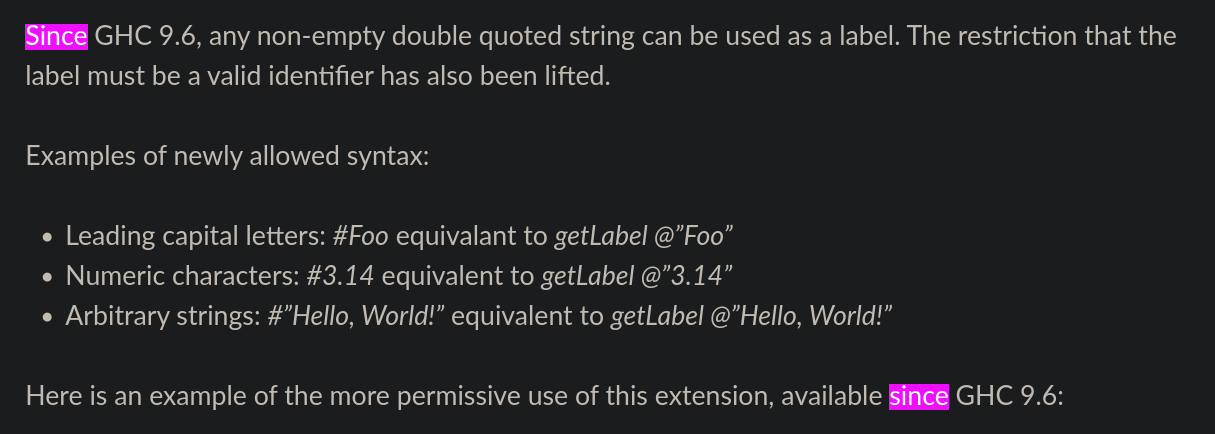
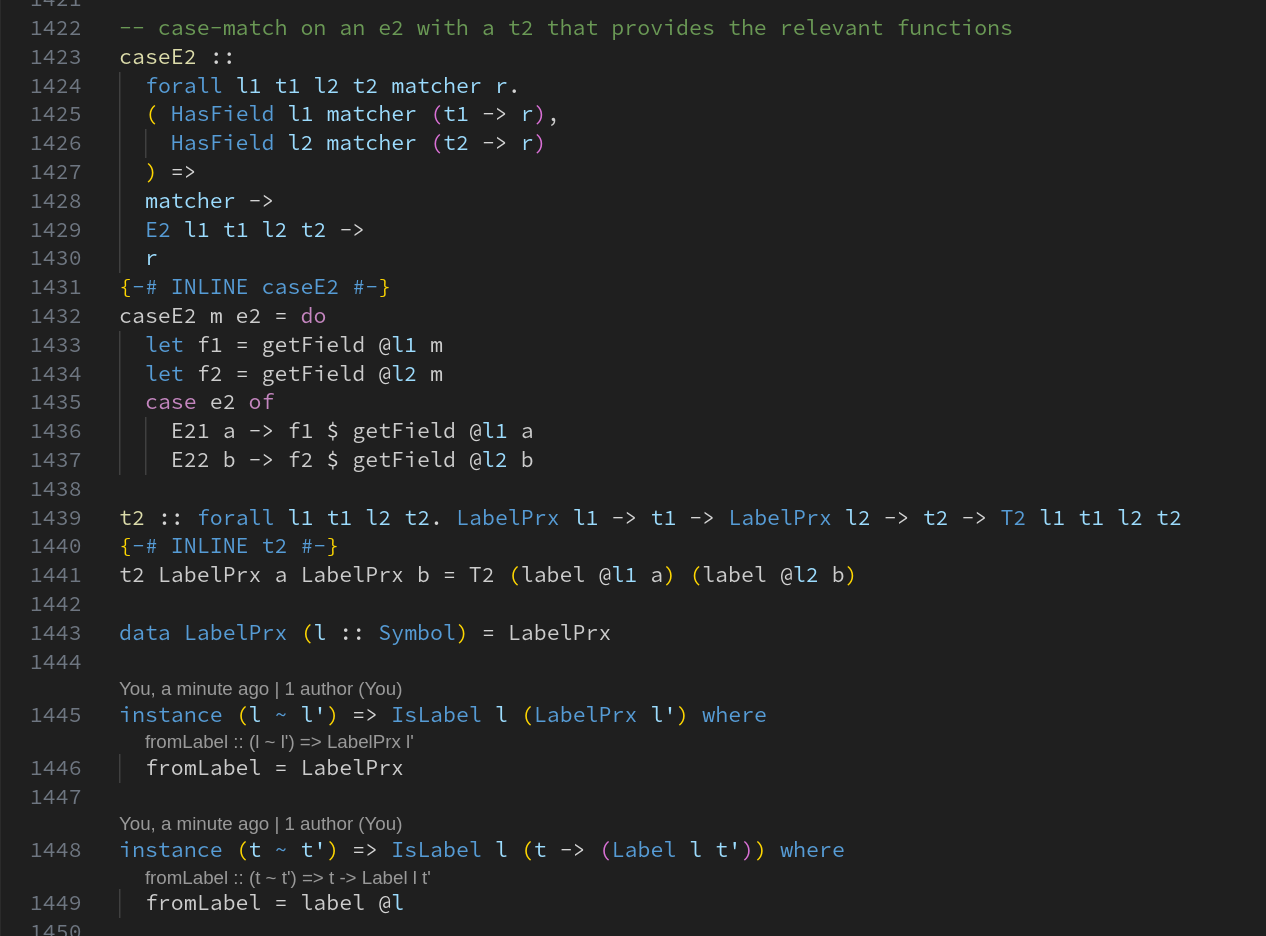
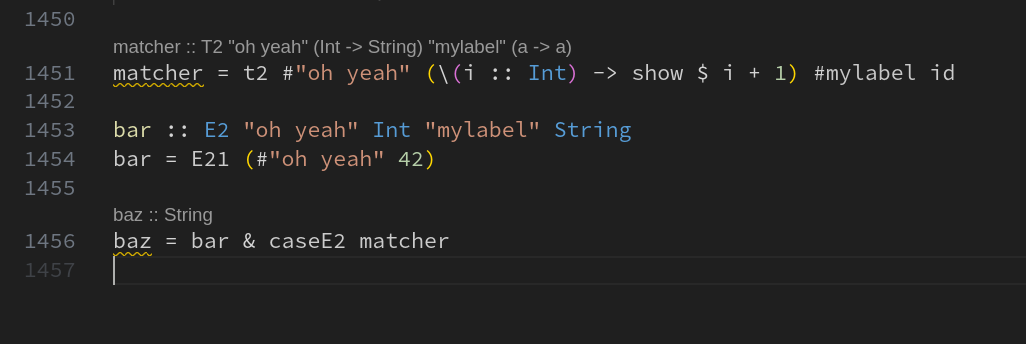
@Profpatsch@mastodon.xyz
@simonmic@fosstodon.org
hledger 1.42 is out, with new run and repl commands.
Thank you to contributors Dmitry Astapov, gesh, Thomas
Miedema, Joschua Kesper, and Lars Kellogg-Stedman !
- https://github.com/simonmichael/hledger/releases/1.42
- https://hledger.org/relnotes.html#2025-03-07-hledger-142
- https://hledger.org/install
#hledger is free, robust, friendly, multicurrency, double-entry,
#plaintextaccounting software for unix, mac, windows, and the web,
written in #haskell for reliability.
@haskell_discussions@mastodon.social
Aztecs v0.10: A modular game-engine and ECS for Haskell (now with a simpler design featuring applicative queries and monadic systems)
https://github.com/aztecs-hs/aztecs
Discussions: https://discu.eu/q/https://github.com/aztecs-hs/aztecs
@haskell_discussions@mastodon.social
Sum Types, Subtypes, and Unions
https://blog.jle.im/entry/sum-types-and-subtypes-and-unions.html
Discussions: https://discu.eu/q/https://blog.jle.im/entry/sum-types-and-subtypes-and-unions.html
@haskell_discussions@mastodon.social
(Haskell in Haskell) 2. Lexing
https://cronokirby.com/posts/2020/12/haskell-in-haskell-2/
Discussions: https://discu.eu/q/https://cronokirby.com/posts/2020/12/haskell-in-haskell-2/
@haskell_discussions@mastodon.social
@haskell_discussions@mastodon.social
"Learn Haskell by Example" book presentation by Philipp Hagenlocher
https://www.youtube.com/watch?v=dm84cqenhcU
Discussions: https://discu.eu/q/https://www.youtube.com/watch?v=dm84cqenhcU
@haskell_discussions@mastodon.social
Continuing introducing Я control flow primitives step by step. It's time for monoidal functors:
https://muratkasimov.art/Ya/Articles/Context-free-effects-with-Monoidal-functors
Discussions: https://discu.eu/q/https://muratkasimov.art/Ya/Articles/Context-free-effects-with-Monoidal-functors

@cdavies@mastodon.scot
I really need to master functions and functional programming generally. There's something about them that addles my brain. It's bothering me that I'm not good at them.
I can read through other people's functions and mostly work out what they do, but I struggle with writing my own.
I've read blogs that suggest learning #Haskell or #Scala as they are pure functional languages, and it helps solidify the logic.
@Jose_A_Alonso@mathstodon.xyz
@haskell_discussions@mastodon.social
Writing a small practice parser for NetPBM images in Haskell
https://github.com/kostareg/netpbm
Discussions: https://discu.eu/q/https://github.com/kostareg/netpbm
@haskell_discussions@mastodon.social
Haskell recap for week 9/2025
https://discu.eu/weekly/haskell/2025/9/
Get RSS feeds and support this bot with the premium plan: https://discu.eu/premium
@haskell_discussions@mastodon.social
illuminant - ActivityPub server with NNTP interface
https://koldfront.dk/git/illuminant/tree/README.md
Discussions: https://discu.eu/q/https://koldfront.dk/git/illuminant/tree/README.md
@Jose_A_Alonso@mathstodon.xyz
Applying purity to the imperative world. ~ Jeremy Bowers. https://jerf.org/iri/post/2025/fp_lessons_purity/ #Haskell #FunctionalProgramming
@Jose_A_Alonso@mathstodon.xyz
Readings shared March 1, 2025. https://jaalonso.github.io/vestigium/posts/2025/03/01-readings_shared_03-01-25 #FunctionalProgramming #Haskell #ITP #LLMs #LeanProver #Math
@haskell_discussions@mastodon.social
@Jose_A_Alonso@mathstodon.xyz
Functional pearl: How much is in a square? Calculating functional programs with squares. ~ Jose Nuno Oliveira. https://www.cambridge.org/core/services/aop-cambridge-core/content/view/F48258008F47DC9F53AA2E61B4E511A7/S0956796825000012a.pdf/how_much_is_in_a_square_calculating_functional_programs_with_squares.pdf #FunctionalProgramming #Haskell
@Jose_A_Alonso@mathstodon.xyz
Readings shared February 28, 2025. https://jaalonso.github.io/vestigium/posts/2025/02/28-readings_shared_02-28-25 #AI #CompSci #DeepLearning #FunctionalProgramming #Haskell #ITP #IsabelleHOL #LLMs #LeanProver #Logic #Math
@Jose_A_Alonso@mathstodon.xyz
PPA: Un asistente de demostración para lógica de primer orden con extracción de testigos usando la traducción de Friedman. ~ Manuel Panichelli. https://gestion.dc.uba.ar/media/academic/grade/thesis/tesis-1.0.1.pdf #Haskell #FunctionalProgramming #Logic
@haskell_discussions@mastodon.social
Static binary with Nix, problems with hmatrix
@haskell_discussions@mastodon.social
haskell streaming libraries
https://jmtd.net/log/haskell_streaming/
Discussions: https://discu.eu/q/https://jmtd.net/log/haskell_streaming/
@haskell_discussions@mastodon.social
Concurrent Order Book
https://github.com/bahbah94/Order-Book-Haskell
Discussions: https://discu.eu/q/https://github.com/bahbah94/Order-Book-Haskell
@haskell_discussions@mastodon.social
Dependent Haskell Roadmap
Discussions: https://discu.eu/q/https://ghc.serokell.io/dh
@haskell_discussions@mastodon.social
Step-by-Step Guide to Installing GHC-JS (Haskell JavaScript FFI)
https://www.tushar-adhatrao.in/blogs/haskell_javascript_ffi.html
Discussions: https://discu.eu/q/https://www.tushar-adhatrao.in/blogs/haskell_javascript_ffi.html

@kack@mastodon.social
Trying to figure out what to use in my next personal project. Trying to stay away from touching JS. I have been considering #Elm becuase I like #haskell. I also have been considering #clojurescript and #clojure becuase I love #lisp. I guess I could choose any backend but I am really looking for a frontend replacement to make a QOL improvement
@kosmikus@functional.cafe
Please consider nominating yourself to be a member of the #Haskell Foundation Board: https://discourse.haskell.org/t/2025-call-for-nominations-for-the-haskell-foundation/11373
@Jose_A_Alonso@mathstodon.xyz
Readings shared February 24, 2025. https://jaalonso.github.io/vestigium/posts/2025/02/24-readings_shared_02-24-25 #AI #CategoryTheory #Clojure #FunctionalProgramming #Haskell #ITP #LLMs #LeanProver #Lisp #Logic #Math
@haskell_discussions@mastodon.social
Haskell recap for week 8/2025
https://discu.eu/weekly/haskell/2025/8/
Get RSS feeds and support this bot with the premium plan: https://discu.eu/premium
@haskell@fosstodon.org · Reply to HaskellOrg's post
Update n°42 from the GHC team at IOG
https://engineering.iog.io/2025-02-20-ghc-update
Highlights:
• Sylvain worked on making GHC built with cabal-install pass the testsuite
• Luite looked into using cosmopolitan libc to see if we can make a GHC cross compiler that produces multi-arch/os binaries
@haskell@fosstodon.org · Reply to HaskellOrg's post
Update n°41 from the GHC team at IOG
https://engineering.iog.io/2025-01-30-ghc-update/
Highlights:
• Luite has completed the GHC 9.6.7 release.
• Sylvain worked on bootstrapping GHC and boot libraries with cabal-install
@Jose_A_Alonso@mathstodon.xyz
The Haskell road to logic, math and programming. ~ Kees Doets, Jan van Eijck (2004). https://fldit-www.cs.tu-dortmund.de/~peter/PS07/HR.pdf #Haskell #FunctionalProgramming #Loggic #Math
@Jose_A_Alonso@mathstodon.xyz
Bind and traverse with Kleisli morphisms. ~ Murat Kasimov. https://muratkasimov.art/Ya/Articles/Bind-and-traverse-with-Kleisli-morphisms #CategoryTheory #Haskell #FunctionalProgramming
@haskell_discussions@mastodon.social
Multi Line Strings are now supported in GHC 9.12.1!
https://ghc.gitlab.haskell.org/ghc/doc/users_guide/exts/multiline_strings.html
Discussions: https://discu.eu/q/https://ghc.gitlab.haskell.org/ghc/doc/users_guide/exts/multiline_strings.html
@abnv@fantastic.earth
In an alternative timeline where #FunctionalProgramming is the norm instead of Object-oriented programming, and #Haskell is the most popular #ProgrammingLanguage instead of #Java, there is a list of tutorials trying to explain what Objects are to programmers in terms of FP concepts, the most popular of which is, “Objects are Comonads”.
However, we don't live in that timeline, so we'll have to be content with the inverse article, “Comonads are Objects” https://www.haskellforall.com/2013/02/you-could-have-invented-comonads.html .
@abnv@fantastic.earth
In an alternative timeline where #FunctionalProgramming is the norm instead of Object-oriented programming, and #Haskell is the most popular #ProgrammingLanguage instead of #Java, there is a list of tutorials trying to explain what Objects are to programmers in terms of FP concepts, the most popular of which is, “Objects are Comonads”.
However, we don't live in that timeline, so we'll have to be content with the inverse article, “Comonads are Objects” https://www.haskellforall.com/2013/02/you-could-have-invented-comonads.html .
@abnv@fantastic.earth
Comparing the chart of #Monad tutorials by year[1] with the Gartner hype cycle graph, it seems like we are almost at the Peak of Inflated Expectations phase now.
[1]: From the list of Monad tutorials (https://wiki.haskell.org/Monad_tutorials_timeline).
In my lifetime, I hope to see the Slope of Enlightenment phase when people stop asking what a Monad is, and the further Plateau of Productivity phase when everyone knows what it is.
@haskell@fosstodon.org
This past week in the #Haskell Security Advisories:
*checks notes*
Nothing. Business as usual it is then.
@haskell@fosstodon.org
The GHC developers are very pleased to announce the availability of the second release candidate of GHC 9.6.7
Release notes: https://downloads.haskell.org/ghc/9.6.7-rc2/docs/users_guide/9.6.7-notes.html
Announcement: https://mail.haskell.org/pipermail/ghc-devs/2025-February/021939.html
@haskell_discussions@mastodon.social
Boost your Haskell productivity with Multiple Home Units in the repl
https://www.youtube.com/watch?v=B1WFMave-r4
Discussions: https://discu.eu/q/https://www.youtube.com/watch?v=B1WFMave-r4
@haskell_discussions@mastodon.social
First Haskell Project (an implementation of Irving's algorithm to find roomates)
https://github.com/TheArjunAgarwal/marriage-pact/tree/main
Discussions: https://discu.eu/q/https://github.com/TheArjunAgarwal/marriage-pact/tree/main
@Jose_A_Alonso@mathstodon.xyz
Readings shared February 20, 2025. https://jaalonso.github.io/vestigium/posts/2025/02/20-readings_shared_02-20-25 #CommonLisp #Haskell #ITP #LLMs #LeanProver #Math #Programming #Python
@haskell_discussions@mastodon.social
Я ☞ Bind and traverse with Kleisli morphisms
https://muratkasimov.art/Ya/Articles/Bind-and-traverse-with-Kleisli-morphisms
Discussions: https://discu.eu/q/https://muratkasimov.art/Ya/Articles/Bind-and-traverse-with-Kleisli-morphisms
@haskell_discussions@mastodon.social
Propositional function code from Haskell Road text
https://fldit-www.cs.tu-dortmund.de/~peter/PS07/HR.pdf
Discussions: https://discu.eu/q/https://fldit-www.cs.tu-dortmund.de/~peter/PS07/HR.pdf
@Jose_A_Alonso@mathstodon.xyz
@pmidden@fosstodon.org
@Jose_A_Alonso@mathstodon.xyz
Readings shared February 19, 2025. https://jaalonso.github.io/vestigium/posts/2025/02/19-readings_shared_02-19-25 #AI #CommonLisp #Coq #Haskell #ITP #LLMs #LeanProver #Logic #Math #Python #Reasoning
@haskell@fosstodon.org
"Monad of No Return: Next Steps" https://discourse.haskell.org/t/monad-of-no-return-next-steps/11443
@haskell_discussions@mastodon.social
GitHub - VitalBio/dash-haskell-flake
https://github.com/VitalBio/dash-haskell-flake
Discussions: https://discu.eu/q/https://github.com/VitalBio/dash-haskell-flake
@haskell_discussions@mastodon.social
@Jose_A_Alonso@mathstodon.xyz
@Jose_A_Alonso@mathstodon.xyz
Readings shared February 18, 2025. https://jaalonso.github.io/vestigium/posts/2025/02/18-readings_shared_02-18-25 #AI #CommonLisp #Haskell #LLMs #Math #Python

@ClemensSchmid@archaeo.social
currycarbon v0.4.0.0 is finally available. This version comes with a number of visible and invisible changes, most obviously an extension of the neat command line plot. This version is again available for MS Windows.
https://github.com/nevrome/currycarbon
#archaeology #Haskell #C14

@ClemensSchmid@archaeo.social
currycarbon v0.4.0.0 is finally available. This version comes with a number of visible and invisible changes, most obviously an extension of the neat command line plot. This version is again available for MS Windows.
https://github.com/nevrome/currycarbon
#archaeology #Haskell #C14
@haskell_discussions@mastodon.social
Announcing Symbolize 1.0.1.0: String Interning / Global Symbol Table, with Garbage Collection
@Jose_A_Alonso@mathstodon.xyz
@haskell_discussions@mastodon.social
Haskell coach to stick with women's team for basketball playoffs despite having been fired
@Jose_A_Alonso@mathstodon.xyz
Readings shared February 17, 2025. https://jaalonso.github.io/vestigium/posts/2025/02/17-readings_shared_02-17-25 #AI #Emacs #FunctionalProgramming #Haskell #ITP #LLMs #LeanProver #Math #Programmingo #Python

@bshankar@mastodon.online · Reply to James Gayfer's post
@jgayfer It also depends on your personality.
I have seen careful and pedantic coders build impressive things with python and js while I tend to make a mess that's impossible to maintain. I also waste many hours debugging.
So for me, a strictly typed language leads to long term productivity. I also take on bigger problems with confidence.
@haskell_discussions@mastodon.social
Haskell Interlude 62: Conal Elliott
http://haskell.foundation/podcast/62/
Discussions: https://discu.eu/q/http://haskell.foundation/podcast/62/
@Jose_A_Alonso@mathstodon.xyz
Natural transformations as a basis of control. ~ Murat Kasimov. https://muratkasimov.art/Ya/Articles/Natural-transformation-as-a-basis-of-control #Haskell #FunctionalProgramming
@Jose_A_Alonso@mathstodon.xyz
Readings shared February 16, 2025. https://jaalonso.github.io/vestigium/posts/2025/02/16-readings_shared_02-16-25 #CategoryTheory #FunctionalProgramming #Haskell #LLMs #LambdaCalculus #Logic #Reasoning
@Jose_A_Alonso@mathstodon.xyz
The relationship between category theory, lambda calculus, and functional programming in Haskell. ~ Antonio Montano. https://4m4.it/posts/category-theory-functional-programming-compositionality/ #Haskell #FunctionalProgramming #CategoryTheory #LambdaCalculus
@haskell_discussions@mastodon.social
PatternMatchable, Yoneda Embedding, and Adjunction - Show and Tell
https://discourse.haskell.org/t/patternmatchable-yoneda-embedding-and-adjunction/11411
Discussions: https://discu.eu/q/https://discourse.haskell.org/t/patternmatchable-yoneda-embedding-and-adjunction/11411
@Jose_A_Alonso@mathstodon.xyz
Readings shared February 14, 2025. https://jaalonso.github.io/vestigium/posts/2025/02/14-readings_shared_02-14-25 #Autoformalization #FunctionalProgramming #Haskell #ITP #IsabelleHOL #LLMs
@haskell_discussions@mastodon.social
Minimalistic niche tech job board
Discussions: https://discu.eu/q/http://beyond-tabs.com/
@Jose_A_Alonso@mathstodon.xyz
@Jose_A_Alonso@mathstodon.xyz
The Haskell Unfolder Episode 39: Deriving strategies). ~ Edsko de Vries, Andres Löh. https://www.youtube.com/live/NEUbp2CsuNg #Haskell #FunctionalProgramming
@pmidden@fosstodon.org
I should learn and use #rust. I could use it for work projects, and it would fit neatly, with being safe, fast, and easily installable/deployable.
But it somehow doesn't "tickle" me. I keep coming back to these (comparatively) more exotic languages like #haskell. Not sure why, but I think it offers more learning experiences, possibly more rigidity?
@haskell_discussions@mastodon.social
Deploying a Single-Binary Haskell Web App
https://entropicthoughts.com/deploying-single-binary-haskell-web-app
Discussions: https://discu.eu/q/https://entropicthoughts.com/deploying-single-binary-haskell-web-app
@haskell_discussions@mastodon.social
The Haskell Unfolder Episode 39: deriving strategies
https://www.youtube.com/watch?index=39&list=PLD8gywOEY4HaG5VSrKVnHxCptlJv2GAn7&v=NEUbp2CsuNg
Discussions: https://discu.eu/q/https://www.youtube.com/watch?index=39&list=PLD8gywOEY4HaG5VSrKVnHxCptlJv2GAn7&v=NEUbp2CsuNg
@robinp@mastodon.social · Reply to Abhinav 🌏's post
@abnv could do it with #Haskell, but of the libraries that sound promising
- 1 has a concise API but is experimental and misses tests
- 1 depends on an ancient base
- 1 has a too conservative licence
- 1 where you need to pass contraprovariant subfunctors and then project the result to 1.5D-space
- 1 uses a logging framework monad dep that is not compatible with your stack
- 1 is practical, but has bug that is fixed locally by users who were too busy to publish them
- 1 you need to jailbreak nix

@redmp@recurse.social
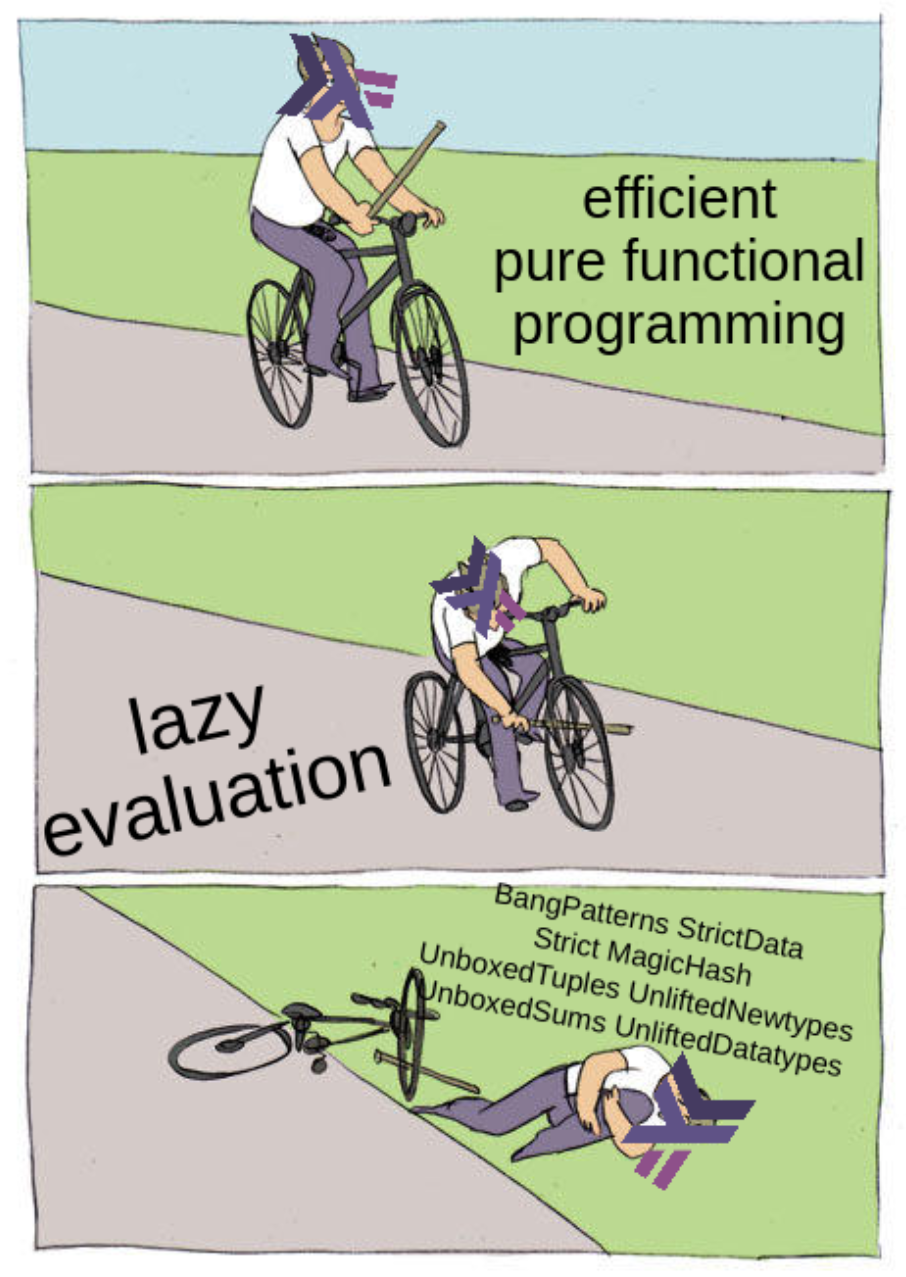
@robinp@mastodon.social · Reply to Abhinav 🌏's post
@abnv could do it with #Haskell, but of the libraries that sound promising
- 1 has a concise API but is experimental and misses tests
- 1 depends on an ancient base
- 1 has a too conservative licence
- 1 where you need to pass contraprovariant subfunctors and then project the result to 1.5D-space
- 1 uses a logging framework monad dep that is not compatible with your stack
- 1 is practical, but has bug that is fixed locally by users who were too busy to publish them
- 1 you need to jailbreak nix
@abnv@fantastic.earth
@kosmikus@functional.cafe
Tomorrow, 2025-02-11, we'll live-stream a new episode of the #Haskell #Unfolder. Edsko and I will discuss the various strategies for deriving instances that GHC offers and their relative strengths and weaknesses. Hope to see you all there! https://www.youtube.com/watch?v=NEUbp2CsuNg&list=PLD8gywOEY4HaG5VSrKVnHxCptlJv2GAn7&index=39
@hackuador@functional.cafe
Talk change for #BFPG tonight. The explicit substitutions talk will be rescheduled. In its place, parser combinators in #Haskell (live-coding a JSON parser from scratch).
Be there or be a lambda cube. https://lu.ma/85i70qns
@Jose_A_Alonso@mathstodon.xyz
@haskell_discussions@mastodon.social
Haskell recap for week 6/2025
https://discu.eu/weekly/haskell/2025/6/
Get RSS feeds and support this bot with the premium plan: https://discu.eu/premium
@haskell_discussions@mastodon.social
Я ☞ Natural transformations as a basis of control flow
https://muratkasimov.art/Ya/Articles/Natural-transformation-as-a-basis-of-control
Discussions: https://discu.eu/q/https://muratkasimov.art/Ya/Articles/Natural-transformation-as-a-basis-of-control
@Jose_A_Alonso@mathstodon.xyz
Turner, Bird, Eratosthenes: An eternal burning thread. ~ Jeremy Gibbons. https://www.cambridge.org/core/journals/journal-of-functional-programming/article/turner-bird-eratosthenes-an-eternal-burning-thread/32E2EDF5D5EAEC95F13D313BC97B86F0 #Haskell #FunctionalProgramming
@haskell_discussions@mastodon.social
2025 Call for nominations for the Haskell Foundation
https://gitlab.haskell.org/hf/meta/-/blob/main/board.md#7-board-membership-lifecycle
Discussions: https://discu.eu/q/https://gitlab.haskell.org/hf/meta/-/blob/main/board.md%237-board-membership-lifecycle
@Jose_A_Alonso@mathstodon.xyz
Readings shared February 8, 2025. https://jaalonso.github.io/vestigium/posts/2025/02/08-readings_shared_02-08-25 #ITP #IsabelleHOL #Haskell #FunctionalProgramming

@jonn@social.doma.dev · Reply to Play Ball and Fight Fascists's post
@cafechatnoir "afternoon workshop type class" – accidental #haskell
@haskell_discussions@mastodon.social
Introducing Haskell Run – A VS Code Extension to Execute Haskell Instantly!
https://marketplace.visualstudio.com/items?itemName=midhunan.haskellrun
Discussions: https://discu.eu/q/https://marketplace.visualstudio.com/items?itemName=midhunan.haskellrun
@DiazCarrete@hachyderm.io
Turner, Bird, Eratosthenes: An eternal burning thread https://www.cambridge.org/core/journals/journal-of-functional-programming/article/turner-bird-eratosthenes-an-eternal-burning-thread/32E2EDF5D5EAEC95F13D313BC97B86F0
@Jose_A_Alonso@mathstodon.xyz
Review of "Haskell in depth" by Vitaly Bragilevsky. ~ Brent Yorgey. https://www.cambridge.org/core/services/aop-cambridge-core/content/view/E8BE1DB3FD80AB7AD92EE979893A10AC/S0956796825000024a.pdf/review_of_haskell_in_depth_by_vitaly_bragilevsky_manning_publications_2021.pdf #Haskell #FunctionalProgramming
@haskell_discussions@mastodon.social
Tricking Haskell into state: how Clash's Signal type works
https://clash-lang.org/blog/0007-signals/
Discussions: https://discu.eu/q/https://clash-lang.org/blog/0007-signals/
@Jose_A_Alonso@mathstodon.xyz
Readings shared February 6, 2025. https://jaalonso.github.io/vestigium/posts/2025/02/06-readings_shared_02-06-25 #ITP #LeanProver #Math #CategoryTheory #Haskell #Python #CommonLisp #Emacs #Elisp #LLMs
@DiazCarrete@hachyderm.io
@Jose_A_Alonso@mathstodon.xyz

@escape_velocity@functional.cafe
I fucking hate cabal #haskell for the inexcusable design decision that all info for a project must be in the cabal file and therefore cabal cannot figure out what modules are part of the project folder structure. Why? Because this means I can’t get extension support for files until I explicitly add the bloody module to the cabal file. When asked about it on the Haskell discord I am told that this is an unfortunate consequence of the above and that it’s on me to use some ugly workaround.
For such a fundamental pain in the UX, the only acceptable response from #cabal devs should be to stuff their pride deep deep down and go back to the fucking drawing board and throw out such hideous design decisions.

@flippac@types.pl · Reply to julesh's post
@julesh I spent a lot of time in freenode #haskell pointing out that no, haskell could go fuck itself re various limitations because the suggestions I was being given were either workaround grade (which, tbf, was usually acknowledged) or attempts to tell me I had an XY problem and Y wasn't "you're using haskell"
Some of them have, at least, improved significantly - but there's also a reason I'm deliberately keeping Nooblog and its successors small enough to piss people off, which is that I absolutely should not be maintaining a language others are building on top of! Cribbing off my design is more than fine by me.
@Jose_A_Alonso@mathstodon.xyz
Readings shared February 4, 2025. https://jaalonso.github.io/vestigium/posts/2025/02/04-readings_shared_02-04-25 #Haskell #Python #CommonLisp
@haskell_discussions@mastodon.social
Type-level interfaces in Haskell and Rust (talk, Functional Conf 2025)
https://youtu.be/vKAuSD0RnmY?si=JG4gHkjmgDSgdCBB
Discussions: https://discu.eu/q/https://youtu.be/vKAuSD0RnmY?si=JG4gHkjmgDSgdCBB
@redmp@recurse.social
this is the best unintentional critique of "make illegal states unrepresentable" I've seen https://lobste.rs/s/wucizv/no_panic_rust_nice_technique_for_systems#c_ysdzf9 tl;dr "shit happens"
@pandoc@fosstodon.org
Evan Silberman wrote an interesting post that describes the process which led to the contribution of the mdoc reader.
https://duckrabbit.tech/articles/mdoc.html
#pandoc #haskell #blogpost
@Jose_A_Alonso@mathstodon.xyz
#Exercitium: Posiciones de las diagonales principales. https://jaalonso.github.io/exercitium/posts/2025/02/04-posiciones_diagonales_principales/ #Haskell #Python #CommonLisp
@Jose_A_Alonso@mathstodon.xyz
Readings shared February 3, 2025. https://jaalonso.github.io/vestigium/posts/2025/02/03-readings_shared_02-03-25 #ITP #LeanProver #IsabelleHOL #Haskell #Python #CommonLisp #Maxima #Math
@abnv@fantastic.earth
Check out my series of #blog posts about writing a fast #Sudoku solver in #Haskell, starting with this post: https://abhinavsarkar.net/posts/fast-sudoku-solver-in-haskell-1/
Comments, boosts and likes appreciated.
@haskell_discussions@mastodon.social
@abnv@fantastic.earth
Over the weekend, I spent a couple of hours #reading through Patrick Thomson's series of blog posts on Recursion Schemes with #Haskell https://blog.sumtypeofway.com/posts/recursion-schemes-part-6.html, and it has been most helpful in understanding the topic. I have tried reading the docs of the eponymous package before, to no avail. That's why I love reading (and writing) #programming tutorials.
I downloaded the posts and converted them to an e-book for offline reading. It was over a hundred pages but it was so engrossing, I couldn't put it down! There are not many blog posts that I could say the same about. Definitely a recommended read if you are interested in #RecursionSchemes and #FunctionalProgramming.
@Jose_A_Alonso@mathstodon.xyz
@haskell_discussions@mastodon.social
my first Haskell project - a random art generator
https://github.com/jamesma100/randomart
Discussions: https://discu.eu/q/https://github.com/jamesma100/randomart
@haskell_discussions@mastodon.social
Midlands Graduate School 2025
https://www.andreipopescu.uk/MGS_Sheffield/MGS2025.html
Discussions: https://discu.eu/q/https://www.andreipopescu.uk/MGS_Sheffield/MGS2025.html
@haskell@fosstodon.org
Registrations for #ZuriHac are open!
@haskell_discussions@mastodon.social
Myth and truth in Haskell asynchronous exceptions
https://kazu-yamamoto.hatenablog.jp/entry/2024/12/04/180338
Discussions: https://discu.eu/q/https://kazu-yamamoto.hatenablog.jp/entry/2024/12/04/180338
@Jose_A_Alonso@mathstodon.xyz
Readings shared January 31, 2025. https://jaalonso.github.io/vestigium/posts/2025/01/31-readings_shared_01-31-25 #Haskell #Python #CommonLisp #SMT
@haskell_discussions@mastodon.social
[Well-Typed] An introduction to Cabal Hooks for package authors
https://www.well-typed.com/blog/2025/01/cabal-hooks/
Discussions: https://discu.eu/q/https://www.well-typed.com/blog/2025/01/cabal-hooks/
@haskell_discussions@mastodon.social
Add safe integral conversions to base · Issue #314 · haskell/core-libraries-committee
https://github.com/haskell/core-libraries-committee/issues/314
Discussions: https://discu.eu/q/https://github.com/haskell/core-libraries-committee/issues/314
@haskell_discussions@mastodon.social
Using the Tardis Monad in a compiler optimisation pass.
https://icicle-lang.github.io/posts/2025-02-01-a-time-travelling-optimisation.html
Discussions: https://discu.eu/q/https://icicle-lang.github.io/posts/2025-02-01-a-time-travelling-optimisation.html
@Jose_A_Alonso@mathstodon.xyz
#Exercitium: Ordenación por el máximo. https://jaalonso.github.io/exercitium/posts/2025/01/29-ordenados_por_maximo/ #Haskell #Python #CommonLisp
@haskell_discussions@mastodon.social
@lobsters@mastodon.social
Hell (Haskell shell) via @hadronized https://lobste.rs/s/f6frhd #haskell #programming
https://chrisdone.com/posts/hell-year-in-review-2025/
@haskell_discussions@mastodon.social
Blazing-Fast Directory Tree Traversal: Haskell Streamly Beats Rust
https://www.youtube.com/watch?v=voy1iT2E4bk
Discussions: https://discu.eu/q/https://www.youtube.com/watch?v=voy1iT2E4bk
@abnv@fantastic.earth
Check out my series of #blog posts about writing a fast #Sudoku solver in #Haskell, starting with this post: https://abhinavsarkar.net/posts/fast-sudoku-solver-in-haskell-1/
Comments, boosts and likes appreciated.
@haskell_discussions@mastodon.social
Haskell recap for week 4/2025
https://discu.eu/weekly/haskell/2025/4/
Get RSS feeds and support this bot with the premium plan: https://discu.eu/premium
@haskell_discussions@mastodon.social
Advent of Code in Haskell: Reflections and write-ups for all 25 days of 2024
https://blog.jle.im/entry/advent-of-code-2024.html
Discussions: https://discu.eu/q/https://blog.jle.im/entry/advent-of-code-2024.html
@haskell_discussions@mastodon.social

@jleigh@recurse.social
Hey all! I'm due for an (re-)introduction: I'm Jack, an engineer in the NYC area from a firmware & cybersecurity background, currently working in something like hardware-software co-design.
Technical work is often with #rust #kicad #python #verilog #c, and in all-too-rare moments stuff like #haskell #forth #agda and #prolog
I've never been much for social media, usually preferring to keep interests local: a better-detailed #introduction to follow as I figure this out 🙂
@Jose_A_Alonso@mathstodon.xyz
Readings shared January 25, 2025. https://jaalonso.github.io/vestigium/posts/2025/01/25-readings_shared_01-25-25 #ITP #Agda #Coq #Rocq #IsabelleHOL #Math #FunctionalProgramming #Haskell #JuliaLang
@haskell_discussions@mastodon.social
Use Monoids for Construction
https://reasonablypolymorphic.com/blog/use-monoids/index.html
Discussions: https://discu.eu/q/https://reasonablypolymorphic.com/blog/use-monoids/index.html
@Jose_A_Alonso@mathstodon.xyz
Use monoids for construction. ~ Sandy Maguire. https://reasonablypolymorphic.com/blog/use-monoids/index.html #Haskell #FunctionalProgramming
@Jose_A_Alonso@mathstodon.xyz
Readings shared January 24, 2025. https://jaalonso.github.io/vestigium/posts/2025/01/24-readings_shared_01-24-25 #ITP #IsabelleHOL #Haskell #FunctionalProgramming #AI #LLMs #GenerativeAI #NeuroSymbolicAI
@abnv@fantastic.earth
After seven years of meticulously formatting and aligning all the source code of my #Haskell static site generator by hand, I finally moved to an auto-formatter today (Ormolu).
@pmidden@fosstodon.org
#haskell's "monoidmap" is fantastic! Getting a histogram from a list is just "foldMap (`MonoidMap.singleton` mempty)" (very implicit, using the "Sum" monoid)

@corpsmoderne@mamot.fr · Reply to Haskell Weekly's post
@haskell_discussions I could predict that the comments would be full of "ThIs Is NoT tHe ReAl QuIcKsOrT!!!" XD #haskell
@haskell_discussions@mastodon.social
Quicksort [Computerphile]
Discussions: https://discu.eu/q/https://youtu.be/OKc2hAmMOY4
@haskell_discussions@mastodon.social
New SHA256 bindings supporting HMAC key reuse
https://hackage.haskell.org/package/sha256
Discussions: https://discu.eu/q/https://hackage.haskell.org/package/sha256

@abuseofnotation@mathstodon.xyz
At the #agda headquaters:
"OK, guys, so our user pool consists only of folks who already know #haskell and #emacs Is there a way to narrow it down more?"
"I got it, what if we allow unicode, so they also have to also know #latex ?"
"Brilliant!"
(just kidding, agda is very cool (hope to learn it someday))
@abuseofnotation@mathstodon.xyz
At the #agda headquaters:
"OK, guys, so our user pool consists only of folks who already know #haskell and #emacs Is there a way to narrow it down more?"
"I got it, what if we allow unicode, so they also have to also know #latex ?"
"Brilliant!"
(just kidding, agda is very cool (hope to learn it someday))
@Jose_A_Alonso@mathstodon.xyz
Tracing foreign function invocations. ~ Edsko de Vries, Zubin Duggal, Matthew Pickering. https://well-typed.com/blog/2025/01/trace-foreign-calls/ #Haskell #FunctionalProgramming
@Jose_A_Alonso@mathstodon.xyz
Supercede’s house style for Haskell. ~ Jezen Thomas. https://jezenthomas.com/2025/01/style-guide/ #Haskell #FunctionalProgramming
@Jose_A_Alonso@mathstodon.xyz
Modeling dataframes in Haskell using higher-kinded types. ~ Laurent P. René de Cotret. https://laurentrdc.xyz/posts/HKTGenerics.html #Haskell #FunctionalProgramming
@Jose_A_Alonso@mathstodon.xyz
Making my life easier with two GADTs. ~ borar. http://systema10.org/posts/making-my-life-easier-with-two-gadts.html #Haskell #FunctionalProgramming
@Jose_A_Alonso@mathstodon.xyz
Making my life harder with GADTs. Matt Parsons. https://www.parsonsmatt.org/2025/01/21/making_my_life_harder_with_gadts.html #Haskell #FunctionalProgramming
@Jose_A_Alonso@mathstodon.xyz
Making my life easier with GADTs. ~ Lucas Escot. https://acatalepsie.fr/posts/making-my-life-easier-with-gadts.html #Haskell #FunctionalProgramming
@Jose_A_Alonso@mathstodon.xyz
Fast Haskell, Redux. ~ Jared Tobin. https://jtobin.io/fast-haskell-redux #Haskell #FunctionalProgramming
@Jose_A_Alonso@mathstodon.xyz
A new perspective on lenses. ~ Sandy Maguire. https://reasonablypolymorphic.com/blog/code-lenses/ #Haskell #FunctionalProgramming
@haskell_discussions@mastodon.social
Hyperbole: Haskell interactive serverside web framework inspired by Htmx, Elm
https://github.com/seanhess/hyperbole
Discussions: https://discu.eu/q/https://github.com/seanhess/hyperbole
@haskell_discussions@mastodon.social
Cabal cannot build scotty project on Windows because of zlib
https://hackage.haskell.org/package/scotty
Discussions: https://discu.eu/q/https://hackage.haskell.org/package/scotty
@Jose_A_Alonso@mathstodon.xyz
Readings shared January 22, 2025. https://jaalonso.github.io/vestigium/posts/2025/01/22-readings_shared_01-22-25 #ITP #IsabelleHOL #Coq #Rocq #LeanProver #FunctionalProgramming #Haskell #Python #Math #AI
@haskell_discussions@mastodon.social
Haskell Interlude 61: Sam Lindley
https://haskell.foundation/podcast/61/
Discussions: https://discu.eu/q/https://haskell.foundation/podcast/61/
@haskell_discussions@mastodon.social
A Proper x86 Assembler in Haskell Using the Escardó-Oliva Functional
http://blog.vmchale.com/article/escardo-oliva-functional
Discussions: https://discu.eu/q/http://blog.vmchale.com/article/escardo-oliva-functional
@haskell_discussions@mastodon.social
Update: Jaxpr / Jax interop Haskell Library (named Neptune)
https://github.com/mzguntalan/neptune
Discussions: https://discu.eu/q/https://github.com/mzguntalan/neptune
@haskell_discussions@mastodon.social
Making my life easier with two GADTs
http://systema10.org/posts/making-my-life-easier-with-two-gadts.html
Discussions: https://discu.eu/q/http://systema10.org/posts/making-my-life-easier-with-two-gadts.html
@Jose_A_Alonso@mathstodon.xyz
@Jose_A_Alonso@mathstodon.xyz
Advent of Code 2024: Haskell solution reflections for all 25 days. ~ Justin Le. https://blog.jle.im/entry/advent-of-code-2024.html #Haskell #FunctionalProgramming
@haskell_discussions@mastodon.social
@haskell_discussions@mastodon.social
Making my life easier with GADTs
https://acatalepsie.fr/posts/making-my-life-easier-with-gadts.html
Discussions: https://discu.eu/q/https://acatalepsie.fr/posts/making-my-life-easier-with-gadts.html
@haskell_discussions@mastodon.social
GHC String Interpolation Survey Open!
https://discourse.haskell.org/t/ghc-string-interpolation-survey-open/11245
Discussions: https://discu.eu/q/https://discourse.haskell.org/t/ghc-string-interpolation-survey-open/11245
@haskell_discussions@mastodon.social
Documentation on using Renovate with haskell-actions
https://github.com/haskell-actions/setup/issues/111
Discussions: https://discu.eu/q/https://github.com/haskell-actions/setup/issues/111

@wim_v12e@merveilles.town
Minor #Haskell #ghc annoyance of the day is this warning:
"warning: [GHC-63394] [-Wx-partial]
In the use of ‘head’
(imported from Prelude, but defined in GHC.List):
"This is a partial function, it throws an error on empty lists. Use pattern matching or Data.List.uncons instead. Consider refactoring to use Data.List.NonEmpty."
I don't want this is on by default. If I want to call `head` on a list it is my problem that this might fail.
Luckily, the fix is easy:
{-# OPTIONS_GHC -Wno-x-partial #-}
@Jose_A_Alonso@mathstodon.xyz
@haskell_discussions@mastodon.social
SupGen is program synthesizer that outperforms SOTA alternatives using the HVM (which is now in Haskell!)
https://www.youtube.com/watch?v=GddkKIhDE2c
Discussions: https://discu.eu/q/https://www.youtube.com/watch?v=GddkKIhDE2c
@haskell_discussions@mastodon.social
Haskell recap for week 3/2025
https://discu.eu/weekly/haskell/2025/3/
Get RSS feeds and support this bot with the premium plan: https://discu.eu/premium
@Jose_A_Alonso@mathstodon.xyz
#Exercitium: Primos consecutivos con media capicúa. https://jaalonso.github.io/exercitium/posts/2025/01/20-primos_consecutivos_con_media_capicua/ #Haskell #Python #Matemáticas
@Jose_A_Alonso@mathstodon.xyz
Interpreting Brainfuck in Haskell. ~ Abhinav Sarkar. https://abhinavsarkar.net/posts/brainfuck-interpreter/ #Haskell #FunctionalProgramming
@Jose_A_Alonso@mathstodon.xyz
Hasochism: The pleasure and pain of dependently typed Haskell programming. ~ Sam Lindley, Conor McBride. https://personal.cis.strath.ac.uk/conor.mcbride/pub/hasochism.pdf #Haskell #FunctionalProgramming
@haskell_discussions@mastodon.social
Hasochism: The Pleasure and Pain of Dependently Typed Haskell Programming
https://personal.cis.strath.ac.uk/conor.mcbride/pub/hasochism.pdf
Discussions: https://discu.eu/q/https://personal.cis.strath.ac.uk/conor.mcbride/pub/hasochism.pdf
@Jose_A_Alonso@mathstodon.xyz
Readings shared January 19, 2025. https://jaalonso.github.io/vestigium/posts/2025/01/19-readings_shared_01-19-25 #ITP #LeanProver #FunctionalProgramming #Haskell #AI #LLMs
@haskell_discussions@mastodon.social
Interpreting Brainfuck in Haskell
https://abhinavsarkar.net/posts/brainfuck-interpreter/
Discussions: https://discu.eu/q/https://abhinavsarkar.net/posts/brainfuck-interpreter/
@haskell_discussions@mastodon.social
Porting PFP from Haskell to OCaml
https://github.com/lewis-carson/PFPCaml
Discussions: https://discu.eu/q/https://github.com/lewis-carson/PFPCaml
@Jose_A_Alonso@mathstodon.xyz
A new perspective on lenses. ~ Sandy Maguire. https://reasonablypolymorphic.com/blog/code-lenses/index.html #Haskell #FunctionalProgramming
@abnv@fantastic.earth
Writing an #interpreter for #Brainfuck is almost a rite of passage for any programming language implementer, and it’s my turn now. In this post, I write not one but four Brainfuck #interpreters in #Haskell: https://abhinavsarkar.net/posts/brainfuck-interpreter/
Please boost for reach. If you have any questions or comments, please reply to this post.
@haskell_discussions@mastodon.social
Haskell: A Great Procedural Language
https://entropicthoughts.com/haskell-procedural-programming
Discussions: https://discu.eu/q/https://entropicthoughts.com/haskell-procedural-programming
@Jose_A_Alonso@mathstodon.xyz
Readings shared January 18, 2025. https://jaalonso.github.io/vestigium/posts/2025/01/18-readings_shared_01-18-25 #Haskell #Python #CommonLisp #ITP #Coq #Rocq #Logic #Math #AI #MachineLearning #LLMs
@Jose_A_Alonso@mathstodon.xyz
@pmidden@fosstodon.org
@Jose_A_Alonso@mathstodon.xyz
Listopia: List manipulation library inspired by Haskell package Data.List. ~ Ito Dimercel. https://github.com/Dimercel/listopia #CommonLisp #Haskell
@haskell_discussions@mastodon.social
Call for Nominations: Haskell.org Committee
https://www.haskell.org/haskell-org-committee/
Discussions: https://discu.eu/q/https://www.haskell.org/haskell-org-committee/
@Jose_A_Alonso@mathstodon.xyz
Readings shared January 17, 2025. https://jaalonso.github.io/vestigium/posts/2025/01/17-readings_shared_01-17-25 #Haskell #Python #ITP #Coq #Rocq #LeanProver #Logic #Math #AI #LLMs #Reasoning
@Jose_A_Alonso@mathstodon.xyz
#Exercitium: Determinación de los elementos minimales. https://jaalonso.github.io/exercitium/posts/2025/01/17-elementos_minimales/ #Haskell #Python #DíaInternacionalDeLasMatemáticas
@Jose_A_Alonso@mathstodon.xyz
#MULCIA: Research software engineer at Epic. https://tinyurl.com/23jucqu4 #Job #CompSci #Haskell
@Jose_A_Alonso@mathstodon.xyz
Readings shared January 16, 2025. https://jaalonso.github.io/vestigium/posts/2025/01/16-readings_shared_01-16-25 #ITP #LeanProver #Agda #Logic #Math #SAT #SMT #FunctionalProgramming #Haskell #Python #Matemáticas #AI #LLMs
@haskell_discussions@mastodon.social
Fast Haskell, Redux
https://jtobin.io/fast-haskell-redux
Discussions: https://discu.eu/q/https://jtobin.io/fast-haskell-redux
@haskell_discussions@mastodon.social
Now added initial support for Haskell - auto-generate Haskell data models from Scala case classes - early preview, will extend further in hackathon
https://codeberg.org/jjba23/dmtscala
Discussions: https://discu.eu/q/https://codeberg.org/jjba23/dmtscala
@Jose_A_Alonso@mathstodon.xyz
#Exercitium: Suma de los números amigos menores que n. https://jaalonso.github.io/exercitium/posts/2025/01/16-suma_de_numeros_amigos_menores_que_n/ #Haskell #Python #Matemáticas
@Jose_A_Alonso@mathstodon.xyz
#Exercitium: Sucesión de números amigos. https://jaalonso.github.io/exercitium/posts/2025/01/15-sucesion_de_numeros_amigos/ #Haskell #Python #Matemáticas
@Jose_A_Alonso@mathstodon.xyz
The Haskell Unfolder Episode 38: tasting and testing CUDA (map, fold, scan). ~ Edsko de Vries, Andres Löh. https://www.youtube.com/live/ww4C3jlsesw?si=615ge7qYP7GBVp2A #Haskell #FunctionalProgramming


@LiraK@tech.lgbt
 https://lira.kraamwinkel.be/articles/haskell_ffi
A while ago I wrote about the Foreign Function Interface in Haskell and how to make a desktop application with Qt6.
The following topics are covered:
foreign import to call C or C++-functions (without name mangling);foreign export to call Haskell-functions in C or C++GStorable);MonadReader (IORef [a]) m is better for storing pointers than MonadState [a] m;ccall and capiI already shared it on my previous account back then, but I am posting it here now too :)
@Jose_A_Alonso@mathstodon.xyz
An agda2hs-compatible representation of exact real arithmetic. ~ Viktor Csimma. https://csimmaviktor.web.elte.hu/acorn.pdf #ITP #Agda #FunctionalProgramming #Haskell
@Jose_A_Alonso@mathstodon.xyz
Readings shared January 15, 2025. https://jaalonso.github.io/vestigium/posts/2025/01/15-readings_shared_01-15-25 #ITP #LeanProver #Logic #Math #CompSci #FunctionalProgramming #Haskell
@haskell_discussions@mastodon.social
The Haskell Unfolder Episode 38: tasting and testing CUDA (map, fold, scan)
https://www.youtube.com/watch?index=38&list=PLD8gywOEY4HaG5VSrKVnHxCptlJv2GAn7&v=ww4C3jlsesw
Discussions: https://discu.eu/q/https://www.youtube.com/watch?index=38&list=PLD8gywOEY4HaG5VSrKVnHxCptlJv2GAn7&v=ww4C3jlsesw
@haskell_discussions@mastodon.social
Research Software Engineer at Epic
https://discourse.haskell.org/t/research-software-engineer-at-epic/11202
Discussions: https://discu.eu/q/https://discourse.haskell.org/t/research-software-engineer-at-epic/11202
@DiazCarrete@hachyderm.io
Hit the translate button and read about some interesting-looking #Haskell libraries.
https://zenn.dev/konn/articles/2025-01-oss-from-previous-job
@Jose_A_Alonso@mathstodon.xyz
#Exercitium: Sucesión de números amigos. https://jaalonso.github.io/exercitium/posts/2025/01/15-sucesion_de_numeros_amigos/ #Haskell #Matemáticas
@Jose_A_Alonso@mathstodon.xyz
Readings shared January 14, 2025. https://jaalonso.github.io/vestigium/posts/2025/01/14-readings_shared_01-14-25 #ITP #IsabelleHOL #Coq #Rocq #Haskell #FunctionalProgramming
@LiraK@tech.lgbt
https://lira.kraamwinkel.be/articles/haskell_ffi
A while ago I wrote about the Foreign Function Interface in Haskell and how to make a desktop application with Qt6.
The following topics are covered:
foreign import to call C or C++-functions (without name mangling);foreign export to call Haskell-functions in C or C++GStorable);MonadReader (IORef [a]) m is better for storing pointers than MonadState [a] m;ccall and capiI already shared it on my previous account back then, but I am posting it here now too :)
@kosmikus@functional.cafe
The #Haskell #Unfolder is back! In tomorrow's episode, we'll take a look at CUDA and write some simple functions in it. We'll also show how to interface from Haskell to CUDA and how to use QuickCheck to test CUDA functions from Haskell.
https://www.youtube.com/watch?v=ww4C3jlsesw&list=PLD8gywOEY4HaG5VSrKVnHxCptlJv2GAn7&index=38
@Jose_A_Alonso@mathstodon.xyz
Hell (Haskell shell): Year in review. ~ Chris Done. https://chrisdone.com/posts/hell-year-in-review-2025/ #Haskell #FunctionalProgramming
@haskell_discussions@mastodon.social
@haskell_discussions@mastodon.social
Haskell recap for week 2/2025
https://discu.eu/weekly/haskell/2025/2/
Get RSS feeds and support this bot with the premium plan: https://discu.eu/premium

@lionhairdino@mastodon.social
하스켈 공부를 시작하고, 펑터를 슬슬 쓰기 시작하면서, Applicative 로 넘어갈 무렵에 볼만한 글입니다. 컨텍스트란 말이 편해지면, 펑터 다음 진도에 도움이 많이 됩니다.
최근 펑터를 공부하면서, 펑터가 달리 보여 5년전 글의 컨텍스트, Applicative, Traversable 내용을 보강해 봤습니다.
https://lionhairdino.github.io/posts/2020-07-02-Context.html
@Jose_A_Alonso@mathstodon.xyz
@lionhairdino@mastodon.social
예전 펑터 글에 "펑터 값을 프리미티브한 값처럼 쓰고 싶다"라는 목표를 먼저 세우고, `<$>`와 `<*>`등을 살펴보는 내용을 추가했습니다.
https://lionhairdino.github.io/posts/2023-03-09-functor.html
@DiazCarrete@hachyderm.io
Trying to learn persistent/esqueleto
https://www.yesodweb.com/book/persistent
https://hackage.haskell.org/package/persistent
persistent-postgresql https://hackage.haskell.org/package/persistent-postgresql
the Persistent entity syntax https://hackage.haskell.org/package/persistent-2.14.6.3/docs/Database-Persist-Quasi.html
esqueleto https://hackage.haskell.org/package/esqueleto


@lionhairdino@mastodon.social
예전 펑터 글에 "펑터 값을 프리미티브한 값처럼 쓰고 싶다"라는 목표를 먼저 세우고, `<$>`와 `<*>`등을 살펴보는 내용을 추가했습니다.
https://lionhairdino.github.io/posts/2023-03-09-functor.html
@Jose_A_Alonso@mathstodon.xyz
@Jose_A_Alonso@mathstodon.xyz
Alpha beta pruning with the selection monad. ~ Johannes Hartmann, Jeremy Gibbons. https://trendsfp.github.io/abstracts/paper-028.pdf #Haskell #FunctionalProgramming
@Jose_A_Alonso@mathstodon.xyz
Shallowly embedded functions. ~ Mart Lubbers, Pieter Koopman, Niek Janssen. https://trendsfp.github.io/abstracts/paper-007.pdf #Haskell #FunctionalProgramming
@Jose_A_Alonso@mathstodon.xyz
Using GHC core to normalise student programs. ~ Matilda Blomqvist, Alex Gerdes. https://trendsfp.github.io/abstracts/paper-012.pdf #Haskell #FunctionalProgramming
@Jose_A_Alonso@mathstodon.xyz
On the correctness of Barron and Strachey’s cartesian product function. ~ Wouter Swierstra, Jason Hemann. https://trendsfp.github.io/abstracts/paper-006.pdf #Haskell #FunctionalProgramming #ITP #Agda
@Jose_A_Alonso@mathstodon.xyz
Categories and Haskell (An introduction to the mathematics behind modern functional programming). ~ Jan-Willem Buurlage. https://raw.githubusercontent.com/jwbuurlage/category-theory-programmers/master/doc/categories_for_programmers.pdf #CategoryTheory #Haskell #FunctionalProgramming
@Jose_A_Alonso@mathstodon.xyz
Readings shared January 10, 2025. https://jaalonso.github.io/vestigium/posts/2025/01/10-readings_shared_01-10-25 #ITP #LeanProver #Logic #Math #Haskell #Python #ASP #LogicProgramming #AI #NeuroSymbolicAI #LLMs
@Jose_A_Alonso@mathstodon.xyz
#Exercitium: Máxima suma de caminos en un triángulo. https://jaalonso.github.io/exercitium/posts/2025/01/10-maxima_suma_de_caminos_en_un_triangulo/ #Haskell #Python #Matemáticas
@haskell_discussions@mastodon.social
[ANN] Yolc - a Haskell-powered, safe, expressive, fun language for Ethereum
@haskell_discussions@mastodon.social
@Jose_A_Alonso@mathstodon.xyz
@haskell_discussions@mastodon.social
Case Study — Using a JavaScript component inside a Haskell application
https://blog.haskell.org/case-study-foreign-integration-js-browser/
Discussions: https://discu.eu/q/https://blog.haskell.org/case-study-foreign-integration-js-browser/
@haskell@fosstodon.org · Reply to HaskellOrg's post
Update n°40 from the GHC team at IOG
https://engineering.iog.io/2025-01-09-ghc-update/
Highlights:
• Luite finalized the patch adding compiler flags to to switch off speculative evaluation.
• Sylvain worked on bootstrapping GHC with Cabal.
@Jose_A_Alonso@mathstodon.xyz
Using a JavaScript component inside a Haskell application. ~ Mateusz Goślinowski. https://blog.haskell.org/case-study-foreign-integration-js-browser/ #Haskell #FunctionalProgramming #JavaScript
@haskell@fosstodon.org
New post on the #Haskell blog: “Case Study — Using a JavaScript component inside a Haskell application”
https://blog.haskell.org/case-study-foreign-integration-js-browser/
@jonn@social.doma.dev · Reply to Jons Mostovojs's post
@tolmasky if I had to implement reflection in Lean4 or Agda, I would try to mimic #Haskell's typeable.
But also, I think there must be a very important point here! In dependently typed languages, entities can have more than one type!
(frac 1 2) : Frac 2 4, but also (frac 1 2) : Frac 4 8, for instance.
[1] : ListLE 1, but also [1]: ListLE 42.
So, perhaps the whole idea of general reflaction is defeated by this property. And this is why #haskell offers superior reflection[1]. Note that #Typeable is in #GHC itself!
I don't know if I'm mansplaining here or if you're aware of haskell's Typeable, but here is a simple demo of its capabilities: https://github.com/cognivore/typeable-haskell-demo/blob/main/app/Main.hs
In #Lean, I would emulate it by defining asking the user to provide explict instances over an enum, just as you wrote! The existential quantification trick can be done in #Lean by carrying the instance inside a structure that ties the knot between the type and an entity which has this type:
```
structure Stuff where
α : Type
val : α
inst : Reflect α
```
You won't be able to construct it unless α is Reflect.
* * *
[1]: https://hackage.haskell.org/package/base-4.21.0.0/docs/Type-Reflection.html#t:TypeRep
@haskell_discussions@mastodon.social
GHC 9.12 & Cabal 3.14 releases
https://blog.haskell.org/ghc-9-12-cabal-3-14/
Discussions: https://discu.eu/q/https://blog.haskell.org/ghc-9-12-cabal-3-14/
@haskell_discussions@mastodon.social
Haskell recap for week 1/2025
https://discu.eu/weekly/haskell/2025/1/
Get RSS feeds and support this bot with the premium plan: https://discu.eu/premium
@Jose_A_Alonso@mathstodon.xyz
Readings shared January 4, 2025. https://jaalonso.github.io/vestigium/posts/2025/01/04-readings_shared_01-04-25 #ITP #IsabelleHOL #LeanProver #HOL_Light #Mizar #Math #Logic #Haskell #Python
@haskell_discussions@mastodon.social
McHale (2024) Streaming Compression via Laziness
http://vmchale.com/static/serve/lazy-c-api-streaming.pdf
Discussions: https://discu.eu/q/http://vmchale.com/static/serve/lazy-c-api-streaming.pdf
@haskell@fosstodon.org
GHC 9.12 & Cabal 3.14 released!
Read the announcement at https://blog.haskell.org/ghc-9-12-cabal-3-14/

@abnv@fantastic.earth
In my quest of solving #AdventOfCode problems in interesting ways, this time I solved the 2020 problem "Seating System" with comonads and stencils in #Haskell. Read my latest #blog post about it: https://abhinavsarkar.net/posts/solving-aoc20-seating-system/
@haskell_discussions@mastodon.social
Solving Advent of Code “Seating System” with Comonads and Stencils
https://abhinavsarkar.net/posts/solving-aoc20-seating-system/
Discussions: https://discu.eu/q/https://abhinavsarkar.net/posts/solving-aoc20-seating-system/
@haskell_discussions@mastodon.social
Policy regarding taking over Hackage packages
https://discourse.haskell.org/t/policy-regarding-taking-over-hackage-packages/
Discussions: https://discu.eu/q/https://discourse.haskell.org/t/policy-regarding-taking-over-hackage-packages/
@abnv@fantastic.earth
In my quest of solving #AdventOfCode problems in interesting ways, this time I solved the 2020 problem "Seating System" with comonads and stencils in #Haskell. Read my latest #blog post about it: https://abhinavsarkar.net/posts/solving-aoc20-seating-system/
@abnv@fantastic.earth
In my quest of solving #AdventOfCode problems in interesting ways, this time I solved the 2020 problem "Seating System" with comonads and stencils in #Haskell. Read my latest #blog post about it: https://abhinavsarkar.net/posts/solving-aoc20-seating-system/
@lionhairdino@mastodon.social
@Jose_A_Alonso@mathstodon.xyz
#Exercitium: Caminos en un triángulo. https://jaalonso.github.io/exercitium/posts/2025/01/04-caminos_en_un_triangulo/ #Haskell #Python #Matemáticas
@Jose_A_Alonso@mathstodon.xyz
Readings shared January 3, 2025. https://jaalonso.github.io/vestigium/posts/2025/01/03-readings_shared_01-03-25 #ITP #Lean4 #IsabelleHOL #Coq #Rocq #Math #FunctionalProgramming #OCaml #Haskell #Python #AI #MachineLearning
@Jose_A_Alonso@mathstodon.xyz
#Exercitium: Mayor órbita de la sucesión de Collatz. https://jaalonso.github.io/exercitium/posts/2025/01/03-mayor_orbita_de_la_sucesion_de_collatz/ #Haskell #Python #DíaInternacionalDeLasMatemáticas
@Jose_A_Alonso@mathstodon.xyz
Parallel SAT solver. ~ Yixuan Li, Jiaqian Li, Phoebe Wang. https://www.cs.columbia.edu/~sedwards/classes/2024/4995-fall/reports/tsp-sat-report.pdf #Haskell #FunctionalProgramming
@Jose_A_Alonso@mathstodon.xyz
Parallel QuickHull algorithm in Haskell. ~ George Morgulis, Henry Lin. https://www.cs.columbia.edu/~sedwards/classes/2024/4995-fall/reports/Convex_Hull-report.pdf #Haskell #FunctionalProgramming
@Jose_A_Alonso@mathstodon.xyz
Modular probabilistic programming with algebraic effects. ~ Oliver Goldstein, Ohad Kammar. https://arxiv.org/abs/2412.19826 #Haskell #FunctionalProgramming
@Jose_A_Alonso@mathstodon.xyz
Readings shared January 2, 2025. https://jaalonso.github.io/vestigium/posts/2025/01/02-readings_shared_01-02-25 #Haskell #Python #Math
@Jose_A_Alonso@mathstodon.xyz
#Exercitium: Ternas pitagóricas con suma dada. https://jaalonso.github.io/exercitium/posts/2025/01/02-ternas_pitagoricas_con_suma_dada/ #Haskell #Python #Matemáticas
@Jose_A_Alonso@mathstodon.xyz
Readings shared January 1, 2025. https://jaalonso.github.io/vestigium/posts/2025/01/01-readings_shared_01-01-25 #ITP #LeanProver #Lean4 #Mizar #Math #Haskell #Python
@haskell_discussions@mastodon.social
[Design] Dataframes in Haskell
https://discourse.haskell.org/t/design-dataframes-in-haskell/11108/2
Discussions: https://discu.eu/q/https://discourse.haskell.org/t/design-dataframes-in-haskell/11108/2
@haskell_discussions@mastodon.social
@haskell_discussions@mastodon.social
Aztecs: A type-safe and friendly ECS for Haskell
https://github.com/matthunz/aztecs
Discussions: https://discu.eu/q/https://github.com/matthunz/aztecs
@Jose_A_Alonso@mathstodon.xyz
#Exercitium: Suma de múltiplos de 3 o de 5. https://jaalonso.github.io/exercitium/posts/2022/02/09-suma_de_multiplos_de_3_o_de_5/ #Haskell #Python #matematicas
@abnv@fantastic.earth
Just in time, my #Haskell special #linkblog for December 2024: https://notes.abhinavsarkar.net/2024/links-12.
@haskell_discussions@mastodon.social
erebe/greenclip: Simple clipboard manager to be integrated with rofi
https://github.com/erebe/greenclip
Discussions: https://discu.eu/q/https://github.com/erebe/greenclip
@haskell_discussions@mastodon.social
Exported for tests only: Precise control over API visibility with custom warnings
@abnv@fantastic.earth
Just in time, my #Haskell special #linkblog for December 2024: https://notes.abhinavsarkar.net/2024/links-12.

@mangoiv@functional.cafe
#haskell hackage now has syntax highlighting 🥹
See e.g.
https://hackage.haskell.org/package/htree
@Jose_A_Alonso@mathstodon.xyz
Readings shared December 30, 2024. https://jaalonso.github.io/vestigium/posts/2024/12/30-readings_shared_12-30-24 #ITP #Coq #Rocq #FunctionalProgramming #Haskell #CommonLisp #EmacsLisp #Emacs #Logic #Math #CategoryTheory #AI
@haskell_discussions@mastodon.social
Haskell recap for week 52/2024
https://discu.eu/weekly/haskell/2024/52/
Get RSS feeds and support this bot with the premium plan: https://discu.eu/premium
@haskell_discussions@mastodon.social
Overloading the lambda abstraction in Haskell
https://acatalepsie.fr/posts/overloading-lambda
Discussions: https://discu.eu/q/https://acatalepsie.fr/posts/overloading-lambda
@haskell_discussions@mastodon.social
Overloading the lambda abstraction in Haskell
https://acatalepsie.fr/posts/overloading-lambda
Discussions: https://discu.eu/q/https://acatalepsie.fr/posts/overloading-lambda
@Jose_A_Alonso@mathstodon.xyz
Generalized Dijkstra in Haskell. ~ Lucas Escot. https://acatalepsie.fr/posts/haskell-dijkstra.html #Haskell #FunctionalProgramming
@Jose_A_Alonso@mathstodon.xyz
@haskell_discussions@mastodon.social
Category Theory Illustrated
https://abuseofnotation.github.io/category-theory-illustrated/
Discussions: https://discu.eu/q/https://abuseofnotation.github.io/category-theory-illustrated/
@Jose_A_Alonso@mathstodon.xyz
#Exercitium: Exponente en la factorización. https://jaalonso.github.io/exercitium/posts//2022/02/08-exponente_en_la_factorizacion/ #Haskell #Python #Matemáticas
@haskell_discussions@mastodon.social
Excellent Haskell course!
https://www.youtube.com/@haskellhutt
Discussions: https://discu.eu/q/https://www.youtube.com/%40haskellhutt
@Jose_A_Alonso@mathstodon.xyz
Readings shared December 26, 2024. https://jaalonso.github.io/vestigium/posts/2024/12/26-readings_shared_12-26-24 #Haskell #Python #Math
@Jose_A_Alonso@mathstodon.xyz
#Exercitium: Reconocimiento de potencias de 4. https://jaalonso.github.io/exercitium/posts/2022/02/04-reconocimiento_de_potencias_de_4/ #Haskell #Python
@Jose_A_Alonso@mathstodon.xyz
Readings shared December 25, 2024. https://jaalonso.github.io/vestigium/posts/2024/12/25-readings_shared_12-25-24 #Haskell #Python #Math #ITP #LeanProver #Lean4 #Lisp #Programming
@Jose_A_Alonso@mathstodon.xyz
Readings shared December 24, 2024. https://jaalonso.github.io/vestigium/posts/2024/12/24-readings_shared_12-24-24 #ITP #Agda #Haskell #FunctionalProgramming #Haskell #Python #AI #LLMs #Math
@Jose_A_Alonso@mathstodon.xyz
#Exercitium: El teorema de Navidad de Fermat. https://www.glc.us.es/~jalonso/exercitium/14-dic-23/ #Haskell #Python #Math
@lionhairdino@mastodon.social
@haskell_discussions@mastodon.social
Show HN: I Ported GHC Haskell Compiler to Windows 11 ARM. MC Gift
https://gitlab.haskell.org/ghc/ghc/-/issues/24603#note_601980
Discussions: https://discu.eu/q/https://gitlab.haskell.org/ghc/ghc/-/issues/24603%23note_601980
@Jose_A_Alonso@mathstodon.xyz
#Exercitium: Producto de los elementos de la diagonal principal. https://jaalonso.github.io/exercitium/posts/2022/02/03-producto_de_los_elementos_de_la_diagonal_principal/ #Haskell #Python #DíaInternacionalDeLasMatemáticas
@Jose_A_Alonso@mathstodon.xyz
Compiling dependent type preconditions to runtime checks with Agda2Hs. ~ Jakob Naucke. https://repository.tudelft.nl/file/File_b39e0ab0-422a-48db-8ce4-cef2e783c3cc #ITP #Agda #Haskell #FunctionalProgramming
@haskell_discussions@mastodon.social
How to collect performance statistics with Cabal
https://blog.haskell.org/how-to-collect-performance-statistics-with-cabal/
Discussions: https://discu.eu/q/https://blog.haskell.org/how-to-collect-performance-statistics-with-cabal/
@haskell_discussions@mastodon.social
Haskell recap for week 51/2024
https://discu.eu/weekly/haskell/2024/51/
Get RSS feeds and support this bot with the premium plan: https://discu.eu/premium
@haskell@fosstodon.org
The Cabal Manual now has a guide on how to collect performance statistics of Haskell applications. Read more at
https://blog.haskell.org/how-to-collect-performance-statistics-with-cabal/
@haskell@fosstodon.org
#Haskell Interlude's guest Tom Ellis works at Groq, using Haskell to compile AI models to specialized hardware. Listen to this episode about stability of both GHC and Haskell libraries, effects, and strictness.
@haskell@fosstodon.org · Reply to HaskellOrg's post
Update n°39 from the GHC team at IOG
https://engineering.iog.io/2024-12-19-ghc-update/
Highlights:
• Sylvain kept working on building GHC with cabal-install instead of Hadrian
• Jeff: created a GHC JS Backend matrix room
• Luite Is back from vacation and has been preparing the GHC 9.6.7 release. Welcome back Luite!
@haskell@fosstodon.org
Update n°38 from the GHC team at IOG
https://engineering.iog.io/2024-11-28-ghc-update/
Highlights:
• Sylvain explored how to build GHC with cabal instead of hadrian
• Jeff investigated variations in the Plutus benchmark suite, possibly related to garbage collection
• Luite worked on preparing the upcoming GHC 9.6.7
@haskell_discussions@mastodon.social
Haskell Interlude 60: Tom Ellis
https://haskell.foundation/podcast/60/
Discussions: https://discu.eu/q/https://haskell.foundation/podcast/60/
@haskell_discussions@mastodon.social
Generalized Dijkstra in Haskell
https://acatalepsie.fr/posts/haskell-dijkstra.html
Discussions: https://discu.eu/q/https://acatalepsie.fr/posts/haskell-dijkstra.html
@haskell_discussions@mastodon.social
Aztecs: A type-safe and friendly ECS for Haskell
https://github.com/matthunz/aztecs
Discussions: https://discu.eu/q/https://github.com/matthunz/aztecs
@Jose_A_Alonso@mathstodon.xyz
Readings shared December 21, 2024. https://jaalonso.github.io/vestigium/posts/2024/12/21-readings_shared_12-21-24 #ITP #IsabelleHOL #Math #Haskell #FunctionalProgramming
@Jose_A_Alonso@mathstodon.xyz
Solving perfect numbers quickly with Haskell. ~ Andrew MacGillivray. https://gist.github.com/amacgillivray/c37a2a860df5117561ec64604bcb6b7d #Haskell #FunctionalProgramming
@Jose_A_Alonso@mathstodon.xyz
An imperative programmer tries to learn Haskell. ~ Thane Thomson. https://hatwd.com/p/an-imperative-programmer-tries-to #Haskell #FunctionalProgramming
@Jose_A_Alonso@mathstodon.xyz
@haskell_discussions@mastodon.social
Project: M36 (Relational Algebra Engine)
https://github.com/agentm/project-m36
Discussions: https://discu.eu/q/https://github.com/agentm/project-m36
@Jose_A_Alonso@mathstodon.xyz
#Exercitium: Reiteración de suma de consecutivos. https://jaalonso.github.io/exercitium/posts/2022/02/02-reiteracion_de_suma_de_consecutivos/ #Haskell #Python #Matemáticas
@Jose_A_Alonso@mathstodon.xyz
Readings shared December 19, 2024. https://jaalonso.github.io/vestigium/posts/2024/12/19-readings_shared_12-19-24 #ITP #IsabelleHOL #Mizar #Logic #Math #Haskell #FunctionalProgramming #LLMs
@haskell_discussions@mastodon.social

@shapr@recurse.social
Is there an active content management system written in #haskell ?
@haskell_discussions@mastodon.social
Remote Haskell position (but must be in EU/EES) at Scrive
https://careers.scrive.com/jobs/5365423-haskell-developer
Discussions: https://discu.eu/q/https://careers.scrive.com/jobs/5365423-haskell-developer
@6d03@mathstodon.xyz
@Jose_A_Alonso@mathstodon.xyz
Linear calculi: A comparison approach. ~ Ana Jorge Carvalho de Soares Almeida. https://repositorio-aberto.up.pt/bitstream/10216/164137/2/700562.pdf #Haskell #FunctionalProgramming
@haskell_discussions@mastodon.social
Lift instance cause Cabal build error: unknown symbol with CFFI but Cabal repl works fine.
https://github.com/yourcomrade/FloPoCoFloat/tree/Error_branch
Discussions: https://discu.eu/q/https://github.com/yourcomrade/FloPoCoFloat/tree/Error_branch
@haskell_discussions@mastodon.social
Introducing bevy-remote-hs: a Haskell library for interfacing with the Bevy game engine
https://github.com/matthunz/bevy-remote-hs
Discussions: https://discu.eu/q/https://github.com/matthunz/bevy-remote-hs
@haskell_discussions@mastodon.social
An imperative programmer tries to learn Haskell
https://hatwd.com/p/an-imperative-programmer-tries-to
Discussions: https://discu.eu/q/https://hatwd.com/p/an-imperative-programmer-tries-to
@haskell_discussions@mastodon.social
Announcing Decision Drill
https://entropicthoughts.com/announcing-decision-drill
Discussions: https://discu.eu/q/https://entropicthoughts.com/announcing-decision-drill
@haskell_discussions@mastodon.social
Effectful - Build Fast & Reliable Haskell Applications
https://haskell-effectful.github.io/
Discussions: https://discu.eu/q/https://haskell-effectful.github.io/
@haskell_discussions@mastodon.social
The Effectful effect system has a website: haskell-effectful.github.io

@vascorsd@mastodon.social
Glasgow #Haskell Compiler 9.12.1 Release notes | Lobsters
https://lobste.rs/s/pyjhml/glasgow_haskell_compiler_9_12_1_release
@haskell_discussions@mastodon.social
Proposal: improve the time performance of `Data.List.unsnoc`
https://github.com/haskell/core-libraries-committee/issues/307
Discussions: https://discu.eu/q/https://github.com/haskell/core-libraries-committee/issues/307
@Jose_A_Alonso@mathstodon.xyz
Readings shared December 16, 2024. https://jaalonso.github.io/vestigium/posts/2024/12/16-readings_shared_12-16-24 #ITP #LeanLang #Lean4 #Logic #SMT #Z3 # #Haskell #FunctionalProgramming #CommonLisp #Programming #AI #Math
@haskell_discussions@mastodon.social
GHC 9.12.1 is now available - Announcements
https://discourse.haskell.org/t/ghc-9-12-1-is-now-available
Discussions: https://discu.eu/q/https://discourse.haskell.org/t/ghc-9-12-1-is-now-available
@Jose_A_Alonso@mathstodon.xyz
Bottom-up computation using trees of sublists. ~ Shin-Cheng Mu. https://www.cambridge.org/core/journals/journal-of-functional-programming/article/bottomup-computation-using-trees-of-sublists/5FC308F9732880B018C841EA424B09FA #Haskell #FunctionalProgramming
@haskell_discussions@mastodon.social
Contributing an mdoc reader to Pandoc
https://duckrabbit.tech/articles/mdoc.html
Discussions: https://discu.eu/q/https://duckrabbit.tech/articles/mdoc.html
@haskell_discussions@mastodon.social
Glasgow Haskell Compiler 9.12.1 Release notes
https://downloads.haskell.org/ghc/9.12.1/docs/users_guide/9.12.1-notes.html
Discussions: https://discu.eu/q/https://downloads.haskell.org/ghc/9.12.1/docs/users_guide/9.12.1-notes.html
@haskell_discussions@mastodon.social
Haskell recap for week 50/2024
https://discu.eu/weekly/haskell/2024/50/
Get RSS feeds and support this bot with the premium plan: https://discu.eu/premium
@Jose_A_Alonso@mathstodon.xyz
Readings shared December 15, 2024. https://jaalonso.github.io/vestigium/posts/2024/12/13-readings_shared_12-13-24 #Haskell #FunctionalProgramming #CategoryTheory #AI #ITP #LeanProver #Math
@haskell_discussions@mastodon.social
Proposal: add `withForeignPtrST` and `touchForeignPtrST`
https://github.com/haskell/core-libraries-committee/issues/294
Discussions: https://discu.eu/q/https://github.com/haskell/core-libraries-committee/issues/294
@Jose_A_Alonso@mathstodon.xyz
Category theory using Haskell (An introduction with Moggi and Yoneda). ~ Shuichi Yukita. https://link.springer.com/book/10.1007/978-3-031-68538-5 #Haskell #FunctionalProgramming #CategoryTheory
@haskell_discussions@mastodon.social
Repost: 2-3 Weeks Haskell Onboarding From Zero (Google, FPComplete)
https://news.ycombinator.com/item?id=23621930
Discussions: https://discu.eu/q/https://news.ycombinator.com/item?id=23621930
@haskell_discussions@mastodon.social
Google Summer of Code 2024 Wrap-up
https://blog.haskell.org/gsoc-2024/
Discussions: https://discu.eu/q/https://blog.haskell.org/gsoc-2024/
@haskell_discussions@mastodon.social
@pmidden@fosstodon.org
#AdventOfCode in #Haskell day 13, supplemental: realized that I don't need a decimal library, just Data.Ratio(Rational). Nice.
@haskell_discussions@mastodon.social
Proposal: add enumerate :: (Enum a, Bounded a) => [a]
https://github.com/haskell/core-libraries-committee/issues/306
Discussions: https://discu.eu/q/https://github.com/haskell/core-libraries-committee/issues/306
@kosmikus@functional.cafe
I wonder if today's (14) #AdventOfCode task was specifically designed to be difficult for AI to solve due to vague specification, or if that's actually a problem that AI is particularly good at.
I was first slightly annoyed at having to guess, but then I got it with my first solution attempt (in #haskell), so I'm happy enough.
@haskell_discussions@mastodon.social
[Well-Typed] GHC activities report: September-November 2024
https://www.well-typed.com/blog/2024/12/ghc-activities-report-september-november-2024/
Discussions: https://discu.eu/q/https://www.well-typed.com/blog/2024/12/ghc-activities-report-september-november-2024/
@pmidden@fosstodon.org
#AdventOfCode in #haskell, day 13. First part was pretty easy. Second part would have been easy if sbv wasn't broken in #nixpkgs. I didn't want to just increase the precision.
@Jose_A_Alonso@mathstodon.xyz
Readings shared December 11, 2024. https://jaalonso.github.io/vestigium/posts/2024/12/11-readings_shared_12-11-24 #ITP #IsabelleHOL #Logic #Math #SetTheory #Haskell #FunctionalProgramming
@haskell_discussions@mastodon.social
Solving a ResourceT-related space leak in production
https://exploring-better-ways.bellroy.com/solving-a-resourcet-related-space-leak-in-production.html



@j3rn@fosstodon.org
#Haskell question: Is there a function for "reapply this function to a starting value N times"? e.g. `doTimes (*2) 3 1` would return `8` ((*2) $ (*2) $ (*2) $ 1). I know I could chain take and iterate and then do a Data.List.last, but that has crumby performance for very large values of N.
@haskell_discussions@mastodon.social
Internship opportunity with NASA programming in Rust
https://stemgateway.nasa.gov/s/course-offering/a0BSJ000000KS9p2AG/flight-software-in-rust
Discussions: https://discu.eu/q/https://stemgateway.nasa.gov/s/course-offering/a0BSJ000000KS9p2AG/flight-software-in-rust
@haskell_discussions@mastodon.social
Haskell Interlude 59: Harry Goldstein
https://haskell.foundation/podcast/59/
Discussions: https://discu.eu/q/https://haskell.foundation/podcast/59/

@gangineering@mas.to
#haskell people
I hope you're doing fine !
I got this every time I compile, I'm tired of it. Any idea why ?

@Jose_A_Alonso@mathstodon.xyz
When is a call stack not a call stack? ~ Chris Smith. https://cdsmithus.medium.com/when-is-a-call-stack-not-a-call-stack-f7f12d7aabbe #Haskell #FunctionalProgramming
@Jose_A_Alonso@mathstodon.xyz
@haskell_discussions@mastodon.social
When is a call stack not a call stack?
https://cdsmithus.medium.com/when-is-a-call-stack-not-a-call-stack-f7f12d7aabbe
Discussions: https://discu.eu/q/https://cdsmithus.medium.com/when-is-a-call-stack-not-a-call-stack-f7f12d7aabbe
@haskell_discussions@mastodon.social
Parser Combinators Beat Regexes
https://entropicthoughts.com/parser-combinators-beat-regexes
Discussions: https://discu.eu/q/https://entropicthoughts.com/parser-combinators-beat-regexes
@pmidden@fosstodon.org
#AdventOfCode in #Haskell, day 10 was a breeze and also quite fun. Still didn't use comonads because of time constraints. 😐
@haskell_discussions@mastodon.social
The Haskell Programmer's Guide to the IO Monad
https://stefan-klinger.de/files/monadGuide.pdf
Discussions: https://discu.eu/q/https://stefan-klinger.de/files/monadGuide.pdf
@abnv@fantastic.earth · Reply to Abhinav 🌏's post
And of course, no disk defragmentation solution is complete without a proper visualization. #Haskell #adventofcode #programming #visualization
@abnv@fantastic.earth · Reply to Abhinav 🌏's post
I prefer using long descriptive names when going against the grain of the language I'm using, hence the long function names today.
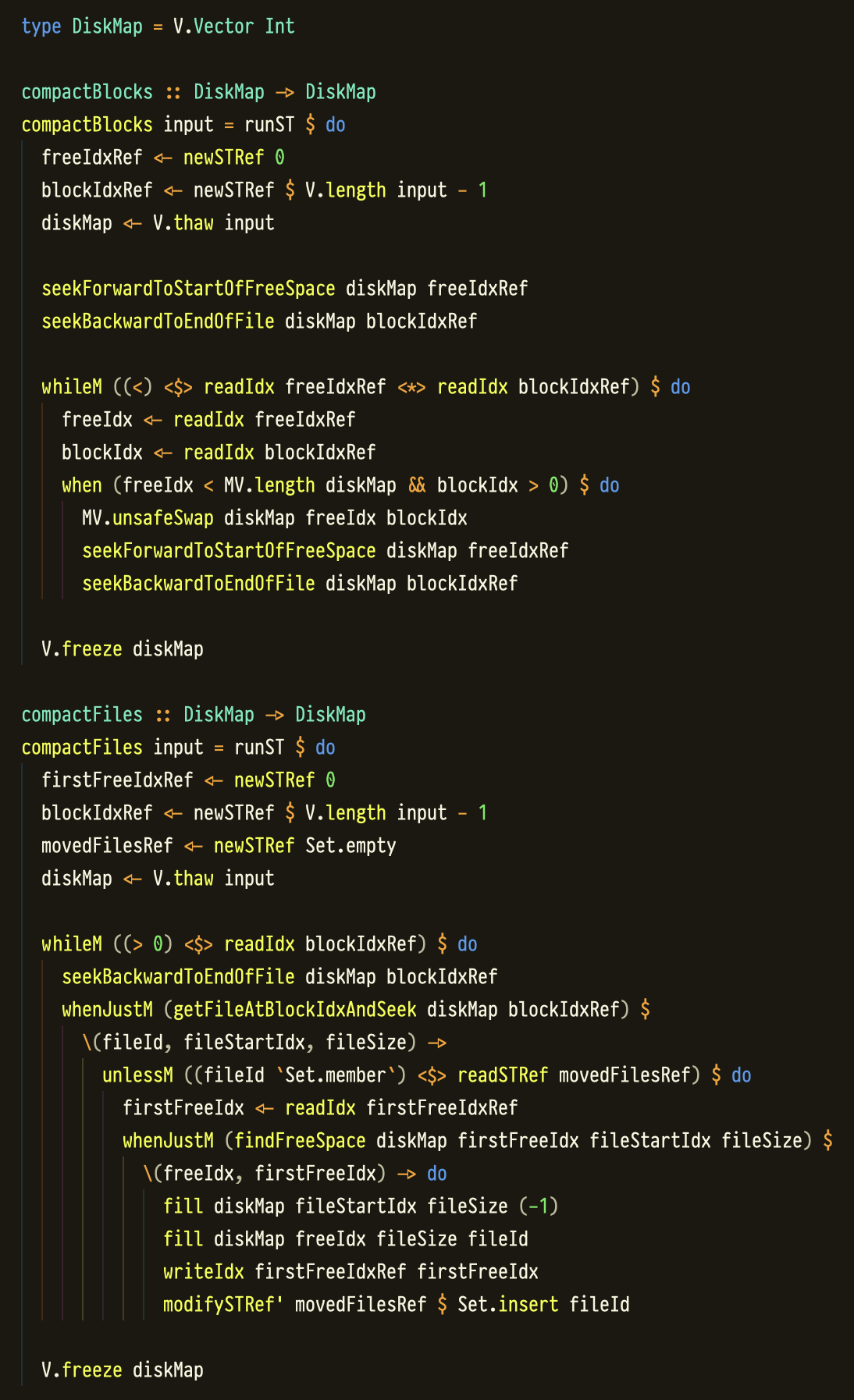
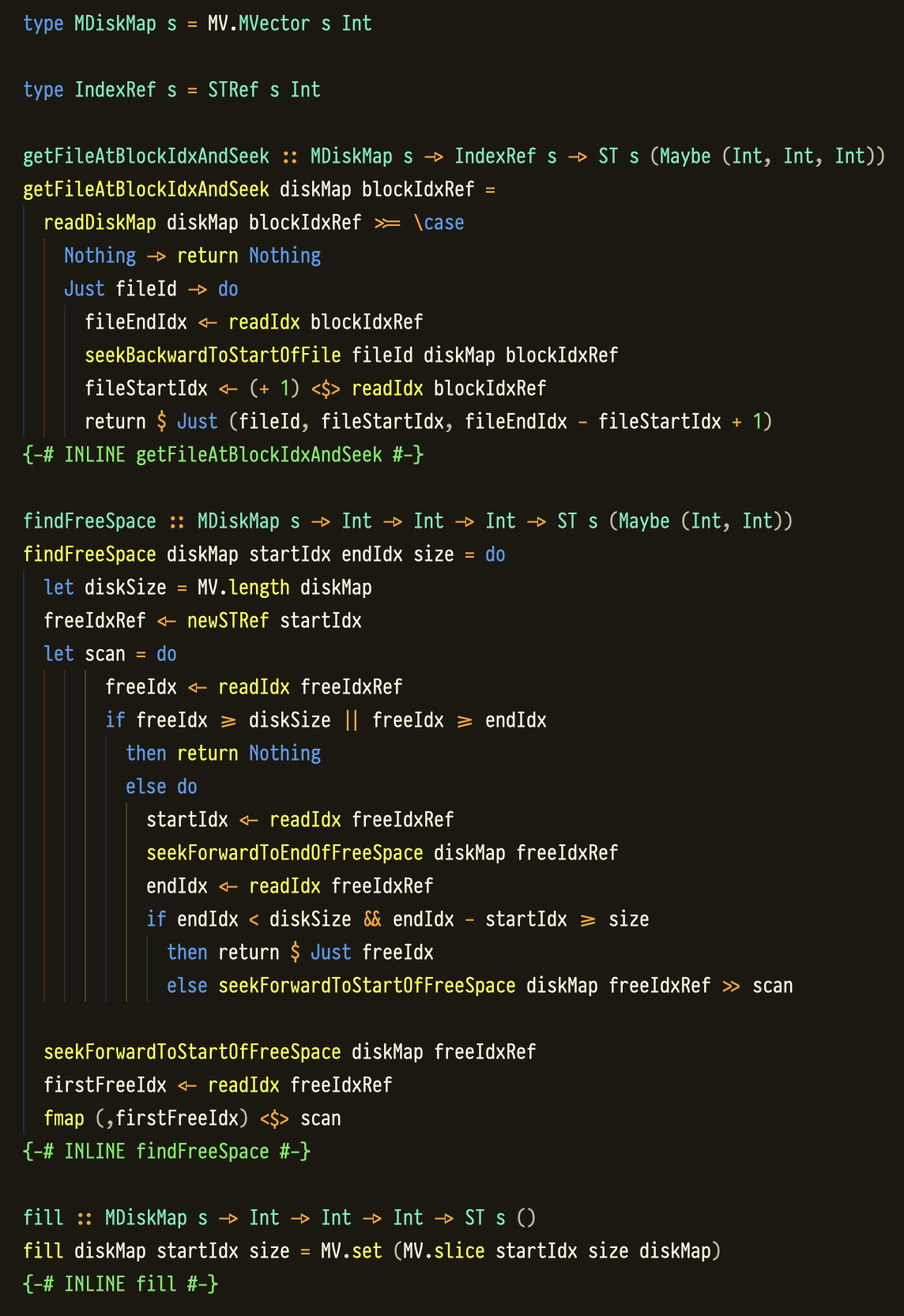
@abnv@fantastic.earth
I've completed "Disk Fragmenter" - Day 9 - Advent of Code 2024 #AdventOfCode https://adventofcode.com/2024/day/9.
Went full mutable today with #Haskell. Check out my solution at https://github.com/abhin4v/AoC24/blob/main/app/Day9.hs
@zurihac@fosstodon.org
🙋 Hello Haskell community!
Are you dreaming of hacking away during sunny days at the foot of the Alps together with hundreds of other Haskellers?
We are busy making this dream a reality for you!
From this account, we will be posting upcoming information about next year's edition of ZuriHac.
So stay tuned and spread the word!
#ZuriHac #ZuriHac2024 #ZuriHac2025 #Haskell #functionalprogramming
@6d03@mathstodon.xyz
Anyone looking for a #Haskell Job, #Berlin or remote in EU/EEA?
~I will update this post when I have more details.~
Here is the job posting: https://careers.scrive.com/jobs/5365423-haskell-developer
We are also looking for an #elm engineer.
@haskell_discussions@mastodon.social
3D Printed Programming Language Logo Tree Ornaments: Designed in Haskell
https://github.com/joe-warren/christmas-ornaments
Discussions: https://discu.eu/q/https://github.com/joe-warren/christmas-ornaments
@haskell_discussions@mastodon.social
Haskell: A Great Procedural Language
https://entropicthoughts.com/haskell-procedural-programming
Discussions: https://discu.eu/q/https://entropicthoughts.com/haskell-procedural-programming

@hongminhee@fosstodon.org · Reply to 洪 民憙 (Hong Minhee)'s post
@haskell_discussions@mastodon.social
Hydra, a code counting program written in Haskell.
Discussions: https://discu.eu/q/https://github.com/haq0/hydra
@lionhairdino@mastodon.social
@jonn@social.doma.dev
Just as I had to got rid of #haskell tag (in favour of #lean), sadly, I feel like it's time to get rid of #elixir tag in my bio.
I'm doing a #rust rewrite of #ZeroHR backend now and while I'm not ruminating too much over the time and money spent on #elixir backend, I find it so much cheaper and faster to write in well-typed languages.
I really hope to become profitable so that I can have a look at #PureNix + #PureErl + #PureScript combo, but I think I'm years away from such a luxury.
@abnv@fantastic.earth
Do you want to learn how to create beautiful and useful #REPL for your #ProgrammingLanguages written in #Haskell? I wrote a Haskeline tutorial just for you: https://abhinavsarkar.net/posts/repling-with-haskeline/
#blog #programming

@haskman@functional.cafe
I have a #Linux machine with 32GB RAM and barely use 8GB of it. I run #Firefox with hundreds of tabs, open #Haskell, #Rust, and #PureScript projects all at the same time. Have #Telegram and #Discord apps running, and the memory usage still hovers around 8GB.Seems like I should be using Docker and Kubernetes just to feel like I'm using my machine to its potential 😆
@BoydStephenSmithJr@hachyderm.io
Would it be insane to create a git repository that has #Haskell, #Purescript, AND #Idris packages in it?
My main concern is that some of the package distribution tooling I've dealt with seems to assume/prefer the package is at the top-level of the git repo.
Should I be using *submodules*!? (Plz, no!)
I think it's going to be informative to keep the packages coherent, and one repo seems like it could be a way to do that.
@kakkun61@pawoo.net
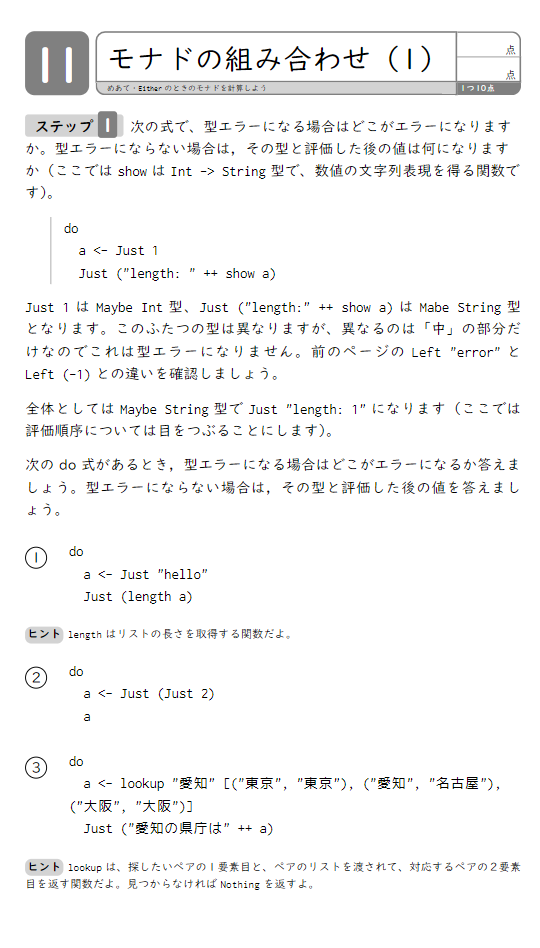
@pandoc@fosstodon.org
Pandoc is written in #Haskell (https://haskell.org), an advanced, purely functional programming language. It was chosen for its great parser support, which was ahead of its time when pandoc was born in 2006. The language is also uniquely suited for a long-lived project, as the strong typing helps tremendously to keep things maintainable.
#pandoc
@haskell_discussions@mastodon.social
Deploying a Single-Binary Haskell Web App
https://entropicthoughts.com/deploying-single-binary-haskell-web-app
Discussions: https://discu.eu/q/https://entropicthoughts.com/deploying-single-binary-haskell-web-app

@justsoup@mstdn.social
Since I am the newest Trusted Contributor with #postmarketOS I thought I would give a little introductory post. 
Heyo! My name is Aster (they/them) and I do stuff with #Linux! I am hard at work getting immutability up and running on pmOS with the help of the amazing work being done to port #systemd.
You may know me for my work on #Lomiri on pmOS, my favorite #MobileLinux desktop environment!
I also dabble in #Rustlang and a bit of #Haskell.
Excited to work with all of y'all!
@jesper@agda.club
For Haskell packages published on Hackage, do you prefer version bounds on dependencies to be narrower or wider?
narrow ~ “We have tested that the package builds with dependencies that fall in this range”
wide ~ “Things are very likely to break if you use a version outside of this range, but we haven’t necessarily tested every version in it”
Case in point, I’m considering for agda2hs whether to bump the bound on base to only include the versions we actually test on CI, or to also include older versions that might still work but aren’t currently tested.
@haskell_discussions@mastodon.social
@haskman@functional.cafe
There is a fundamental difference between #complexity for the sake of convenience (I can build an entire app quickly. Think #JavaScript framework of the day), vs complexity for the sake of robustness (I can make changes to the app quickly without introducing new bugs. Think #Rust or #Haskell).
When you are not familiar with the tech, both can look the same, but they are not. The latter is actually #simplicity in disguise
@abnv@fantastic.earth
So, you've heard of the new hotness that is #Nix, for creating reproducible and isolated development environments, and want to use it for your new #Haskell project? But you are unclear about how to get started? Then this is the guide you are looking for: https://abhinavsarkar.net/posts/nix-for-haskell/
@pmidden@fosstodon.org
In #haskell, is there a way to have doctests that just compile and not run? I have some IO code that I cannot execute in an isolated fashion.

@MrBerard@pilote.me
Mastodon's global search only works on hashed tags, not text, so:
#ComputerScience
#SoftwareEngineering
#Education
#UK Teacher
#Python
#Haskell
#InfoSec
#Processing
#AI
#Computing
#ComputingEducation
#SoundEngineering
#MusicProduction
#Music
#Comedy
#Standup
#French
#London

@RanaldClouston@fediscience.org
I've been on Mastodon for a year, so it's time for a new pinned #introduction post with an updated dog pic! I'm a lecturer in #computerScience at Australian National University #ANU in #Canberra , #Ngunnawal / #Ngambri country. I research #typeTheory , #logic , #proofTheory and a little #categoryTheory , and teach an intro to programming class in #Haskell . Sometimes I post about work; when I'm busy at work I'm more likely to post about #books , my #labradoodle , and other pleasant distractions


@tymwol@hachyderm.io
#c - what if everything was a pointer
#lisp - what if everything was a linked list
#haskell - what if everything was a pure function
#forth - what if everything was a stack
#lua - what if everything was a hash map
#erlang - what if everything was immutable
#prolog - what if everything was a pattern to match
#java - what if everything was a class
#rust - what if everything was a memory allocation problem
#golang - what if everything != nil
#javascript - what if everything was everything
@DiazCarrete@hachyderm.io
--enable-multi-repl has arrived to cabal-install! 🎉
It still has some limitations, but it should work for speeding up ghcid-based development, and hopefully making HLS more reliable.
https://discourse.haskell.org/t/cabal-install-3-12-1-0-and-accompanying-libraries-released/9830
https://github.com/haskell/cabal/blob/e7657ad319b9a5b50718262488d17aad915aad90/doc/internal/multi-repl.md?plain=1#L194


@abnv@fantastic.earth
JSON is probably the most used standard file format for storing and transmitting data on the Internet in recent times. It has a simple syntax with only four scalar data types and two composite data types. So, writing a parser for #JSON is a great exercise for learning the basics of parsing.
That's exactly what I did: I wrote a JSON #parser from scratch in #Haskell. Read my #blog post to learn about basics of parsing, nuances of the JSON syntax, and parser combinators and property-based #testing in Haskell: https://abhinavsarkar.net/posts/json-parsing-from-scratch-in-haskell/

@ultima12@sonomu.club
Hi, I am a sound designer and engineer.
I like programming sounds with #pd, #maxmsp and hardware synths, DAW's, etc. But tools don't matter in the end as you probably know, aesthetics do -- and reverb algorithms. Do you know any?
I spent too much time with #linux and #haskell. I reaaaally don't like commercial ads. After all, is the internet post-modern?
My favorite emoticon is the smiling face with tear.
I toyed around with gabber:
https://susengchannel.bandcamp.com/album/anthem-of-scham
@DiazCarrete@hachyderm.io
https://hackage.haskell.org/package/network-uri-2.6.4.2/docs/Network-URI.html#g:2
https://www.ietf.org/rfc/rfc2396.txt
https://webmasters.stackexchange.com/a/56844/89929
"A relative reference that begins with a single slash character is termed an absolute-path reference. A relative reference that does not begin with a slash character is termed a relative-path reference."

@abnv@fantastic.earth
Every year I try to solve some problems from the #AdventOfCode competition in a not straightforward way. This year I solved the day 19 problem “Aplenty” by compiling the problem input to an executable file.
A new #blog post: https://abhinavsarkar.net/posts/compiling-aoc23-aplenty/


@OliveBrunch@corteximplant.com
New instance, so I should do an #Introduction
Hi! I'm a 30-something non-binary (they/she) programmer.
I always felt at home tinkering with computers, since they seem to mirror the way my brain works.
I always liked cyberpunk's aesthetic, and in the last few years its punk themes have really resonated with me, after growing disillusioned with the tech industry.
Got started using #linux in my teens and nowadays I'm becoming more interested in #bsd because of its simplicity. I enjoy the control these systems give me, as well as the ability to debug issues and (hopefully) understand how they work under the hood.
I love learning programming languages and exploring the different ways they provide to "communicate" with the machine.
My first programming language was C and recently I have been learning #ziglang and finding it has a similar vibe.
I also like functional programming. I've mainly used #scheme and a bit of #haskell
As for scripting languages, #ruby is my favorite.
I'm usually listening to music. My tastes are pretty eclectic, but i often find myself gravitating towards metal and drum and bass.
Lately I've been listening to a lot of Lord Of The Lost, Iron Maiden and Keygen Church.
@abnv@fantastic.earth · Reply to Abhinav 🌏's post
I finished Make A #Lisp in C++20 in about 2600 lines of code. I learned a lot about modern #CPP and managed to write the whole #interpreter without writing a single C-style macro or pointer arithmetic or type casting.
Compared to my usual choice #Haskell, C++ is way more verbose. I feel I can write the same interpreter in (idiomatic) Haskell in less than 800 LOCs. But it’ll probably be much slower.
Some time later in the year, I want to attempt writing a compiler for MAL in Haskell via QBE.
@DiazCarrete@hachyderm.io
"Understanding the Phases Applicative"
https://gist.github.com/kbridge/00f2e155acdc8d50270aa322caa26be3
@haskell_discussions@mastodon.social
Why is Prettier rock solid? Haskell!
Discussions: https://discu.eu/q/https://mrmr.io/til/prettier

@cxandru@types.pl
Painted a mug with my preferred tech stack: #emacs #agda #haskell #nix #nixos
(Also featured: the Σ ⊣ Δ ⊣ Π adjunction sequence from the categorical semantics of (dependent) type theory)
#categorytheory #typetheory

@abnv@fantastic.earth
#Haskell's documentation generation tool Haddock failed me so I wrote some regexes. Published new note: “Generating Standalone Haddock Docs for a Multi-package Haskell Project” https://notes.abhinavsarkar.net/2023/standalone-haddock
@haskell_discussions@mastodon.social
MicroHs: Haskell Implemented with Combinators
https://github.com/augustss/MicroHs
Discussions: https://discu.eu/q/https://github.com/augustss/MicroHs
@DiazCarrete@hachyderm.io
"Nesting APIs and ReaderT environments with Servant"
https://nicolashery.com/nesting-reader-environments-servant/
@hungryjoe@functional.cafe
If anyone's interested in the combination of #Haskell & #CAD / #3DPrinting I've been working on a library for declarative solid modeling
https://hackage.haskell.org/package/waterfall-cad-0.0.0.1
https://github.com/joe-warren/opencascade-hs


@abnv@fantastic.earth
My fork of the #Mastodon digest has accumulated enough new features that I'm getting antsy of writing #Python, which is what the original is written in. I’m thinking of a rewriting it, but I'm conflicted between using #Haskell, which is my comfort language, #Golang, which may be easier for others to contribute to, and #Rust, which I want to learn.
The program involves fetching a bunch of #JSON data from the internet, doing some statistical calculations on that data, and then outputting an HTML page.
What do you think I should rewrite it in? #Programming #poll
| Option | Voters |
|---|---|
| Haskell | 33 (23%) |
| Golang | 31 (21%) |
| Rust | 76 (52%) |
| Something else | 6 (4%) |

@liskin@genserver.social


@nicuveo@tech.lgbt
I've been meaning to write this down for a long while, but i've made it a youtube essay instead, as an experiment, to learn something new; so: what the hell is the problem with monads?
https://youtube.com/watch?v=LekhueQ4zVU #monads #haskell
@xameer@mathstodon.xyz
In a lazy evaluation scheme, the evaluation of an expression is deferred until the
value of the expression is actually needed elsewhere in the computation. That
is, the expression is evaluated on demand. This contrasts with what is called
eager evaluation in which an expression is evaluated as soon as its inputs are
available.
For example, if eager evaluation is used, an argument (which may be an arbi-
trary expression) of a function call is evaluated before the body of the function.
If lazy evaluation is used, the argument is not evaluated until the value is actu-
ally needed during the evaluation of the function body. If an argument’s value
is never needed, then the argument is expression is never evaluated.
Why should we care? Well, this facility allows programmers to construct and
use data structures that are conceptually unbounded or infinite in size. As
long as a program never actually needs to inspect the entire structure, then a
terminating computation is still possible.
For example, we might define the list of natural numbers as a list beginning
with 0, followed by the list formed by adding one to each element of the list of
natural numbers.
Lazy evaluation thus allows programmers to separate the data from the control.
They can define a data structure without having to worry about how it is
processed and they can define functions that manipulate the data structure
without having to worry about its size or how it is created. This ability to
separate the data from the control of processing enables programs to be highly
modular
#haskell
https://john.cs.olemiss.edu/~hcc/csci450/notes/haskell_notes.pdf
@haskell_discussions@mastodon.social
Anti-Instances in Haskell
https://www.heneli.dev/blog/anti-instances
Discussions: https://discu.eu/q/https://www.heneli.dev/blog/anti-instances
@quincy@chaos.social
@haskell_discussions@mastodon.social
Difference between type variables, unification variables and skolems
https://cohost.org/prophet/post/2220730-if-there-is-one-piec
Discussions: https://discu.eu/q/https://cohost.org/prophet/post/2220730-if-there-is-one-piec

@tuturto@mastodon.art
time for an #introduction
I'm Tuula Aurora, a trans woman living in Finland and trying to figure out the world.
I tend to switch from hobby to hobby when it strikes my fancy.
I like coding and switch from language to language (#python, #hy, #haskell). Sometimes I try to wrap my head around #coq or #rust.
I also like #drawing and doodle silly things on the margins now and then.
Also, tell me about your cool project. I love hearing what people are creating.
@abnv@fantastic.earth · Reply to Abhinav 🌏's post
And it was just 200 lines of #Haskell code including Alphatization. https://abhinavsarkar.net/code/cps-transform.html
@abnv@fantastic.earth
I ported @mattmight’s #CPS conversion code (https://matt.might.net/articles/cps-conversion/) to #Haskell and after some fighting with the type system, it worked! To make the #interpreters work with the Cont monad, I had to remove recursive lets and hence, functions being able to call themselves recursively, but the rest works fine.
The attached images show the conversion of the Fibonacci function into the CPS version.
@abnv@fantastic.earth
I wrote the fourth part of my #blog series “Implementing Co, a small programming language with #coroutines”. And this time, we add support for channels in #Co for inter-coroutine communication. https://abhinavsarkar.net/posts/implementing-co-4/
#Programming #PLT #ProgrammingLanguages #Compilers #Haskell #concurrency
@haskell_discussions@mastodon.social
falsify: Hypothesis-inspired shrinking for Haskell
https://well-typed.com/blog/2023/04/falsify/
Discussions: https://discu.eu/q/https://well-typed.com/blog/2023/04/falsify/
@abnv@fantastic.earth · Reply to Julia Evans's post
@b0rk I wrote a minimal but complete and working JSON parser from scratch in less that 500 lines in #Haskell https://abhinavsarkar.net/posts/json-parsing-from-scratch-in-haskell/
@redmp@recurse.social
@Jose_A_Alonso@mathstodon.xyz
falsify: Hypothesis-inspired shrinking for Haskell. ~ Edsko de Vries. https://well-typed.com/blog/2023/04/falsify/ #Haskell #FunctionalProgramming
@xameer@mathstodon.xyz
A category with a terminal object, products and exponentials
is called a Cartesian Closed Category (CCC). N
For example, Set is a CCC. Another class of examples are Boolean algebras,
seen as categories:
• Products are given by conjunctions A ∧ B. We define exponentials as im-
plications:
A ⇒ B := ¬A ∨ B .
• Evaluation is just Modus Ponens,
(A ⇒ B) ∧ A ≤ B
while couniversality is the Deduction Theorem,
C ∧ A ≤ B ⇐⇒ C ≤ A ⇒ B
#haskell
@xameer@mathstodon.xyz
Abstract:
later
Author :
Me
Assumption :
1. there are no onions , such that number of layers of an onion are 0 .
Law : You have no way to record all you knife ops .
2. Given theory T , for \[x \in T \], x need not be either true or false
if onions here are a functor they are also free monad
\[Op\]- now you peel of a layer from one
\[Op^{-1}\]you can wrap it back too
when you do that , you have a monoid.
How do you write a computable abstract syntax tree (AS A monad computation) for these ops
REFERENCES - LATER
To be contd
#HASKELL

@xameer@mathstodon.xyz
So one way to define #continuousintegration is to write recursive function that defines its inputs in terms of the outputs, which the function gives using initial inputs and so on.
So domain corresponds to rand and vice versa and this describes continuity of the function?
Can we define the continuity in #math like this
Why types should I use if i write it in #haskell
Aha others are thinking about it too
Albeit, i don't think I can treat arrows like applicatives in my approach
Quote
fetching gives you a source promise and you want an image promise
writing pipelines using arrow notation is difficult because we have to program in a point-free style (without variables).
ci- is cool
https://codeberg.org/Codeberg-CI/request-access
https://roscidus.com/blog/blog/2019/11/14/cicd-pipelines/
via @talex5
@abnv@fantastic.earth
Trying to debug a memory leak in #haskell be like:

@lispwitch@octodon.social
#anarchism #ancientgreek #anthropology #baduk #bicycling #boardgames #calligraphy #chess #classicalantiquity #classics #climatechange #commonlisp #communism #compilers #cooperatives #culture #deutsch #digitalhumanities #dsa #emacs #español #esperanto #fiction #fancyrats #freeculture #freesoftware #fsf #gamedev #godot #gnu #guile #guix #hcoop #haskell #history #hypertext #internationalsolidarity #javascript #koinegreek #latin #lgbt #linguistics #lisp #lispgames #lispm #logic #math #northcarolina #octodon #philosophy #plt #posca #programming #poetry #queer #rats #scheme #sciencefiction #smalltalk #sml #snowdriftcoop #socialism #tea #trans #typography #unions #vegetarian #weiqi #wikis #www #xanadu #xmpp #yerbamate #yow #zen
@abnv@fantastic.earth
@abnv@fantastic.earth
I wrote the third part of my #blog post series: “Implementing Co, a Small Language With Coroutines #3: Adding #Coroutines”. https://abhinavsarkar.net/posts/implementing-co-3/
Reply to this toot to post comments on the article.
#programming #programminglanguages #plt #compilers #haskell #concurrency
@abnv@fantastic.earth
After a gap of 1.5 years since the last part, I have finally finished writing the third part of my post series on implementing Co. Planning to publish it this weekend. #haskell #programminglanguages #blog
@haskell_discussions@mastodon.social
@haskell_discussions@mastodon.social
What chapters from the GHC User's Guide you'd recommend?
https://lexi-lambda.github.io/blog/2021/03/25/an-introduction-to-typeclass-metaprogramming/
Discussions: https://discu.eu/q/https://lexi-lambda.github.io/blog/2021/03/25/an-introduction-to-typeclass-metaprogramming/

@etorreborre@fosstodon.org
@abnv@fantastic.earth
I wrote a #blog post about implementing a small #interpreted #programming language with #coroutines: https://abhinavsarkar.net/posts/implementing-co-1/
#ProgrammingLanguages #plt #haskell
@haskell_discussions@mastodon.social
Overloading the lambda abstraction in Haskell
https://acatalepsie.fr/posts/overloading-lambda
Discussions: https://discu.eu/q/https://acatalepsie.fr/posts/overloading-lambda
@haskell_discussions@mastodon.social
Haskell, Ada, C++, Awk: An Experiment in Prototyping Productivity (1994) [pdf]
https://www.cs.yale.edu/publications/techreports/tr1049.pdf
Discussions: https://discu.eu/q/https://www.cs.yale.edu/publications/techreports/tr1049.pdf
@abnv@fantastic.earth
I solved #AdventOfCode day 7 in #Haskell with #parsers, #zippers and #interpreters, and wrote a note about it: https://notes.abhinavsarkar.net/2022/aoc-7
@abnv@fantastic.earth
I wrote a note about implementing A* #algorithm in #Haskell https://notes.abhinavsarkar.net/2022/astar
#programming
@haskell_discussions@mastodon.social
Introducing Haskell into my team (and looking for a really good senior engineer to help)
Discussions: https://discu.eu/q/https://www.converge.io

@dino@masto.ai

@rossng@indieweb.social
Hello! I guess I'm here now. 👋
You might find me talking about some of these nerdy topics: #programming #types #fp #functionalprogramming #typescript #rust #haskell
And these slightly different nerdy topics: #urbanism #bikes #architecture

@bwbush@vis.social
I am a #physicist who has focused much of my career on the #modeling, #simulation, #visualization, and #analysis of #complexSystems (especially #infrastructure and #renewableEnergy), and who is currently working on the #Cardano #blockchain. I love #functionalProgramming, #Haskell, #formalMethods, #categoryTheory, #datavis, #infovis, #XR, #statistics, and teaching.
I have passion for art, music, language, and #meditation; I occasionally create #painting, #sculpture, and #poetry.

@ttuegel@functional.cafe
I write #Haskell for a living; currently web backends, but previously formal methods. I've been contributing to Haskell open source since 2010; you probably know my work even though you don't know me! 😉
I also do some dynamically typed functional programming: I've been involved with #NixOS since 2014 and I'm an avid #Emacs user.
Besides "types" and "functional programming", my technical interests include programming language theory, testing, and software engineering practice.
Before I was a software developer, I did a Ph.D. in Physics at UIUC. My area was condensed matter theory, in particular, topological insulators, but I could also probably talk your ear off about fundamental physics.
I like to ride bicycles. I collect fountain pens. And I find it rather awkward to talk about myself.

@mdreid@mastodon.social
I got a suggestion to use hashtags to help kickstart my network here. So here's a hashtag-dense list of my interests:
I'm a data-focused #machinelearning engineer at #Apple, working with #PyTorch, #Spark, and #Python which I write with a #Haskell accent. I used to work in #LearningTheory.
I enjoy long distance #running and #trailrunning and am training for my first #ultramarathon.
In my spare time I make electronic #ModularSynth/#Eurorack music and am learning #JazzPiano and the #GameOfGo.
@das_g@chaos.social
Hallo Fediversum!
Obwohl ich bereits einen Account auf @das_g@en.osm.town hatte, bin ich #neuhier. 👋
#Vorstellung: Als #WiMa an einer 🎓Fachhochschule 👨🏫betreue ich Übungen & 👩🔧Praktika, 👨💻entwickle #Software und 👨🔬betreibe angewandte "#Forschung". In meiner Freizeit trage ich zu 🗺️#OpenStreetMap bei und lerne & spreche 💚#Esperanto. Ich interessiere mich für #funktionale_Programmierung & #funktionale_Programmiersprache|n wie #Haskell und für das  Beibringen des #Programmieren|s.
@das_g@chaos.social
Saluton Fediverso!
Kvankam mi antaŭe havis konton ĉe @das_g@en.osm.town, mi estas 👋#nova_ĉi_tie.
#Sinprezento: Mi laboras kiel 👨🏫 #instruisthelpanto & 👨💻 #programisto/👨🔬"#esploristo" ĉe 🎓fakaltlernejo. Libertempe mi kontribuas al 🗺️ #OpenStreetMap kaj (evidente) mi estas 💚#Esperantisto. Mi interesiĝas interalie pri #funkciaj_programlingvoj kiel #Haskell kaj pri #instruado de #programado.

@league@scholar.social
Reactivating — Hello! I’m into:
• Functional programming, especially #haskell, #ocaml, #elmlang, #purescript
• Proof systems & software correctness tools #coq, #idris, #agda, #rustlang
• Scientific data acquisition & analysis, #gpu frameworks
• Reproducible builds, #nixos, #nixpkgs
• Non-traditional families (#queer, interracial)
• #ADHD strategies & other #neurodivergent perspectives
• Black natural hair care, for Ms. 7yo
• #Classical & electronic music, dabbling at piano as a busy adult

@esap@noc.social
#Haskell #LinearAlgebra library.
#Graph , #Matrix computations, #RealNumbers.
Github: https://github.com/esapulkkinen/cifl-math-library
Docs: https://esapulkkinen.github.io/cifl-math-library/

@greenrd@fosstodon.org
Stephen Diel has recently updated his guide to modern #haskell - "What I Wish I Knew When Learning Haskell", now at version 2.5
http://dev.stephendiehl.com/hask/
Will have to give it a re-read, as I haven't done any Haskell development for years, but I'm trying to get back into it with a new #sideproject - about #cryptocurrency futures trading