洪 民憙 (Hong Minhee) :nonbinary:'s avatar

洪 民憙 (Hong Minhee) :nonbinary:

@hongminhee@hollo.social · 1050 following · 1862 followers

An intersectionalist, feminist, and socialist living in Seoul (UTC+09:00). @tokolovesme's spouse. Who's behind @fedify, @hollo, and @botkit. Write some free software in , , , & . They/them.

서울에 사는 交叉女性主義者이자 社會主義者. 金剛兔(@tokolovesme)의 配偶者. @fedify, @hollo, @botkit 메인테이너. , , , 等으로 自由 소프트웨어 만듦.

()

洪 民憙 (Hong Minhee) :nonbinary:'s avatar
洪 民憙 (Hong Minhee) :nonbinary:

@hongminhee@hollo.social

Hello! I'm Hong Minhee (洪 民憙), an open source software engineer in my late 30s, living in Seoul, Korea. I'm bisexual and non-binary (they/them), and an enthusiastic advocate of free/open source software and the fediverse.

I work full-time on @fedify, an ActivityPub server framework in TypeScript, funded by @sovtechfund. I'm also the creator of @hollo, a single-user ActivityPub microblog; @botkit, an ActivityPub bot framework; Hackers' Pub, a fediverse platform for software developers; and LogTape, a logging library for JavaScript and TypeScript.

I have a long interest in East Asian languages (CJK) and Unicode. I post mostly in English here, though occasionally in Japanese or in mixed-script Korean (國漢文混用體), a traditional writing style that interleaves Chinese characters with the native Korean alphabet. Wanting to write in that style was actually one of the reasons I joined the fediverse. Feel free to talk to me in English, Korean, Japanese, or even Literary Chinese!

洪 民憙 (Hong Minhee) :nonbinary:'s avatar
洪 民憙 (Hong Minhee) :nonbinary:

@hongminhee@hollo.social · Reply to 洪 民憙 (Hong Minhee) :nonbinary:'s post

はじめまして!ソウル在住の30代後半のオープンソースソフトウェアエンジニア、洪 民憙ホン・ミンヒと申します。バイセクシュアル(bisexual)・ノンバイナリー(non-binary)で、自由・オープンソースソフトウェア(F/OSS)とフェディバース(fediverse)の熱烈な支持者です。

STF(@sovtechfund)の支援を受け、TypeScript用ActivityPubサーバーフレームワーク「@fedify」の開発に専念しています。他にも、おひとり様向けのActivityPubマイクロブログ「@hollo」、ActivityPubボットフレームワーク「@botkit」、ソフトウェア開発者向けフェディバースプラットフォームHackers' Pub、JavaScript・TypeScript用ロギングライブラリLogTapeなどの制作者でもあります。

東アジア言語(いわゆるCJK)とUnicodeにも興味があります。このアカウントでは主に英語で投稿していますが、時々日本語や国漢文混用体(漢字ハングル混じり文)の韓国語でも書いています。実はこの文体で書きたくてフェディバースを始めた、という経緯もあります。日本語、英語、韓国語、漢文でも気軽に話しかけてください!

洪 民憙 (Hong Minhee) :nonbinary:'s avatar
洪 民憙 (Hong Minhee) :nonbinary:

@hongminhee@hollo.social · Reply to 洪 民憙 (Hong Minhee) :nonbinary:'s post

安寧(안녕)하세요! 저는 서울에 살고 있는 30() 後半(후반)의 오픈 소스 소프트웨어 엔지니어 洪民憙(홍민희)입니다. 兩性愛者(양성애자)(bisexual)이자 논바이너리(non-binary)이며, 自由(자유)·오픈 소스 소프트웨어(F/OSS)와 聯合宇宙(연합우주)(fediverse)의 熱烈(열렬)支持者(지지자)이기도 합니다.

STF(@sovtechfund)의 支援(지원)을 받아 TypeScript() ActivityPub 서버 프레임워크 @fedify 開發(개발)專業(전업)으로 ()하고 있습니다. 그 ()에도 싱글 유저() ActivityPub 마이크로블로그 @hollo, ActivityPub 봇 프레임워크 @botkit, 소프트웨어 開發者(개발자)를 위한 聯合宇宙(연합우주) 플랫폼 Hackers' Pub, JavaScript·TypeScript() 로깅 라이브러리 LogTape ()製作者(제작자)이기도 합니다.

()아시아 言語(언어)(이른바 CJK)와 Unicode에도 關心(관심)이 많습니다. 이 計定(계정)에서는 ()英語(영어)로 포스팅하지만, 때때로 日本語(일본어)國漢文混用體(국한문 혼용체) 韓國語(한국어)로도 씁니다. 聯合宇宙(연합우주)에 오게 된 動機(동기) () 하나가 바로 國漢文混用體(국한문 혼용체)로 글을 쓰고 싶었기 때문이기도 하고요. 韓國語(한국어), 英語(영어), 日本語(일본어), 아니면 漢文(한문)으로도 말을 걸어주세요!

洪 民憙 (Hong Minhee) :nonbinary:'s avatar
洪 民憙 (Hong Minhee) :nonbinary:

@hongminhee@hollo.social · Reply to Jaeyeol Lee (a.k.a. kodingwarrior) :vim:'s post

@kodingwarrior 아이고… 고생이 많으십니다. 😭

洪 民憙 (Hong Minhee) :nonbinary:'s avatar
洪 民憙 (Hong Minhee) :nonbinary:

@hongminhee@hollo.social · Reply to :_ko::_ko::_a::_ni::_lya::_n:'s post

@cocoa_vrc @AmaseCocoa もしよろしければ、ログにどの様な内容が記録されるのか、DMで教えていただけませんか?

洪 民憙 (Hong Minhee) :nonbinary:'s avatar
洪 民憙 (Hong Minhee) :nonbinary:

@hongminhee@hollo.social · Reply to :_ko::_ko::_a::_ni::_lya::_n:'s post

@cocoa_vrc これは調べてみます!

ここあ :logo_cocoa: at :hollo:'s avatar
ここあ :logo_cocoa: at :hollo:

@cocoa@hollo.amase.cc

でプロフィールカードを作成しました! https://purofu.y-zu.org/view/server?id=142

洪 民憙 (Hong Minhee) :nonbinary:'s avatar
洪 民憙 (Hong Minhee) :nonbinary:

@hongminhee@hollo.social

I am to resolve the pending issues of this evening.

洪 民憙 (Hong Minhee) :nonbinary:'s avatar
洪 民憙 (Hong Minhee) :nonbinary:

@hongminhee@hollo.social · Reply to 洪 民憙 (Hong Minhee) :nonbinary:'s post

Wait, is only iPhone 17 Pro Max going to come out like this? Then it might be okay because I'm not interested in large-sized iPhone anyway. 🤔

洪 民憙 (Hong Minhee) :nonbinary:'s avatar
洪 民憙 (Hong Minhee) :nonbinary:

@hongminhee@hollo.social

If iPhone 17 is really released like this mock-up, I don't think I'll buy a new iPhone for a while.

https://mastodon.social/@macrumors/114058266581926184

Erin 💽✨'s avatar
Erin 💽✨

@erincandescent@erincandescent.net

Postgres won't let you store `\u0000` (a legal JSON escape sequence!) in a JSONB record 🤯

Fortunately for our use case, our input data is Latin 1. I'm suggesting we replace the NULs with control picture ␀
洪 民憙 (Hong Minhee) :nonbinary:'s avatar
洪 民憙 (Hong Minhee) :nonbinary:

@hongminhee@hollo.social

PostgreSQL은 任意(임의)表現式(표현식)索引(색인)을 만들 수 있고, jsonjsonb 타입에는 JSON 값의 部分(부분) 값을 抽出(추출)하는 演算子(연산자)函數(함수)이 있기 때문에 저렇게 해도 索引(색인)可能(가능)합니다.

https://social.maka.nagoya/notes/a4mflu94zxek3bq1

Pedro Fonseca's avatar
Pedro Fonseca

@PJFDF@masto.pt

Wait, what? 😯

can send email? Damn... @bagder I'm impressed (not that I didn't expected that), curl just keeps on giving. 😁

curl --url "smtp://$SMTP_SERVER:$SMTP_PORT" \
--ssl-reqd \
--mail-from "$SMTP_USER" \
--mail-rcpt "$EMAIL" \
--upload-file "$LOG_FILE" \
--user "$SMTP_USER:$SMTP_PASSWORD" \
--insecure

洪 民憙 (Hong Minhee) :nonbinary:'s avatar
洪 民憙 (Hong Minhee) :nonbinary:

@hongminhee@hollo.social

@thx 그건 그렇지요… 나름 디자인 심볼로 승화하려고 한 것 같지만 여전히 너무 부담스럽습니다.

洪 民憙 (Hong Minhee) :nonbinary:'s avatar
洪 民憙 (Hong Minhee) :nonbinary:

@hongminhee@hollo.social

@thx Pixel 최근에 나온 것들은 꽤 예쁘지 않나요? 제 눈에만 그렇게 보이는 걸 수도…

洪 民憙 (Hong Minhee) :nonbinary:'s avatar
洪 民憙 (Hong Minhee) :nonbinary:

@hongminhee@hollo.social

Yes, we probably should have had this sooner… but hey, proper domain handling is coming to 1.5.0!

https://hollo.social/@fedify/01953693-1afd-7430-988a-23d649099e1c

Fedify: ActivityPub server framework's avatar
Fedify: ActivityPub server framework

@fedify@hollo.social

We're excited to announce two major features coming in 1.5.0, focused on giving you more control over domain names in your federated apps:

Separate WebFinger Host from Server Origin

Want different domains for your WebFinger handles and server URIs? Fedify 1.5.0 will let you use domains like @alice@example.com as fediverse handles while serving content from https://ap.example.com. This gives you more flexibility in how you structure your federated services.

Canonical Origin Support

Need to ensure consistent URLs across your infrastructure? The new canonical origin support lets you explicitly set your server's authoritative domain. This is particularly useful when running behind reverse proxies or load balancers—no more unexpected URLs generated from internal hostnames.


These features represent our ongoing commitment to making Fedify more flexible and production-ready.

Can't wait to try these features? You can experiment with them today using our unstable release v1.5.0-dev.680+562e3dc0 (JSR & npm). Keep in mind that this is an unstable release intended for testing—use it in production at your own risk.

Otherwise, stay tuned for the stable Fedify 1.5.0 release!

Separating WebFinger host from the server origin

This API is available since Fedify 1.5.0.

Sometimes you may want to use different domain names for WebFinger handles (i.e., fediverse handles) and the server origin. For example, you may want to use https://ap.example.com/actors/alice as an actor URI but want to use @alice@example.com as its fediverse handle.

In such cases, you can set the handleHost different from the webOrigin in the origin option. The handleHost is used to construct the WebFinger handles, and the webOrigin is used to construct the URLs in the Context object:

const federation = createFederation({
  origin: {
    handleHost: "example.com",
    webOrigin: "https://ap.example.com",
  },
});

NOTE

Even if you set the handleHost different from the webOrigin, the other fediverse handle with the same domain name as the webOrigin will still be recognized.

In the above example, two fediverse handles are recognized as the same:

• @alice@example.com
• @alice@ap.example.com
ALT text detailsSeparating WebFinger host from the server origin This API is available since Fedify 1.5.0. Sometimes you may want to use different domain names for WebFinger handles (i.e., fediverse handles) and the server origin. For example, you may want to use https://ap.example.com/actors/alice as an actor URI but want to use @alice@example.com as its fediverse handle. In such cases, you can set the handleHost different from the webOrigin in the origin option. The handleHost is used to construct the WebFinger handles, and the webOrigin is used to construct the URLs in the Context object: const federation = createFederation({ origin: { handleHost: "example.com", webOrigin: "https://ap.example.com", }, }); NOTE Even if you set the handleHost different from the webOrigin, the other fediverse handle with the same domain name as the webOrigin will still be recognized. In the above example, two fediverse handles are recognized as the same: • @alice@example.com • @alice@ap.example.com
Explicitly setting the canonical origin

This API is available since Fedify 1.5.0.

Or you can explicitly set the canonical origin of the server by passing the origin option to the createFederation() function. The origin option is either a string or a FederationOrigin object, which consists of two fields: handleHost and webOrigin.

For example, if you want to set the canonical origin to https://example.com, you can pass the string:

const federation = createFederation({
  origin: "https://example.com",
});

NOTE

The origin option has to include the leading https:// or http:// scheme.

Such a configuration leads the constructed URLs using Context to use the canonical origin instead of the origin from the incoming HTTP requests, which avoids constructing unexpected URLs when a request bypasses a reverse proxy or a load balancer.

CAUTION

For example, suppose that your federated server (upstream) is accessible at the http://1.2.3.4:8000 and your load balancer (downstream) is accessible at the https://example.com and forwards the requests to the upstream server. In this case, you should set the canonical origin to https://example.com to construct the correct URLs. Otherwise, when some malicious actor directly sends a request to the upstream server, the constructed URLs will start with http://1.2.3.4:8000 instead of https://example.com, which can lead to security issues.
ALT text detailsExplicitly setting the canonical origin This API is available since Fedify 1.5.0. Or you can explicitly set the canonical origin of the server by passing the origin option to the createFederation() function. The origin option is either a string or a FederationOrigin object, which consists of two fields: handleHost and webOrigin. For example, if you want to set the canonical origin to https://example.com, you can pass the string: const federation = createFederation({ origin: "https://example.com", }); NOTE The origin option has to include the leading https:// or http:// scheme. Such a configuration leads the constructed URLs using Context to use the canonical origin instead of the origin from the incoming HTTP requests, which avoids constructing unexpected URLs when a request bypasses a reverse proxy or a load balancer. CAUTION For example, suppose that your federated server (upstream) is accessible at the http://1.2.3.4:8000 and your load balancer (downstream) is accessible at the https://example.com and forwards the requests to the upstream server. In this case, you should set the canonical origin to https://example.com to construct the correct URLs. Otherwise, when some malicious actor directly sends a request to the upstream server, the constructed URLs will start with http://1.2.3.4:8000 instead of https://example.com, which can lead to security issues.
Fedify: ActivityPub server framework's avatar
Fedify: ActivityPub server framework

@fedify@hollo.social

We're excited to announce two major features coming in 1.5.0, focused on giving you more control over domain names in your federated apps:

Separate WebFinger Host from Server Origin

Want different domains for your WebFinger handles and server URIs? Fedify 1.5.0 will let you use domains like @alice@example.com as fediverse handles while serving content from https://ap.example.com. This gives you more flexibility in how you structure your federated services.

Canonical Origin Support

Need to ensure consistent URLs across your infrastructure? The new canonical origin support lets you explicitly set your server's authoritative domain. This is particularly useful when running behind reverse proxies or load balancers—no more unexpected URLs generated from internal hostnames.


These features represent our ongoing commitment to making Fedify more flexible and production-ready.

Can't wait to try these features? You can experiment with them today using our unstable release v1.5.0-dev.680+562e3dc0 (JSR & npm). Keep in mind that this is an unstable release intended for testing—use it in production at your own risk.

Otherwise, stay tuned for the stable Fedify 1.5.0 release!

Separating WebFinger host from the server origin

This API is available since Fedify 1.5.0.

Sometimes you may want to use different domain names for WebFinger handles (i.e., fediverse handles) and the server origin. For example, you may want to use https://ap.example.com/actors/alice as an actor URI but want to use @alice@example.com as its fediverse handle.

In such cases, you can set the handleHost different from the webOrigin in the origin option. The handleHost is used to construct the WebFinger handles, and the webOrigin is used to construct the URLs in the Context object:

const federation = createFederation({
  origin: {
    handleHost: "example.com",
    webOrigin: "https://ap.example.com",
  },
});

NOTE

Even if you set the handleHost different from the webOrigin, the other fediverse handle with the same domain name as the webOrigin will still be recognized.

In the above example, two fediverse handles are recognized as the same:

• @alice@example.com
• @alice@ap.example.com
ALT text detailsSeparating WebFinger host from the server origin This API is available since Fedify 1.5.0. Sometimes you may want to use different domain names for WebFinger handles (i.e., fediverse handles) and the server origin. For example, you may want to use https://ap.example.com/actors/alice as an actor URI but want to use @alice@example.com as its fediverse handle. In such cases, you can set the handleHost different from the webOrigin in the origin option. The handleHost is used to construct the WebFinger handles, and the webOrigin is used to construct the URLs in the Context object: const federation = createFederation({ origin: { handleHost: "example.com", webOrigin: "https://ap.example.com", }, }); NOTE Even if you set the handleHost different from the webOrigin, the other fediverse handle with the same domain name as the webOrigin will still be recognized. In the above example, two fediverse handles are recognized as the same: • @alice@example.com • @alice@ap.example.com
Explicitly setting the canonical origin

This API is available since Fedify 1.5.0.

Or you can explicitly set the canonical origin of the server by passing the origin option to the createFederation() function. The origin option is either a string or a FederationOrigin object, which consists of two fields: handleHost and webOrigin.

For example, if you want to set the canonical origin to https://example.com, you can pass the string:

const federation = createFederation({
  origin: "https://example.com",
});

NOTE

The origin option has to include the leading https:// or http:// scheme.

Such a configuration leads the constructed URLs using Context to use the canonical origin instead of the origin from the incoming HTTP requests, which avoids constructing unexpected URLs when a request bypasses a reverse proxy or a load balancer.

CAUTION

For example, suppose that your federated server (upstream) is accessible at the http://1.2.3.4:8000 and your load balancer (downstream) is accessible at the https://example.com and forwards the requests to the upstream server. In this case, you should set the canonical origin to https://example.com to construct the correct URLs. Otherwise, when some malicious actor directly sends a request to the upstream server, the constructed URLs will start with http://1.2.3.4:8000 instead of https://example.com, which can lead to security issues.
ALT text detailsExplicitly setting the canonical origin This API is available since Fedify 1.5.0. Or you can explicitly set the canonical origin of the server by passing the origin option to the createFederation() function. The origin option is either a string or a FederationOrigin object, which consists of two fields: handleHost and webOrigin. For example, if you want to set the canonical origin to https://example.com, you can pass the string: const federation = createFederation({ origin: "https://example.com", }); NOTE The origin option has to include the leading https:// or http:// scheme. Such a configuration leads the constructed URLs using Context to use the canonical origin instead of the origin from the incoming HTTP requests, which avoids constructing unexpected URLs when a request bypasses a reverse proxy or a load balancer. CAUTION For example, suppose that your federated server (upstream) is accessible at the http://1.2.3.4:8000 and your load balancer (downstream) is accessible at the https://example.com and forwards the requests to the upstream server. In this case, you should set the canonical origin to https://example.com to construct the correct URLs. Otherwise, when some malicious actor directly sends a request to the upstream server, the constructed URLs will start with http://1.2.3.4:8000 instead of https://example.com, which can lead to security issues.
洪 民憙 (Hong Minhee) :nonbinary:'s avatar
洪 民憙 (Hong Minhee) :nonbinary:

@hongminhee@hollo.social · Reply to 염산하's post

@ysh @rangho_220 북마크와 좋아요는 Hollo 관리 페이지에 있는 내보내기 기능을 쓰시면 CSV로 저장하실 수 있습니다. 포스트와 부스트는 제가 다른 댓글에서 언급한 방식(ActivityPub의 발신함 조회)으로 가능할 것 같습니다! (일반 포스트는 "type": "Create"로, 부스트는 "type": "Announce"로 표시됩니다.)

https://hollo.social/@hongminhee/019531ff-9e05-7152-b100-f6a8272b016f

洪 民憙 (Hong Minhee) :nonbinary:'s avatar
洪 民憙 (Hong Minhee) :nonbinary:

@hongminhee@hollo.social · Reply to McK's post

@mck 앗, 링크 수정했습니다! 감사합니다!

洪 民憙 (Hong Minhee) :nonbinary:'s avatar
洪 民憙 (Hong Minhee) :nonbinary:

@hongminhee@hollo.social · Reply to Emelia 👸🏻's post

@thisismissem @bori Oh, I see!

洪 民憙 (Hong Minhee) :nonbinary:'s avatar
洪 民憙 (Hong Minhee) :nonbinary:

@hongminhee@hollo.social · Reply to Emelia 👸🏻's post

@thisismissem @bori I've never been aware that “numbers” can also refer to fingers. Interesting!

洪 民憙 (Hong Minhee) :nonbinary:'s avatar
洪 民憙 (Hong Minhee) :nonbinary:

@hongminhee@hollo.social

@bori購讀(구독)】이 “subscription”의 完全(완전)飜譯語(번역어)機能(기능)하는 것은 唯獨(유독) 韓國語(한국어)에서만 그런 것 같더라고요. (제가 알기로는 中國語(중국어)日本語(일본어)에서는 그렇게 쓰이지 않아요.)

Kaori :_mastodon_2022:'s avatar
Kaori :_mastodon_2022:

@kaorit@fedibird.com

番号の話に興味が湧いたので辞書を引いたら元々は英語のnumberの訳語だそうで。

番号の意味は「順番を示す符号。順序のしるし」。ナンバー(number)は「数・数詞」。

これらから推察するに順序立てて(後から辿れるように)並んでいれば数字やその他の符号が混じっていても問題は無さそう。

逆に順序が不明になるものには使えない言葉という事になるのかな。

洪 民憙 (Hong Minhee) :nonbinary:'s avatar
洪 民憙 (Hong Minhee) :nonbinary:

@hongminhee@hollo.social · Reply to 洪 民憙 (Hong Minhee) :nonbinary:'s post

英語(영어)境遇(경우), 確實(확실)히 “number”는 數字(숫자) 以外(이외)包含(포함)할 수 있다는 느낌이 있지요. 實際(실제)《위키낱말辭典(사전)英文板(영문판)에서 “number”를 찾아보면

A sequence of digits and letters used to register people, automobiles, and various other items.

Her passport number is C01X864TN.

라는 用例(용례)가 나와 있기도 하고요.

https://baram.me/@bori/114056446388564683

洪 民憙 (Hong Minhee) :nonbinary:'s avatar
洪 民憙 (Hong Minhee) :nonbinary:

@hongminhee@hollo.social

내가 Galaxy 시리즈를 안 쓰는 가장 큰 理由(이유)單純(단순)三星(삼성)不買(불매)하기 때문. (三星(삼성)不買(불매)理由(이유)는 너무나 많기 때문에 여기서는 省略(생략).) 메인 폰으로 iPhone을 쓰고 있지만, Android를 쓰게 되더라도 Google의 Pixel 시리즈 같은 걸 쓸 것 같다.

洪 民憙 (Hong Minhee) :nonbinary:'s avatar
洪 民憙 (Hong Minhee) :nonbinary:

@hongminhee@hollo.social

I have great respect for @thisismissem's tremendous work on @hollo.😲

https://hachyderm.io/@thisismissem/114056333638591578

Emelia 👸🏻's avatar
Emelia 👸🏻

@thisismissem@hachyderm.io

Extended my previous contribution to @hollo tonight with some tests for the `GET /api/v1/accounts/verify_credentials` route:

github.com/fedify-dev/hollo/pu

There's some magic going on here, but I'm pretty happy with the results.

Though, node.js's test runner seems really slow at times and I've no idea why, like some of these are taking 1-4 seconds, whereas other tests are 54ms. I've tried instrumenting the code to find slownesses and I can't, everything's taking only milliseconds.

Emelia 👸🏻's avatar
Emelia 👸🏻

@thisismissem@hachyderm.io · Reply to Emelia 👸🏻's post

Found the slowness! It was because each account that was created for the tests generated two keypairs for activitypub usage. We don't need those for these tests.

Now they run in like 150ms each, or a 10x increase in speed.

Emelia 👸🏻's avatar
Emelia 👸🏻

@thisismissem@hachyderm.io · Reply to Emelia 👸🏻's post

One of the things I'm wanting to do is also implement some of the **planned** OAuth functionality for Mastodon in @hollo first to get a feel for how it works — I'm way better at writing typescript compared to ruby.

So things like Device Code Grant Flow for input constrained devices (sign-in to hollo on your TV or retro computer), or supporting access token expiration and Client ID Metadata Documents (which removes the need for a client to pre-register with a given server before doing an oauth flow).

Emelia 👸🏻's avatar
Emelia 👸🏻

@thisismissem@hachyderm.io · Reply to Emelia 👸🏻's post

This is part of the work to improve how @hollo does OAuth and to bring it up to par with Mastodon 4.3

However, one of those next steps requires a rather major refactor of how we do authorization grants and access tokens. Before we make those changes it would be great to be able to have some baseline test coverage in place.

Related issues:
- github.com/fedify-dev/hollo/is

Emelia 👸🏻's avatar
Emelia 👸🏻

@thisismissem@hachyderm.io

Another @hollo pull request for this weekend: improving the testability of the OAuth related code.

I was supposed to be having a "me" day and relaxing, but I started having a coughing fit and needing to focus on something to help calm my system down, and what better than a refactor?

github.com/fedify-dev/hollo/pu

Emelia 👸🏻's avatar
Emelia 👸🏻

@thisismissem@hachyderm.io

Extended my previous contribution to @hollo tonight with some tests for the `GET /api/v1/accounts/verify_credentials` route:

github.com/fedify-dev/hollo/pu

There's some magic going on here, but I'm pretty happy with the results.

Though, node.js's test runner seems really slow at times and I've no idea why, like some of these are taking 1-4 seconds, whereas other tests are 54ms. I've tried instrumenting the code to find slownesses and I can't, everything's taking only milliseconds.

洪 民憙 (Hong Minhee) :nonbinary:'s avatar
洪 民憙 (Hong Minhee) :nonbinary:

@hongminhee@hollo.social · Reply to 洪 民憙 (Hong Minhee) :nonbinary:'s post

日本語(일본어) 原文(원문)飜譯(번역):

辭典的(사전적)으로는 【番號(번호)】는 數字(숫자) 以外(이외)包含(포함)하는 듯한데, UUID처럼 알파벳 () 數字(숫자) 以外(이외)包含(포함)하는 文字列(문자열)番號(번호)라고 表現(표현)하는 것에는 違和感(위화감)을 느낀다.

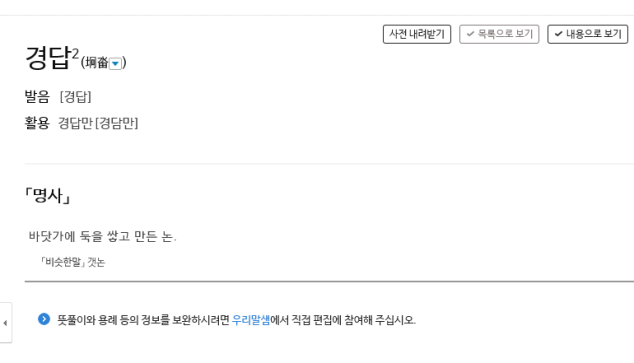
日本語(일본어)는 그렇구나, 하고 韓國語(한국어)는 어떤가 싶어 찾아봤더니, 《標準國語大辭典(표준국어대사전)》에서는 (強調(강조)는 내가):

番號(번호)2

名詞(명사)次例(차례)를 나타내거나 識別(식별)하기 ()해 붙이는 數字(숫자).

라고 定義(정의)되어 있다.

https://misskey.io/notes/a4lvwxiqmzej02vl

洪 民憙 (Hong Minhee) :nonbinary:'s avatar
洪 民憙 (Hong Minhee) :nonbinary:

@hongminhee@hollo.social

なるほど、って、韓国語はどうなんだろうと思って調べてみると、『標準国語大辞典』では:

【番号2

〔名詞〕順番を表したり、識別する為に付ける数字

と定義されている。(強調は私が)🤔

https://misskey.io/notes/a4lvwxiqmzej02vl

← Newer
Older →