


ryumu
@ryumu@himagine.club
英語の障壁はそれこそAIでかなりなくなってきたと思うので、MisskeyのひともFEPだせばいいよね。


@hongminhee@hollo.social · 988 following · 1364 followers
An intersectionalist, feminist, and socialist living in Seoul (UTC+09:00). @tokolovesme's spouse. Who's behind @fedify, @hollo, and @botkit. Write some free software in #TypeScript, #Haskell, #Rust, & #Python. They/them.
서울에 사는 交叉女性主義者이자 社會主義者. 金剛兔(@tokolovesme)의 配偶者. @fedify, @hollo, @botkit 메인테이너. #TypeScript, #Haskell, #Rust, #Python 等으로 自由 소프트웨어 만듦.
| Website | GitHub | Blog | Hackers' Pub |
|---|---|---|---|
@ryumu@himagine.club
英語の障壁はそれこそAIでかなりなくなってきたと思うので、MisskeyのひともFEPだせばいいよね。

@hongminhee@hollo.social
CLIパーサーの新しい記事を書きました。--reporterの値によって--output-fileが必須になったり禁止になったり…そういう関係、型で表現できたら楽じゃないですか?

@hongminhee@hollo.social
なんだかんだ言っても、ActivityPubの開発はとにかく面白い。
@julian@fietkau.social · Reply to 洪 民憙 (Hong Minhee) :nonbinary:'s post
@hongminhee The Mastodon team has actually been publishing FEPs for a while before FEP-044f. I'm at least aware of https://helge.codeberg.page/fep/fep/8fcf/ and https://helge.codeberg.page/fep/fep/5feb/
I agree that the FEP process happening in English is a barrier. ActivityPub itself is a W3C spec of course, and: “The working language of W3C is American English.” https://www.w3.org/Consortium/Translation/Overview.html
Specifically, FEP-a4ed says: “All Fediverse Enhancement Proposals must be written in English” https://helge.codeberg.page/fep/fep/a4ed/#language-document-structure-and-format
🫤
@omasanori@mstdn.maud.io
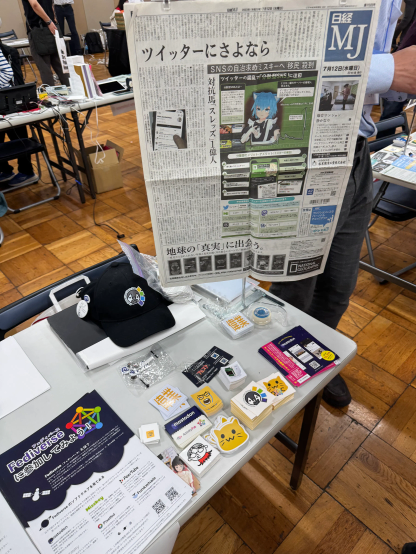
私のThinkPadの天板も https://stickertop.art/ に掲載された。うれしい。

@hongminhee@hollo.social
この問題についても話したいことはたくさんありますが、まず、MastodonやMisskeyなどの既存の主流な実装が「ActivityPubを改善するため」という名目で、FEPのような標準化プロセスを経ずに拡張機能を実装してしまうのは、コミュニティとしては困る点があると考えています。こうした批判を意識してか、Mastodonは最近、独自の引用仕様を実装する前に「FEP-044f: Consent-respecting quote posts」を提案したりもしました。ただ、FEPが依然として英語圏中心で動いていることは、非英語圏の開発者にとっては残念な状況だと思います。
しゅいろ
(本物)@syuilo@misskey.io
ActivityPubに問題があるというのは概ね共通認識とは思うけど、じゃあそれを改善したものを作ろうというと歓迎されない
しゅいろ
(本物)@syuilo@misskey.io
ActivityPubに問題があるというのは概ね共通認識とは思うけど、じゃあそれを改善したものを作ろうというと歓迎されない

@hongminhee@hollo.social
私もActivityPubをゼロから実装することはお勧めしませんが、FedifyのようなActivityPubサーバーフレームワークを使えば問題ないと思います。より多くのウェブサイトがActivityPubを実装することには意義があります。
https://amase.cc/articles/why-dont-recommend-implement-activitypub/

@AmaseCocoa@misskey.io
ActivityPub実装の開発はおすすめしない
https://amase.cc/articles/why-dont-recommend-implement-activitypub/

@hongminhee@hollo.social
Still validating CLI option relationships with if statements? Your type system can do it for you.
@hongminhee@hackers.pub
If you've built CLI tools, you've written code like this:
if (opts.reporter === "junit" && !opts.outputFile) {
throw new Error("--output-file is required for junit reporter");
}
if (opts.reporter === "html" && !opts.outputFile) {
throw new Error("--output-file is required for html reporter");
}
if (opts.reporter === "console" && opts.outputFile) {
console.warn("--output-file is ignored for console reporter");
}
A few months ago, I wrote Stop writing CLI validation. Parse it right the first time. about parsing individual option values correctly. But it didn't cover the relationships between options.
In the code above, --output-file only makes sense when --reporter is junit or html. When it's console, the option shouldn't exist at all.
We're using TypeScript. We have a powerful type system. And yet, here we are, writing runtime checks that the compiler can't help with. Every time we add a new reporter type, we need to remember to update these checks. Every time we refactor, we hope we didn't miss one.
The old guard—Commander, yargs, minimist—were built before TypeScript became mainstream. They give you bags of strings and leave type safety as an exercise for the reader.
But we've made progress. Modern TypeScript-first libraries like cmd-ts and Clipanion (the library powering Yarn Berry) take types seriously:
// cmd-ts
const app = command({
args: {
reporter: option({ type: string, long: 'reporter' }),
outputFile: option({ type: string, long: 'output-file' }),
},
handler: (args) => {
// args.reporter: string
// args.outputFile: string
},
});
// Clipanion
class TestCommand extends Command {
reporter = Option.String('--reporter');
outputFile = Option.String('--output-file');
}
These libraries infer types for individual options. --port is a number. --verbose is a boolean. That's real progress.
But here's what they can't do: express that --output-file is required when --reporter is junit, and forbidden when --reporter is console. The relationship between options isn't captured in the type system.
So you end up writing validation code anyway:
handler: (args) => {
// Both cmd-ts and Clipanion need this
if (args.reporter === "junit" && !args.outputFile) {
throw new Error("--output-file required for junit");
}
// args.outputFile is still string | undefined
// TypeScript doesn't know it's definitely string when reporter is "junit"
}
Rust's clap and Python's Click have requires and conflicts_with attributes, but those are runtime checks too. They don't change the result type.
If the parser configuration knows about option relationships, why doesn't that knowledge show up in the result type?
conditional() Optique treats option relationships as a first-class concept. Here's the test reporter scenario:
import { conditional, object } from "@optique/core/constructs";
import { option } from "@optique/core/primitives";
import { choice, string } from "@optique/core/valueparser";
import { run } from "@optique/run";
const parser = conditional(
option("--reporter", choice(["console", "junit", "html"])),
{
console: object({}),
junit: object({
outputFile: option("--output-file", string()),
}),
html: object({
outputFile: option("--output-file", string()),
openBrowser: option("--open-browser"),
}),
}
);
const [reporter, config] = run(parser);
The conditional() combinator takes a discriminator option (--reporter) and a map of branches. Each branch defines what other options are valid for that discriminator value.
TypeScript infers the result type automatically:
type Result =
| ["console", {}]
| ["junit", { outputFile: string }]
| ["html", { outputFile: string; openBrowser: boolean }];
When reporter is "junit", outputFile is string—not string | undefined. The relationship is encoded in the type.
Now your business logic gets real type safety:
const [reporter, config] = run(parser);
switch (reporter) {
case "console":
runWithConsoleOutput();
break;
case "junit":
// TypeScript knows config.outputFile is string
writeJUnitReport(config.outputFile);
break;
case "html":
// TypeScript knows config.outputFile and config.openBrowser exist
writeHtmlReport(config.outputFile);
if (config.openBrowser) openInBrowser(config.outputFile);
break;
}
No validation code. No runtime checks. If you add a new reporter type and forget to handle it in the switch, the compiler tells you.
Test reporters are a nice example, but let's try something with more variation. Database connection strings:
myapp --db=sqlite --file=./data.db
myapp --db=postgres --host=localhost --port=5432 --user=admin
myapp --db=mysql --host=localhost --port=3306 --user=root --ssl
Each database type needs completely different options:
Here's how you model this:
import { conditional, object } from "@optique/core/constructs";
import { withDefault, optional } from "@optique/core/modifiers";
import { option } from "@optique/core/primitives";
import { choice, string, integer } from "@optique/core/valueparser";
const dbParser = conditional(
option("--db", choice(["sqlite", "postgres", "mysql"])),
{
sqlite: object({
file: option("--file", string()),
}),
postgres: object({
host: option("--host", string()),
port: withDefault(option("--port", integer()), 5432),
user: option("--user", string()),
password: optional(option("--password", string())),
}),
mysql: object({
host: option("--host", string()),
port: withDefault(option("--port", integer()), 3306),
user: option("--user", string()),
ssl: option("--ssl"),
}),
}
);
The inferred type:
type DbConfig =
| ["sqlite", { file: string }]
| ["postgres", { host: string; port: number; user: string; password?: string }]
| ["mysql", { host: string; port: number; user: string; ssl: boolean }];
Notice the details: PostgreSQL defaults to port 5432, MySQL to 3306. PostgreSQL has an optional password, MySQL has an SSL flag. Each database type has exactly the options it needs—no more, no less.
With this structure, writing dbConfig.ssl when the mode is sqlite isn't a runtime error—it's a compile-time impossibility.
Try expressing this with requires_if attributes. You can't. The relationships are too rich.
Once you see it, you find this pattern in many CLI tools:
Authentication modes:
const authParser = conditional(
option("--auth", choice(["none", "basic", "token", "oauth"])),
{
none: object({}),
basic: object({
username: option("--username", string()),
password: option("--password", string()),
}),
token: object({
token: option("--token", string()),
}),
oauth: object({
clientId: option("--client-id", string()),
clientSecret: option("--client-secret", string()),
tokenUrl: option("--token-url", url()),
}),
}
);
Deployment targets, output formats, connection protocols—anywhere you have a mode selector that determines what other options are valid.
conditional() exists Optique already has an or() combinator for mutually exclusive alternatives. Why do we need conditional()?
The or() combinator distinguishes branches based on structure—which options are present. It works well for subcommands like git commit vs git push, where the arguments differ completely.
But in the reporter example, the structure is identical: every branch has a --reporter flag. The difference lies in the flag's value, not its presence.
// This won't work as intended
const parser = or(
object({ reporter: option("--reporter", choice(["console"])) }),
object({
reporter: option("--reporter", choice(["junit", "html"])),
outputFile: option("--output-file", string())
}),
);
When you pass --reporter junit, or() tries to pick a branch based on what options are present. Both branches have --reporter, so it can't distinguish them structurally.
conditional() solves this by reading the discriminator's value first, then selecting the appropriate branch. It bridges the gap between structural parsing and value-based decisions.
Instead of parsing options into a loose type and then validating relationships, define a parser whose structure is the constraint.
| Traditional approach | Optique approach |
|---|---|
| Parse → Validate → Use | Parse (with constraints) → Use |
| Types and validation logic maintained separately | Types reflect the constraints |
| Mismatches found at runtime | Mismatches found at compile time |
The parser definition becomes the single source of truth. Add a new reporter type? The parser definition changes, the inferred type changes, and the compiler shows you everywhere that needs updating.
If this resonates with a CLI you're building:
Next time you're about to write an if statement checking option relationships, ask: could the parser express this constraint instead?
The structure of your parser is the constraint. You might not need that validation code at all.
@lobsters@mastodon.social
Optique 0.8.0: Conditional parsing, pass-through options, and LogTape integration https://lobste.rs/s/wh35st #javascript
https://hackers.pub/@hongminhee/2025/optique-080

@hongminhee@hollo.social · Reply to 洪 民憙 (Hong Minhee) :nonbinary:'s post
I posted a blog entry to wrap up the year: My 2025 with the fediverse. I'm grateful that the fediverse has allowed me to connect with so many people. I look forward to our continued connection.

@hongminhee@hollo.social · Reply to 洪 民憙 (Hong Minhee) :nonbinary:'s post
Fediverse Advent Calendar 2025の10日目に参加する記事をブログに投稿しました:「フェディバースと過ごした2025年」。タイトルの通り、フェディバースと共に過ごした私の一年を振り返る内容です。フェディバースのおかげで多くのご縁に恵まれ、感謝しています。これからもよろしくお願いします。

@hongminhee@hollo.social
한 해를 마무리하는 글을 블로그에 썼습니다: 〈聯合宇宙와 함께 한 2025年〉(한글 專用文은 이쪽). 題目 그대로 聯合宇宙와 함께 했던 저의 한 해를 되돌아 보는 글입니다. 聯合宇宙 德分에 많은 因緣과 이어지게 되어서 感謝하게 생각합니다.

@hongminhee@hollo.social
CLIパーサーの新しい記事を書きました。--reporterの値によって--output-fileが必須になったり禁止になったり…そういう関係、型で表現できたら楽じゃないですか?
@jdv_jazz@mastodon.nl
Cannonball Adderley & The Bossa Rio Sextet - Batida Diferentes (Feat. Sergio Mendes)
#JazzDeVille #Jazz #NowPlaying #CannonballAdderleyTheBossaRioSextet
@omasanori@mstdn.maud.io · Reply to Masanori Ogino 𓀁's post
先に書いておくと、RDFのシリアライズ形式は必ずしもXMLでなければならないわけではなく、Turtleなど、JSONくらい《軽い》文法もあります。
@omasanori@mstdn.maud.io
そんなことをしたら流行ってないのは承知の上で、JSON-LDではなくRDFを使ったActivityPubの世界をみたいかも。

@hongminhee@hollo.social
Released Optique 0.8.0, a type-safe CLI parser for TypeScript.
This version adds conditional() for branching based on a discriminator option, passThrough() for forwarding unknown options to underlying tools, and a new @optique/logtape package for configuring LogTape via CLI.
@hongminhee@hackers.pub
We're excited to announce Optique 0.8.0! This release introduces powerful new features for building sophisticated CLI applications: the conditional() combinator for discriminated union patterns, the passThrough() parser for wrapper tools, and the new @optique/logtape package for seamless logging configuration.
Optique is a type-safe combinatorial CLI parser for TypeScript, providing a functional approach to building command-line interfaces with composable parsers and full type inference.
conditional() Ever needed to enable different sets of options based on a discriminator value? The new conditional() combinator makes this pattern first-class. It creates discriminated unions where certain options only become valid when a specific discriminator value is selected.
import { conditional, object } from "@optique/core/constructs";
import { option } from "@optique/core/primitives";
import { choice, string } from "@optique/core/valueparser";
const parser = conditional(
option("--reporter", choice(["console", "junit", "html"])),
{
console: object({}),
junit: object({ outputFile: option("--output-file", string()) }),
html: object({ outputFile: option("--output-file", string()) }),
}
);
// Result type: ["console", {}] | ["junit", { outputFile: string }] | ...
Key features:
[discriminator, branchValue] for clear type narrowingThe conditional() parser provides a more structured alternative to or() for discriminated union patterns. Use it when you have an explicit discriminator option that determines which set of options is valid.
See the conditional() documentation for more details and examples.
passThrough() Building wrapper CLI tools that need to forward unrecognized options to an underlying tool? The new passThrough() parser enables legitimate wrapper/proxy patterns by capturing unknown options without validation errors.
import { object } from "@optique/core/constructs";
import { option, passThrough } from "@optique/core/primitives";
const parser = object({
debug: option("--debug"),
extra: passThrough(),
});
// mycli --debug --foo=bar --baz=qux
// → { debug: true, extra: ["--foo=bar", "--baz=qux"] }
Key features:
"equalsOnly" (default, safest), "nextToken" (captures --opt val pairs), and "greedy" (captures all remaining tokens)-- options terminator in "equalsOnly" and "nextToken" modesobject(), subcommands, and other combinatorsThis feature is designed for building Docker-like CLIs, build tool wrappers, or any tool that proxies commands to another process.
See the passThrough() documentation for usage patterns and best practices.
The new @optique/logtape package provides seamless integration with LogTape, enabling you to configure logging through command-line arguments with various parsing strategies.
# Deno
deno add --jsr @optique/logtape @logtape/logtape
# npm
npm add @optique/logtape @logtape/logtape
Quick start with the loggingOptions() preset:
import { loggingOptions, createLoggingConfig } from "@optique/logtape";
import { object } from "@optique/core/constructs";
import { parse } from "@optique/core/parser";
import { configure } from "@logtape/logtape";
const parser = object({
logging: loggingOptions({ level: "verbosity" }),
});
const args = ["-vv", "--log-output=-"];
const result = parse(parser, args);
if (result.success) {
const config = await createLoggingConfig(result.value.logging);
await configure(config);
}
The package offers multiple approaches to control log verbosity:
verbosity() parser: The classic -v/-vv/-vvv pattern where each flag increases verbosity (no flags → "warning", -v → "info", -vv → "debug", -vvv → "trace")debug() parser: Simple --debug/-d flag that toggles between normal and debug levelslogLevel() value parser: Explicit --log-level=debug option for direct level selectionlogOutput() parser: Log output destination with - for console or file path for file outputSee the LogTape integration documentation for complete examples and configuration options.
Fixed an issue where the integer() value parser rejected negative integers when using type: "number". The regex pattern has been updated from /^\d+$/ to /^-?\d+$/ to correctly handle values like -42. Note that type: "bigint" already accepted negative integers, so this change brings consistency between the two types.
# Deno
deno add jsr:@optique/core
# npm
npm add @optique/core
# pnpm
pnpm add @optique/core
# Yarn
yarn add @optique/core
# Bun
bun add @optique/core
For the LogTape integration:
# Deno
deno add --jsr @optique/logtape @logtape/logtape
# npm
npm add @optique/logtape @logtape/logtape
# pnpm
pnpm add @optique/logtape @logtape/logtape
# Yarn
yarn add @optique/logtape @logtape/logtape
# Bun
bun add @optique/logtape @logtape/logtape
Optique 0.8.0 continues our focus on making CLI development more expressive and type-safe. The conditional() combinator brings discriminated union patterns to the forefront, passThrough() enables new wrapper tool use cases, and the LogTape integration makes logging configuration a breeze.
As always, all new features maintain full backward compatibility—your existing parsers continue to work unchanged.
We're grateful to the community for feedback and suggestions. If you have ideas for future improvements or encounter any issues, please let us know through GitHub Issues. For more information about Optique and its features, visit the documentation or check out the full changelog.
@hongminhee@hackers.pub
We're excited to announce Optique 0.8.0! This release introduces powerful new features for building sophisticated CLI applications: the conditional() combinator for discriminated union patterns, the passThrough() parser for wrapper tools, and the new @optique/logtape package for seamless logging configuration.
Optique is a type-safe combinatorial CLI parser for TypeScript, providing a functional approach to building command-line interfaces with composable parsers and full type inference.
conditional() Ever needed to enable different sets of options based on a discriminator value? The new conditional() combinator makes this pattern first-class. It creates discriminated unions where certain options only become valid when a specific discriminator value is selected.
import { conditional, object } from "@optique/core/constructs";
import { option } from "@optique/core/primitives";
import { choice, string } from "@optique/core/valueparser";
const parser = conditional(
option("--reporter", choice(["console", "junit", "html"])),
{
console: object({}),
junit: object({ outputFile: option("--output-file", string()) }),
html: object({ outputFile: option("--output-file", string()) }),
}
);
// Result type: ["console", {}] | ["junit", { outputFile: string }] | ...
Key features:
[discriminator, branchValue] for clear type narrowingThe conditional() parser provides a more structured alternative to or() for discriminated union patterns. Use it when you have an explicit discriminator option that determines which set of options is valid.
See the conditional() documentation for more details and examples.
passThrough() Building wrapper CLI tools that need to forward unrecognized options to an underlying tool? The new passThrough() parser enables legitimate wrapper/proxy patterns by capturing unknown options without validation errors.
import { object } from "@optique/core/constructs";
import { option, passThrough } from "@optique/core/primitives";
const parser = object({
debug: option("--debug"),
extra: passThrough(),
});
// mycli --debug --foo=bar --baz=qux
// → { debug: true, extra: ["--foo=bar", "--baz=qux"] }
Key features:
"equalsOnly" (default, safest), "nextToken" (captures --opt val pairs), and "greedy" (captures all remaining tokens)-- options terminator in "equalsOnly" and "nextToken" modesobject(), subcommands, and other combinatorsThis feature is designed for building Docker-like CLIs, build tool wrappers, or any tool that proxies commands to another process.
See the passThrough() documentation for usage patterns and best practices.
The new @optique/logtape package provides seamless integration with LogTape, enabling you to configure logging through command-line arguments with various parsing strategies.
# Deno
deno add --jsr @optique/logtape @logtape/logtape
# npm
npm add @optique/logtape @logtape/logtape
Quick start with the loggingOptions() preset:
import { loggingOptions, createLoggingConfig } from "@optique/logtape";
import { object } from "@optique/core/constructs";
import { parse } from "@optique/core/parser";
import { configure } from "@logtape/logtape";
const parser = object({
logging: loggingOptions({ level: "verbosity" }),
});
const args = ["-vv", "--log-output=-"];
const result = parse(parser, args);
if (result.success) {
const config = await createLoggingConfig(result.value.logging);
await configure(config);
}
The package offers multiple approaches to control log verbosity:
verbosity() parser: The classic -v/-vv/-vvv pattern where each flag increases verbosity (no flags → "warning", -v → "info", -vv → "debug", -vvv → "trace")debug() parser: Simple --debug/-d flag that toggles between normal and debug levelslogLevel() value parser: Explicit --log-level=debug option for direct level selectionlogOutput() parser: Log output destination with - for console or file path for file outputSee the LogTape integration documentation for complete examples and configuration options.
Fixed an issue where the integer() value parser rejected negative integers when using type: "number". The regex pattern has been updated from /^\d+$/ to /^-?\d+$/ to correctly handle values like -42. Note that type: "bigint" already accepted negative integers, so this change brings consistency between the two types.
# Deno
deno add jsr:@optique/core
# npm
npm add @optique/core
# pnpm
pnpm add @optique/core
# Yarn
yarn add @optique/core
# Bun
bun add @optique/core
For the LogTape integration:
# Deno
deno add --jsr @optique/logtape @logtape/logtape
# npm
npm add @optique/logtape @logtape/logtape
# pnpm
pnpm add @optique/logtape @logtape/logtape
# Yarn
yarn add @optique/logtape @logtape/logtape
# Bun
bun add @optique/logtape @logtape/logtape
Optique 0.8.0 continues our focus on making CLI development more expressive and type-safe. The conditional() combinator brings discriminated union patterns to the forefront, passThrough() enables new wrapper tool use cases, and the LogTape integration makes logging configuration a breeze.
As always, all new features maintain full backward compatibility—your existing parsers continue to work unchanged.
We're grateful to the community for feedback and suggestions. If you have ideas for future improvements or encounter any issues, please let us know through GitHub Issues. For more information about Optique and its features, visit the documentation or check out the full changelog.

@hongminhee@hollo.social · Reply to Carlana :v_trans:'s post
@carlana Haha, maybe, but I haven't heard of these word yet!
@krosylight@fosstodon.org
As a multi language speaker I'd love to have some built-in language selector in the web browser for each website. This feature shouldn't be part of the website but rather the browser...
@firesidefedi@social.firesidefedi.live
EU Commission's X account has been removed after the EU fined X for transparency failures at the tune $150,000,000. I hope someone at the EU is paying attention to X's behavior as well as our growing community here on the #fediverse .
https://www.euractiv.com/news/x-blocks-eu-commissions-advertising-account-after-e120-million-fine/

@hongminhee@hollo.social
韓国語でクィア(queer)を意味する言葉に、(「一般」ではないという意味で)「二般」という言葉が有るのですが、本当によくできた言葉だと思います。

@hongminhee@hollo.social · Reply to 洪 民憙 (Hong Minhee) :nonbinary:'s post
오늘 liftIO 2025에서 發表한 〈Optique: TypeScript의 타입 推論으로 CLI 有效性 檢査를 代替하기〉의 發表 資料를 共有합니다! 들어주신 모든 분들께 感謝 드립니다.

@hongminhee@hollo.social

@hongminhee@hollo.social · Reply to Jaeyeol Lee (a.k.a. kodingwarrior) :vim:'s post
@kodingwarrior 아니면 버티컬 마우스는 어떠세요? 저는 버티컬 마우스랑 같이 써요. ABKO에서 나오는 이런 거 하나 싸게 사시면… (저도 저거 쓰고 있습니다.)
@hongminhee@hackers.pub
내일은 liftIO 2025에서 발표… 떨린다…
@kodingwarrior@hackers.pub
여기에 뒤늦게 올리지만 2차 모집도 진행중입니다! 이번엔 12월 15일(월)까지....!!
RE: https://hackers.pub/@kodingwarrior/019abed2-f2e0-79fe-ada8-6b150ae0d840
@kodingwarrior@hackers.pub
Hackers' Public @ Seoul 송년 네트워킹 밋업은 발표보다 대화, 형식보다 연결을 중심으로 진행됩니다. 라이트닝 토크도 지원받습니다. 만들었던 것·배운 것·고민했던 이야기를 자유롭게 얘기해보도록 해요.
많은 관심 부탁드립니다~

@hongminhee@hollo.social · Reply to Jaeyeol Lee (a.k.a. kodingwarrior) :vim:'s post
@kodingwarrior 麻婆丼 먹고 싶네요…