#materialism

洪 民憙 (Hong Minhee) :nonbinary:'s avatar
洪 民憙 (Hong Minhee) :nonbinary:

@hongminhee@hollo.social

I've been increasingly concerned about the corporate monopoly over frontier LLMs. While many ethically-minded people choose to boycott these models, I believe passive resistance alone cannot break the structural grip of big tech. To truly “liberate” these technologies and turn them into public goods, we need to look beyond moral high grounds and engage with the material basis of AI—specifically compute, data, and the relations of production.

I've written two posts exploring this through the lens of historical materialism. The first piece analyzes why current “open source” definitions struggle with LLMs, and the second discusses what it means to “act materialistically” in our imperfect world. My goal is to suggest a path forward that moves from mere boycotting to a more proactive, structural socialization of AI infrastructure.

If you've been feeling uneasy about the AI landscape but aren't sure if boycotting is the final answer, I'd love for you to give these a read:

洪 民憙 (Hong Minhee) :nonbinary:'s avatar
洪 民憙 (Hong Minhee) :nonbinary:

@hongminhee@hollo.social

I've been increasingly concerned about the corporate monopoly over frontier LLMs. While many ethically-minded people choose to boycott these models, I believe passive resistance alone cannot break the structural grip of big tech. To truly “liberate” these technologies and turn them into public goods, we need to look beyond moral high grounds and engage with the material basis of AI—specifically compute, data, and the relations of production.

I've written two posts exploring this through the lens of historical materialism. The first piece analyzes why current “open source” definitions struggle with LLMs, and the second discusses what it means to “act materialistically” in our imperfect world. My goal is to suggest a path forward that moves from mere boycotting to a more proactive, structural socialization of AI infrastructure.

If you've been feeling uneasy about the AI landscape but aren't sure if boycotting is the final answer, I'd love for you to give these a read:

洪 民憙 (Hong Minhee) :nonbinary:'s avatar
洪 民憙 (Hong Minhee) :nonbinary:

@hongminhee@hollo.social

I've been increasingly concerned about the corporate monopoly over frontier LLMs. While many ethically-minded people choose to boycott these models, I believe passive resistance alone cannot break the structural grip of big tech. To truly “liberate” these technologies and turn them into public goods, we need to look beyond moral high grounds and engage with the material basis of AI—specifically compute, data, and the relations of production.

I've written two posts exploring this through the lens of historical materialism. The first piece analyzes why current “open source” definitions struggle with LLMs, and the second discusses what it means to “act materialistically” in our imperfect world. My goal is to suggest a path forward that moves from mere boycotting to a more proactive, structural socialization of AI infrastructure.

If you've been feeling uneasy about the AI landscape but aren't sure if boycotting is the final answer, I'd love for you to give these a read:

洪 民憙 (Hong Minhee) :nonbinary:'s avatar
洪 民憙 (Hong Minhee) :nonbinary:

@hongminhee@hollo.social

I've been increasingly concerned about the corporate monopoly over frontier LLMs. While many ethically-minded people choose to boycott these models, I believe passive resistance alone cannot break the structural grip of big tech. To truly “liberate” these technologies and turn them into public goods, we need to look beyond moral high grounds and engage with the material basis of AI—specifically compute, data, and the relations of production.

I've written two posts exploring this through the lens of historical materialism. The first piece analyzes why current “open source” definitions struggle with LLMs, and the second discusses what it means to “act materialistically” in our imperfect world. My goal is to suggest a path forward that moves from mere boycotting to a more proactive, structural socialization of AI infrastructure.

If you've been feeling uneasy about the AI landscape but aren't sure if boycotting is the final answer, I'd love for you to give these a read:

洪 民憙 (Hong Minhee) :nonbinary:'s avatar
洪 民憙 (Hong Minhee) :nonbinary:

@hongminhee@hollo.social

I've been increasingly concerned about the corporate monopoly over frontier LLMs. While many ethically-minded people choose to boycott these models, I believe passive resistance alone cannot break the structural grip of big tech. To truly “liberate” these technologies and turn them into public goods, we need to look beyond moral high grounds and engage with the material basis of AI—specifically compute, data, and the relations of production.

I've written two posts exploring this through the lens of historical materialism. The first piece analyzes why current “open source” definitions struggle with LLMs, and the second discusses what it means to “act materialistically” in our imperfect world. My goal is to suggest a path forward that moves from mere boycotting to a more proactive, structural socialization of AI infrastructure.

If you've been feeling uneasy about the AI landscape but aren't sure if boycotting is the final answer, I'd love for you to give these a read:

洪 民憙 (Hong Minhee) :nonbinary:'s avatar
洪 民憙 (Hong Minhee) :nonbinary:

@hongminhee@hollo.social

I've been increasingly concerned about the corporate monopoly over frontier LLMs. While many ethically-minded people choose to boycott these models, I believe passive resistance alone cannot break the structural grip of big tech. To truly “liberate” these technologies and turn them into public goods, we need to look beyond moral high grounds and engage with the material basis of AI—specifically compute, data, and the relations of production.

I've written two posts exploring this through the lens of historical materialism. The first piece analyzes why current “open source” definitions struggle with LLMs, and the second discusses what it means to “act materialistically” in our imperfect world. My goal is to suggest a path forward that moves from mere boycotting to a more proactive, structural socialization of AI infrastructure.

If you've been feeling uneasy about the AI landscape but aren't sure if boycotting is the final answer, I'd love for you to give these a read:

洪 民憙 (Hong Minhee) :nonbinary:'s avatar
洪 民憙 (Hong Minhee) :nonbinary:

@hongminhee@hollo.social

I've been increasingly concerned about the corporate monopoly over frontier LLMs. While many ethically-minded people choose to boycott these models, I believe passive resistance alone cannot break the structural grip of big tech. To truly “liberate” these technologies and turn them into public goods, we need to look beyond moral high grounds and engage with the material basis of AI—specifically compute, data, and the relations of production.

I've written two posts exploring this through the lens of historical materialism. The first piece analyzes why current “open source” definitions struggle with LLMs, and the second discusses what it means to “act materialistically” in our imperfect world. My goal is to suggest a path forward that moves from mere boycotting to a more proactive, structural socialization of AI infrastructure.

If you've been feeling uneasy about the AI landscape but aren't sure if boycotting is the final answer, I'd love for you to give these a read:

洪 民憙 (Hong Minhee) :nonbinary:'s avatar
洪 民憙 (Hong Minhee) :nonbinary:

@hongminhee@hollo.social

I've been increasingly concerned about the corporate monopoly over frontier LLMs. While many ethically-minded people choose to boycott these models, I believe passive resistance alone cannot break the structural grip of big tech. To truly “liberate” these technologies and turn them into public goods, we need to look beyond moral high grounds and engage with the material basis of AI—specifically compute, data, and the relations of production.

I've written two posts exploring this through the lens of historical materialism. The first piece analyzes why current “open source” definitions struggle with LLMs, and the second discusses what it means to “act materialistically” in our imperfect world. My goal is to suggest a path forward that moves from mere boycotting to a more proactive, structural socialization of AI infrastructure.

If you've been feeling uneasy about the AI landscape but aren't sure if boycotting is the final answer, I'd love for you to give these a read:

洪 民憙 (Hong Minhee) :nonbinary:'s avatar
洪 民憙 (Hong Minhee) :nonbinary:

@hongminhee@hollo.social

I've been increasingly concerned about the corporate monopoly over frontier LLMs. While many ethically-minded people choose to boycott these models, I believe passive resistance alone cannot break the structural grip of big tech. To truly “liberate” these technologies and turn them into public goods, we need to look beyond moral high grounds and engage with the material basis of AI—specifically compute, data, and the relations of production.

I've written two posts exploring this through the lens of historical materialism. The first piece analyzes why current “open source” definitions struggle with LLMs, and the second discusses what it means to “act materialistically” in our imperfect world. My goal is to suggest a path forward that moves from mere boycotting to a more proactive, structural socialization of AI infrastructure.

If you've been feeling uneasy about the AI landscape but aren't sure if boycotting is the final answer, I'd love for you to give these a read:

洪 民憙 (Hong Minhee) :nonbinary:'s avatar
洪 民憙 (Hong Minhee) :nonbinary:

@hongminhee@hollo.social

I've been increasingly concerned about the corporate monopoly over frontier LLMs. While many ethically-minded people choose to boycott these models, I believe passive resistance alone cannot break the structural grip of big tech. To truly “liberate” these technologies and turn them into public goods, we need to look beyond moral high grounds and engage with the material basis of AI—specifically compute, data, and the relations of production.

I've written two posts exploring this through the lens of historical materialism. The first piece analyzes why current “open source” definitions struggle with LLMs, and the second discusses what it means to “act materialistically” in our imperfect world. My goal is to suggest a path forward that moves from mere boycotting to a more proactive, structural socialization of AI infrastructure.

If you've been feeling uneasy about the AI landscape but aren't sure if boycotting is the final answer, I'd love for you to give these a read:

洪 民憙 (Hong Minhee) :nonbinary:'s avatar
洪 民憙 (Hong Minhee) :nonbinary:

@hongminhee@hollo.social

I've been increasingly concerned about the corporate monopoly over frontier LLMs. While many ethically-minded people choose to boycott these models, I believe passive resistance alone cannot break the structural grip of big tech. To truly “liberate” these technologies and turn them into public goods, we need to look beyond moral high grounds and engage with the material basis of AI—specifically compute, data, and the relations of production.

I've written two posts exploring this through the lens of historical materialism. The first piece analyzes why current “open source” definitions struggle with LLMs, and the second discusses what it means to “act materialistically” in our imperfect world. My goal is to suggest a path forward that moves from mere boycotting to a more proactive, structural socialization of AI infrastructure.

If you've been feeling uneasy about the AI landscape but aren't sure if boycotting is the final answer, I'd love for you to give these a read:

洪 民憙 (Hong Minhee) :nonbinary:'s avatar
洪 民憙 (Hong Minhee) :nonbinary:

@hongminhee@hollo.social

I've been increasingly concerned about the corporate monopoly over frontier LLMs. While many ethically-minded people choose to boycott these models, I believe passive resistance alone cannot break the structural grip of big tech. To truly “liberate” these technologies and turn them into public goods, we need to look beyond moral high grounds and engage with the material basis of AI—specifically compute, data, and the relations of production.

I've written two posts exploring this through the lens of historical materialism. The first piece analyzes why current “open source” definitions struggle with LLMs, and the second discusses what it means to “act materialistically” in our imperfect world. My goal is to suggest a path forward that moves from mere boycotting to a more proactive, structural socialization of AI infrastructure.

If you've been feeling uneasy about the AI landscape but aren't sure if boycotting is the final answer, I'd love for you to give these a read:

洪 民憙 (Hong Minhee) :nonbinary:'s avatar
洪 民憙 (Hong Minhee) :nonbinary:

@hongminhee@hollo.social

I've been increasingly concerned about the corporate monopoly over frontier LLMs. While many ethically-minded people choose to boycott these models, I believe passive resistance alone cannot break the structural grip of big tech. To truly “liberate” these technologies and turn them into public goods, we need to look beyond moral high grounds and engage with the material basis of AI—specifically compute, data, and the relations of production.

I've written two posts exploring this through the lens of historical materialism. The first piece analyzes why current “open source” definitions struggle with LLMs, and the second discusses what it means to “act materialistically” in our imperfect world. My goal is to suggest a path forward that moves from mere boycotting to a more proactive, structural socialization of AI infrastructure.

If you've been feeling uneasy about the AI landscape but aren't sure if boycotting is the final answer, I'd love for you to give these a read:

洪 民憙 (Hong Minhee) :nonbinary:'s avatar
洪 民憙 (Hong Minhee) :nonbinary:

@hongminhee@hollo.social

I've been increasingly concerned about the corporate monopoly over frontier LLMs. While many ethically-minded people choose to boycott these models, I believe passive resistance alone cannot break the structural grip of big tech. To truly “liberate” these technologies and turn them into public goods, we need to look beyond moral high grounds and engage with the material basis of AI—specifically compute, data, and the relations of production.

I've written two posts exploring this through the lens of historical materialism. The first piece analyzes why current “open source” definitions struggle with LLMs, and the second discusses what it means to “act materialistically” in our imperfect world. My goal is to suggest a path forward that moves from mere boycotting to a more proactive, structural socialization of AI infrastructure.

If you've been feeling uneasy about the AI landscape but aren't sure if boycotting is the final answer, I'd love for you to give these a read:

洪 民憙 (Hong Minhee) :nonbinary:'s avatar
洪 民憙 (Hong Minhee) :nonbinary:

@hongminhee@hollo.social

I've been increasingly concerned about the corporate monopoly over frontier LLMs. While many ethically-minded people choose to boycott these models, I believe passive resistance alone cannot break the structural grip of big tech. To truly “liberate” these technologies and turn them into public goods, we need to look beyond moral high grounds and engage with the material basis of AI—specifically compute, data, and the relations of production.

I've written two posts exploring this through the lens of historical materialism. The first piece analyzes why current “open source” definitions struggle with LLMs, and the second discusses what it means to “act materialistically” in our imperfect world. My goal is to suggest a path forward that moves from mere boycotting to a more proactive, structural socialization of AI infrastructure.

If you've been feeling uneasy about the AI landscape but aren't sure if boycotting is the final answer, I'd love for you to give these a read:

Arend van Beelen's avatar
Arend van Beelen

@arendjr@mstdn.social

is an illusion.

"To remain intellectually honest, not just with ourselves, but with the universe at large, we must accept that materialism is a mere illusion, a projection of the mind."

philosophyofbalance.com/blog/m

Reply to this toot to have your comment appear under the post.

Letterform Archive's avatar
Letterform Archive

@letterformarchive@typo.social

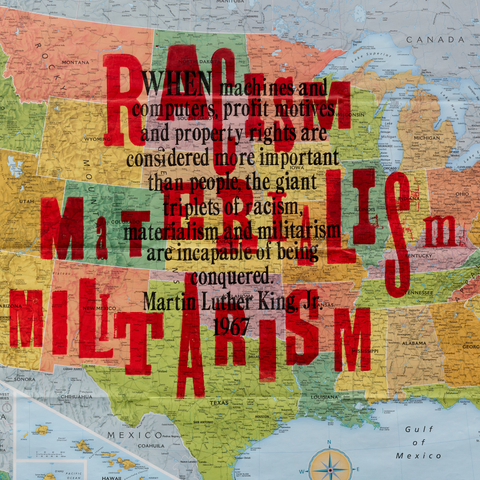
Amos Paul Kennedy, Jr.; Racism, Materialism, Militarism; letterpress on map, Detroit, 2014.

Citizen Printer is open through March 16 at Letterform Archive. Visit, see the online exhibition, buy the book: letterformarchive.org/news/amo

Letterpress type printed over the top of a U.S. map. The words “RACISM, MATERIALISM, MILITARISM” are in red. A quote from Martin Luther King, Jr. from 1967 is in black: “When machines and computers, profit motives and property rights are considered more important than people, the giant triplets of racism, materialism and militarism are incapable of being conquered.”
ALT text detailsLetterpress type printed over the top of a U.S. map. The words “RACISM, MATERIALISM, MILITARISM” are in red. A quote from Martin Luther King, Jr. from 1967 is in black: “When machines and computers, profit motives and property rights are considered more important than people, the giant triplets of racism, materialism and militarism are incapable of being conquered.”
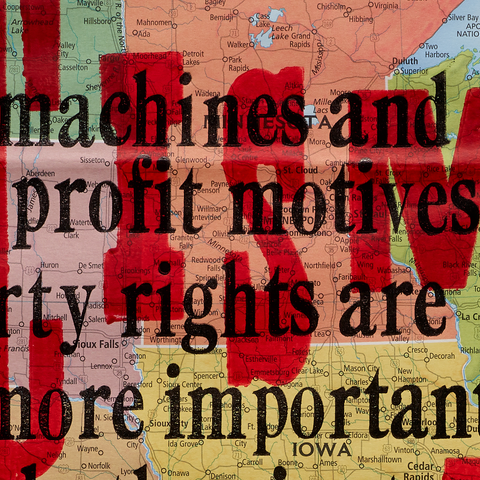
Zoomed detail of the red and black type.
ALT text detailsZoomed detail of the red and black type.
Full, uncropped view of the map.
ALT text detailsFull, uncropped view of the map.