Hashtag

#OpenTelemetry

180 posts tagged with this hashtag.

@opentelemetry@fosstodon.org

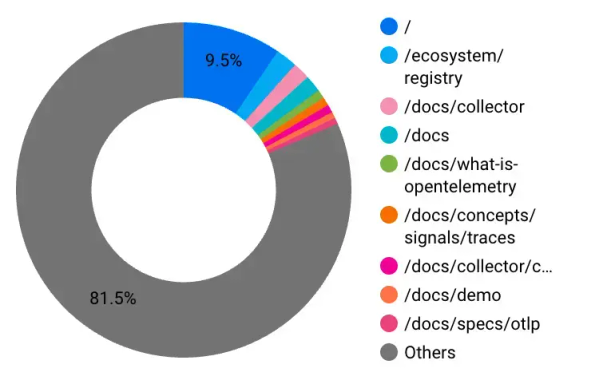
🗓️ Over a year in the making
📈 One of the fastest-growing projects in

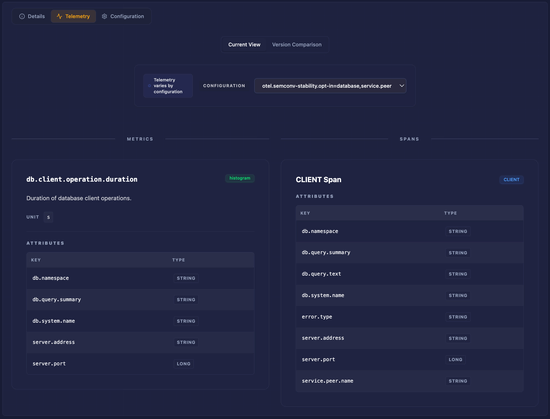
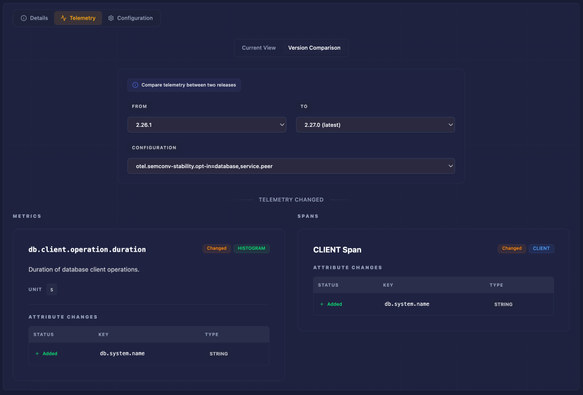
Introducing the Ecosystem Explorer

is huge: hundreds of instrumentations across a dozen languages, plus the Collector. Figuring out what telemetry you actually get used to mean deploying first.

Not anymore. The Ecosystem Explorer helps you understand OTel before you start. We’re starting with Java, with plenty more to come.

Got ideas? Come build with us.

opentelemetry.io/blog/2026/int

@opentelemetry@fosstodon.org

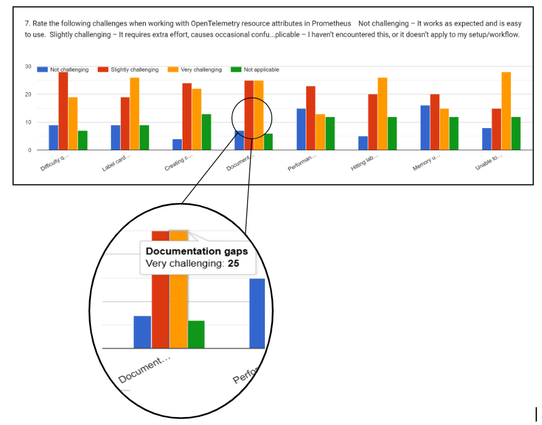
OpenTelemetry ❤️ Prometheus!

The and communities are strengthening interoperability, and we want your input!

🛠️ If you’re building with both, check out the client library doc to understand key similarities and differences, plus updates on Prometheus compatibility and exporter spec stabilization. Links in thread.

📄 We’re also supporting an LFX mentorship to improve interoperability docs.

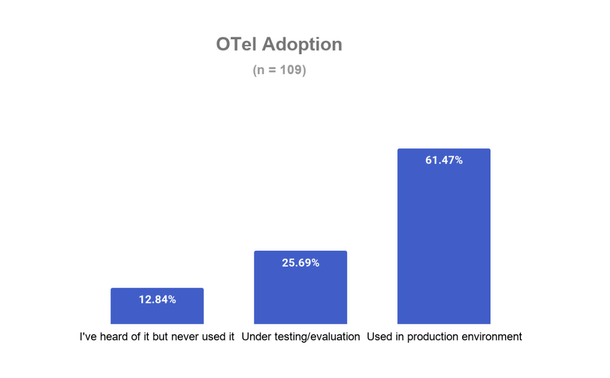
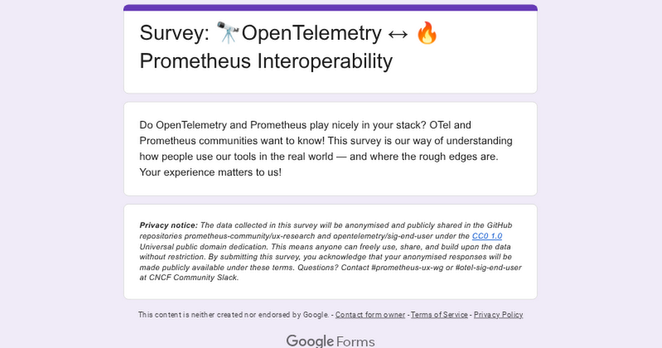
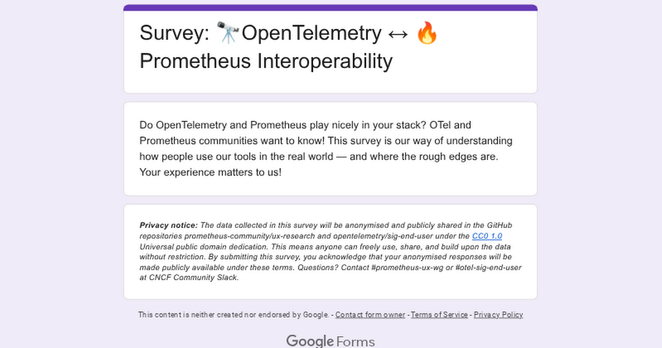
🗳️ Running both together? Take our 3-minute survey! buff.ly/XhVm0Fg

@joschi@hachyderm.io

Are you living in Sydney, AUS? Are you looking for a job in the platform engineering and space?

This is your chance to join a great startup in the space which recently acquired unicorn status:

jobs.ashbyhq.com/dash0/c71c1a0

jobs.ashbyhq.com

Platform Engineer

ABOUT DASH0 Join Dash0 and help us define the future of observability. We are OpenTelemetry-native, building a delightful, simple, and AI-centric platform that eliminates vendor lock-in and meaningless toil. Shape a product that developers love—all with transparent pricing and cost-control built in. THE OPPORTUNITY Dash0 is building the observability platform that developers actually want to use — OpenTelemetry-native, transparent, and designed to eliminate the lock-in and complexity that define the incumbent players. As we expand engineering capacity globally, we're looking for a Mid-Level Platform Engineer to join our growing team in the Sydney area. This role is fully remote, but you'll be based in the Sydney, Australia area to collaborate regularly in person with the existing regional team member. You'll work across infrastructure, automation, and reliability — owning foundational systems that let our product teams move fast without breaking things. If you're a few years into your platform engineering career and ready to take on real ownership in a fast-moving environment, this is the right next step. What You'll Do - Build and maintain CI/CD pipelines and deployment automation to support continuous, high-quality software delivery - Provision and manage cloud infrastructure using Terraform, keeping things scalable, secure, and well-documented - Partner with product engineering teams to design resilient, cloud-native solutions and review code for quality and standards adherence - Monitor, troubleshoot, and improve platform performance and availability — including on-call coverage when needed - Embed security best practices into platform design, from access controls and encryption through to deployment pipelines - Contribute to platform architecture decisions and help evolve our infrastructure as the product and team scale - Write and maintain technical documentation: architecture diagrams, runbooks, and infrastructure standards What You Bring - 3–5 years of platform, infrastructure, or DevOps engineering experience - Solid Go (GoLang) programming skills — you're writing and reviewing production Go code, not just reading it - Hands-on experience with Terraform or comparable infrastructure-as-code tooling - Working knowledge of containerization and orchestration (Docker, Kubernetes) - Experience building and operating CI/CD pipelines in a cloud environment (AWS, GCP, or Azure) - Strong async communication skills — you're comfortable working across time zones and explaining infrastructure decisions to non-infrastructure engineers - Based in the Sydney, Australia area with the ability to meet the local team in person regularly Nice to Have - Experience with observability tooling, monitoring platforms, or OpenTelemetry instrumentation - Familiarity with security compliance frameworks relevant to SaaS platforms (e.g., SOC 2, ISO 27001) - Experience in a high-growth, venture-backed startup environment Why Dash0 This is a unique opportunity to help build a generational company. Dash0 is backed by top-tier investors including Balderton Capital, Accel and Cherry Ventures and led by a founding team with decades of experience in observability. We're in the middle of a massive growth phase after our Series B — and we're just getting started. If you're looking for a place where a great product meets great people, where momentum is real and your impact is visible from day one — this is it. What we offer: - Competitive salary & meaningful equity participation — you'll own part of what you're building - Flexible, remote-first work environment with offices in New York, Amsterdam, and Munich - €60/month phone & internet allowance - Location-specific benefits - Collaborative, fast-moving team culture with a builder mindset - Clear path for career growth and development - Direct access to founders and leadership

@joschi@hachyderm.io
@opentelemetry@fosstodon.org

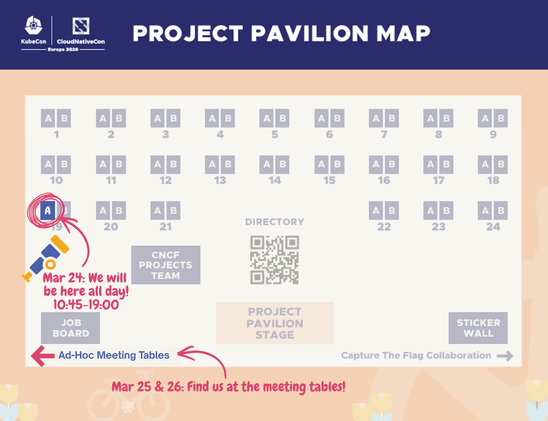
and CloudNativeCon EU is next week! If you'll be in Amsterdam, come say hi!

will be in the Project Pavilion at booth 19A for the entire day on Tuesday, March 24.

For the remainder of the event, find us at the ad-hoc meeting tables right next to the Project Pavilion.

We hope to see you there!

@opentelemetry@fosstodon.org

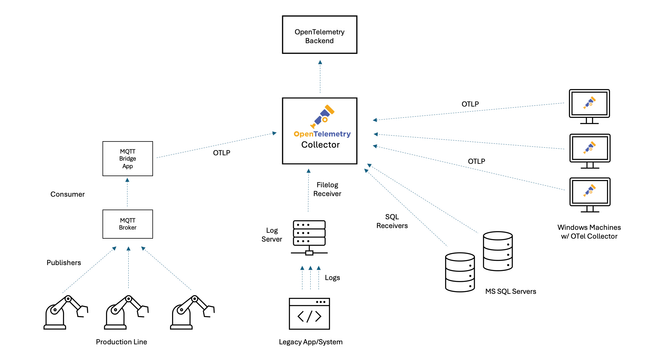
🤔 Have you ever wondered how real organizations use the Collector in production? What architecture do they choose and why? How do they deploy it? How do they configure it to meet the requirements of a production system?

Check out the new blog series launched by the Developer Experience SIG! These posts will highlight end-user stories from a variety of industries, architectures, and company sizes. The first one is up today!

opentelemetry.io/blog/2026/dev

@opentelemetry@fosstodon.org

‼️ is deprecating the Span Events API.

Our aim is to remove the confusion and duplication caused by having two overlapping ways to emit events: span events and log-based events. New code should write events as logs that are correlated with the current span. The older "span events" style will be phased out over time, but existing data and views that show events on spans will keep working.

Read our latest post to learn more about how you can prepare.

opentelemetry.io/blog/2026/dep

I've been thinking about adding federation health monitoring to —not as a separate data store or custom API, but by extending the existing integration. The idea is to expose delivery outcomes, signature verification failures, and per-remote-host error rates as OpenTelemetry metrics alongside the spans Fedify already emits. If you already have a Prometheus or Grafana setup, you'd get federation observability basically for free. Circuit breaker behavior (temporarily skipping a remote server that's been consistently unreachable) could surface as OpenTelemetry events, keeping everything in the same trace context rather than scattered across separate logs.

Does this sound useful to you? I'm curious whether people building on Fedify—or running federated servers in general—would actually reach for this, and what kinds of things you'd most want to observe. Happy to hear any thoughts.

I've been thinking about adding federation health monitoring to —not as a separate data store or custom API, but by extending the existing integration. The idea is to expose delivery outcomes, signature verification failures, and per-remote-host error rates as OpenTelemetry metrics alongside the spans Fedify already emits. If you already have a Prometheus or Grafana setup, you'd get federation observability basically for free. Circuit breaker behavior (temporarily skipping a remote server that's been consistently unreachable) could surface as OpenTelemetry events, keeping everything in the same trace context rather than scattered across separate logs.

Does this sound useful to you? I'm curious whether people building on Fedify—or running federated servers in general—would actually reach for this, and what kinds of things you'd most want to observe. Happy to hear any thoughts.

I've been thinking about adding federation health monitoring to —not as a separate data store or custom API, but by extending the existing integration. The idea is to expose delivery outcomes, signature verification failures, and per-remote-host error rates as OpenTelemetry metrics alongside the spans Fedify already emits. If you already have a Prometheus or Grafana setup, you'd get federation observability basically for free. Circuit breaker behavior (temporarily skipping a remote server that's been consistently unreachable) could surface as OpenTelemetry events, keeping everything in the same trace context rather than scattered across separate logs.

Does this sound useful to you? I'm curious whether people building on Fedify—or running federated servers in general—would actually reach for this, and what kinds of things you'd most want to observe. Happy to hear any thoughts.

I've been thinking about adding federation health monitoring to —not as a separate data store or custom API, but by extending the existing integration. The idea is to expose delivery outcomes, signature verification failures, and per-remote-host error rates as OpenTelemetry metrics alongside the spans Fedify already emits. If you already have a Prometheus or Grafana setup, you'd get federation observability basically for free. Circuit breaker behavior (temporarily skipping a remote server that's been consistently unreachable) could surface as OpenTelemetry events, keeping everything in the same trace context rather than scattered across separate logs.

Does this sound useful to you? I'm curious whether people building on Fedify—or running federated servers in general—would actually reach for this, and what kinds of things you'd most want to observe. Happy to hear any thoughts.

@hongminhee@hollo.social

I've been thinking about adding federation health monitoring to —not as a separate data store or custom API, but by extending the existing integration. The idea is to expose delivery outcomes, signature verification failures, and per-remote-host error rates as OpenTelemetry metrics alongside the spans Fedify already emits. If you already have a Prometheus or Grafana setup, you'd get federation observability basically for free. Circuit breaker behavior (temporarily skipping a remote server that's been consistently unreachable) could surface as OpenTelemetry events, keeping everything in the same trace context rather than scattered across separate logs.

Does this sound useful to you? I'm curious whether people building on Fedify—or running federated servers in general—would actually reach for this, and what kinds of things you'd most want to observe. Happy to hear any thoughts.

@hongminhee@hollo.social

I've been thinking about adding federation health monitoring to —not as a separate data store or custom API, but by extending the existing integration. The idea is to expose delivery outcomes, signature verification failures, and per-remote-host error rates as OpenTelemetry metrics alongside the spans Fedify already emits. If you already have a Prometheus or Grafana setup, you'd get federation observability basically for free. Circuit breaker behavior (temporarily skipping a remote server that's been consistently unreachable) could surface as OpenTelemetry events, keeping everything in the same trace context rather than scattered across separate logs.

Does this sound useful to you? I'm curious whether people building on Fedify—or running federated servers in general—would actually reach for this, and what kinds of things you'd most want to observe. Happy to hear any thoughts.

@opentelemetry@fosstodon.org

⏳️ Years in the making...

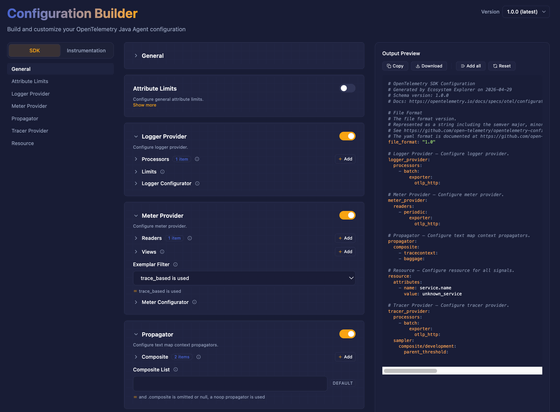
The project is delighted to announce that declarative configuration is stable!

With implementations in five languages and two more in the works, declarative config brings greater configuration consistency across languages and more flexibility than environment variables can offer.

Congratulations to everyone who contributed to this momentous accomplishment!

opentelemetry.io/blog/2026/sta

@opentelemetry@fosstodon.org

With the latest release of the Collector, the Filter Processor now includes OTTL context inference. In the legacy configuration, writing filters required understanding the Collector’s internal telemetry hierarchy. Context inference removes this complexity: instead of organizing conditions by context blocks, write a flat list using basic configuration style. Want details? 👇️ 👇️

opentelemetry.io/blog/2026/ott

@nickistre@floss.social
@dmathieu@fosstodon.org

talk on auto-instrumentation.

"Using the Go SDK is too complicated" (their example was actually a bit hypocritical, as you do not need to manually instrument every HTTP handler).
"Write YAML instead, it's quite simple". 🤔

@opentelemetry@fosstodon.org

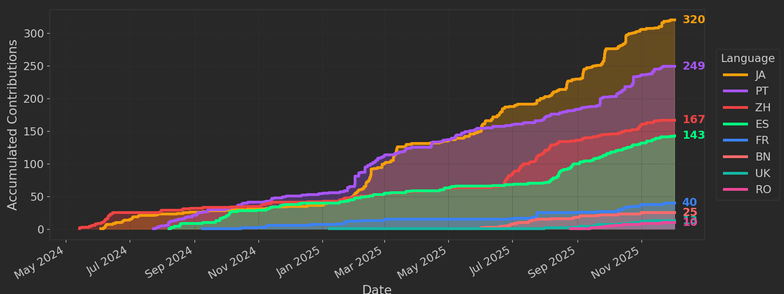
The website and documentation SIG is taking a look back at 2025:

- Eight localization teams produced nearly 75k lines of translation! 🚀
- PRs merged grew 50%! 📈
- Ten contributors were promoted to SIG leadership! 🔟

Looking to get started in open source? Documentation is a great entry point! Check out our new blog post for all the exciting achievements from last year and how you can join us this year.

opentelemetry.io/blog/2026/202

@opentelemetry@fosstodon.org

❓ A question to start the year: what can you learn from analyzing thousands of Slack messages?

The project answers this question in our first blog post of 2026. Using a combination of sentiment analysis, frustration indicators, and topic correlation of aggregated Slack data, we identified the top challenges for users. We'll be working to address these issues over the course of the year. Come join us!

opentelemetry.io/blog/2026/sla

Fedify 1.10.0: Observability foundations for the future debug dashboard

Fedify is a framework for building servers that participate in the . It reduces the complexity and boilerplate typically required for ActivityPub implementation while providing comprehensive federation capabilities.

We're excited to announce 1.10.0, a focused release that lays critical groundwork for future debugging and observability features. Released on December 24, 2025, this version introduces infrastructure improvements that will enable the upcoming debug dashboard while maintaining full backward compatibility with existing Fedify applications.
This release represents a transitional step toward Fedify 2.0.0, introducing optional capabilities that will become standard in the next major version. The changes focus on enabling richer observability through OpenTelemetry enhancements and adding prefix scanning capabilities to the key–value store interface.

Enhanced OpenTelemetry instrumentation

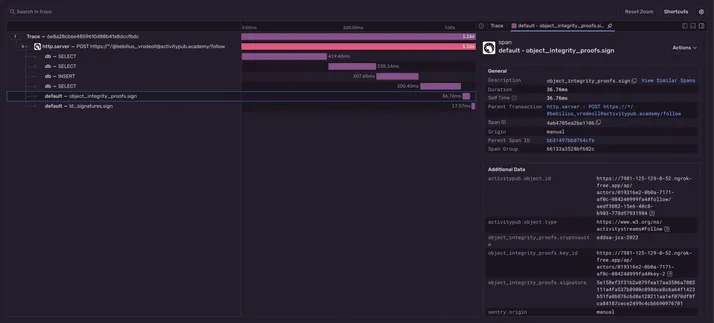
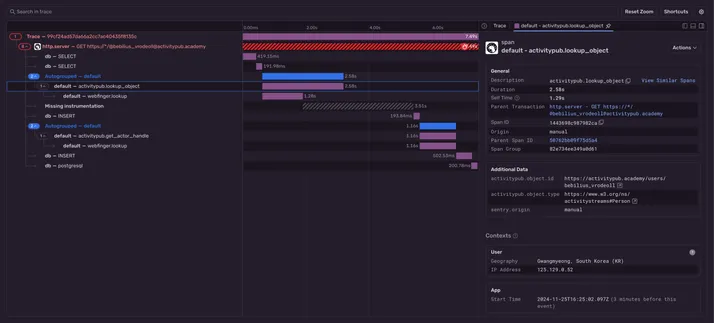
Fedify 1.10.0 significantly expands OpenTelemetry instrumentation with span events that capture detailed ActivityPub data. These enhancements enable richer observability and debugging capabilities without relying solely on span attributes, which are limited to primitive values.

The new span events provide complete activity payloads and verification status, making it possible to build comprehensive debugging tools that show the full context of federation operations:

  • activitypub.activity.received event on activitypub.inbox span — records the full activity JSON, verification status (activity verified, HTTP signatures verified, Linked Data signatures verified), and actor information
  • activitypub.activity.sent event on activitypub.send_activity span — records the full activity JSON and target inbox URL
  • activitypub.object.fetched event on activitypub.lookup_object span — records the fetched object's type and complete JSON-LD representation

Additionally, Fedify now instruments previously uncovered operations:

  • activitypub.fetch_document span for document loader operations, tracking URL fetching, HTTP redirects, and final document URLs
  • activitypub.verify_key_ownership span for cryptographic key ownership verification, recording actor ID, key ID, verification result, and the verification method used

These instrumentation improvements emerged from work on issue #234 (Real-time ActivityPub debug dashboard). Rather than introducing a custom observer interface as originally proposed in #323, we leveraged Fedify's existing OpenTelemetry infrastructure to capture rich federation data through span events. This approach provides a standards-based foundation that's composable with existing observability tools like Jaeger, Zipkin, and Grafana Tempo.

Distributed trace storage with FedifySpanExporter

Building on the enhanced instrumentation, Fedify 1.10.0 introduces FedifySpanExporter, a new OpenTelemetry SpanExporter that persists ActivityPub activity traces to a KvStore. This enables distributed tracing support across multiple nodes in a Fedify deployment, which is essential for building debug dashboards that can show complete request flows across web servers and background workers.

The new @fedify/fedify/otel module provides the following types and interfaces:

import { MemoryKvStore } from "@fedify/fedify";
import { FedifySpanExporter } from "@fedify/fedify/otel";
import {
  BasicTracerProvider,
  SimpleSpanProcessor,
} from "@opentelemetry/sdk-trace-base";

const kv = new MemoryKvStore();
const exporter = new FedifySpanExporter(kv, {
  ttl: Temporal.Duration.from({ hours: 1 }),
});

const provider = new BasicTracerProvider();
provider.addSpanProcessor(new SimpleSpanProcessor(exporter));

The stored traces can be queried for display in debugging interfaces:

// Get all activities for a specific trace
const activities = await exporter.getActivitiesByTraceId(traceId);

// Get recent traces with summary information
const recentTraces = await exporter.getRecentTraces({ limit: 100 });

The exporter supports two storage strategies depending on the KvStore capabilities. When the list() method is available (preferred), it stores individual records with keys like [prefix, traceId, spanId]. When only cas() is available, it uses compare-and-swap operations to append records to arrays stored per trace.

This infrastructure provides the foundation for implementing a comprehensive debug dashboard as a custom SpanExporter, as outlined in the updated implementation plan for issue #234.

Optional list() method for KvStore interface

Fedify 1.10.0 adds an optional list() method to the KvStore interface for enumerating entries by key prefix. This method enables efficient prefix scanning, which is useful for implementing features like distributed trace storage, cache invalidation by prefix, and listing related entries.

interface KvStore {
  // ... existing methods
  list?(prefix?: KvKey): AsyncIterable<KvStoreListEntry>;
}

When the prefix parameter is omitted or empty, list() returns all entries in the store. This is useful for debugging and administrative purposes. All official KvStore implementations have been updated to support this method:

  • MemoryKvStore — filters in-memory keys by prefix
  • SqliteKvStore — uses LIKE query with JSON key pattern
  • PostgresKvStore — uses array slice comparison
  • RedisKvStore — uses SCAN with pattern matching and key deserialization
  • DenoKvStore — delegates to Deno KV's built-in list() API
  • WorkersKvStore — uses Cloudflare Workers KV list() with JSON key prefix pattern

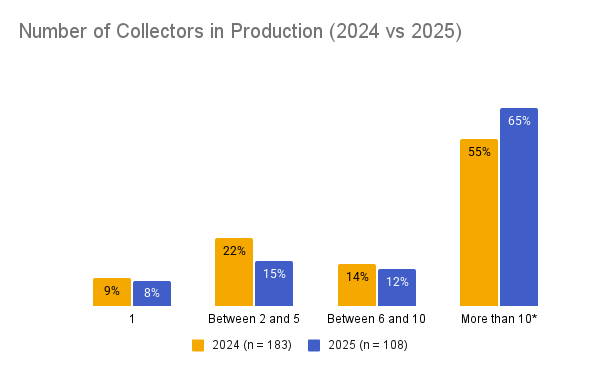
While list() is currently optional to give existing custom KvStore implementations time to add support, it will become a required method in Fedify 2.0.0 (tracked in issue #499). This migration path allows implementers to gradually adopt the new capability throughout the 1.x release cycle.
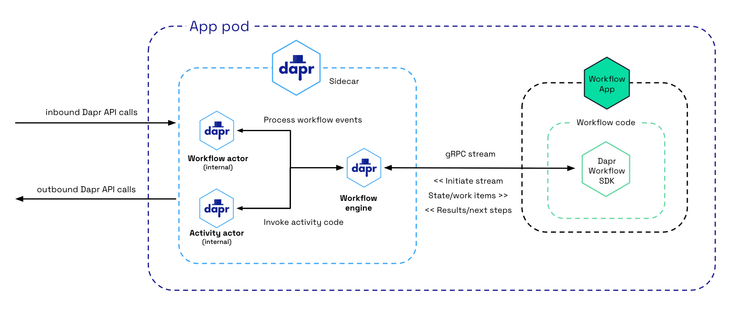
The addition of list() support was implemented in pull request #500, which also included the setup of proper testing infrastructure for WorkersKvStore using Vitest with @cloudflare/vitest-pool-workers.

NestJS 11 and Express 5 support

Thanks to a contribution from Cho Hasang (@crohasang), the @fedify/nestjs package now supports NestJS 11 environments that use Express 5. The peer dependency range for Express has been widened to ^4.0.0 || ^5.0.0, eliminating peer dependency conflicts in modern NestJS projects while maintaining backward compatibility with Express 4.

This change, implemented in pull request #493, keeps the workspace catalog pinned to Express 4 for internal development and test stability while allowing Express 5 in consuming applications.

What's next

Fedify 1.10.0 serves as a stepping stone toward the upcoming 2.0.0 release. The optional list() method introduced in this version will become required in 2.0.0, simplifying the interface contract and allowing Fedify internals to rely on prefix scanning being universally available.

The enhanced instrumentation and FedifySpanExporter provide the foundation for implementing the debug dashboard proposed in issue #234. The next steps include building the web dashboard UI with real-time activity lists, filtering, and JSON inspection capabilities—all as a separate package that leverages the standards-based observability infrastructure introduced in this release.

Depending on the development timeline and feature priorities, there may be additional 1.x releases before the 2.0.0 migration. For developers building custom KvStore implementations, now is the time to add list() support to prepare for the eventual 2.0.0 upgrade. The implementation patterns used in the official backends provide clear guidance for various storage strategies.

Acknowledgments

Special thanks to Cho Hasang (@crohasang) for the NestJS 11 compatibility improvements, and to all community members who provided feedback and testing for the new observability features.

For the complete list of changes, bug fixes, and improvements, please refer to the CHANGES.md file in the repository.

github.com

fedify/CHANGES.md at main · fedify-dev/fedify

ActivityPub server framework in TypeScript. Contribute to fedify-dev/fedify development by creating an account on GitHub.

Fedify 1.10.0: Observability foundations for the future debug dashboard

Fedify is a framework for building servers that participate in the . It reduces the complexity and boilerplate typically required for ActivityPub implementation while providing comprehensive federation capabilities.

We're excited to announce 1.10.0, a focused release that lays critical groundwork for future debugging and observability features. Released on December 24, 2025, this version introduces infrastructure improvements that will enable the upcoming debug dashboard while maintaining full backward compatibility with existing Fedify applications.

This release represents a transitional step toward Fedify 2.0.0, introducing optional capabilities that will become standard in the next major version. The changes focus on enabling richer observability through OpenTelemetry enhancements and adding prefix scanning capabilities to the key–value store interface.

Enhanced OpenTelemetry instrumentation

Fedify 1.10.0 significantly expands OpenTelemetry instrumentation with span events that capture detailed ActivityPub data. These enhancements enable richer observability and debugging capabilities without relying solely on span attributes, which are limited to primitive values.

The new span events provide complete activity payloads and verification status, making it possible to build comprehensive debugging tools that show the full context of federation operations:

  • activitypub.activity.received event on activitypub.inbox span — records the full activity JSON, verification status (activity verified, HTTP signatures verified, Linked Data signatures verified), and actor information
  • activitypub.activity.sent event on activitypub.send_activity span — records the full activity JSON and target inbox URL
  • activitypub.object.fetched event on activitypub.lookup_object span — records the fetched object's type and complete JSON-LD representation

Additionally, Fedify now instruments previously uncovered operations:

  • activitypub.fetch_document span for document loader operations, tracking URL fetching, HTTP redirects, and final document URLs
  • activitypub.verify_key_ownership span for cryptographic key ownership verification, recording actor ID, key ID, verification result, and the verification method used

These instrumentation improvements emerged from work on issue #234 (Real-time ActivityPub debug dashboard). Rather than introducing a custom observer interface as originally proposed in #323, we leveraged Fedify's existing OpenTelemetry infrastructure to capture rich federation data through span events. This approach provides a standards-based foundation that's composable with existing observability tools like Jaeger, Zipkin, and Grafana Tempo.

Distributed trace storage with FedifySpanExporter

Building on the enhanced instrumentation, Fedify 1.10.0 introduces FedifySpanExporter, a new OpenTelemetry SpanExporter that persists ActivityPub activity traces to a KvStore. This enables distributed tracing support across multiple nodes in a Fedify deployment, which is essential for building debug dashboards that can show complete request flows across web servers and background workers.

The new @fedify/fedify/otel module provides the following types and interfaces:

import { MemoryKvStore } from "@fedify/fedify";
import { FedifySpanExporter } from "@fedify/fedify/otel";
import {
  BasicTracerProvider,
  SimpleSpanProcessor,
} from "@opentelemetry/sdk-trace-base";

const kv = new MemoryKvStore();
const exporter = new FedifySpanExporter(kv, {
  ttl: Temporal.Duration.from({ hours: 1 }),
});

const provider = new BasicTracerProvider();
provider.addSpanProcessor(new SimpleSpanProcessor(exporter));

The stored traces can be queried for display in debugging interfaces:

// Get all activities for a specific trace
const activities = await exporter.getActivitiesByTraceId(traceId);

// Get recent traces with summary information
const recentTraces = await exporter.getRecentTraces({ limit: 100 });

The exporter supports two storage strategies depending on the KvStore capabilities. When the list() method is available (preferred), it stores individual records with keys like [prefix, traceId, spanId]. When only cas() is available, it uses compare-and-swap operations to append records to arrays stored per trace.

This infrastructure provides the foundation for implementing a comprehensive debug dashboard as a custom SpanExporter, as outlined in the updated implementation plan for issue #234.

Optional list() method for KvStore interface

Fedify 1.10.0 adds an optional list() method to the KvStore interface for enumerating entries by key prefix. This method enables efficient prefix scanning, which is useful for implementing features like distributed trace storage, cache invalidation by prefix, and listing related entries.

interface KvStore {
  // ... existing methods
  list?(prefix?: KvKey): AsyncIterable<KvStoreListEntry>;
}

When the prefix parameter is omitted or empty, list() returns all entries in the store. This is useful for debugging and administrative purposes. All official KvStore implementations have been updated to support this method:

  • MemoryKvStore — filters in-memory keys by prefix
  • SqliteKvStore — uses LIKE query with JSON key pattern
  • PostgresKvStore — uses array slice comparison
  • RedisKvStore — uses SCAN with pattern matching and key deserialization
  • DenoKvStore — delegates to Deno KV's built-in list() API
  • WorkersKvStore — uses Cloudflare Workers KV list() with JSON key prefix pattern

While list() is currently optional to give existing custom KvStore implementations time to add support, it will become a required method in Fedify 2.0.0 (tracked in issue #499). This migration path allows implementers to gradually adopt the new capability throughout the 1.x release cycle.

The addition of list() support was implemented in pull request #500, which also included the setup of proper testing infrastructure for WorkersKvStore using Vitest with @cloudflare/vitest-pool-workers.

NestJS 11 and Express 5 support

Thanks to a contribution from Cho Hasang (@crohasang), the @fedify/nestjs package now supports NestJS 11 environments that use Express 5. The peer dependency range for Express has been widened to ^4.0.0 || ^5.0.0, eliminating peer dependency conflicts in modern NestJS projects while maintaining backward compatibility with Express 4.

This change, implemented in pull request #493, keeps the workspace catalog pinned to Express 4 for internal development and test stability while allowing Express 5 in consuming applications.

What's next

Fedify 1.10.0 serves as a stepping stone toward the upcoming 2.0.0 release. The optional list() method introduced in this version will become required in 2.0.0, simplifying the interface contract and allowing Fedify internals to rely on prefix scanning being universally available.

The enhanced instrumentation and FedifySpanExporter provide the foundation for implementing the debug dashboard proposed in issue #234. The next steps include building the web dashboard UI with real-time activity lists, filtering, and JSON inspection capabilities—all as a separate package that leverages the standards-based observability infrastructure introduced in this release.

Depending on the development timeline and feature priorities, there may be additional 1.x releases before the 2.0.0 migration. For developers building custom KvStore implementations, now is the time to add list() support to prepare for the eventual 2.0.0 upgrade. The implementation patterns used in the official backends provide clear guidance for various storage strategies.

Acknowledgments

Special thanks to Cho Hasang (@crohasang) for the NestJS 11 compatibility improvements, and to all community members who provided feedback and testing for the new observability features.

For the complete list of changes, bug fixes, and improvements, please refer to the CHANGES.md file in the repository.

github.com

fedify/CHANGES.md at main · fedify-dev/fedify

ActivityPub server framework in TypeScript. Contribute to fedify-dev/fedify development by creating an account on GitHub.

Fedify 1.10.0: Observability foundations for the future debug dashboard

Fedify is a framework for building servers that participate in the . It reduces the complexity and boilerplate typically required for ActivityPub implementation while providing comprehensive federation capabilities.

We're excited to announce 1.10.0, a focused release that lays critical groundwork for future debugging and observability features. Released on December 24, 2025, this version introduces infrastructure improvements that will enable the upcoming debug dashboard while maintaining full backward compatibility with existing Fedify applications.

This release represents a transitional step toward Fedify 2.0.0, introducing optional capabilities that will become standard in the next major version. The changes focus on enabling richer observability through OpenTelemetry enhancements and adding prefix scanning capabilities to the key–value store interface.

Enhanced OpenTelemetry instrumentation

Fedify 1.10.0 significantly expands OpenTelemetry instrumentation with span events that capture detailed ActivityPub data. These enhancements enable richer observability and debugging capabilities without relying solely on span attributes, which are limited to primitive values.
The new span events provide complete activity payloads and verification status, making it possible to build comprehensive debugging tools that show the full context of federation operations:

  • activitypub.activity.received event on activitypub.inbox span — records the full activity JSON, verification status (activity verified, HTTP signatures verified, Linked Data signatures verified), and actor information
  • activitypub.activity.sent event on activitypub.send_activity span — records the full activity JSON and target inbox URL
  • activitypub.object.fetched event on activitypub.lookup_object span — records the fetched object's type and complete JSON-LD representation

Additionally, Fedify now instruments previously uncovered operations:

  • activitypub.fetch_document span for document loader operations, tracking URL fetching, HTTP redirects, and final document URLs
  • activitypub.verify_key_ownership span for cryptographic key ownership verification, recording actor ID, key ID, verification result, and the verification method used

These instrumentation improvements emerged from work on issue #234 (Real-time ActivityPub debug dashboard). Rather than introducing a custom observer interface as originally proposed in #323, we leveraged Fedify's existing OpenTelemetry infrastructure to capture rich federation data through span events. This approach provides a standards-based foundation that's composable with existing observability tools like Jaeger, Zipkin, and Grafana Tempo.

Distributed trace storage with FedifySpanExporter

Building on the enhanced instrumentation, Fedify 1.10.0 introduces FedifySpanExporter, a new OpenTelemetry SpanExporter that persists ActivityPub activity traces to a KvStore. This enables distributed tracing support across multiple nodes in a Fedify deployment, which is essential for building debug dashboards that can show complete request flows across web servers and background workers.

The new @fedify/fedify/otel module provides the following types and interfaces:

import { MemoryKvStore } from "@fedify/fedify";
import { FedifySpanExporter } from "@fedify/fedify/otel";
import {
  BasicTracerProvider,
  SimpleSpanProcessor,
} from "@opentelemetry/sdk-trace-base";

const kv = new MemoryKvStore();
const exporter = new FedifySpanExporter(kv, {
  ttl: Temporal.Duration.from({ hours: 1 }),
});

const provider = new BasicTracerProvider();
provider.addSpanProcessor(new SimpleSpanProcessor(exporter));

The stored traces can be queried for display in debugging interfaces:

// Get all activities for a specific trace
const activities = await exporter.getActivitiesByTraceId(traceId);

// Get recent traces with summary information
const recentTraces = await exporter.getRecentTraces({ limit: 100 });

The exporter supports two storage strategies depending on the KvStore capabilities. When the list() method is available (preferred), it stores individual records with keys like [prefix, traceId, spanId]. When only cas() is available, it uses compare-and-swap operations to append records to arrays stored per trace.

This infrastructure provides the foundation for implementing a comprehensive debug dashboard as a custom SpanExporter, as outlined in the updated implementation plan for issue #234.

Optional list() method for KvStore interface

Fedify 1.10.0 adds an optional list() method to the KvStore interface for enumerating entries by key prefix. This method enables efficient prefix scanning, which is useful for implementing features like distributed trace storage, cache invalidation by prefix, and listing related entries.

interface KvStore {
  // ... existing methods
  list?(prefix?: KvKey): AsyncIterable<KvStoreListEntry>;
}

When the prefix parameter is omitted or empty, list() returns all entries in the store. This is useful for debugging and administrative purposes. All official KvStore implementations have been updated to support this method:

  • MemoryKvStore — filters in-memory keys by prefix
  • SqliteKvStore — uses LIKE query with JSON key pattern
  • PostgresKvStore — uses array slice comparison
  • RedisKvStore — uses SCAN with pattern matching and key deserialization
  • DenoKvStore — delegates to Deno KV's built-in list() API
  • WorkersKvStore — uses Cloudflare Workers KV list() with JSON key prefix pattern

While list() is currently optional to give existing custom KvStore implementations time to add support, it will become a required method in Fedify 2.0.0 (tracked in issue #499). This migration path allows implementers to gradually adopt the new capability throughout the 1.x release cycle.

The addition of list() support was implemented in pull request #500, which also included the setup of proper testing infrastructure for WorkersKvStore using Vitest with @cloudflare/vitest-pool-workers.

NestJS 11 and Express 5 support

Thanks to a contribution from Cho Hasang (@crohasang), the @fedify/nestjs package now supports NestJS 11 environments that use Express 5. The peer dependency range for Express has been widened to ^4.0.0 || ^5.0.0, eliminating peer dependency conflicts in modern NestJS projects while maintaining backward compatibility with Express 4.

This change, implemented in pull request #493, keeps the workspace catalog pinned to Express 4 for internal development and test stability while allowing Express 5 in consuming applications.

What's next

Fedify 1.10.0 serves as a stepping stone toward the upcoming 2.0.0 release. The optional list() method introduced in this version will become required in 2.0.0, simplifying the interface contract and allowing Fedify internals to rely on prefix scanning being universally available.

The enhanced instrumentation and FedifySpanExporter provide the foundation for implementing the debug dashboard proposed in issue #234. The next steps include building the web dashboard UI with real-time activity lists, filtering, and JSON inspection capabilities—all as a separate package that leverages the standards-based observability infrastructure introduced in this release.

Depending on the development timeline and feature priorities, there may be additional 1.x releases before the 2.0.0 migration. For developers building custom KvStore implementations, now is the time to add list() support to prepare for the eventual 2.0.0 upgrade. The implementation patterns used in the official backends provide clear guidance for various storage strategies.

Acknowledgments

Special thanks to Cho Hasang (@crohasang) for the NestJS 11 compatibility improvements, and to all community members who provided feedback and testing for the new observability features.

For the complete list of changes, bug fixes, and improvements, please refer to the CHANGES.md file in the repository.

github.com

fedify/CHANGES.md at main · fedify-dev/fedify

ActivityPub server framework in TypeScript. Contribute to fedify-dev/fedify development by creating an account on GitHub.

Fedify 1.10.0: Observability foundations for the future debug dashboard

Fedify is a framework for building servers that participate in the . It reduces the complexity and boilerplate typically required for ActivityPub implementation while providing comprehensive federation capabilities.

We're excited to announce 1.10.0, a focused release that lays critical groundwork for future debugging and observability features. Released on December 24, 2025, this version introduces infrastructure improvements that will enable the upcoming debug dashboard while maintaining full backward compatibility with existing Fedify applications.

This release represents a transitional step toward Fedify 2.0.0, introducing optional capabilities that will become standard in the next major version. The changes focus on enabling richer observability through OpenTelemetry enhancements and adding prefix scanning capabilities to the key–value store interface.

Enhanced OpenTelemetry instrumentation

Fedify 1.10.0 significantly expands OpenTelemetry instrumentation with span events that capture detailed ActivityPub data. These enhancements enable richer observability and debugging capabilities without relying solely on span attributes, which are limited to primitive values.

The new span events provide complete activity payloads and verification status, making it possible to build comprehensive debugging tools that show the full context of federation operations:

  • activitypub.activity.received event on activitypub.inbox span — records the full activity JSON, verification status (activity verified, HTTP signatures verified, Linked Data signatures verified), and actor information
  • activitypub.activity.sent event on activitypub.send_activity span — records the full activity JSON and target inbox URL
  • activitypub.object.fetched event on activitypub.lookup_object span — records the fetched object's type and complete JSON-LD representation

Additionally, Fedify now instruments previously uncovered operations:

  • activitypub.fetch_document span for document loader operations, tracking URL fetching, HTTP redirects, and final document URLs
  • activitypub.verify_key_ownership span for cryptographic key ownership verification, recording actor ID, key ID, verification result, and the verification method used

These instrumentation improvements emerged from work on issue #234 (Real-time ActivityPub debug dashboard). Rather than introducing a custom observer interface as originally proposed in #323, we leveraged Fedify's existing OpenTelemetry infrastructure to capture rich federation data through span events. This approach provides a standards-based foundation that's composable with existing observability tools like Jaeger, Zipkin, and Grafana Tempo.

Distributed trace storage with FedifySpanExporter

Building on the enhanced instrumentation, Fedify 1.10.0 introduces FedifySpanExporter, a new OpenTelemetry SpanExporter that persists ActivityPub activity traces to a KvStore. This enables distributed tracing support across multiple nodes in a Fedify deployment, which is essential for building debug dashboards that can show complete request flows across web servers and background workers.

The new @fedify/fedify/otel module provides the following types and interfaces:

import { MemoryKvStore } from "@fedify/fedify";
import { FedifySpanExporter } from "@fedify/fedify/otel";
import {
  BasicTracerProvider,
  SimpleSpanProcessor,
} from "@opentelemetry/sdk-trace-base";

const kv = new MemoryKvStore();
const exporter = new FedifySpanExporter(kv, {
  ttl: Temporal.Duration.from({ hours: 1 }),
});

const provider = new BasicTracerProvider();
provider.addSpanProcessor(new SimpleSpanProcessor(exporter));

The stored traces can be queried for display in debugging interfaces:

// Get all activities for a specific trace
const activities = await exporter.getActivitiesByTraceId(traceId);

// Get recent traces with summary information
const recentTraces = await exporter.getRecentTraces({ limit: 100 });

The exporter supports two storage strategies depending on the KvStore capabilities. When the list() method is available (preferred), it stores individual records with keys like [prefix, traceId, spanId]. When only cas() is available, it uses compare-and-swap operations to append records to arrays stored per trace.

This infrastructure provides the foundation for implementing a comprehensive debug dashboard as a custom SpanExporter, as outlined in the updated implementation plan for issue #234.

Optional list() method for KvStore interface

Fedify 1.10.0 adds an optional list() method to the KvStore interface for enumerating entries by key prefix. This method enables efficient prefix scanning, which is useful for implementing features like distributed trace storage, cache invalidation by prefix, and listing related entries.

interface KvStore {
  // ... existing methods
  list?(prefix?: KvKey): AsyncIterable<KvStoreListEntry>;
}

When the prefix parameter is omitted or empty, list() returns all entries in the store. This is useful for debugging and administrative purposes. All official KvStore implementations have been updated to support this method:

  • MemoryKvStore — filters in-memory keys by prefix
  • SqliteKvStore — uses LIKE query with JSON key pattern
  • PostgresKvStore — uses array slice comparison
  • RedisKvStore — uses SCAN with pattern matching and key deserialization
  • DenoKvStore — delegates to Deno KV's built-in list() API
  • WorkersKvStore — uses Cloudflare Workers KV list() with JSON key prefix pattern

While list() is currently optional to give existing custom KvStore implementations time to add support, it will become a required method in Fedify 2.0.0 (tracked in issue #499). This migration path allows implementers to gradually adopt the new capability throughout the 1.x release cycle.

The addition of list() support was implemented in pull request #500, which also included the setup of proper testing infrastructure for WorkersKvStore using Vitest with @cloudflare/vitest-pool-workers.

NestJS 11 and Express 5 support

Thanks to a contribution from Cho Hasang (@crohasang), the @fedify/nestjs package now supports NestJS 11 environments that use Express 5. The peer dependency range for Express has been widened to ^4.0.0 || ^5.0.0, eliminating peer dependency conflicts in modern NestJS projects while maintaining backward compatibility with Express 4.

This change, implemented in pull request #493, keeps the workspace catalog pinned to Express 4 for internal development and test stability while allowing Express 5 in consuming applications.

What's next

Fedify 1.10.0 serves as a stepping stone toward the upcoming 2.0.0 release. The optional list() method introduced in this version will become required in 2.0.0, simplifying the interface contract and allowing Fedify internals to rely on prefix scanning being universally available.

The enhanced instrumentation and FedifySpanExporter provide the foundation for implementing the debug dashboard proposed in issue #234. The next steps include building the web dashboard UI with real-time activity lists, filtering, and JSON inspection capabilities—all as a separate package that leverages the standards-based observability infrastructure introduced in this release.

Depending on the development timeline and feature priorities, there may be additional 1.x releases before the 2.0.0 migration. For developers building custom KvStore implementations, now is the time to add list() support to prepare for the eventual 2.0.0 upgrade. The implementation patterns used in the official backends provide clear guidance for various storage strategies.

Acknowledgments

Special thanks to Cho Hasang (@crohasang) for the NestJS 11 compatibility improvements, and to all community members who provided feedback and testing for the new observability features.

For the complete list of changes, bug fixes, and improvements, please refer to the CHANGES.md file in the repository.

github.com

fedify/CHANGES.md at main · fedify-dev/fedify

ActivityPub server framework in TypeScript. Contribute to fedify-dev/fedify development by creating an account on GitHub.

Fedify 1.10.0: Observability foundations for the future debug dashboard

Fedify is a framework for building servers that participate in the . It reduces the complexity and boilerplate typically required for ActivityPub implementation while providing comprehensive federation capabilities.

We're excited to announce 1.10.0, a focused release that lays critical groundwork for future debugging and observability features. Released on December 24, 2025, this version introduces infrastructure improvements that will enable the upcoming debug dashboard while maintaining full backward compatibility with existing Fedify applications.

This release represents a transitional step toward Fedify 2.0.0, introducing optional capabilities that will become standard in the next major version. The changes focus on enabling richer observability through OpenTelemetry enhancements and adding prefix scanning capabilities to the key–value store interface.

Enhanced OpenTelemetry instrumentation

Fedify 1.10.0 significantly expands OpenTelemetry instrumentation with span events that capture detailed ActivityPub data. These enhancements enable richer observability and debugging capabilities without relying solely on span attributes, which are limited to primitive values.

The new span events provide complete activity payloads and verification status, making it possible to build comprehensive debugging tools that show the full context of federation operations:

  • activitypub.activity.received event on activitypub.inbox span — records the full activity JSON, verification status (activity verified, HTTP signatures verified, Linked Data signatures verified), and actor information
  • activitypub.activity.sent event on activitypub.send_activity span — records the full activity JSON and target inbox URL
  • activitypub.object.fetched event on activitypub.lookup_object span — records the fetched object's type and complete JSON-LD representation

Additionally, Fedify now instruments previously uncovered operations:

  • activitypub.fetch_document span for document loader operations, tracking URL fetching, HTTP redirects, and final document URLs
  • activitypub.verify_key_ownership span for cryptographic key ownership verification, recording actor ID, key ID, verification result, and the verification method used

These instrumentation improvements emerged from work on issue #234 (Real-time ActivityPub debug dashboard). Rather than introducing a custom observer interface as originally proposed in #323, we leveraged Fedify's existing OpenTelemetry infrastructure to capture rich federation data through span events. This approach provides a standards-based foundation that's composable with existing observability tools like Jaeger, Zipkin, and Grafana Tempo.

Distributed trace storage with FedifySpanExporter

Building on the enhanced instrumentation, Fedify 1.10.0 introduces FedifySpanExporter, a new OpenTelemetry SpanExporter that persists ActivityPub activity traces to a KvStore. This enables distributed tracing support across multiple nodes in a Fedify deployment, which is essential for building debug dashboards that can show complete request flows across web servers and background workers.

The new @fedify/fedify/otel module provides the following types and interfaces:

import { MemoryKvStore } from "@fedify/fedify";
import { FedifySpanExporter } from "@fedify/fedify/otel";
import {
  BasicTracerProvider,
  SimpleSpanProcessor,
} from "@opentelemetry/sdk-trace-base";

const kv = new MemoryKvStore();
const exporter = new FedifySpanExporter(kv, {
  ttl: Temporal.Duration.from({ hours: 1 }),
});

const provider = new BasicTracerProvider();
provider.addSpanProcessor(new SimpleSpanProcessor(exporter));

The stored traces can be queried for display in debugging interfaces:

// Get all activities for a specific trace
const activities = await exporter.getActivitiesByTraceId(traceId);

// Get recent traces with summary information
const recentTraces = await exporter.getRecentTraces({ limit: 100 });

The exporter supports two storage strategies depending on the KvStore capabilities. When the list() method is available (preferred), it stores individual records with keys like [prefix, traceId, spanId]. When only cas() is available, it uses compare-and-swap operations to append records to arrays stored per trace.

This infrastructure provides the foundation for implementing a comprehensive debug dashboard as a custom SpanExporter, as outlined in the updated implementation plan for issue #234.

Optional list() method for KvStore interface

Fedify 1.10.0 adds an optional list() method to the KvStore interface for enumerating entries by key prefix. This method enables efficient prefix scanning, which is useful for implementing features like distributed trace storage, cache invalidation by prefix, and listing related entries.

interface KvStore {
  // ... existing methods
  list?(prefix?: KvKey): AsyncIterable<KvStoreListEntry>;
}

When the prefix parameter is omitted or empty, list() returns all entries in the store. This is useful for debugging and administrative purposes. All official KvStore implementations have been updated to support this method:

  • MemoryKvStore — filters in-memory keys by prefix
  • SqliteKvStore — uses LIKE query with JSON key pattern
  • PostgresKvStore — uses array slice comparison
  • RedisKvStore — uses SCAN with pattern matching and key deserialization
  • DenoKvStore — delegates to Deno KV's built-in list() API
  • WorkersKvStore — uses Cloudflare Workers KV list() with JSON key prefix pattern

While list() is currently optional to give existing custom KvStore implementations time to add support, it will become a required method in Fedify 2.0.0 (tracked in issue #499). This migration path allows implementers to gradually adopt the new capability throughout the 1.x release cycle.

The addition of list() support was implemented in pull request #500, which also included the setup of proper testing infrastructure for WorkersKvStore using Vitest with @cloudflare/vitest-pool-workers.

NestJS 11 and Express 5 support

Thanks to a contribution from Cho Hasang (@crohasang), the @fedify/nestjs package now supports NestJS 11 environments that use Express 5. The peer dependency range for Express has been widened to ^4.0.0 || ^5.0.0, eliminating peer dependency conflicts in modern NestJS projects while maintaining backward compatibility with Express 4.

This change, implemented in pull request #493, keeps the workspace catalog pinned to Express 4 for internal development and test stability while allowing Express 5 in consuming applications.

What's next

Fedify 1.10.0 serves as a stepping stone toward the upcoming 2.0.0 release. The optional list() method introduced in this version will become required in 2.0.0, simplifying the interface contract and allowing Fedify internals to rely on prefix scanning being universally available.

The enhanced instrumentation and FedifySpanExporter provide the foundation for implementing the debug dashboard proposed in issue #234. The next steps include building the web dashboard UI with real-time activity lists, filtering, and JSON inspection capabilities—all as a separate package that leverages the standards-based observability infrastructure introduced in this release.

Depending on the development timeline and feature priorities, there may be additional 1.x releases before the 2.0.0 migration. For developers building custom KvStore implementations, now is the time to add list() support to prepare for the eventual 2.0.0 upgrade. The implementation patterns used in the official backends provide clear guidance for various storage strategies.

Acknowledgments

Special thanks to Cho Hasang (@crohasang) for the NestJS 11 compatibility improvements, and to all community members who provided feedback and testing for the new observability features.

For the complete list of changes, bug fixes, and improvements, please refer to the CHANGES.md file in the repository.

github.com

fedify/CHANGES.md at main · fedify-dev/fedify

ActivityPub server framework in TypeScript. Contribute to fedify-dev/fedify development by creating an account on GitHub.

Fedify 1.10.0: Observability foundations for the future debug dashboard

Fedify is a framework for building servers that participate in the . It reduces the complexity and boilerplate typically required for ActivityPub implementation while providing comprehensive federation capabilities.

We're excited to announce 1.10.0, a focused release that lays critical groundwork for future debugging and observability features. Released on December 24, 2025, this version introduces infrastructure improvements that will enable the upcoming debug dashboard while maintaining full backward compatibility with existing Fedify applications.

This release represents a transitional step toward Fedify 2.0.0, introducing optional capabilities that will become standard in the next major version. The changes focus on enabling richer observability through OpenTelemetry enhancements and adding prefix scanning capabilities to the key–value store interface.

Enhanced OpenTelemetry instrumentation

Fedify 1.10.0 significantly expands OpenTelemetry instrumentation with span events that capture detailed ActivityPub data. These enhancements enable richer observability and debugging capabilities without relying solely on span attributes, which are limited to primitive values.

The new span events provide complete activity payloads and verification status, making it possible to build comprehensive debugging tools that show the full context of federation operations:

  • activitypub.activity.received event on activitypub.inbox span — records the full activity JSON, verification status (activity verified, HTTP signatures verified, Linked Data signatures verified), and actor information
  • activitypub.activity.sent event on activitypub.send_activity span — records the full activity JSON and target inbox URL
  • activitypub.object.fetched event on activitypub.lookup_object span — records the fetched object's type and complete JSON-LD representation

Additionally, Fedify now instruments previously uncovered operations:

  • activitypub.fetch_document span for document loader operations, tracking URL fetching, HTTP redirects, and final document URLs
  • activitypub.verify_key_ownership span for cryptographic key ownership verification, recording actor ID, key ID, verification result, and the verification method used

These instrumentation improvements emerged from work on issue #234 (Real-time ActivityPub debug dashboard). Rather than introducing a custom observer interface as originally proposed in #323, we leveraged Fedify's existing OpenTelemetry infrastructure to capture rich federation data through span events. This approach provides a standards-based foundation that's composable with existing observability tools like Jaeger, Zipkin, and Grafana Tempo.

Distributed trace storage with FedifySpanExporter

Building on the enhanced instrumentation, Fedify 1.10.0 introduces FedifySpanExporter, a new OpenTelemetry SpanExporter that persists ActivityPub activity traces to a KvStore. This enables distributed tracing support across multiple nodes in a Fedify deployment, which is essential for building debug dashboards that can show complete request flows across web servers and background workers.

The new @fedify/fedify/otel module provides the following types and interfaces:

import { MemoryKvStore } from "@fedify/fedify";
import { FedifySpanExporter } from "@fedify/fedify/otel";
import {
  BasicTracerProvider,
  SimpleSpanProcessor,
} from "@opentelemetry/sdk-trace-base";

const kv = new MemoryKvStore();
const exporter = new FedifySpanExporter(kv, {
  ttl: Temporal.Duration.from({ hours: 1 }),
});

const provider = new BasicTracerProvider();
provider.addSpanProcessor(new SimpleSpanProcessor(exporter));

The stored traces can be queried for display in debugging interfaces:

// Get all activities for a specific trace
const activities = await exporter.getActivitiesByTraceId(traceId);

// Get recent traces with summary information
const recentTraces = await exporter.getRecentTraces({ limit: 100 });

The exporter supports two storage strategies depending on the KvStore capabilities. When the list() method is available (preferred), it stores individual records with keys like [prefix, traceId, spanId]. When only cas() is available, it uses compare-and-swap operations to append records to arrays stored per trace.

This infrastructure provides the foundation for implementing a comprehensive debug dashboard as a custom SpanExporter, as outlined in the updated implementation plan for issue #234.

Optional list() method for KvStore interface

Fedify 1.10.0 adds an optional list() method to the KvStore interface for enumerating entries by key prefix. This method enables efficient prefix scanning, which is useful for implementing features like distributed trace storage, cache invalidation by prefix, and listing related entries.

interface KvStore {
  // ... existing methods
  list?(prefix?: KvKey): AsyncIterable<KvStoreListEntry>;
}

When the prefix parameter is omitted or empty, list() returns all entries in the store. This is useful for debugging and administrative purposes. All official KvStore implementations have been updated to support this method:

  • MemoryKvStore — filters in-memory keys by prefix
  • SqliteKvStore — uses LIKE query with JSON key pattern
  • PostgresKvStore — uses array slice comparison
  • RedisKvStore — uses SCAN with pattern matching and key deserialization
  • DenoKvStore — delegates to Deno KV's built-in list() API
  • WorkersKvStore — uses Cloudflare Workers KV list() with JSON key prefix pattern

While list() is currently optional to give existing custom KvStore implementations time to add support, it will become a required method in Fedify 2.0.0 (tracked in issue #499). This migration path allows implementers to gradually adopt the new capability throughout the 1.x release cycle.

The addition of list() support was implemented in pull request #500, which also included the setup of proper testing infrastructure for WorkersKvStore using Vitest with @cloudflare/vitest-pool-workers.

NestJS 11 and Express 5 support

Thanks to a contribution from Cho Hasang (@crohasang), the @fedify/nestjs package now supports NestJS 11 environments that use Express 5. The peer dependency range for Express has been widened to ^4.0.0 || ^5.0.0, eliminating peer dependency conflicts in modern NestJS projects while maintaining backward compatibility with Express 4.

This change, implemented in pull request #493, keeps the workspace catalog pinned to Express 4 for internal development and test stability while allowing Express 5 in consuming applications.

What's next

Fedify 1.10.0 serves as a stepping stone toward the upcoming 2.0.0 release. The optional list() method introduced in this version will become required in 2.0.0, simplifying the interface contract and allowing Fedify internals to rely on prefix scanning being universally available.

The enhanced instrumentation and FedifySpanExporter provide the foundation for implementing the debug dashboard proposed in issue #234. The next steps include building the web dashboard UI with real-time activity lists, filtering, and JSON inspection capabilities—all as a separate package that leverages the standards-based observability infrastructure introduced in this release.

Depending on the development timeline and feature priorities, there may be additional 1.x releases before the 2.0.0 migration. For developers building custom KvStore implementations, now is the time to add list() support to prepare for the eventual 2.0.0 upgrade. The implementation patterns used in the official backends provide clear guidance for various storage strategies.

Acknowledgments

Special thanks to Cho Hasang (@crohasang) for the NestJS 11 compatibility improvements, and to all community members who provided feedback and testing for the new observability features.

For the complete list of changes, bug fixes, and improvements, please refer to the CHANGES.md file in the repository.

github.com

fedify/CHANGES.md at main · fedify-dev/fedify

ActivityPub server framework in TypeScript. Contribute to fedify-dev/fedify development by creating an account on GitHub.

Fedify 1.10.0: Observability foundations for the future debug dashboard

Fedify is a framework for building servers that participate in the . It reduces the complexity and boilerplate typically required for ActivityPub implementation while providing comprehensive federation capabilities.

We're excited to announce 1.10.0, a focused release that lays critical groundwork for future debugging and observability features. Released on December 24, 2025, this version introduces infrastructure improvements that will enable the upcoming debug dashboard while maintaining full backward compatibility with existing Fedify applications.

This release represents a transitional step toward Fedify 2.0.0, introducing optional capabilities that will become standard in the next major version. The changes focus on enabling richer observability through OpenTelemetry enhancements and adding prefix scanning capabilities to the key–value store interface.

Enhanced OpenTelemetry instrumentation

Fedify 1.10.0 significantly expands OpenTelemetry instrumentation with span events that capture detailed ActivityPub data. These enhancements enable richer observability and debugging capabilities without relying solely on span attributes, which are limited to primitive values.

The new span events provide complete activity payloads and verification status, making it possible to build comprehensive debugging tools that show the full context of federation operations:

  • activitypub.activity.received event on activitypub.inbox span — records the full activity JSON, verification status (activity verified, HTTP signatures verified, Linked Data signatures verified), and actor information
  • activitypub.activity.sent event on activitypub.send_activity span — records the full activity JSON and target inbox URL
  • activitypub.object.fetched event on activitypub.lookup_object span — records the fetched object's type and complete JSON-LD representation

Additionally, Fedify now instruments previously uncovered operations:

  • activitypub.fetch_document span for document loader operations, tracking URL fetching, HTTP redirects, and final document URLs
  • activitypub.verify_key_ownership span for cryptographic key ownership verification, recording actor ID, key ID, verification result, and the verification method used

These instrumentation improvements emerged from work on issue #234 (Real-time ActivityPub debug dashboard). Rather than introducing a custom observer interface as originally proposed in #323, we leveraged Fedify's existing OpenTelemetry infrastructure to capture rich federation data through span events. This approach provides a standards-based foundation that's composable with existing observability tools like Jaeger, Zipkin, and Grafana Tempo.

Distributed trace storage with FedifySpanExporter

Building on the enhanced instrumentation, Fedify 1.10.0 introduces FedifySpanExporter, a new OpenTelemetry SpanExporter that persists ActivityPub activity traces to a KvStore. This enables distributed tracing support across multiple nodes in a Fedify deployment, which is essential for building debug dashboards that can show complete request flows across web servers and background workers.

The new @fedify/fedify/otel module provides the following types and interfaces:

import { MemoryKvStore } from "@fedify/fedify";
import { FedifySpanExporter } from "@fedify/fedify/otel";
import {
  BasicTracerProvider,
  SimpleSpanProcessor,
} from "@opentelemetry/sdk-trace-base";

const kv = new MemoryKvStore();
const exporter = new FedifySpanExporter(kv, {
  ttl: Temporal.Duration.from({ hours: 1 }),
});

const provider = new BasicTracerProvider();
provider.addSpanProcessor(new SimpleSpanProcessor(exporter));

The stored traces can be queried for display in debugging interfaces:

// Get all activities for a specific trace
const activities = await exporter.getActivitiesByTraceId(traceId);

// Get recent traces with summary information
const recentTraces = await exporter.getRecentTraces({ limit: 100 });

The exporter supports two storage strategies depending on the KvStore capabilities. When the list() method is available (preferred), it stores individual records with keys like [prefix, traceId, spanId]. When only cas() is available, it uses compare-and-swap operations to append records to arrays stored per trace.

This infrastructure provides the foundation for implementing a comprehensive debug dashboard as a custom SpanExporter, as outlined in the updated implementation plan for issue #234.

Optional list() method for KvStore interface

Fedify 1.10.0 adds an optional list() method to the KvStore interface for enumerating entries by key prefix. This method enables efficient prefix scanning, which is useful for implementing features like distributed trace storage, cache invalidation by prefix, and listing related entries.

interface KvStore {
  // ... existing methods
  list?(prefix?: KvKey): AsyncIterable<KvStoreListEntry>;
}

When the prefix parameter is omitted or empty, list() returns all entries in the store. This is useful for debugging and administrative purposes. All official KvStore implementations have been updated to support this method:

  • MemoryKvStore — filters in-memory keys by prefix
  • SqliteKvStore — uses LIKE query with JSON key pattern
  • PostgresKvStore — uses array slice comparison
  • RedisKvStore — uses SCAN with pattern matching and key deserialization
  • DenoKvStore — delegates to Deno KV's built-in list() API
  • WorkersKvStore — uses Cloudflare Workers KV list() with JSON key prefix pattern

While list() is currently optional to give existing custom KvStore implementations time to add support, it will become a required method in Fedify 2.0.0 (tracked in issue #499). This migration path allows implementers to gradually adopt the new capability throughout the 1.x release cycle.

The addition of list() support was implemented in pull request #500, which also included the setup of proper testing infrastructure for WorkersKvStore using Vitest with @cloudflare/vitest-pool-workers.

NestJS 11 and Express 5 support

Thanks to a contribution from Cho Hasang (@crohasang), the @fedify/nestjs package now supports NestJS 11 environments that use Express 5. The peer dependency range for Express has been widened to ^4.0.0 || ^5.0.0, eliminating peer dependency conflicts in modern NestJS projects while maintaining backward compatibility with Express 4.

This change, implemented in pull request #493, keeps the workspace catalog pinned to Express 4 for internal development and test stability while allowing Express 5 in consuming applications.

What's next

Fedify 1.10.0 serves as a stepping stone toward the upcoming 2.0.0 release. The optional list() method introduced in this version will become required in 2.0.0, simplifying the interface contract and allowing Fedify internals to rely on prefix scanning being universally available.

The enhanced instrumentation and FedifySpanExporter provide the foundation for implementing the debug dashboard proposed in issue #234. The next steps include building the web dashboard UI with real-time activity lists, filtering, and JSON inspection capabilities—all as a separate package that leverages the standards-based observability infrastructure introduced in this release.

Depending on the development timeline and feature priorities, there may be additional 1.x releases before the 2.0.0 migration. For developers building custom KvStore implementations, now is the time to add list() support to prepare for the eventual 2.0.0 upgrade. The implementation patterns used in the official backends provide clear guidance for various storage strategies.

Acknowledgments

Special thanks to Cho Hasang (@crohasang) for the NestJS 11 compatibility improvements, and to all community members who provided feedback and testing for the new observability features.

For the complete list of changes, bug fixes, and improvements, please refer to the CHANGES.md file in the repository.

github.com

fedify/CHANGES.md at main · fedify-dev/fedify

ActivityPub server framework in TypeScript. Contribute to fedify-dev/fedify development by creating an account on GitHub.

Fedify 1.10.0: Observability foundations for the future debug dashboard

Fedify is a framework for building servers that participate in the . It reduces the complexity and boilerplate typically required for ActivityPub implementation while providing comprehensive federation capabilities.

We're excited to announce 1.10.0, a focused release that lays critical groundwork for future debugging and observability features. Released on December 24, 2025, this version introduces infrastructure improvements that will enable the upcoming debug dashboard while maintaining full backward compatibility with existing Fedify applications.

This release represents a transitional step toward Fedify 2.0.0, introducing optional capabilities that will become standard in the next major version. The changes focus on enabling richer observability through OpenTelemetry enhancements and adding prefix scanning capabilities to the key–value store interface.

Enhanced OpenTelemetry instrumentation

Fedify 1.10.0 significantly expands OpenTelemetry instrumentation with span events that capture detailed ActivityPub data. These enhancements enable richer observability and debugging capabilities without relying solely on span attributes, which are limited to primitive values.

The new span events provide complete activity payloads and verification status, making it possible to build comprehensive debugging tools that show the full context of federation operations:

  • activitypub.activity.received event on activitypub.inbox span — records the full activity JSON, verification status (activity verified, HTTP signatures verified, Linked Data signatures verified), and actor information
  • activitypub.activity.sent event on activitypub.send_activity span — records the full activity JSON and target inbox URL
  • activitypub.object.fetched event on activitypub.lookup_object span — records the fetched object's type and complete JSON-LD representation

Additionally, Fedify now instruments previously uncovered operations:

  • activitypub.fetch_document span for document loader operations, tracking URL fetching, HTTP redirects, and final document URLs
  • activitypub.verify_key_ownership span for cryptographic key ownership verification, recording actor ID, key ID, verification result, and the verification method used

These instrumentation improvements emerged from work on issue #234 (Real-time ActivityPub debug dashboard). Rather than introducing a custom observer interface as originally proposed in #323, we leveraged Fedify's existing OpenTelemetry infrastructure to capture rich federation data through span events. This approach provides a standards-based foundation that's composable with existing observability tools like Jaeger, Zipkin, and Grafana Tempo.

Distributed trace storage with FedifySpanExporter

Building on the enhanced instrumentation, Fedify 1.10.0 introduces FedifySpanExporter, a new OpenTelemetry SpanExporter that persists ActivityPub activity traces to a KvStore. This enables distributed tracing support across multiple nodes in a Fedify deployment, which is essential for building debug dashboards that can show complete request flows across web servers and background workers.

The new @fedify/fedify/otel module provides the following types and interfaces:

import { MemoryKvStore } from "@fedify/fedify";
import { FedifySpanExporter } from "@fedify/fedify/otel";
import {
  BasicTracerProvider,
  SimpleSpanProcessor,
} from "@opentelemetry/sdk-trace-base";

const kv = new MemoryKvStore();
const exporter = new FedifySpanExporter(kv, {
  ttl: Temporal.Duration.from({ hours: 1 }),
});

const provider = new BasicTracerProvider();
provider.addSpanProcessor(new SimpleSpanProcessor(exporter));

The stored traces can be queried for display in debugging interfaces:

// Get all activities for a specific trace
const activities = await exporter.getActivitiesByTraceId(traceId);

// Get recent traces with summary information
const recentTraces = await exporter.getRecentTraces({ limit: 100 });

The exporter supports two storage strategies depending on the KvStore capabilities. When the list() method is available (preferred), it stores individual records with keys like [prefix, traceId, spanId]. When only cas() is available, it uses compare-and-swap operations to append records to arrays stored per trace.

This infrastructure provides the foundation for implementing a comprehensive debug dashboard as a custom SpanExporter, as outlined in the updated implementation plan for issue #234.

Optional list() method for KvStore interface

Fedify 1.10.0 adds an optional list() method to the KvStore interface for enumerating entries by key prefix. This method enables efficient prefix scanning, which is useful for implementing features like distributed trace storage, cache invalidation by prefix, and listing related entries.

interface KvStore {
  // ... existing methods
  list?(prefix?: KvKey): AsyncIterable<KvStoreListEntry>;
}

When the prefix parameter is omitted or empty, list() returns all entries in the store. This is useful for debugging and administrative purposes. All official KvStore implementations have been updated to support this method:

  • MemoryKvStore — filters in-memory keys by prefix
  • SqliteKvStore — uses LIKE query with JSON key pattern
  • PostgresKvStore — uses array slice comparison
  • RedisKvStore — uses SCAN with pattern matching and key deserialization
  • DenoKvStore — delegates to Deno KV's built-in list() API
  • WorkersKvStore — uses Cloudflare Workers KV list() with JSON key prefix pattern

While list() is currently optional to give existing custom KvStore implementations time to add support, it will become a required method in Fedify 2.0.0 (tracked in issue #499). This migration path allows implementers to gradually adopt the new capability throughout the 1.x release cycle.

The addition of list() support was implemented in pull request #500, which also included the setup of proper testing infrastructure for WorkersKvStore using Vitest with @cloudflare/vitest-pool-workers.

NestJS 11 and Express 5 support

Thanks to a contribution from Cho Hasang (@crohasang), the @fedify/nestjs package now supports NestJS 11 environments that use Express 5. The peer dependency range for Express has been widened to ^4.0.0 || ^5.0.0, eliminating peer dependency conflicts in modern NestJS projects while maintaining backward compatibility with Express 4.

This change, implemented in pull request #493, keeps the workspace catalog pinned to Express 4 for internal development and test stability while allowing Express 5 in consuming applications.

What's next

Fedify 1.10.0 serves as a stepping stone toward the upcoming 2.0.0 release. The optional list() method introduced in this version will become required in 2.0.0, simplifying the interface contract and allowing Fedify internals to rely on prefix scanning being universally available.

The enhanced instrumentation and FedifySpanExporter provide the foundation for implementing the debug dashboard proposed in issue #234. The next steps include building the web dashboard UI with real-time activity lists, filtering, and JSON inspection capabilities—all as a separate package that leverages the standards-based observability infrastructure introduced in this release.

Depending on the development timeline and feature priorities, there may be additional 1.x releases before the 2.0.0 migration. For developers building custom KvStore implementations, now is the time to add list() support to prepare for the eventual 2.0.0 upgrade. The implementation patterns used in the official backends provide clear guidance for various storage strategies.

Acknowledgments

Special thanks to Cho Hasang (@crohasang) for the NestJS 11 compatibility improvements, and to all community members who provided feedback and testing for the new observability features.

For the complete list of changes, bug fixes, and improvements, please refer to the CHANGES.md file in the repository.

github.com

fedify/CHANGES.md at main · fedify-dev/fedify

ActivityPub server framework in TypeScript. Contribute to fedify-dev/fedify development by creating an account on GitHub.

Fedify 1.10.0: Observability foundations for the future debug dashboard

Fedify is a framework for building servers that participate in the . It reduces the complexity and boilerplate typically required for ActivityPub implementation while providing comprehensive federation capabilities.

We're excited to announce 1.10.0, a focused release that lays critical groundwork for future debugging and observability features. Released on December 24, 2025, this version introduces infrastructure improvements that will enable the upcoming debug dashboard while maintaining full backward compatibility with existing Fedify applications.

This release represents a transitional step toward Fedify 2.0.0, introducing optional capabilities that will become standard in the next major version. The changes focus on enabling richer observability through OpenTelemetry enhancements and adding prefix scanning capabilities to the key–value store interface.

Enhanced OpenTelemetry instrumentation

Fedify 1.10.0 significantly expands OpenTelemetry instrumentation with span events that capture detailed ActivityPub data. These enhancements enable richer observability and debugging capabilities without relying solely on span attributes, which are limited to primitive values.

The new span events provide complete activity payloads and verification status, making it possible to build comprehensive debugging tools that show the full context of federation operations:

  • activitypub.activity.received event on activitypub.inbox span — records the full activity JSON, verification status (activity verified, HTTP signatures verified, Linked Data signatures verified), and actor information
  • activitypub.activity.sent event on activitypub.send_activity span — records the full activity JSON and target inbox URL
  • activitypub.object.fetched event on activitypub.lookup_object span — records the fetched object's type and complete JSON-LD representation

Additionally, Fedify now instruments previously uncovered operations:

  • activitypub.fetch_document span for document loader operations, tracking URL fetching, HTTP redirects, and final document URLs
  • activitypub.verify_key_ownership span for cryptographic key ownership verification, recording actor ID, key ID, verification result, and the verification method used

These instrumentation improvements emerged from work on issue #234 (Real-time ActivityPub debug dashboard). Rather than introducing a custom observer interface as originally proposed in #323, we leveraged Fedify's existing OpenTelemetry infrastructure to capture rich federation data through span events. This approach provides a standards-based foundation that's composable with existing observability tools like Jaeger, Zipkin, and Grafana Tempo.

Distributed trace storage with FedifySpanExporter

Building on the enhanced instrumentation, Fedify 1.10.0 introduces FedifySpanExporter, a new OpenTelemetry SpanExporter that persists ActivityPub activity traces to a KvStore. This enables distributed tracing support across multiple nodes in a Fedify deployment, which is essential for building debug dashboards that can show complete request flows across web servers and background workers.

The new @fedify/fedify/otel module provides the following types and interfaces:

import { MemoryKvStore } from "@fedify/fedify";
import { FedifySpanExporter } from "@fedify/fedify/otel";
import {
  BasicTracerProvider,
  SimpleSpanProcessor,
} from "@opentelemetry/sdk-trace-base";

const kv = new MemoryKvStore();
const exporter = new FedifySpanExporter(kv, {
  ttl: Temporal.Duration.from({ hours: 1 }),
});

const provider = new BasicTracerProvider();
provider.addSpanProcessor(new SimpleSpanProcessor(exporter));

The stored traces can be queried for display in debugging interfaces:

// Get all activities for a specific trace
const activities = await exporter.getActivitiesByTraceId(traceId);

// Get recent traces with summary information
const recentTraces = await exporter.getRecentTraces({ limit: 100 });

The exporter supports two storage strategies depending on the KvStore capabilities. When the list() method is available (preferred), it stores individual records with keys like [prefix, traceId, spanId]. When only cas() is available, it uses compare-and-swap operations to append records to arrays stored per trace.

This infrastructure provides the foundation for implementing a comprehensive debug dashboard as a custom SpanExporter, as outlined in the updated implementation plan for issue #234.

Optional list() method for KvStore interface

Fedify 1.10.0 adds an optional list() method to the KvStore interface for enumerating entries by key prefix. This method enables efficient prefix scanning, which is useful for implementing features like distributed trace storage, cache invalidation by prefix, and listing related entries.

interface KvStore {
  // ... existing methods
  list?(prefix?: KvKey): AsyncIterable<KvStoreListEntry>;
}

When the prefix parameter is omitted or empty, list() returns all entries in the store. This is useful for debugging and administrative purposes. All official KvStore implementations have been updated to support this method:

  • MemoryKvStore — filters in-memory keys by prefix
  • SqliteKvStore — uses LIKE query with JSON key pattern
  • PostgresKvStore — uses array slice comparison
  • RedisKvStore — uses SCAN with pattern matching and key deserialization
  • DenoKvStore — delegates to Deno KV's built-in list() API
  • WorkersKvStore — uses Cloudflare Workers KV list() with JSON key prefix pattern

While list() is currently optional to give existing custom KvStore implementations time to add support, it will become a required method in Fedify 2.0.0 (tracked in issue #499). This migration path allows implementers to gradually adopt the new capability throughout the 1.x release cycle.

The addition of list() support was implemented in pull request #500, which also included the setup of proper testing infrastructure for WorkersKvStore using Vitest with @cloudflare/vitest-pool-workers.

NestJS 11 and Express 5 support

Thanks to a contribution from Cho Hasang (@crohasang), the @fedify/nestjs package now supports NestJS 11 environments that use Express 5. The peer dependency range for Express has been widened to ^4.0.0 || ^5.0.0, eliminating peer dependency conflicts in modern NestJS projects while maintaining backward compatibility with Express 4.

This change, implemented in pull request #493, keeps the workspace catalog pinned to Express 4 for internal development and test stability while allowing Express 5 in consuming applications.

What's next

Fedify 1.10.0 serves as a stepping stone toward the upcoming 2.0.0 release. The optional list() method introduced in this version will become required in 2.0.0, simplifying the interface contract and allowing Fedify internals to rely on prefix scanning being universally available.

The enhanced instrumentation and FedifySpanExporter provide the foundation for implementing the debug dashboard proposed in issue #234. The next steps include building the web dashboard UI with real-time activity lists, filtering, and JSON inspection capabilities—all as a separate package that leverages the standards-based observability infrastructure introduced in this release.

Depending on the development timeline and feature priorities, there may be additional 1.x releases before the 2.0.0 migration. For developers building custom KvStore implementations, now is the time to add list() support to prepare for the eventual 2.0.0 upgrade. The implementation patterns used in the official backends provide clear guidance for various storage strategies.

Acknowledgments

Special thanks to Cho Hasang (@crohasang) for the NestJS 11 compatibility improvements, and to all community members who provided feedback and testing for the new observability features.

For the complete list of changes, bug fixes, and improvements, please refer to the CHANGES.md file in the repository.

github.com

fedify/CHANGES.md at main · fedify-dev/fedify

ActivityPub server framework in TypeScript. Contribute to fedify-dev/fedify development by creating an account on GitHub.

Fedify 1.10.0: Observability foundations for the future debug dashboard

Fedify is a framework for building servers that participate in the . It reduces the complexity and boilerplate typically required for ActivityPub implementation while providing comprehensive federation capabilities.

We're excited to announce 1.10.0, a focused release that lays critical groundwork for future debugging and observability features. Released on December 24, 2025, this version introduces infrastructure improvements that will enable the upcoming debug dashboard while maintaining full backward compatibility with existing Fedify applications.

This release represents a transitional step toward Fedify 2.0.0, introducing optional capabilities that will become standard in the next major version. The changes focus on enabling richer observability through OpenTelemetry enhancements and adding prefix scanning capabilities to the key–value store interface.

Enhanced OpenTelemetry instrumentation

Fedify 1.10.0 significantly expands OpenTelemetry instrumentation with span events that capture detailed ActivityPub data. These enhancements enable richer observability and debugging capabilities without relying solely on span attributes, which are limited to primitive values.

The new span events provide complete activity payloads and verification status, making it possible to build comprehensive debugging tools that show the full context of federation operations:

  • activitypub.activity.received event on activitypub.inbox span — records the full activity JSON, verification status (activity verified, HTTP signatures verified, Linked Data signatures verified), and actor information
  • activitypub.activity.sent event on activitypub.send_activity span — records the full activity JSON and target inbox URL
  • activitypub.object.fetched event on activitypub.lookup_object span — records the fetched object's type and complete JSON-LD representation

Additionally, Fedify now instruments previously uncovered operations:

  • activitypub.fetch_document span for document loader operations, tracking URL fetching, HTTP redirects, and final document URLs
  • activitypub.verify_key_ownership span for cryptographic key ownership verification, recording actor ID, key ID, verification result, and the verification method used

These instrumentation improvements emerged from work on issue #234 (Real-time ActivityPub debug dashboard). Rather than introducing a custom observer interface as originally proposed in #323, we leveraged Fedify's existing OpenTelemetry infrastructure to capture rich federation data through span events. This approach provides a standards-based foundation that's composable with existing observability tools like Jaeger, Zipkin, and Grafana Tempo.

Distributed trace storage with FedifySpanExporter

Building on the enhanced instrumentation, Fedify 1.10.0 introduces FedifySpanExporter, a new OpenTelemetry SpanExporter that persists ActivityPub activity traces to a KvStore. This enables distributed tracing support across multiple nodes in a Fedify deployment, which is essential for building debug dashboards that can show complete request flows across web servers and background workers.

The new @fedify/fedify/otel module provides the following types and interfaces:

import { MemoryKvStore } from "@fedify/fedify";
import { FedifySpanExporter } from "@fedify/fedify/otel";
import {
  BasicTracerProvider,
  SimpleSpanProcessor,
} from "@opentelemetry/sdk-trace-base";

const kv = new MemoryKvStore();
const exporter = new FedifySpanExporter(kv, {
  ttl: Temporal.Duration.from({ hours: 1 }),
});

const provider = new BasicTracerProvider();
provider.addSpanProcessor(new SimpleSpanProcessor(exporter));

The stored traces can be queried for display in debugging interfaces:

// Get all activities for a specific trace
const activities = await exporter.getActivitiesByTraceId(traceId);

// Get recent traces with summary information
const recentTraces = await exporter.getRecentTraces({ limit: 100 });

The exporter supports two storage strategies depending on the KvStore capabilities. When the list() method is available (preferred), it stores individual records with keys like [prefix, traceId, spanId]. When only cas() is available, it uses compare-and-swap operations to append records to arrays stored per trace.

This infrastructure provides the foundation for implementing a comprehensive debug dashboard as a custom SpanExporter, as outlined in the updated implementation plan for issue #234.

Optional list() method for KvStore interface

Fedify 1.10.0 adds an optional list() method to the KvStore interface for enumerating entries by key prefix. This method enables efficient prefix scanning, which is useful for implementing features like distributed trace storage, cache invalidation by prefix, and listing related entries.

interface KvStore {
  // ... existing methods
  list?(prefix?: KvKey): AsyncIterable<KvStoreListEntry>;
}

When the prefix parameter is omitted or empty, list() returns all entries in the store. This is useful for debugging and administrative purposes. All official KvStore implementations have been updated to support this method:

  • MemoryKvStore — filters in-memory keys by prefix
  • SqliteKvStore — uses LIKE query with JSON key pattern
  • PostgresKvStore — uses array slice comparison
  • RedisKvStore — uses SCAN with pattern matching and key deserialization
  • DenoKvStore — delegates to Deno KV's built-in list() API
  • WorkersKvStore — uses Cloudflare Workers KV list() with JSON key prefix pattern

While list() is currently optional to give existing custom KvStore implementations time to add support, it will become a required method in Fedify 2.0.0 (tracked in issue #499). This migration path allows implementers to gradually adopt the new capability throughout the 1.x release cycle.

The addition of list() support was implemented in pull request #500, which also included the setup of proper testing infrastructure for WorkersKvStore using Vitest with @cloudflare/vitest-pool-workers.

NestJS 11 and Express 5 support

Thanks to a contribution from Cho Hasang (@crohasang), the @fedify/nestjs package now supports NestJS 11 environments that use Express 5. The peer dependency range for Express has been widened to ^4.0.0 || ^5.0.0, eliminating peer dependency conflicts in modern NestJS projects while maintaining backward compatibility with Express 4.

This change, implemented in pull request #493, keeps the workspace catalog pinned to Express 4 for internal development and test stability while allowing Express 5 in consuming applications.

What's next

Fedify 1.10.0 serves as a stepping stone toward the upcoming 2.0.0 release. The optional list() method introduced in this version will become required in 2.0.0, simplifying the interface contract and allowing Fedify internals to rely on prefix scanning being universally available.

The enhanced instrumentation and FedifySpanExporter provide the foundation for implementing the debug dashboard proposed in issue #234. The next steps include building the web dashboard UI with real-time activity lists, filtering, and JSON inspection capabilities—all as a separate package that leverages the standards-based observability infrastructure introduced in this release.

Depending on the development timeline and feature priorities, there may be additional 1.x releases before the 2.0.0 migration. For developers building custom KvStore implementations, now is the time to add list() support to prepare for the eventual 2.0.0 upgrade. The implementation patterns used in the official backends provide clear guidance for various storage strategies.

Acknowledgments

Special thanks to Cho Hasang (@crohasang) for the NestJS 11 compatibility improvements, and to all community members who provided feedback and testing for the new observability features.

For the complete list of changes, bug fixes, and improvements, please refer to the CHANGES.md file in the repository.

github.com

fedify/CHANGES.md at main · fedify-dev/fedify

ActivityPub server framework in TypeScript. Contribute to fedify-dev/fedify development by creating an account on GitHub.

@grafana@grafana.social

🇪🇸 2026 is heading to Barcelona, Spain from 20-22 Apr!

Get ready to feel on tapas the world at our biggest community conference of the year.

This conference goes beyond . It’s also about all of the other open source projects in our ecosystem (, , Loki, etc.), plus related data source plugins and collectors.

Sign up to receive notifications when 30% discount tickets go on sale: grafana.com/events/grafanacon/

GrafanaCON 2026 Save the Date for 20-22 April, 2026 in Barcelona, Spain.
ALT text

GrafanaCON 2026 Save the Date for 20-22 April, 2026 in Barcelona, Spain.

@grafana@grafana.social

🇪🇸 2026 is heading to Barcelona, Spain from 20-22 Apr!

Get ready to feel on tapas the world at our biggest community conference of the year.

This conference goes beyond . It’s also about all of the other open source projects in our ecosystem (, , Loki, etc.), plus related data source plugins and collectors.

Sign up to receive notifications when 30% discount tickets go on sale: grafana.com/events/grafanacon/

GrafanaCON 2026 Save the Date for 20-22 April, 2026 in Barcelona, Spain.
ALT text

GrafanaCON 2026 Save the Date for 20-22 April, 2026 in Barcelona, Spain.

@opentelemetry@fosstodon.org

There is no open source without community.

Today we're delighted to announce the winners of the second annual Community Awards! These individuals were nominated by their peers for their exceptional efforts to the project over the past year.

Congratulations to the winners! And thank you to the entire community for your hard work! We literally couldn't do it without you.

opentelemetry.io/blog/2025/com

@opentelemetry@fosstodon.org

📢 日本のOpenTelemetry(OTel)エンドユーザーの皆様へ!

OTel End User SIGとOTel日本語ローカライズチームが、OTel活用事例を紹介するオンラインイベントを開催します。

💬 あなたの経験を共有しましょう
✨ 発見した素晴らしい知見を披露しましょう

特集インタビューにご協力いただける方は、返信をお願いします。ぜひあなたのストーリーを共有させてください!🫶

@opentelemetry@fosstodon.org

📢 日本のOpenTelemetry(OTel)エンドユーザーの皆様へ!

OTel End User SIGとOTel日本語ローカライズチームが、OTel活用事例を紹介するオンラインイベントを開催します。

💬 あなたの経験を共有しましょう
✨ 発見した素晴らしい知見を披露しましょう

特集インタビューにご協力いただける方は、返信をお願いします。ぜひあなたのストーリーを共有させてください!🫶

@thomasvitale@mastodon.online

The goal of Arconia OpenTelemetry is to provide a single dependency you can add to your Spring Boot application to get unified Java observability with minimal configuration and maximum compatibility with both OpenTelemetry and Micrometer ecosystems.


thomasvitale.com/spring-boot-o

thomasvitale.com

Spring Boot Observability with Arconia OpenTelemetry

Arconia OpenTelemetry enhances observability for Spring Boot by combining the standardization of OpenTelemetry with the robustness of Micrometer.

@opentelemetry@fosstodon.org

Everyone knows is designed to provide useful attributes that can be easily filtered and aggregated by any backend. But what happens when the data itself is complex?

We are excited to announce upcoming support for capturing complex data across all signals starting with OTLP 1.9.0. With this advancement, you'll be able to observe real-world systems, libraries, and applications whose properties are sometimes complex. Learn more in our latest post.

opentelemetry.io/blog/2025/com

@opentelemetry@fosstodon.org
@seanhood@hachyderm.io
@opentelemetry@fosstodon.org
@pedro@mastodon.pepicrft.me
@opentelemetry@fosstodon.org

🚀 Vești bune pentru comunitatea din România!

Documentația OpenTelemetry are acum o pagină de prezentare disponibilă în limba română 🇷🇴

Construim acest proiect împreună și ne-ar bucura să avem alături mai mulți contribuitori vorbitori de română. Dacă vrei să ajuți, te așteptăm pe canalul -localization-ro de pe Slack-ul CNCF.

Hai să facem observabilitatea accesibilă pentru toată lumea!

opentelemetry.io/ro/

@opentelemetry@fosstodon.org

Every established enterprise has that one system. It’s the one running in the corner, performing a critical function for years. It’s reliable, but it’s also a black box. No one wants to touch it for fear of breaking it. 🫣

But what if you could make that black box more transparent with no risk? Check out our latest blog post to learn how to instrument legacy applications without touching the code. Gain visibility, even in the cobwebby corners! 🕸️

opentelemetry.io/blog/2025/ope

@opentelemetry@fosstodon.org

Our latest blog post explains how the End User SIG created a clear, low-effort, data-driven way for the community to signal the work that matters most.

So the next time you’re browsing issues, don’t just read and leave. When you find an issue that describes a problem you’re also facing or a feature you’d like to see implemented, give the issue description a 👍 reaction. That’s it! Like and subscribe. That’s the signal.

opentelemetry.io/blog/2025/iss

@opentelemetry@fosstodon.org

⏳ Haven’t shared your experience with the OpenTelemetry Collector yet? There’s still time!

Our follow-up survey is still open, and we’re inviting all Collector users to help us understand:
- What’s improved
- What still needs work
- How we can better support your use cases

Even if you responded to the first survey, we’d love your updated perspective.

📝 Take 5 minutes and tell us what’s up → buff.ly/Ghoh5H9

@opentelemetry@fosstodon.org

📣 This Wednesday, 16th July at 4PM CST / 10AM CET join us for a new session of OTel in Practice with Huxing Zhang and Steve Rao.

🔭 Discover how Alibaba has approached adoption within their internal platform and services. We’ll cover challenges and learnings from large-scale migrations, and the journey that has led them to be active contributors to OpenTelemetry!

📅 RSVP at community.cncf.io/j/jjqff3gapt

community.cncf.io

OTel in Practice: Alibaba's OpenTelemetry Journey | CNCF

Virtual Event - Join us for a new session of OTel in Practice with Huxing Zhang, Staff Engineer at Alibaba and OTel Go Compile-Time Inst...

@opentelemetry@fosstodon.org

Earlier this year, we heard from contributors in our Contributor Experience Survey. Now we're ready to release the results! Our latest blog post explains everything we learned from the contributor community. Your responses will guide us as we improve the project and the contribution experience.

Thank you to all the contributors who took time to complete the survey and provide thoughtful feedback!

opentelemetry.io/blog/2025/con

@opentelemetry@fosstodon.org

🚨 Just 2 days to go! Have you RSVP’d for the next OTel Me session?

We’re chatting with Oluwatomisin Taiwo and Andrei Morozov about how they're using at Compass Digital. Don't miss it.

🗓️ June 10, 2024
🕐 13:00 EDT | 19:00 CEST | 10:00 PDT

📌 Register here: buff.ly/2oGtiAq

@DiazCarrete@hachyderm.io
@opentelemetry@fosstodon.org

🎙️ Join us for the next edition of OTel Me. This time, we’ll hear from Oluwatomisin Taiwo and Andrei Morozov of Compass Digital as they share their organization's journey.

🗓️ June 10, 2024
🕐 13:00 EDT | 19:00 CEST | 10:00 PDT
🎤 Co-hosted by Adriana Villela and Andrej Kiripolski

📌 RSVP here: community.cncf.io/events/detai

@opentelemetry@fosstodon.org

এখন থেকে এর হোমপেজ বাংলায়ও উপলব্ধ!
বাংলাভাষী ডেভেলপারদের জন্য অবজারভেবিলিটি শেখা এখন আরও বেশি সহজ।
এখানে দেখুন: opentelemetry.io/bn

---

We’re excited to share that the OpenTelemetry homepage is now available in Bengali!
This makes it easier for Bengali-speaking developers to get started with observability.
Visit here: opentelemetry.io/bn

@grafana@grafana.social
@opentelemetry@fosstodon.org

This week on March 20! We've got our very first repeat guest lined up for OTel Me, our end user Q&A. Join us to find out how the team at Relativity, an early adopter, have handled the various project changes over the last 3 years, and what's next for them.

@opentelemetry@fosstodon.org
@grafana@grafana.social
@opentelemetry@fosstodon.org

There's still time to give gift of feedback! ❤️🔭🎁 Are you a developer using ? Then take our OTel developer experience survey to let us know what you think! Your feedback helps us make improvements to the project. Survey runs through January 31st, 2025.

buff.ly/4gyZ6VP

@joschi@hachyderm.io

I usually don't post about work-related stuff except for ranting or asking technical questions, but this time I'll make an exception:

Today, Dash0 went out of beta and I am very proud to be part of the magnificent team making this Native solution possible. 😀

If you’re looking for an observability solution, such as , , , or , then give it a spin!

Start your free 14-days trial at www.dash0.com!

@honeycombio@mastodon.social

As we take our first steps into the fediverse, we are wondering - are there specific things you'd like to see from us?

Obviously we plan to keep posting about & , with our usual meanderings into engineering management & . And you'll never pry us away from or snark.

Also: if you're wondering why we followed you here, it's because you were following us on Twitter and we wanted you to know we were here!